
In stock

LP
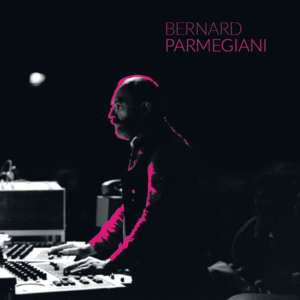
Bernard PARMEGIANI
“Mémoire Magnétique, vol. 3 (1967-1971)”
Transversales is very glad to announce the release of « Mémoire Magnétique, vol.3 » spanning 1967-1971, revelatory collection of short and secret music by electronic music pioneer Bernard Parmegiani.
The third volume of this compilation allows us to discover some of unreleased rarities from Bernard Parmegiani’s personal archives and unpublished recordings which were composed for the screen or the performing arts.
Remastered high-resolution audio transferred directly from the original master tapes.
L'ARAIGNELEPHANT (1967)
Musique pour le film de Piotr Kamler
NARCISSUS ECHO (1971)
Musique pour un film d'animation de Peter Foldès
SADIQUEMENT VOTRE I (1968)
Musique pour une émission TV de Michel Wichard"Agrippe-le Agrippine !"
SABLES (1970)
Musique composée pour le film de Lucien Clergues
LA VILLE EN HAUT DE LA COLLINE I (1968)
Musique pour le film de Jacques Vernier
JE, TU, ELLES (1969)
Musique pour un film de Peter Foldès
LABYRINTHE (1970)
Musique pour le film de Piotr Kamler
26,00€
In stock

LP
Bernard PARMEGIANI
“Lac Noir – La Serpente 1992”
Unreleased material composed by Bernard Parmegiani in 1992. Lac Noir - La Serpente is part of Emmanuel Raquin-Lorenzi's Lac Noir, a composite work inspired by a serpentine female creature or "snake-woman" that he saw in Transylvania in 1976, with a total of 33 pieces using various media, 24 by himself and 9 by other artists. All the materials used in Lac Noir were gathered on the land of the snake-woman between 1990 and 1992. The first coordinated broadcast ran from June to October 2019, like a theatrical display of media.
"At the end of May 1992, in Provence, in his Summer studio not far from the Montagne Sainte-Victoire, Bernard Parmegiani played the first musical moments he had worked on from the sounds he and Christian Zanési had collected in Negreni in October 1990. A few days after this listening session, on 4th June, I wrote him a letter. I didn't mean to take control of what was to become the ninth movement of his composition, but to share with him some of the resonances I had heard in what he had composed, which mingled with my dreams and memories of the Transylvanian snake-woman, and outlined possible concordances with the other pieces underway for Lac Noir. In the midst of the garish chaos of the fair and its spectacular stunts, there could spread out -- still, silent eye of the cyclone -- the long waters of a lake. Calm waters. Patches cool but sensitive as skin. Between the waters there flows and ripples, there shows up and dives again a snake-woman born of the still waters. A sweet, good serpent whose song -- strange and melodious, sensual, yet already tinged, as if bitten by the black depths, with bitterness; that of prescience, shading it with melancholy -- is her very undulation, the rings of which appear, together or in turn, the way translucent veins overlap, slither over one another in a moving braid of metamorphoses." (Extracts from notes by E. Raquin-Lorenzi)
17,00€
Out of stock
CD
Bernard PARMEGIANI
“Lac Noir – La Serpente 1992”
Unreleased material composed by Bernard Parmegiani in 1992. Lac Noir - La Serpente is part of Emmanuel Raquin-Lorenzi's Lac Noir, a composite work inspired by a serpentine female creature or "snake-woman" that he saw in Transylvania in 1976, with a total of 33 pieces using various media, 24 by himself and 9 by other artists. All the materials used in Lac Noir were gathered on the land of the snake-woman between 1990 and 1992. The first coordinated broadcast ran from June to October 2019, like a theatrical display of media.
"At the end of May 1992, in Provence, in his Summer studio not far from the Montagne Sainte-Victoire, Bernard Parmegiani played the first musical moments he had worked on from the sounds he and Christian Zanési had collected in Negreni in October 1990. A few days after this listening session, on 4th June, I wrote him a letter. I didn't mean to take control of what was to become the ninth movement of his composition, but to share with him some of the resonances I had heard in what he had composed, which mingled with my dreams and memories of the Transylvanian snake-woman, and outlined possible concordances with the other pieces underway for Lac Noir. In the midst of the garish chaos of the fair and its spectacular stunts, there could spread out -- still, silent eye of the cyclone -- the long waters of a lake. Calm waters. Patches cool but sensitive as skin. Between the waters there flows and ripples, there shows up and dives again a snake-woman born of the still waters. A sweet, good serpent whose song -- strange and melodious, sensual, yet already tinged, as if bitten by the black depths, with bitterness; that of prescience, shading it with melancholy -- is her very undulation, the rings of which appear, together or in turn, the way translucent veins overlap, slither over one another in a moving braid of metamorphoses." (Extracts from notes by E. Raquin-Lorenzi)
13,50€
Out of stock

2 LP
Bernard PARMEGIANI
“De Natura Sonorum”
2022 repress
"De Natura Sonorum, Première série, 1975 (28'03)
- incidences / résonances
- accidents / harmoniques
- géologie sonore
- dynamique de la résonance
- étude élastique
- conjugaison du timbre
De Natura Sonorum, Deuxième série, 1975 (28'40)
- incidences / battements
- natures éphémères
- matières induites
- ondes croisées
- pleins et déliés
- points contre champs
Premiered at the Salle Wagram in Paris on 3rd June 1975.
A suite of twelve movements, divided into two series of six."
25,00€
In stock

LP
Bernard PARMEGIANI
“Mémoire Magnétique, Vol 2.”
Transversales is very glad to announce the release of Mémoire Magnétique Vol. 2 spanning 1966-1993, revelatory collection of short and secret music by electronic music pioneer Bernard Parmegiani.
Since the late 50's, Bernard Parmegiani, a major figure of electroacoustic music and a founding member of GRM has created some eighty two concerts music. From the start, Parmegiani’s work was closely linked to the screen, with dozens of documentaries, films, long features, animation films but also musical pieces for dance, stage or television. If many of his pieces are landmarks in the history of electroacoustic music (De Natura Sonorum, La Roue Ferris…), his application music compositions are strongly embedded in the subconscious landscape of the French public (Stade 2, Roissy Paris Airport…).
The second volume of this compilation allows us to discover some of unreleased rarities from Bernard Parmegiani’s personal archives and unpublished recordings which were composed for the screen or the performing arts.
24,00€
Out of stock

CD
Bernard PARMEGIANI
“Stries”
Bernard Parmegiani (1927–2013), the grand old man of French electroacoustic music, did not write much music for tape with live performers. Among them is “Stries” for the unusual combination of three live synthesizer players and tape.
Until recently, “Stries” had not been played live for some 30 years. This is the first complete recording, only part of it had been previously released on LP on the INA/GRM label.
“Stries” was written for the three synthesizer players of the Paris-based electroacoustic trio TM+, Yann Geslin, Laurent Cuniot and Denis Dufour, founded at the INA/GRM. Over the span of the ensemble’s lifetime, TM+ used a range of different instruments — analog synthesizers in the late 1970s and early digital synthesizers in the mid-1980s — and amassed a repertoire of about 40 compositions written especially for them.
Fortunately, Yann Geslin, of the INA/GRM, archived the original score by Parmegiani, as well as the parts for the instrumentalists. Also in GRM’s archives was the original analog reel-to-reel tape for the piece, as well as the analog 8-track recordings from the recording session.
Armed with this material, the electronic music trio of Colette Broeckaert, Martin Lorenz and Sebastian Berweck, together with Yann Geslin, recreated the piece with the aim of bringing it back to the stage as well as producing generic scores that could help get the piece into the repertoire of many instrumentalists. Their work is realized on this release.
“Stries” (1980) is a work in three parts based on the tapes of Parmegiani’s “Violostries” for violin & tape from 1963. The tape part is derived completely from recordings of the violin which Parmegiani masterfully alters to create an at times extremely dense, at other times pointillist piece of music.
The first part, “Strilento,” is a piece for tape solo and can as such be played alone, while the second and third movements — “Strio” and the eponymous “Stries” — make direct usage of the old tapes and the analog synthesizers of the players.
Sebastian Berweck’s liner notes detail the reconstruction of “Stries” for both performance and this recording.
Stries (1980) for 3 synthesizers and tape 44:59
1. Strilento 17:26
2. Strio 7:31
3. Stries 20:01
Broeckaert//Berweck//Lorenz, synthesizers
16,50€
12 CD box
Bernard PARMEGIANI
“L’œuvre musicale en 12 CD”
2021 repress
Disc 1: Violostries (1964), 16:37 JazzEx (1966), 16:51 L’instant mobile (1966), 10:41 Capture éphémère (1967), 11:57 Disc 2 Bidule en ré (1969), 9:18 Pop’eclectic (1969), 10:59 Du pop à l’âne (1968), 10:09 Ponomatopées (1970), 6:17 Musico picassa (1978), 6:53 Et après (1973), 11:35 Disc 3 L’œil écoute (1970), 19:11 Pour en finir avec le pouvoir d’Orphée (1972), 23:27 La roue Ferris (1971), 10:40 Disc 4 Enfer (1972), 61:20 Disc 5 De natura sonorum (1975), 53:01 Disc 6 Dedans-dehors (1977), 22:24 La table des matières (1979), 19:02 Des mots et des sons (1977), 19:17 Disc 7 La création du monde (1982-84), 72:44 Disc 8 Exercisme 1 (1985), 17:22 Exercisme 2 (1985), 27:03 Exercisme 3 (1986), 24:13 Disc 9 Litaniques (1987), 21:23 Rouge-mort: Thanatos (1987), 16:48 È pericoloso sporgersi! (1991), 25:37 Disc 10 Le présent composé (1991), 23:45 Entre-temps (1992), 22:22 Plain temps (1991-93), 24:23 Disc 11 Sonare (1996), 21:22 Sons-jeu (1998, 2000), 21:09 La mémoire des sons (2000-01), 24:40 Disc 12 Immer / sounds (1999), 11:24 Espèces d’espace (2002-04), 21:47 Au gré du souffle… le son s’envole (2005-06), 20:03 Rêveries (2007), 13:46
Disc 1: Violostries (1964), 16:37 JazzEx (1966), 16:51 L’instant mobile (1966), 10:41 Capture éphémère (1967), 11:57 Disc 2 Bidule en ré (1969), 9:18 Pop’eclectic (1969), 10:59 Du pop à l’âne (1968), 10:09 Ponomatopées (1970), 6:17 Musico picassa (1978), 6:53 Et après (1973), 11:35 Disc 3 L’œil écoute (1970), 19:11 Pour en finir avec le pouvoir d’Orphée (1972), 23:27 La roue Ferris (1971), 10:40 Disc 4 Enfer (1972), 61:20 Disc 5 De natura sonorum (1975), 53:01 Disc 6 Dedans-dehors (1977), 22:24 La table des matières (1979), 19:02 Des mots et des sons (1977), 19:17 Disc 7 La création du monde (1982-84), 72:44 Disc 8 Exercisme 1 (1985), 17:22 Exercisme 2 (1985), 27:03 Exercisme 3 (1986), 24:13 Disc 9 Litaniques (1987), 21:23 Rouge-mort: Thanatos (1987), 16:48 È pericoloso sporgersi! (1991), 25:37 Disc 10 Le présent composé (1991), 23:45 Entre-temps (1992), 22:22 Plain temps (1991-93), 24:23 Disc 11 Sonare (1996), 21:22 Sons-jeu (1998, 2000), 21:09 La mémoire des sons (2000-01), 24:40 Disc 12 Immer / sounds (1999), 11:24 Espèces d’espace (2002-04), 21:47 Au gré du souffle… le son s’envole (2005-06), 20:03 Rêveries (2007), 13:46
60,00€
Out of stock

LP
Bernard PARMEGIANI
“Violostries”
Violostries (1963/64), 16'39
Premiered and recorded in April 1965 at the Royan Festival - France, by Devy Erlih (violin) & Bernard Parmegiani (sound projection).
Violostries represents the intersection of several musical research directions, presented as two simultaneous dialogues - composer/performer and instrument/orchestra.
After a short introduction tutti very spatialized:
1. Pulsion/Miroirs: multiplied by itself, the violin is projected into the four corners of the sound space.
2. Jeu de cellules: concertante piece for violin and audio medium, the latter being made up of very tightly woven microsounds.
3. Végétal: slow and invisible development following a continuous time, resulting from an internal and permanent processing of the matter.
Capture éphémère (1967, 1988 version), 11'48
This work was composed in four tracks in 1967 for quadraphonic diffusion.
Remixed in stereo in 1988.
Premiered at the Studio 105 of the Maison de la Radio, Paris, May 1967.
Sounds - noises that circulate as time unfolds - continue to exist despite our recording them.
Breaths, fluttering wings: ephemeral microsonic sounds streaking space, sound scratches, landslides, bounces, vertigo of solid objects falling into an abyssal void, multiple snapshots forever frozen in their fall. As many symbols leave inside us the permanent trace of their ephemeral brushing against our ear.
Some day, a desert, a sound, then never again....
Somewhere, in my head and body something still resonates... resonance, what could be more ephemeral.
La Roue Ferris (1971), 10'45
Premiered at the Festival des chantiers navals, Menton, on August 26, 1971.
Sound projection: Bernard Parmegiani.
La Roue Ferris (Ferris wheel) spins, merging with its own resonance, stubbornly perpetuating its variations. It only sketches a regularly evolving movement around a constant axis. Each of its towers generates thick sonic layers that penetrate each other, producing a very fluid interweaving. The crackling of the origin eventually metamorphoses into sonic threads whose lightness recalls high-altitude clouds, cirrus clouds, haunted by the cries of swifts twirling in the warm air. The wondrous arises and dies off, leaving us with an illusion of duration.
17,00€
In stock

LP
Bernard PARMEGIANI
“Rock”
Back in stock.
Limited edition (500 copies) remastered from the original master tapes by Jonathan Fitoussi.
This is the first release by the French label Transversales founded by Sebastien Rosat and Jonathan Fitoussi. The never before released soundtrack of the film “Rock” (1982) directed by Michel Treguer and composed by Bernard Parmegiani (1927-2013).
Major figure of electroacoustic music and member of the historic GRM where he composed among others his masterpiece, “De Natura Sonorum”, Bernard Parmegiani produced also a large number of jingles, soundtracks, and indicatives.
On listening to Rock, one is reminded of John Carpenter or François de Roubaix: a work which mixes the sounds of the TR-808 drum-machine, Synthi AKS, Farfisa organ, and Clavinet. Remastered from the original master tapes.
Includes exclusive liner notes.
20,90€
In stock

LP
Bernard PARMEGIANI
“Mémoire Magnétique, Vol. 1 (1966 – 1990)”
Never before released !
Transversales is very glad to announce the release of « Mémoire Magnétique, vol.1 » spanning 1966-1990, revelatory collection of commercial and secret music by electronic music pionneer Bernard Parmegiani.
Since the late 50's, Bernard Parmegiani, a major figure of electroacoustic music and a founding member of GRM has created some sixty concert music.
From the start, Parmegiani’s work was closely linked to the screen, with dozens of documentaries, films, long features, animation films but also musical pieces for dance, stage or television. If many of his pieces are landmarks in the history of electroacoustic music (De Natura Sonorum, La Roue Ferris...), his application music compositions are strongly embedded in the subconscious landscape of the French public (Stade 2, Roissy CDG Paris Airport...).
The first volume of this compilation allows us to discover some of these lost tapes and unpublished recordings which were composed for the screen or the performing arts.
“This series of rare application music compositions are representative of the vast scope explored by Parmegiani. Far from the strict format of concert music, its codes and usages, this music designed to fit with the screen is a work of amazing freshness and spontaneity.
It is pervaded with a singular balance, between minimalist music and a more articulated language. There is a space for melody, for word repetitions. Actually, repetition is a constant feature, blurring the line between his concert work and the rest. More than a border line, it seems to define two worlds, which communicate through it.
With an impressive number of application works, and some time spent at the head of the Sound / Image sector in the research service led by Pierre Schaeffer, the composer has managed to build up a framework designed for research and mutual exchange. Bernard Parmegiani presents us with lights, gestures, lines, various registers. Besides, how could one perceive these pieces of music without the pictures they are supposed to enhance? Each title is suggestive, and the best answer is in the field of imagination.
In the middle of the B-side, there is a true gem dated 1977. In this second extract of “Versailles… peut-être“ Bernard Parmegiani gives us a glimpse of the future. One can feel the pulse of the 80’s and of the first accents of Techno Music. It feels like driving a drop head car at 134 BPM, faster than on Kraftwerk’s “Autobahn”. One can also sense that soon the LFO will be replaced by the drum-machine.
Listening to these pieces of music arouses the same sensation as reading the prose of an author already known for his poetry. If one has never read his poems, here is the record that will open the door on a new world to be discovered.” Maxime Barthélemy.
Remastered high-resolution audio transferred directly from the original tapes.
Exclusive Liner Notes + obi strip.
24,00€
In stock

CD
Bernard PARMEGIANI
“La mémoire des sons”
“Capture éphémère” (1967). “Sons/Jeu” (1998). “La mémoire des sons” (2001).
15,00€
In stock

In stock

CD
Bernard PARMEGIANI
“Sonare”
One 25 minute piece, from 1996. A State/CIRM commissioned work. "There is already music... of an Italian an character in this title! Sonare: l love this word because it is Italian and because upon hearing it, music simly springs forth from within it. For each of the 5 movements, I have chosen a pseudo-instrumental or synthesis sound which I sense will allow me to bring out its very essence to develop it until it is within the deepest levels of the soul, if the soul can at all be rendered accessible to such acoustic resonance!!! I had to imagine the most suitable interplay to bring out such ’intrinsic resonance’. Now of course, no interplay can be genuine unless certain freedoms are present within or inherent to it, the rule being that such an interplay should remain musical whilst the sounds, ’in a real context’ become linked to or opposed to each other. No combat, just interplay for its own sake, for itself alone, and at the same time, changes in contour, an opening or closing in the tone, range, patterns of rhythm, as if the work were a living being in itself which these creations in sound so often closely resemble, these same creations in sound, intended firstly for our ears but not only for our ears." B.Parmegiani.
15,00€
Out of stock

CD
Bernard PARMEGIANI
“Plain-temps”
“Présent composé” (1991). “Entre-temps” (1992). “Plain Temps” (1991-93).
15,00€
Out of stock
CD
Bernard PARMEGIANI
“L’œil écoute”
“L’Œil écoute” (1970), “La roue Ferris” (1971), “Espèces d’espace” (2002-2003).
15,00€
Out of stock
2 CD
Bernard PARMEGIANI
“Matières premières”
Bernard Parmegiani (1927 - 2013).
CD1 with three previously unreleased pieces, “L’écho du miroir” (1980-2008), “Adagio” (1980), “Un arbre… c’était le mien!” (1987).
CD2 with a large number of tapes of preparatory work for future musical compositions.
CD1 with three previously unreleased pieces, “L’écho du miroir” (1980-2008), “Adagio” (1980), “Un arbre… c’était le mien!” (1987).
CD2 with a large number of tapes of preparatory work for future musical compositions.
23,50€
Out of stock

2 CD
Bernard PARMEGIANI
“Violostries”
“Violostries” (1964), “Pour en finir avec le pouvoir d’Orphée” (1972), “Dedans-Dehors” (1977), “Rouge-Mort” (1987), “Exercisme 3” (1986), “Le Présent Composé” (1991).
15,00€