
Out of stock

CD
Paul DEMARINIS
“The Edison effect-A listener’s companion”
“For this recording, the acclaimed sound artist created theoretically dense work which explores the relationships between recording technologies. Working with the faults of mediums lifetimes apart - the early Wax Cylinder Phonograph and Digital audio suite - he recorded signals imbued with the inherent noise of the opposing mediums. Recording the results back and forth on both technologies ancient and new, this experimental work strives to make music with the hidden textures of history. In short, The Edison Effect is an audio essay of sorts, that seeks to address artistic issues through the exploration and deconstruction of the mediums, and employs the laser beam of digital audio interpreting the analog grooves carved into wax. Aesthetically, this work is a meditative animation of nostalgia, with the idiosyncrasies of the failing mediums providing the texture and tonality to these quiet pensive compositions. Predating the glitch movement where recorded medium deconstruction became the vogue of artist such as Oval and Otomo Yoshihide, the recording has similarities to vinyl deconstruction artist Christian Marclay and Philip Jeck, and comes highly recommended to those intrigued by such explorations.” Sylvie Harrison, All Music Guide
18,00€
Out of stock
CD
Lasse MARHAUG – John WIESE
“Country and western”
Lasse Marhaug & John Wiese, recorded January 2008 at the best studio in Oslo.
14,00€
Out of stock

CD
FOSSIL AEROSOL MINING PROJECT
“The Unlistening Place”
Fossil Aerosol Mining Project are an enigmatic lot, comprised of sonic archeologists residing the American Midwest. Their work spans several decades and is almost always in flux through the variable states of contextual re-investigation and technological degradation. Aesthetically, FAMP align with the post-industrial research of :zoviet*france:, Cranioclast and Robert Turman. Bacteria damaged tape loops, ghostly time-lag accumulation and the excavation of mediated sound from suburbia’s failures are key components to the Fossil Aerosol’s working process.
The core tracks of The Unlistening Place were recorded in 2015, and at the time were intended to be part of what was to be the final Fossil Aerosol album, scheduled for a distant release. But history circled back on itself, and the result was a reworking of future tracks, alongside more new material. Historiography eating its own tail.
14,50€
Out of stock

CD
FOSSIL AEROSOL MINING PROJECT
“Revisionist history”
The first Fossil Aerosol Mining Project audio recordings were made 30 years ago this year. In the observation of three decades of obscure, faked resurrection, we are pleased to announce the release of the new CD Revisionist History. The recordings on this album are hybrids, created by the grafting of old artifacts onto new material using recently devised studio processes. New sounds of the past, articulated through the devices of an unimagined future. In addition to the 69-minute CD, each package also includes an exclusive download code for an additional hour of full-resolution tracks via Bandcamp. This bonus material consists of special remixes and reconsiderations of nine of our old favorites. In total, Revisionist History includes over two hours of enhanced decay and mnemonic devices. This artist-edition is limited to 300 specially prepared packages that include a manipulated page of pseudohistorical text (circa 1972), and a souvenir fragment of open-reel dictaphone tape collected as source material in Chicago in 1988.
The anniversary edition of Revisionist History is brought to you through a collaboration between Afterdays Media and The Helen Scarsdale Agency.
The Fossil Aerosol Mining Project began in the mid-1980s as a loose-knit group of artists and collectors interested in exploring the damaged remains of late 20th century popular culture. Of particular appeal were inadvertent examples of the post-industrial, post-apocalyptic landscapes so commonly imagined in Cold War-era media. Places and debris that fostered views of mummified modern pop, and contemporary provisions made artifact. The Project began making audio recordings in 1986. The first studio experimentation employed literal “found sounds” such as fragments of open reel 1/4” tape and 35mm film recovered from burnt out warehouses and abandoned drive-in theaters. The earliest work involved physical tape loops and analog signal processes, which were gradually replaced by digital delay treatments and multi-track manipulation. Fossil Aerosol still works primarily with found materials - audio artifacts and field recordings. Signal processing equipment remains the principal form of instrumentation. Songs of enhanced decay and faked resurrection.
18,00€
In stock

CD
M.S. WALDRON-Steven STAPLETON-S.B. SIGMARSSON-Jim HAINES-R.K. FAULHABER
“The sleeping moustache”
Let’s begin with the introductions. M.S. Waldron may be best known for his work as irr. app. (ext.), an unwieldy moniker that begets uncanny, hallucinatory sound. Steven Stapleton is the genius behind Nurse With Wound, the consistently unpredictable project that scrambles musical obsessions for krautrock, surrealism, and avant-garde composition into a brash quest for expressionism through experimentation. Sigtryggur Berg Sigmarsson hails from the Icelandic electro-absurdist duo Stilluppsteypa, which continues to investigate the finer points of drunken minimalism. Jim Haynes prefers to merely state that he rusts things. R.K. Faulhaber is something of a mysterious figure, looming around Mr. Waldron’s irr. app. (ext.) recordings and performances while keeping his own work a hermetic secret. Each with a peculiar understanding of the audio arts, these five artists came to the proverbial table and thought it a good idea to collaborate. Given the predilection for the surreal and the sidereal that each of these five employ in their many audio and visual projects, those agendas oozed from the recordings that became known as The Sleeping Moustache. An epiphany of controlled disorder, a convulsion of beauty, a cascade of thought from delirious minds, The Sleeping Moustache is an exquisite manifestation of sound poetry scattered into a tortuous collage mired in an oblique melancholy. Magnetic tones extracted from the ether, mechanical sounds smeared into a lugubrious growls, horns trumpeting straight out of John’s Book of Revelation, ululations sliced into information overload that Schwitters himself would be proud of. The Sleeping Moustache presents a psychically instable landscape, where dreams and nightmares wreak havoc upon the drudgery of daily life. The closest audible territory for The Sleeping Moustache might be the psychoactive constructions of Nurse With Wound’s Homotopy To Marie, although the characters in this drama happened upon an entirely different map of that terrain. The artwork for the first edition of The Sleeping Moustache features five letterpress prints from each of the artists with an edition of 1700.
15,00€
Out of stock
CD
John WALL & Mark DURGAN
“Contrapt”
John Wall and Mark Durgan return after a lengthy absence [there first release together was in 2011]. Theirs is a fractured sound world woven together from improvisations that took place in the Utterpsalm Studio in London between 2012-15. The resultant seven tracks are an attempt at imposing order, structure and “expression” without meaning or intentionality onto a huge amount of heavily edited sonic material.
10,00€
Out of stock

CD
Marc NAMBLARD
“F.Guyana”
One CD + digital bonus. 500 copies.
The field recordings of « F.Guyana » have been realized in the forests and the costal regions of French Guiana between the dry season and the « little rainy season » (November/December 2014, 2015 and 2016).
Marc Namblard was born in Paris in October 1973. He grew up mostly in Loiret, (Central France) but spent most of his holidays with his family in the Cévennes, south eastern France. It is certainly in these rugged yet generous mountains that his sensitivity to nature asserted itself little by little. After his baccalaureate in literature, visual arts and art history, he studied at l’École de l’Image d’Épinal, a visual arts school. During his 21-month non-military national service in an outdoor education centre, he discovered the job of environmental educator. After his national service, Marc completed his studies at the Fine Art School of Épinal and gained a National diploma in visual arts in June 2000. Sound then began to take an increasingly bigger place in his own work.
In the following years, Marc moved away from Fine arts to work as an environmental educator for popular education organisations. At the same time, he met many people interested in sound art and wildlife recording. Since then, his work has been characterised by a dual approach, naturalist and musical, rational yet intuitive. Depending on projects, one approach prevails but never takes over the other completely.
Since 2000, Marc has been living and working as a nature guide, wildlife sound recordist and sound artist in Lorraine (Eastern France).
15,00€
Out of stock

CD
Christina KUBISH & Eckehard GÜTHER
“Unter Grund”
The Ruhr Area lives from and with water. It needs drinking water, water for industrial facilities and water for transportation. Water veins pulse invisibly with groundwater, connecting rivers through subsurface tunnels that also force their way into disused mines. This mine water has to be drained continuously or pumped out from underground (one speaks of unending tasks) to prevent the collapse of old shafts, subsidence damage, and the contamination of drinking water. Without constant pumping of the groundwater the Ruhr Area would transform into a vast marshy landscape.
Fabian Lasarzik, “The discomfort from the underground”. Christina Kubisch’s site-specific sound installations are based on retrieving parallel worlds. She often responds to structures and atmospheres of places and their unheralded vibrancy which she turns into concrete perception and imagination by the recipient. For the 26-channel installation “under ground” carried out on Zeche Zollverein Christina Kubisch examined above ground and subterranean streams which are little noticed, but play a decisive role: water which has to be developed from abandoned and not backfilled shafts and mounted into a complex canal and river system.
“Unter Grund“ was presented 2014 in the context of the festival NOW/ Parallele Welten as a 26-channel sound installation at the Zollverein world heritage site. The composition on the CD under the same name consists of recordings that were made in the Ruhr Area in machine rooms above and under ground, pumping stations, waterworks, ponds, shaft sumps, cages, spillways et cetera. Some of the recordings were taken directly from Shaft XII of the former Zollverein Coal Mine. The sound recordings were mainly made with hydrophones and contact microphones.
15,00€
Out of stock
CD
Michael PISARO
“Closed categories in cartesian worlds”
We are very happy to announce the release of GW 010, a 72-minute CD version of Closed Categories in Cartesian Worlds, for crotales and sine tones (composed by Michael Pisaro, performed by Greg Stuart, mastered by Michael Pisaro and Joe Panzner). Those interested in more info and sound examples can look below. The disc also comes with extensive notes and a reproduction of a page of the score.
From the notes: “This record consists of four crotales, each bowed for 16 minutes. Against each crotale I have placed sine tones, one after another, for four minutes each (four for each crotale note). The score gives 10 possibilities for each crotale (over the two octave range of the instrument there are 250 possibilities). Greg selected four instruments, and then sent me the recordings. I took some time to select and scale the volume of the sine tones, work with the stereo balance and mix each crotale/tone combination in a slightly different way.
What emerges from the vast possible selection is four connected pieces, working their way up in range, each having a distinct profile, structured perhaps with a distant echo of a four movement symphony.”
From the notes: “This record consists of four crotales, each bowed for 16 minutes. Against each crotale I have placed sine tones, one after another, for four minutes each (four for each crotale note). The score gives 10 possibilities for each crotale (over the two octave range of the instrument there are 250 possibilities). Greg selected four instruments, and then sent me the recordings. I took some time to select and scale the volume of the sine tones, work with the stereo balance and mix each crotale/tone combination in a slightly different way.
What emerges from the vast possible selection is four connected pieces, working their way up in range, each having a distinct profile, structured perhaps with a distant echo of a four movement symphony.”
14,00€
In stock
CD
Michael PISARO
“Fields have ears (6)”
“A 56-minute piece for guitar and electronics. It has had a long composition history, starting from a solo for classical guitar and sine tones (premiered in Munich in July of 2010). It was subsequently performed in Seattle (August, 2010), A Coruña, Galicia (May, 2011) and New York (September, 2011). For each performance a new version was created, incorporating recordings from the previous locations (including parts of previous performances), and other sounds that I began to associate with the history of the piece: turntables, radios, records, field recordings, earlier pieces of mine, etc. The process reached its endpoint in December of 2011 (with me recording all the parts on electric guitar). What started as a fairly simple piece is now a densely layered object, that carries its history on its back like a tortoise shell.”
16,00€
Out of stock
CD
Michael PISARO – Greg STUART
“Ricefall (2)”
“Gravity Wave, a new CD label, curated by composer Michael Pisaro, designed by Yuko Zama. Icefall (2), a 72-minute piece for 64 separate tracks of rice falling on objects. This recording is the second part of a trilogy of the first disc length works by Stuart and Pisaro (an unrhymed chord is the first part, and A wave and waves is the third). The dynamic range of the recording is extremely wide. In the second of the four sections, there is a storm of falling rice that is certainly the loudest music the duo have made; the final section is an unbroken 16 minutes of lightly falling, slightly pitched sounds. The release features a short essay by Pisaro on working with Stuart.” label info
16,00€
In stock
CD
Michael PISARO
“Étant Donnés”
Étant donnés [2015-2017] is a six-track disc based almost entirely on samples (from Curtis Mayfield to John Carpenter !!!).
15,00€
Out of stock

CD
Thomas TILLY
“Codex Amphibia (an interpretation of the explosive breeding phenomenon)”
Professionnaly duplicated CDR.
Field recordings realized by Thomas Tilly, December 2016 Guiana. This project comes from a research field session realized with Antoine Fouquet, Research associate at The French National Center for Scientific Research; “Ecology, environment and interactions in Amazonian systems Lab” (LEEISA); and the “Evolution and Biological diversity Lab”.
Comprised from unprocessed raw field recordings and interspersed sinewave structures by Thomas Tilly, 2017.
13,00€
Out of stock
CD
Francisco MEIRINO & Jamasp JHABVALA
“Additive manufacturing”
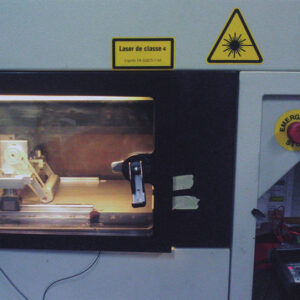
The source material for this opus is the sound of different setups all involved in the so-called Selective Melting process: fiber laser emission, eddy current crack detection, powder deposition system, ultrasonic sieving…
The setups were activated by Jamasp Jhabvala and recorded by Francisco Meirino with binaural microphones, electronic PVDF stethoscopes, stereo condenser microphones, hydrophones and piezo transducers.
Finally edited and mastered at Francisco Meirino’s studio using the recordings of the improvisation session and the untreated source recordings.
Released 15 November 2014.
14,00€
In stock
CD
COMPILATION
VETERANS OF THE FRENCH UNDERGROUND MEET LA JEUNE GARDE
“Veteran musicians from the ‘post-1968’ movement, still in activity, and their relatively young ‘heirs’ are gathered here for thirteen exclusive collaborations. Showing that continuity exists despite the changes of period and generation, and that passing the baton is possible and necessary. With Daevid Allen, Gilbert Artman, Pierre Bastien, Jac Berrocal, Philippe Bolliet, Guigou Chenevier, Pascal Comelade, eRikm, David Fenech, Lionel Fondeville, Dominique Grimaud, Etienne Jaumet, Kawaii, Klimperei, Cyril LeFebvre, Dominique Lentin, Madame Patate, Bérangère Maximin, My Favourite Sideburns Orchestra, Jean-François Pauvros, Richard Pinhas, Joseph Racaille, Dominique Répécaud, Christophe Sorro, Ghédalia Tazartès, Jo Thirion, Toupidek Limonade, Tycho Brahé.”
15,00€
Out of stock
CD
FALL OF SAIGON
“1981-1984”
“Ephemeral trio formed at the very beginning of the Eighties, Fall of Saigon takes a special place within French rock. A voice (Florence Berthon), an organ (Pascal Comelade) and a guitar (Thierry Den), supported by a foregrounded drumbox, suffice to maintain a minimalist and essential construction, full of class and inventiveness. More conventionally rocky than musics recorded by Pascal Comelade in those years, although subtly peculiar, the compositions show influences marked by the New York seal. Thus the musicians are not constrained to the usual clumsiness of those who never managed to go beyond the mere imitation (Or their limitation...). Through two years of existence, 1981 and 1982, Fall of Saigon had only released one single-play, that’s become both quite rare and expensive. The reissue of these recordings represents the eleventh volume of the Zut-O-Pistes series, and it’s enhanced with seven unreleased tracks, three live recordings, plus two prior and post-Fall of Saigon era titles. This is certainly enough to take advantage of the subtle charm of this trio !” label info
15,00€
Out of stock
CD
The AMES ROOM
“In St Johann”
Now also available on CD.
The return of this power trio : Jean-Luc Guionnet, alto saxophone. Will Guthrie, drums. Clayton Thomas, double bass. Recorded live, March 9 2012, Festival Artacts, St Johann in Tirol, Austria. As powerfull as always !
“Encompassed by the 40-minute marathon title track, the live performance capturedin St Johann (Austria) is irrefutably exhilarating. Featuring French alto saxophonist Jean Luc Guionnet‘s lead voice, The Ames Room embarks on a splintered approach to free-bop, propelled by drummer Will Guthrie‘s penetrating beats and bassist Clayton Thomas’ pumping bottom.
The Ames Room follows his own path down the road of “new wave” of free jazz, for our own pleasure.”
The return of this power trio : Jean-Luc Guionnet, alto saxophone. Will Guthrie, drums. Clayton Thomas, double bass. Recorded live, March 9 2012, Festival Artacts, St Johann in Tirol, Austria. As powerfull as always !
“Encompassed by the 40-minute marathon title track, the live performance capturedin St Johann (Austria) is irrefutably exhilarating. Featuring French alto saxophonist Jean Luc Guionnet‘s lead voice, The Ames Room embarks on a splintered approach to free-bop, propelled by drummer Will Guthrie‘s penetrating beats and bassist Clayton Thomas’ pumping bottom.
The Ames Room follows his own path down the road of “new wave” of free jazz, for our own pleasure.”
10,00€
Out of stock
CD
COMPILATION
FORERUNNERS SWEDISH ELECTRONIC AND CONCRETE MUSIC 1955-65
With Karl-Birger Blomdahl: Mimamusik (1959). Bengt Hambraeus: Doppelrohr 2 (1955). Rune Lindblad: Formation (1958-59), Optica 2 (1960). Arne Mellnäs: Nite Music (1964). Sten Hanson: Fruits de mer (1962). Åke Karlung: Antihappening (1962). Leo Nilsson: Skorpionen (1964). Ralph Lundsten: Atomskymning (1964). Bengt Emil Johnson: Enmans Gubbdrunkning (1964). Lars-Gunnar Bodin: Den heter ingenting, den heter nog “Seans 2” (1965). The cd includes a 16 page booklet with texts by Sten Hanson.
15,00€
Out of stock

CD
Sten HANSON
“My last works”
“Sten Hanson passed away on November 1st 2013. During the last year we discussed with him to make a record with four of his unreleased works from the last then years period. Sten had the title for this record: My Last Works.” Daniel Rozenhall & Leif Elggren, August 2014. The CD includes a 40 page booklet with essays by Magnus Haglund and Gerrit Jan de Rook.
15,00€
In stock

CD
COMPILATION
FTARRI AFTER TOMORROW
It’s been five years since Ftarri, an online CD shop and record label specializing in improvised music, opened a physical store of the same name in Suidobashi, Tokyo.
This is the first title in a four-CD series celebrating the store's fifth anniversary.
It consists of four performances (three solos and one duo) by a total of five musicians.
The first track is an electronic sound piece by Hideki Umezawa (born in 1986) in which myriad wriggling, slithering sounds are released little by little in an enjoyable way.
In track 2, Yoko Ikeda (violin, etc.) and Wakana Ikeda (flute, etc.)--both members of Suidobashi Chamber Ensemble--perform a composition by Wakana. This work, in which sound parts using instruments and other objects alternate with silences, conveys a sense of Wakana's unique ideas.
In track 3, Yoichi Kamimura (born in 1982) takes field recordings gathered in various locations, seasons them with electronic sounds, and processes and edits the work with superb artistry.
Tracks 4 and 5 are improvised performances by Takashi Masabuchi (acoustic guitar). Both proceed in a relaxed way, with beautiful sound sequencing and resonance.
Limited edition of 200, consecutive numbering.
11,00€
Out of stock
CD
COMPILATION
FTARRI FUKUBUKURO 2018
Fukubukuro are special surprise gift bags sold at stores in Japan at the New Year. This fukubukuro CD is being released by the CD shop/label Ftarri to celebrate its fresh start for 2018. Each of the 5 tracks is a solo piece by a different musician. Shuta Hiraki is an electronics musician who creates mainly drone music. He released the CD Unicursal on Kyou Records in 2017. Radio ensembles Aiida, a solo project by A. Mizuki, presents unique performances using shortwave radios as “instruments.” Her 2017 CD In a Room (Radio of the Day
1) was released on VLZ Produkt. Leo Okagawa takes field recordings and concrete sounds and processes them electronically to create music. He released the CD-R The Notional Terrain on Glistening Examples in 2017. Beijing residents Zhu Wenbo and Zhao Cong have for several years been carrying out musical exchanges with Yan Jun, one of China's leading experimental/improvisational musicians. Zhu Wenbo specializes in conceptual creative styles; his track on this CD is a composition consisting entirely of hand claps. Zhao Cong constructs works of music by amplifying the sounds produced by an array of small objects.
11,00€
In stock
CD
Toshimaru NAKAMURA – Martin TAXT
“Listening to the Footsteps of Living Ones Who Are Still on the Ground”
This is a duo album by Toshimaru Nakamura, a mixer player based in Tokyo, and Martin Taxt, a tuba player living in Oslo. Instead of a conventional tuba, Taxt plays a custom-made “microtonal tuba” capable of producing microtones. In this album, Nakamura incorporates Taxt’s tuba sounds in his mixer through a microphone instead of playing his usual instrument, the no-input mixing board, which does not take in external sounds.
The project started with the concept of Nakamura processing the tuba sounds in real time as they played. But in their actual performances, the opposite often occurred: Taxt’s tuba sound directed and obstructed Nakamura’s feedback. This completely unexpected outcome astonished both musicians and spurred them on to new forms of creation. The three tracks on this album were recorded in Japan in April 2016.
13,00€
Out of stock
CD
Tetuzi AKIYAMA – Makoto OSHIRO – SUZUERI – Roger TURNER
“Live at Ftarri”
The 2 tracks on this CD document a concert held at Ftarri, Tokyo, on February 19, 2013, featuring the famed drummer Roger Turner, a leading figure on the British improvised music scene. The opening act, a trio performance (41 minutes 55 seconds) by Tetuzi Akiyama (guitar), Makoto Oshiro (self-made instruments) and Suzueri (piano, toy piano, objects, voice), was followed by a quartet performance (15 minutes 38 seconds) made up of these three musicians plus Turner (drums, percussion). Played at relatively low volume, the various murmuring, clattering sounds that emerge and transform with the passage of time fully demonstrate the special appeal of improvisational performance. Superb.
12,00€
Out of stock
CD
Taku SUGIMOTO
“Quintets: Berlin, San Diego”
In recent years, guitarist Taku Sugimoto has been active as a composer, providing works to musicians inside and outside Japan, and also as an improvisational musician. He often works with composers and musicians in the sphere of the Wandelweiser school, and gives many performances overseas. Sugimoto is also a member of the Suidobashi Chamber Ensemble, which is made up of five Japanese musicians.
This CD, Sugimoto’s first release since Septet (on Meenna) in 2015, is made up of two versions, both about 30 minutes long, of his 2017 composition “Quintet,” recorded in Berlin and San Diego (U.S.A.). It is performed by five musicians on flute, two clarinets, violin and cello. Track 1, the Berlin version, is a live performance that took place on August 6, 2017. Track 2, the San Diego version, was studio-recorded on March 15, 2017. Clarinetists Samuel Dunscombe, from Australia, and Michiko Ogawa performed on both tracks. Other performing musicians were Rebecca Lane (flute), Johnny Chang (violin), and Lucy Railton (cello) in Berlin; and Michael Matsuno (flute), Erik Carlson (violin), and Judith Hamann (cello) in San Diego. Sugimoto composed the work but did not participate in the performances. The frequently overlapping and interfering long tones and the short tones nonchalantly plucked on the strings continue throughout the performances. Simple structural beauty and a tranquil resonance pervade the performances. A masterpiece.
12,00€
Out of stock
CD
Taku SUGIMOTO
“Septet”
Guitarist Taku Sugimoto continues his long-term musical activities, with a focus on composing, and also collaborates closely with some of the composers in the Wandelweiser Group. This release is one of the summits of his recent work.
Septet is a work of just under 40 minutes, performed by seven musicians on clarinet, flute, viola, contrabass, cello, electric guitar and sine-tones. Throughout, numerous diffuse sound reverberations emerge and overlap, then fade away. The sound progression is simple and unhurried, but the work is permeated with tension from start to finish. A masterpiece. This is the live recording of the work's world premiere in Berlin in March 2015. The performers are Rebecca Lane (flute), Michael Thieke (clarinet), Johnny Chang (viola), Koen Nutters (contrabass), Derek Shirley (cello), Taku Sugimoto (electric guitar) and Bryan Eubanks (sine-tones).
“This composition is conceived of as a sort of double concertino for clarinet, flute, and small ensemble. However, the two main instruments, clarinet and flute, make no melody: the one tone is shared and repeated by them. I want to have the other instruments (viola, cello, contrabass, guitar, and sine-tone generator) work as if they are drawing several spectrums with the sound of the clarinet or flute, so each of these instruments has a specific set of microtones to play. In order to make it easier to produce those microtones, the stringed instruments are tuned anomalously; only harmonics or open strings are played. The very low frequencies are produced only by the sine-tone generator, since these frequencies are too low to play with any musical instrument except piano.” T. S.
13,00€
Out of stock
CD
Seijiro MURAYAMA – Eric LA CASA
“Paris: public spaces”
Seijiro Murayama is a drummer-percussionist-voice performer currently working in Japan again after living for a number of years in France. Éric La Casa is a French sound artist well known for site-specific field recordings with a strong improvisational element. The two have been working together on numerous projects for nearly a decade. For six months starting in January 2012, La Casa and Murayama took portable tape recorders out to parks, subway stations, streets and other public spaces in Paris and separately made individual recordings in the same place and time frame, then edited the recordings. The result is the 12 tracks on this CD. Murayama frequently produced his unique vocal sounds while recording. This odd and unexpected voice sneaks into the varied and lively sounds that fill the public spaces, creating curious accents.
13,00€
Out of stock
CD
Seijiro MURAYAMA
“Downdate”
Seijiro Murayama, a percussionist/drummer currently based in Japan, lived in France for a number of years and has received acclaim in the west for his musicianship. He performs frequently both inside and outside Japan. This is Murayama’s first solo album since “Broken Iteration” was released on the Herbal International label four years ago, in 2013. It consists of two tracks of about 20 minutes and one of about 7 minutes (3 in total). Overlapping and combining with percussion and scraping sounds are electronic sounds, field recordings of sounds like birdsong and flowing water, and vocal sounds. Rich in creativity and fantasy, this is an album that could only have been made by Seijiro Murayama.
12,00€
Out of stock
CD
Seijiro MURAYAMA – Jean-Luc GUIONNET
“Mishima, Day & Night”
Seijiro Murayama (percussion), who is currently based in Japan, lived in France for a number of years and since that time has performed frequently with the French alto sax player Jean-Luc Guionnet. “Mishima, Day & Night” is their third duo album after “Le Bruit du Toit” (Xing-Wu Records, 2007) and “Window Dressing” (Potlatch, 2011). These four tracks document their improvised music performances in Mishima City at Hongaku Temple (day) and Teke Bar (night) on the same day in July 2013. Murayama uses just one or two elements of the drum set (a cymbal and a snare drum on the first track, and only a snare drum on other tracks), Guionnet plays alto sax, and together they freely create a unique and inimitable sound. The three superb tracks from the performance at Hongaku Temple vividly demonstrate the special qualities of two artists at the forefront of the international improvised music scene and retain a consistent tension from start to finish. Track 4, a live concert held in the more relaxed atmosphere of Teke Bar, is a performance that develops through the perfect pairing of the two musicians, while fully displaying their respective characters.
12,00€
Out of stock
CD
Ryoko AKAMA – Ko ISHIKAWA – Bruno DUPLANT
“2 Compositions”
Ryoko Akama is a sound artist/composer living in the UK. Her prolific activity in recent years, not only in the UK but throughout the world, has been remarkable. Over the past several years she has released a succession of recordings of her compositions and performances. Ko Ishikawa plays the sho, an instrument used in gagaku, traditional Japanese court music. While active in the world of gagaku, the incomparable Ishikawa has also established a firm foothold on the improvised music scene. Bruno Duplant is a French musician who has become widely known, particularly since 2010, for his unique approach to music. Akama and Duplant have been collaborating since 2013 and have released several CDs and CD-Rs. In the album 2 Compositions, the newest product of their collaboration--this time with Ishikawa--the three artists perform Akama’s compositions using scores consisting of text and graphics. Akama (electronics), Ishikawa (sho) and Duplant (contrabass and electronics) bring out all the beauty of Akama’s succinct and elegant compositions generously incorporating “space.”
13,50€
Out of stock
CD
Rhodri DAVIES – John BUTCHER
“Routing Lynn”
This is the first duo album since 2010 by leading British improvisers Rhodri Davies (harp) and John Butcher (saxophone). In January 2014, together with respected musician and sound recordist Chris Watson, they visited Routing Lynn, an area of ancient rock carvings in Northumberland, northern England. In this natural setting, Davies and Butcher played music and Watson recorded. Two months later, at a festival in Gateshead, England, Davies and Butcher performed along with the 4-channel playback of the recording made by Watson in Routing Lynn. The performance is documented on this CD as a single 35-minute track.
Powerful and exquisite instrumental sounds blend with the sounds of nature (water, warbling birds) from this area of ancient rock. Davies and Butcher’s performance combines with Watson’s recording to create a masterpiece!
14,00€
In stock
CD
Masashi TAKASHIMA – Yuma TAKESHITA – Yuji ISHIHARA – Atsushi ARAKAWA – Fiona LEE
“Ftarri Jam”
It’s been five years since Ftarri, an online CD shop and record label specializing in improvised music, opened a physical store of the same name in Suidobashi, Tokyo. This is the second title in a four-CD series celebrating the store's fifth anniversary. The single 33-minute track is a group improvisation by all five musicians who appeared at Ftarri on May 5, 2017, performed at the end of the concert. Masashi Takashima (drums, electronics), who lives in the city of Koriyama in Fukushima Prefecture, is a talented composer as well as a drummer. He participated as a composer and player on the CD Astrocyte, which was released on the label Meenna in 2016. Atsushi Arakawa (electric guitar), who also lives in Koriyama, is a member of RedTemple, a rock trio which gained attention on the improvised music scene for its LP release in collaboration with Otomo Yoshihide. Yuma Takeshita (remodeled bass guitar) and Yuji Ishihara (drums) perform together frequently, mainly in Tokyo. For the past several years they have been performing as the duo project Tumo. Fiona Lee (self-made electronics, objects) is a Hong Kong-based sound artist who has recently been gaining widespread recognition. She has performed in Japan several times, including at the Asian Meeting Festival 2016, and this was her first appearance at Ftarri. The concert that day was probably the first and last by this rare combination of musicians. The many sounds produced by each of them overlapped and combined in an organic way in this lively and impressive performance. Limited edition of 200, consecutive numbering.
11,00€
Out of stock
CD
Masahide TOKUNAGA
“Alto Saxophone 2”
Masahide Tokunaga, born in 1982, is an alto sax player & improviser active on the Tokyo scene. This CD is his second solo album, and his first since the 2009 release of “Alto Saxophone” on the Slub Music label five and a half years ago. Like that CD, these 7 tracks (recorded in January 2015) are made up entirely of subtly changing long tones played on the alto sax. This album is just as unique, but compared to the previous CD, which is made up entirely of soft playing, its sound is a great deal bigger, deeper and more powerful. Tokunaga continues his steady advancement as an incomparably original, extremely impressive sax player. A highly satisfying album.
12,00€