
In stock

LP
Tózé FERREIRA
“Música de Baixa Fidelidade”
Two records came out in 1988 that forever changed the perception of "experimental" or "serious" music produced in Portugal. These were "Plux Quba" by Nuno Canavarro and "Música de Baixa Fidelidade" by Tózé (António) Ferreira. Both were released by the same label - Ama Romanta -, an influential independent imprint closely linked to avantgarde pop band Pop Dell'Arte. Because those records appeared in what could be perceived as an "alternative pop" framework, they rescued this difficult music from Academia. It helps that Canavarro played in a successful new wave pop band (Street Kids) during the period 1980-83. By association, being a friend since 1976, António was in close contact with many of the musicians and bands that were part of the equally celebrated and detested Portuguese Rock Boom (roughly 79-82).
He was not a musician then but through his friendship with Canavarro, who had the means to acquire electronic equipment, António became involved with that equipment and shared Canavarro's passion for experimentation and curiosity for knowledge. They tried to get hold of as many technical magazines as possible and learn while testing ideas. In 1983, Street Kids were about to break up, young lives drafted into the Army and maybe, in Canavarro's case, a whole new passion for challenging music similar to his bandmate Nuno Rebelo, by then in the process of discovering a wide range of "other" music mainly through Jorge Lima Barreto. Barreto, who had started Telectu with Vítor Rua, possessed a huge book and record collection and, like Rua before them, Canavarro, Rebelo and Ferreira became fascinated by the pool of knowledge they now had access to by frequenting Barreto's house in Lisbon. He was roughly a decade older, had published several books and other writings throughout the 1970s, cultivated an anarchic stance and a penchant for cultural indoctrination. Rebelo was the first to be introduced via his contact with Rua (who had invited him to play in his other band GNR).
Overwhelmed, he felt the need to share his enthusiasm with friends and eventually took a few to the house in true pilgrimage fashion. To see the Light. Among the few he led there was even João Peste, founder of Ama Romanta. Canavarro and Ferreira preceded him.
Ferreira recalls an exciting learning process added to his experiments with Canavarro's array of synths such as the Korg Ms 20, Korg polysix, ARP Axxe, Roland SH-01, the Ensoniq Mirage sampler... He read in a magazine article about someone who had studied at the Institute of Sonology (then in Utrecht, Netherlands) and went there during a vacation trip in the Summer of 1983. He became excited by the prospect of studying at the Institute but money was a problem. Canavarro, on the other hand, was admitted there in the following year. Back in Portugal, Ferreira eventually abandoned his Chemical Engineering studies in Lisbon's Technical Institute in favour of a more focused music practice. He collaborated with Telectu during 1984 and 85 as a sort of technical engineer, implementing some recording solutions and background tapes and went to work at a thermoelectric power plant in Sines, hoping to make enough money to fund his musical studies. He did and proceeded with the paperwork for admission at the Institute of Sonology, now based in The Hague. António studied there in 1986-87 and the present album includes two compositions developed at the Institute: "More Adult Music" and "This Is Music, As It Was Expected", both featuring the voice of Rodney Waschka II. Among other activities and talents, Rodney is an expert in computer music and to António his voice sounded similar to Robert Ashley's, whose work he admired.
What happened at the Institute was a systematization of António's self-taught practice. Computer software, Musique Concrète, noise and silence, organisation of abstract ideas and sounds. The original notes on the back sleeve of the LP give some indication of process and thinking, but a more detailed account was given by António in the liner notes of the CD reissue in 2002, which are also included in this 2025 LP reissue.
The music sounds deep and detailed, despite the fact of António calling it low-fi ("Baixa Fidelidade"). It flows like an improvised performance where several musicians might be responding to each other, respectful of their mutual space. Drama occurs, as a natural emotional connection is sought by the listener. Piano, bells, drone, processed voices, even the clear narrative of Rodney Waschka II, contribute to create a sort of alternative perceptual reality. The sounds are almost tangible, more a part of the physical world than ethereal manifestations and thus it would not be correct to invoke "ambient music" as a selling point. But although "physical" and distinct, this music is still alien, more so in Portugal's 1988 environment. In March, helped by Canavarro, António set up a home studio and there he recorded the remaining material for this album: "Algumas Pessoas Olharam O Sul E Viram Deserto", "Um Som, Seguido De Uma Cena Negra E Malva" and "O Verão Nasceu Da Paixão De 1921".
"Música de Baixa Fidelidade" stands not only as a proof of great resilience but as one of those magnificent works of art coming from someone who balanced technical inclination and emotional sensibility. Because of that, Tózé Ferreira is able to decode the phantom world of sound for anyone who cares to experience the sensation of inhabiting a version of the Future. First ever vinyl reissue, reproduction of the original artwork with an additional insert. Made in collaboration with the artist and the support of Paulo Menezes (Plancton Music), who provided valuable assistance. Remastered by Taylor Deupree.
24,00€
In stock

LP
FLUTTER RIDDER
“Flutter Ridder”
Flutter Ridder is the duo of Norwegian multidisciplinary artists Espen Friberg and Jenny Berger Myhre, both of whom play important roles in Oslo’s contemporary art and music underground. The pair first collaborated during the production of Friberg’s debut solo record, “Sun Soon” (Hubro, 2022), quickly recognizing in one another a creative kinship rooted in a playful, intentionally naive approach towards making art. In November of 2023, the pair decamped to the coastal town of Hvisten in southeastern Norway to record what would become this debut, self-titled album in an ancient wooden church. Drawing from a palette of Friberg’s idiosyncratic Serge modular system and the church’s resident pipe organ and intoxicating acoustic reverb, they began recording and sculpting music informed by the notion that air and electricity share a common flow, a continuous current that can be directed through valves and potentiometers. The pair came to think of the Serge and pipe organ as sibling instruments, the former yielding characteristically unpredictable and complex timbres that complement the wooly, reedy drones and strange, microtonal overtones of the latter. At once sublime, liturgical, and whimsical, Flutter Ridder offers its listener a series of moving, cinematic natural landscapes, affirming the sensibilities of its makers and the indelible influence of the environment in which it was produced.
25,00€
In stock
LP
KMRU
“Forge”
On his new album 'forge’, ambient artist KMRU explores the blend of melody and noise, rhythm and drone. ‚forge’ marks the third release on Seil Records for the Nairobi born and Berlin based producer. Made up of 10 tracks, the album effortlessly wanders from intimate compositions over field recordings to deep and rich soundscapes.
The result feels like a living, breathing organism. Music you can immerse yourself in. Like few others, the 27 year old producer carved a niche of his own, capturing the essence of his raw live performances to form a highly unique listening experience that transcends what ambient music is known for.
'forge‘ can both exist in the background as well as front and center. Filled with intricate details and vast sonic vistas, it invites the listeners to lose themselves in the music. It’s gentle, yet uncompromising; soft and warm, yet growly and dense.
28,00€
In stock
LP
Hüma UTKU
“Dracones”
Hüma Utku returns to Editions Mego with her new album. The title Dracones makes reference to the mediaeval latin term "Hic sunt dracones" (Here be dragons), marking the unexplored, dangerous places on world maps, expressing the fear of chaos, the unexpected and the unknown.
This new work by the Istanbul sound artist is a sonic journal of an expedition into uncharted territory, one which occupies self and domesticity. Inspired by Utku’s experience of matrescence, Dracones explores the themes of familial demonology, metamorphosis and homecoming as well as human relationship to the experience of love woven layers of euphoria, alienation and consumption.
Musically, Dracones traverses a wide array of sonic tools whereby industrial sounds are imbedded with certain psychological angles, this is an album where, all matter meshes into a sly snapshot of the human experience with a tension and release exposure occurring frequently with dark corners opening up to bright layers of electronic experimentation.
The haunting opening track ‘A World Between Worlds’ tackles pregnancy, of which Utku was experiencing when making this record. The emotional, physical, spiritual and mental experience of this journey is all documented here.. This track features the ‘Lyraei’, an electromagnetic string instrument and modern interpretation of the ancient lyre, that was built and played by Mihalis Shammas. ‘Comfort of The Shadows’ moves from within to without, what was once hidden is now exposed. Utku’s ability to conjure the visual in the sonic is at the forefront as howling electronics give a distinct impression of movement. ‘A Familial Curse’ presents a desire to break the cycle of generational trauma with a creeping sense of dread that rolls into an industrial rhythm prior to landing in a beautiful place represented with shimmering guitar tones. ‘Here be Dragons’ is a rich and dark evocation, a spooked surrender to the themes of the record whereby Utku’s wildly distorted voice beckons all manner of phantasmagoria over cello and recordings of her ultrasound. ‘Care in Consume’ engages in further sonic exploration as a means of conjuring ‘matriphagy’, with its unique psychic energy coursing through electronic veins. ‘A House within a House’ could also be read as a body within a body as the pulse of ultrasound audio rattle amongst a cage of thudding rhythms and swirling electronics, one also ending in optimism as an exquisite melody is born from the prior fire. The striking journey ends with the more soothing ‘Ayaz’a’, a track embracing love and all the hardships that a period of fundamental metamorphosis brings, this is a heartfelt dedication to her son and concludes an album draped in life, experience, joy and pain.
Dracones is a deeply visual journey through inner and outer worlds, a space where symbolic evocation is supreme and passive listening is not an option.
26,00€
In stock

LP
HASWELL & HECKER
“UPIC Diffusion Session #23”
Russell Haswell and Florian Hecker have both a long history with Mego/Editions Mego. Individual releases have peppered the Mego catalogue since Haswell’s Live Salvage 1997->2000 cd release (MEGO 012) in 2001 and the debut Hecker release IT ISO161975 (MEGO 014) in 1998.
The individual exploration of sonic phenomena by these two practitioners has resulted in both being highly regarded for their uncompromising approach to sound as matter. Russell Haswell and Florian Hecker came together as a collaborative duo with the now-legendary record Blackest Ever Black, somewhat inexplicably, on the classical imprint of Warner Brothers.
In 2025, Hecker and Haswell return with a new album featuring the two-channel edit produced initially for their UPIC DIFFUSION SESSION #23, performed as a live diffusion across 8-channels at the X100 Festival, Berlin, 2023, celebrating the 100th anniversary of Xenakis' birth.
This record furthers the duo's exploration of Xenakis's UPIC system as the sole instrument. The UPIC is a computer music system that generates sound from visual input. The original intention of the system developed by Xenakis was to make a utopian tool for producing new sounds accessible to all, independent of formal training. One can locate footage of Xenakis and a group of children making drawings for the system in the 70's.
The duo set off experimenting with a diverse array of hand-drawn images to feed the UPIC system including news photographs of disasters and atrocities, "food porn" through to depictions of the natural world and microscopic images of molecular structures (including 'the blackest ever black'). The resulting eccentric audio from these images is claimed by the artists to heighten synaesthesia and is as mysterious as it is baffling.
Throughout UPIC DIFFUSION SESSION #23 frequency clusters move and morph in the most unusual manner, shifting and stretching into shapes that hint at some kind of magical process. What starts out deceptively simple soon unravels into a large array of sonic mayhem. Symbolic jet planes are shredded by a swarm of insects, a metal bowl howls into the void, a tiny tin toy crawls into a thicket with the resolute aura of a black hole. A burning geyser of laser forms liquid shrapnel. This is sound as an alchemical process, a constant chimerical flow into the netherworld and is the net result of the decades long radical investigations by the two artists involved. UPIC DIFFUSION SESSION #23 is a direct, rich and rewarding listen for those willing to invest time into the outer limits.
26,00€
In stock
LP
Peter REHBERG
“Liminal States”
Peter Rehberg is known for his pioneering electronic work with computer software which over time evolved into a modular set up alongside running MEGO and then Editions Mego labels.
Rehberg was a prolific collaborator, with other musicians and with contemporary dance and theatre productions, most notably with French artist and choreographer, Gisèle Vienne with whom he created a series of soundtracks from Showroomdummies, released under the name DACM in 2002 (Showroomdummies MEGO 056), to Crowd in 2017. A collection of Rehberg’s solo works for Vienne was released in 2008 (Work for GV 2004-2008 EMEGO 092). The outfit KTL, with Stephen O’Malley, was initiated by Gisèle Vienne for her work Kindertotenlieder and subsequently made a series of soundtracks for Vienne’s works branching off into a prolific series of live shows. The work Rehberg did for theatre and performance teased out aspects of his practice one may not have encountered in his own solo work as PITA or that of collaborations with other musicians.
Editions Mego is proud to present a previously unreleased theatre soundtrack made for Icelandic choreographer Margrét Sara Guðjónsdóttir, whom Rehberg had a decade long collaboration with until his untimely passing in 2021. The original composition for Liminal States was created by Rehberg for the performance Pervasive Magnetic Stimuli in 2018 and then revisited as a catalyst for the concepts behind Liminal States. This work is based on an ongoing artistic research conducted by the choreographer into altered states of perception through phenomenological embodiment. It is the last in a trilogy dealing with the notion of larger forces that act on us beyond our conscious mind. The trilogy consists of Pervasive Magnetic Stimuli (2018), Boundless Ominous Fields (2024) and now Liminal States (2024).
Rehberg's score for Liminal States is a vast canvas of spectral ambience at once tangible and unfathomable in its constantly shapeshifting lysergic dread. The results are a psychological journey through the mental effects of sound on space and subsequently the mind. The first part presents cascading waves of shimmering electronics laying the groundwork for the second part where the psychological illusion splinters into all manner of sonic effects taking the listener on a deep mental voyage. If references are witnessed the late period long form hallucinatory works of Coil, such as Time Machines and Constant shallowness leads to evil, are amongst a similar mind message delivered here. Unlike any other release in Rehberg’s output Liminal States is a single long form work which, despite the form, retains Rehberg’s idiosyncratic sound vision.
Guðjónsdóttir and Rehberg’s collaboration blurs that relationship into a greater force which truly enables the theme of liminal states to unfold in a brave new fashion. Rich in timbre and sonic invention this is powerful work easily holding its own outside of the intended performance whilst still complimenting the missions statement entirely. This profound collaboration has the cumulative effect where the concept and soundtrack are one and may be one of the strongest works in the entire Rehberg canon.
26,00€
In stock
LP
GENERAL MAGIC
“Bosko”
Editions Mego presents Bosko, landing exactly 30 years after the initial General Magic flights into the fantastic; the legendary first Mego release, a collaboration with Pita whereby all sounds were harnessed from the buzzing, drinking, humming sounds of fridges [MEGO 001 General Magic & Pita] and a 12” with Elin called Die Mondlandung (The Moon Landing) [MEGO 002] which embarked on a minimal techno template so austere and strange it was one of the historic progenitors of austere and wonky rhythms alongside Sakho and other European explorers.
The initial return of the playful and mystical Austrian outfit General Magic came with the 20th year anniversary vinyl reissue of their classic debut Frantz [eMEGO 010]. A record so audacious and playful it still baffles as much as it entertains. At some point whilst working on this reissue GM’s Ramon Bauer and Andi Pieper were spurred on to rummage around with ideas and tools once more and after more than two decades of inactivity sonic sorcery was conjured once again. Live shows in honour of Peter Rehberg were performed in Vienna and London. Softbop, a limited risograph collaboration with Tina Frank came with the first new recordings as a digital download came out discreetly online. The first full length album following Rechenkönig in 2000 [MEGO 032] “Nein Aber Ja” released in 2023 on Finlay Shakespeare’s GOTO Records on CD and cassette. An ongoing series of mix tapes online further highlights their interests encapsulating a new found angle on electronic mayhem. All of these elements retain the wildly eclectic and ecstatic glow that only they can harness and hand out to an unprepared world.
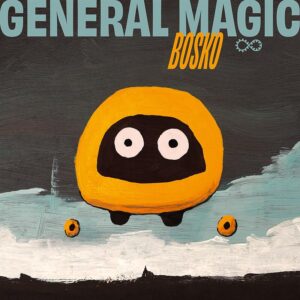
Now, we have General Magic’s second official full length comeback recording, Bosko. The new album is initially notable prior to the needle hitting the wax or the cursor identifying a track due to the artwork. Made by long term collaborator Tina Frank, this is Frank’s first analogue artwork, with a painting of a happy/nervous machine thing hovering in a landscape of no discernible identity. It’s quasi science fiction hovering amongst the potential for fun. Suited to the music? Natürlich.
Bosko sees Bauer and Pieper update and reframe their original investigations with a fresh supply of head scratching, heart racing tunes that hit the inexplicable with a wild mesh of drums, pianos, synthetic voices and all manner of immaterial sonic play. Startling sonics shock the ears on Club Duchamp which sounds like a conversation between synthetic adult ants in an environment still in development. Elfer features vocals supplied by a female-ish voice who, whilst grappling melody, has trouble executing a firm identity. Noorenhalt catapults along a mainframe of syncopation so unwieldy it feels like the voice, which is utterly alien, provides the only comfort. Seite 5 inhabits a fuzzy zone where a synthetic Horn of Jericho type ambience competes with rhythms never quite sure of who they are. Rise of the Ombré raises the spectral dread. Is this Science Fact? Absolutely nothing within Bosko is predictable.
The amount of change in the miasma of existence and the things we touch in order to make things has shifted so exponentially we are at the point where minds are starting to glaze over. All of this makes the return of the always original, always surprising, always fresh and exciting General Magic totally in tune with the artificial intelligent apocalyptic age we currently inhabit. The tools may have changed but the wonderfully warped gaze of Bosko offers a fresh new vision of perplexing funk and robotic punk.
26,00€
In stock

LP
NURSE WITH WOUND
“The Grave And Beautiful Name Of Sadness”
Featuring two archive mixes of the original 1984 recording. A 2007 epic variation recorded for possible inclusion in Peter Strickland's film 'Katalin Varga' and a unique 'psychedelic' version from 2012 which until now has never been heard.
28,50€
In stock
LP
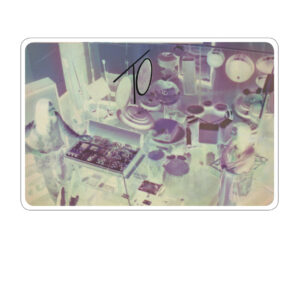
TO (Will JACKSON & Stefan “Z’EV” WEISSER)
“Manifestations Of Spirit From Within Electronic Electro-Acoustic & Acoustic Space”
Erratum Musical, Studio Forum and C.A.R.E. are very pleased to announce the release of this groundbreaking historical LP from 1976 recorded in Los Angeles. First ever recordings of sounds by Serge Modular System + Z’EV + Will Jackson!
TO was founded in 1976 in San Francisco by Will E. Jackson (1945-2019) & Stefan “Z’EV” Weisser (1951-2017), occasionally performing under the code name “Center for Inter-Species communication”.
The real missing link between works by California’s modular synthesizers pioneers, the industrial music explosion of the mid 70s and the early new age interspecies communication protocols.
This is a mesmerizing trip record at its finest, which original masters on magnetic tapes have just been rediscovered.
A collaborative effort, the heart of the TO project was heavily influenced by Will Jackson’s participation in the inaugural 1975 Greenpeace V campaign to save the whales. One of the objectives of the Greenpeace V expedition was to demonstrate the ability of cetaceans and humans to communicate through sound – an idea developed by Paul Spong and later perfected by Will’s friend, John C. Lilly with his “Project Janus”.
During the Greenpeace expedition against the barbarity of whaling off the coasts of Alaska, Will Jackson used his Serge#1 modular synthesizer (built under the supervision of Serge Tcherepnin at CalArts in 1973, and now in France at C.A.R.E. since 2023) and broadcast the electronic sounds on underwater speakers, recording these broadcasts as well as the reciprocating songs of the whales that came to investigate.
A symbolic melding of music and mission, TO has only ever released one vinyl during its existence, of which there are only a few dozen copies in the wild. That record has been restored with the original masters, whose magnetic tapes have just been rediscovered.
These miraculous encounters constitute the basic sound material of TO: communication by invocation.
TO ceased its activities during the summer of 1977.
Will Jackson joined Ether Ship, a pioneering group of “sonic xenolinguistics”, created in 1972 by Willard van de Bogart and Lemon DeGeorge. During this time, Will Jackson participated in several strange sound experiments including the legendary “Extraterrestrial Intelligence Ether Ship Transmission for Star Net Pilot Program”, which was recorded in the presence of Jacques Vallée in 1978.
Stefan Weisser then began his solitary adventure and soon after gave his first solo performance, “Sound of Wind and Limb”, with his “Analog Acoustic Assemblege” he devised for TO.
He created the pseudonym Z’EV and was instrumental in the conception of “industrial music” in the underground scene.
Will Jackson and Stefan Weisser would reunite later that same year, one last time, for Ether Ship’s performance of “A Cosmic Journey”, filmed with Gary Schroeder’s cutting-edge video synthesizer.
23,00€
Out of stock

LP
DEEAT PALACE
“Pièces pour Serge”
In 2021, Wilfried Wendling offered a 3-day residency to Marion Camy-Palou at the Muse en Circuit (Alfortville / Paris), a working time which then has evolved into a 2-year cruise dedicated to the Serge Modular System (offered by Jean Claude Eloy at the Muse). This search finally resulted in a concert in April 2023, and this record - Deeat Palace's debut album.
'Pièces pour Serge' offers two intense pieces, cut in 45 rpm for vinyl to allow a deeper sonic dive into the heart of the bowels of a synthesizer that has become legendary and which celebrated its 50th anniversary in 2023.
note : a series of albums produced with the 'Serge Modular Music System#1' (first Serge synth modules built at Cal Arts in 1973 by Will Jackson under the direction of Serge Tcherepnin and now restored and in use in Annecy/Fr at C.A.R.E.) will be published later.
Pièces pour Serge | composed by Marion Camy-Palou, 2022-2023 | mixed by Camille Jamain | mastered and cut by Frederic Alstadt at Mont Analogue | recorded at la Muse En Circuit, Alfortville | engineered by Camille Lezer | photography by Vincent Ducard | released by Erratum Musical - EM035, Paris 2024 | 300 copies.
23,00€
Out of stock

LP
Charmaine LEE
“KNVF”
Following the release of her 2018 solo tape, Ggggg (Anticausal Systems), vocalist Charmaine Lee returns with her debut LP, KNVF, for Erratum Musical (Paris, France). In just two years, the album marks a considerable evolution from the austere concentration of Ggggg towards expansive sonic worlds. Inspired by the arcs of popular music, Charmaine freely and fearlessly navigates a wide range of aesthetics, digging beneath each surface to disclose a highly personal sense of musicality. Microphones of varying fidelities, contact mics placed on the throat, and amplified hair combs are used to simulate polyphony and a dialogue between the inner and outer body. With Charmaine’s unique vocal articulations atop a bed of feedback and extreme frequencies, form follows expression in an ever-evolving context built on the traditions of noise, vocal, and improvised music. KNVF is a powerful statement in modern vocal music and a thrilling new development in Charmaine‘s artistry that will reward those who listen for the journey.
Charmaine Lee (b. 1991) is a New York-based vocalist from Sydney, Australia. Her music is predominantly improvised, favoring a uniquely personal approach to vocal expression concerned with spontaneity, playfulness, and risk-taking. Beyond extended vocal technique, Charmaine uses amplification, feedback, and microphones to augment and distort the voice. She has performed with leading improvisers Nate Wooley, id m theft able, C. Spencer Yeh, and Ikue Mori, and maintains ongoing collaborations with Conrad Tao, Victoria Shen, Zach Rowden, and Eric Wubbels. Charmaine has performed at ISSUE Project Room, the Kitchen, Roulette, The Poetry Project, and MoMA PS1, and participated in festivals including Resonant Bodies, Huddersfield Contemporary, and Ende Tymes. Her work has been featured in group exhibitions including The Moon Represents My Heart: Music, Memory and Belonging at the Museum of Chinese in America (2019). As a composer, Charmaine has been commissioned by the Wet Ink Ensemble (2018) and Spektral Quartet (2018). In 2019, she was an Artist-in-Residence at ISSUE Project Room and is currently a 2021 Van Lier Fellow at Roulette. Charmaine is a member of the Editorial Board of Sound American.
23,00€
In stock

LP
GOLEM MÉCANIQUE
“Siamo tutti in pericolo”
"Siamo tutti in pericolo" is the third album by Golem Mecanique, the nom de plume of French multi-instrumentalist composer Karen Jebane, to be released on Ideologic Organ. Jebane works within the fringes of contemporary folk (aka La Novea community), microtonal and early modern spheres, as well as touching upon the ashes and fibres of back metal and the DNA of gothic music, literature, sorcery and most of all - poetry. Jebane's work with the "drone box" (a mechanised hurdy-gurdy) and zither as a smooth and rippling surface for her singing is immediately evident in a nearly ceremonial way, inviting into a space of clear-dark creativity-beauty. On "Siamo tutti in pericolo", Jebane works with her forms of composition in new ways, poetic and spare execution of her techniques, through her homage/hymns/meditations on the highly irregular circumstances and questions/mysteries of the passing of the soul of master artist Pier Paolo Pasolini. A perfect pairing with collage artist Julien Langendorff's cover art, "Siamo tutti in pericolo", presents a pure presentation of Jebane's "Golem Mecanique". –Stephen O'Malley, Brion, France, 1 Sept 2024
Voice, electric/processed hurdy-gurdy and zither by Golem Mecanique
Composed, performed and mixed by Golem Mecanique between November 2023 and May 2024
Mastered by Stephan Mathieu at Schwebung, July 2024
Cut by Andreas Kauffelt at Schnittstelle, Berlin, September 2024
27,50€
Out of stock

LP
Nina GARCIA
“Bye Bye Bird”
Nina Garcia has been actively moving the art of noise guitar into surprising and intriguing new spaces. She has been at it for some time now, a bit of a secret weapon all the while hiding in plain sight. As I listen to her music and ruminate upon seeing her perform it brings me to a realization which I have with very few musicians: the ego inherent in making art can be transcended through a purity of direct action. At least that’s the feeling I have when experiencing Nina’s music which comes across as serious and radical and wholly engaged in the moment of its creative impulse. With Bye Bye Bird she delivers her most exalted and sublime collection of recordings for all adventurous hearts to hear. A fantastic album.
Thurston Moore, London 2024
:::::
After a decade of performing concerts under the Mariachi guise, Nina Garcia has finally unveiled her unique approach in Bye Bye Bird, her first album under her name. Bye Bye Bird is her second solo album, to be released by Ideologic Organ in February 2025.
With no pretence or demonstration, the album is a captivating blend of chiaroscuro, melodies, and raw emotion.
Nina Garcia's album takes on an almost documentary-like quality by adopting a simple approach to gesture and sound recording. It offers a candid portrayal of a moment, a lack, a state, and a breathtaking energy. With ostinato as her only credo, Nina Garcia's music is an experiment in freedom, where the peaks answer the abysses, and the power of movement and the emotion of sound serves as her compass.
From very short (01:28) to never very long (07:34), the eight tracks that make up this set explore a moment, a space, a mechanism, an intention or a way of doing things. As a common feature of almost all these pieces (all but one, the last), Nina Garcia explores a new technique. She adds to her instrumentation, reduced to the essentials (a guitar, a pedal and an amp), an electromagnetic microphone which, when held in hand, makes it possible to listen in on the exact zones where the vibration of the string creates a sound amid vast spaces of silence. The guitar is unplugged, and the body/instrument relationship changes in dimension.
In this series of variations, you can get caught up in masses of noise seen from very, very close up, evocations of melodies in the making, feedback on ridgelines, pulsations that hold their own, modulations weakened by exhaustion and harmonic bursts that hint at better days to come.
Neither hopelessly chthonic nor beatifically ethereal, Bye Bye Bird is a sum of musical pieces that make a whole and give voice to echoes of what has been, the presence of what is and the hope of what will be, a record movement in the form of flight and salvation.
Since 2015, Nina Garcia has been researching and creating around the electric guitar, halfway between improvised music and noise.
On numerous stages in Europe and North America, she has played occasionally with Stephen O'Malley, Sophie Agnel, Fred Frith, Antoine Chessex, Louis Schild or with Luke Stewart and Leila Bordreuil's Feedback Ensemble, in addition to more regular formations in which she participates, such as the ensemble Le Un, mamiedaragon, Autoreverse (with Arnaud Rivière), duets with trombonist Maria Bertel and percussionist Camille Émaille, and the installation piece De Haut En Bas, De Bas En Haut Et Latéralement (with Christophe Cardoen, Jennifer Caubet, Etienne Foyer, Anna Gaïotti and Romain Simon).
–Arnaud Riviere, Paris November 2024
27,50€
In stock

LP
Judith HAMANN
“Aunes”
Aunes is a rare solo album from peripatetic Australian cellist-composer-performer Judith Hamann, presenting six pieces recorded across several years and countries. Developing the collage techniques and expanded sound palettes heard on their previous releases, Aunes makes use of synthesizers, organ, voice and location recordings alongside the dazzlingly pure, enveloping tones of Hamann’s cello. The record takes its name from an old French unit of measurement for fabric, varying around the country and from material to material. Unlike the platinum metre bar deposited in the National Archives after the Revolution as an immovable standard, an aune of silk differed from an aune of linen: the measure could not be separated from the material. In much the same way, in these six pieces—which Hamann thinks of as ‘songs’—formal aspects such as tuning, pacing, melodic shape and timbre are not abstractions applied universally to musical material but are inextricable from the instruments and sounds used, even from the places and communities in which the music was made.
Audible location sound embeds the music in its place of making, as in the delicate duet for church organ and wordless singing ‘schloss, night’, where shuffles and cluttering in the reverberant church space form a phantom accompaniment, gradually displaced by a uneasy shimmer of wavering tones from half-opened organ stops. ‘Casa Di Riposo, Gesu’ Redentore’ documents a walk up a hill to an outdoor mass in Chiusure, layering voices near and far with footsteps, insects and other incidental sounds. Like in the work of Moniek Darge or Luc Ferrari, location recordings are folded on themselves in space and time, their documentary function dislocated to dreamlike effect. On other pieces, it is the emphatic presence of the performing body that grounds the music, whether in the intimate fragility of Hamann’s softly sung and hummed vocal tones or the clothing that rustles across a microphone on the opening ‘by the line’. The idea of a music inextricable from its material conditions is perhaps most strikingly communicated on the album’s briefest piece ‘bruststärke (lung song)’, composed from layered whistling recorded while Hamann suffered through an asthma flare up, the results halfway between field recordings of an imaginary aviary and the audiopoems of Henri Chopin.
More than any of Hamann’s previous solo works, a strong melodic sensibility runs through Aunes, even when, like on ‘seventeen fabrics of measure’, the music hangs together by the merest thread. At other points, Hamann’s love of pop music is more obvious: the rich synth harmonies of ‘by the line’ could almost be a melting fragment of a backing track from Hounds of Love. The expansive closing piece ‘neither from nor toward’ exemplifies the highly personal musical language that Hamann has developed in recent years through constant solo performance (and a rigorous discipline of instrumental practice), pairing two overdubbed voices with the boundless depth and harmonic richness of just-intoned cello notes, calling up Ockegham or Linda Caitlin Smith in its elegiac slow motion arcs. Hamann’s most personal work yet, Aunes arrives in a striking sleeve reproducing a section of a painting made from sewn pieces of dyed wool by Wilder Alison, a friend and fellow resident at Akademie Schloss Solitude, one of the temporary homes where much of this music was recorded.
26,00€
In stock

LP
Carlos GIFFONI
“Dream Walker”
About 20 years ago, Carlos Giffoni quickly made a name for himself both as a noise guitarist and a laptop noisician upon arriving in New York (via Florida and Venezuela). His expertly curated annual No Fun Festival, as well as his No Fun label, further solidified him as a key figure in the international noise scene. The festival’s success proved the formula for experimental and improvised music fests could work with the noise underground as well, but it also capitalized on the faster rate of connections being made between geographically disparate artists as a result of the (still relatively nascent) internet. Back then Carlos would play his laptop like a pinball machine, in contrast to the static stage presence of most laptop performers, and his solo music, like many others’ at that time, expressed a less dark and dour vision of the implications of harsh noise. By the close of the 2000s, he had stopped doing the festival, switched gears musically to playing the lighter No Fun Acid sets, and moved to LA.
Now he has re-emerged in a big way with Dream Walker, his first full-length since 2018’s Vain (and only his second since 2010). Inspired by the masterful performances and diffusions he heard at the February 2023 GRM electronic music festival in Paris, particularly sets by old friends Lasse Marhaug, Jim O’Rourke, and Eiko Ishibashi, he began conceptualizing new music of his own in response, turning to synthesizers and other hardware to produce a work more firmly in the tradition of European electronic music than anything else he’s done. Intended as a late night listen that evokes the edge of consciousness, with Carlos getting as close as possible to a trance state during the actual recording and mixing, each of the eleven tracks transition into one another rather than being standalone discrete pieces, forming two side-long suites that proceed like stages of a dream.
Unabashedly tonal and repetitive, the glistening opener “Now Dream,” the droning “Sleep Walker,” and the closing triptych of “Lost in Descanso,” “Sunrise,” and “The Hidden Path” occupy a power electronics-ambient nexus that feels spiritually close to the Mego label. Elsewhere, “Ticking Clock” is reminiscent of Stereolab’s non-easy listening vintage electronic side, while the two-part arpeggiated “Euphoria” recalls early Oneohtrix Point Never (which Carlos released on No Fun). The contrast between “One Breath”’s crackling opening and its remarkably fluid and soaring sustained synthesized chords is a distillation of the album’s lingering tension between electronics’ ability to project mechanical rupture as well as the organic and the infinite —or “walking between dreams,” as Carlos himself puts it.
Produced by Lasse Marhaug (who also mastered Carlos’ first solo album, Welcome Home, back in 2005), released by Stephen O’Malley (who I remember DJing at the No Fun fest), with cover art and photos by personal friends, Carlos considers the album a family affair. But Dream Walker most of all heralds a maturation of the artist, and stands as a record that exists out of pure desire, rather than obligation or force of habit; a statement of reconnecting with music not by merely revisiting it, but by building on what’s come before, both in his own work and in the music he loves.
–Alan Licht, New York, December 2023
26,00€
In stock

LP
Lukas De CLERCK
“The Telescopic Aulos of Atlas”
Lukas de Clerck brings the telescopic aulos, which his new interpretation of long-form expression coaxed forth on this tremendous recording.
Lukas de Clerck explores a niche of archaeological research in music; the aulos is a historical Greek instrument that Lukas analyzed and reinterpreted by a luthier in modern times—navigating this impression as an artwork or living sculptural object, as there is an absence of historical partitions or written information about how to recreate technique on the instrument. Lukas de Clerck has interpreted information from the rare archaeological resources and visual art of the classical period to recreate both playing technique and possible sound timbres with the instrument. With his contemporary approach to drone, post-minimalist music, and contemporary folk, we find a deeply satisfying and compelling, even playful set of songs, timbral exercises and compositions.
"The morphology of the aulos is defined by its reeds. The tubular memory inside the plant's fibre will ensure it closes and opens naturally, like the mouth that blows breath inside. The reeds are the core, the sound source—the naked instrument. They behave like two oscillators, bending high-pitched notes into beatings. The pipes are a context, a channel for the sound. They create a narrative."
An essential document of new music meets contemporary archaemusicological research via Stephen O'Malley of SUNN O)))'s label Ideologic Organ.
26,00€
In stock

LP
Timothy ARCHAMBAULT
“Onimikìg”
Onimikìg [Algonquin]:
(n. an.)- thunder
Timothy Archambault’s unaccompanied flute pieces for this album have been inspired by Indigenous brontomancy (divination by thunder).
Each piece highlights a different extended flute technique metaphorically related to types of thunder sounds: claps, peals, rolls, rumbles, inversions, and CG (cloud-to-ground).
The Indigenous flute used in this recording is made of cedar respective to the traditional woods used by the Kichesipirini and other tribes who live along the Ottawa & Saint Lawrence Rivers. To the Algonquin the flute (Pibigwan) is the wind maker or essence of the wind. Unlike other tribal nations whom the majority used the flute as a courting instrument, the Algonquin generally utilized the flute for more contemplative singular usage to mimic the sounds of nature or as a signaling device during times of conflict. When love songs were required, they were usually more plaintive in character expressing sadness, loneliness, or concerning the departure of a lover.
The album intro begins with the shaking of a necklace of otter penis bone, fish spine, bear claw, elk teeth and deer hide, gifted from Algonquin Elder Ajawajawesi. It is meant to focus the listener’s attention before the flute pieces begin. The warble or multi-phonic oscillation prevalent in all the pieces traditionally represented the “throat rattling” vocalization of the tonic note, sometimes known as the horizon of which the melody floats from. Due to the repetition of multi-phonic oscillation the performer will breathe erratically creating an altered state correlating with similar traditional ceremonial practices.
An important document of new music meets contemporary musicological research via Stephen O’Malley of SUNN O)))’s Ideologic Organ.
Timothy Archambault is an Indigenous flute player, composer, and architect. His repertoire includes traditional Canadian Algonquin flute songs (recorded for the Smithsonian National Museum of the American Indian Archives in 2007), early 20th-century Indigenous flute music, and contemporary music by Indigenous composers. He has recorded extensively and received commissions from the Metropolitan Museum of Art, Agnes Etherington Art Centre, National Gallery of Art East Building, and the Winterville Mounds Association. He is a Hereditary Senator of the Kichesipirini Algonquin First Nation, a member of the Métis Nation of Quebec, First Nations Composer Initiative, and co-founder of thecreativedestruction
26,00€
In stock

LP
Kevin DRUMM
“OG23”
Ever unpredictable, Drumm this time takes the fellow time-traveller through what sounds like an electronic field recording, a journey through an electronic soundscape of luminescent textures that invites immersive listening.
30,00€
Out of stock

2 LP
Tashi WADA
“What Is Not Strange?”
Composer and performer based in Los Angeles. Son of artist Yoshi Wada. Runs the label Saltern.
What Is Not Strange? is the first full-length solo album by Los Angeles-based composer Tashi Wada, comprising his most far-reaching and impassioned music to date. Written and recorded over a period that encompassed the death of his father and the birth of his daughter, the album sees Wada reflecting inward to explore broad narratives—being alive, mortality, finding one’s place in the world—through new modes of ecstatic, song-based expression. While the denser forms, stark contrasts, and overt surreality may carry a different weight than Wada’s earlier work, which elicited perceptual effects with minimal means, the heart of What Is Not Strange? is still in experimentation and unforeseen outcomes.
All music written by Tashi Wada
The melody from “Calling” is based on a traditional Swedish herding call, or kulning, as sung by Elin Lisslass.
Ezra Buchla – viola, electric viola
Corey Fogel – drums, percussion
Devin Hoff – double bass
Julia Holter – vocals, additional keyboard
Tashi Wada – keyboards, sirens
36,00€
In stock

LP
Catherine Christer HENNIX
“Further Selections from the Electric Harpsichord”
Rediscovered and compiled for release shortly before her death in November 2023, Further Selections from the Electric Harpsichord presents a never-before-heard recording of composer and artist Catherine Christer Hennix’s early magnum opus. Originally debuted in 1976 at the festival Brouwer’s Lattice at Stockholm’s Moderna Museet, The Electric Harpsichord has steadily mystified fans and students of Western minimalist music for its implacable, transformative qualities, and the long-held, relative obscurity of its creator. Like the work of Hennix’s close friend La Monte Young, the piece is set in just intonation and focuses on the transcendental potentials of precise tuning, inspired by their studies with Pandit Pran Nath. Composed of bursts of oscillating, synthetic tones using a carefully retuned synthesizer and a tape-based system for feedback delay, the sounds swirl, twinkle, and appear to bend time, space, and perception. Additional, sustained chords on the sheng, most likely played by her Deontic Miracle bandmate Hans Isgren, are present at the opening of the piece and reemerge towards the end of the recording.
The release of Further Selections constitutes the most comprehensive original recording of this foundational work to date. Originally billed as The Well-Tuned Organ during its debut in Sweden, The Electric Harpsichord has developed a legendary reputation, predicated on a twenty-six minute fragment salvaged and circulated by Hennix’s friend Henry Flynt. Promoting its importance on multiple occasions, Flynt aired the work on WBAI radio, organized a pair of tape concerts at New York alternative arts spaces in 1970s, and later penned a 1998 essay which served as the liner notes to its eventual CD release in 2010. For him, this work not only represented a sterling milestone in minimal sonic aesthetics, but also spawned a new genre that he dubbed “hallucinogenic/ecstatic sound environments (HESE),” which in turn inspired his own drone-like compositions. Gradually, interest in the recording led to a spate of archival projects, public performances, and new compositions by Hennix in the 2010s, in turn drawing into focus her multifarious practice, which includes serious contributions towards mathematics, poetry, sculpture, Noh drama, philosophy, and light art.
28,00€
In stock

LP
Charlemagne PALESTINE
“DINGGGDONGGGDINGGGzzzzzzz ferrrr SSSOFTTT DIVINI TIESSSSS!!!!!!!!!”
DINGGGDONGGGDINGGGzzzzzzz!!!!!!! In the newest record by the iconoclastic Brooklyn-born composer Charlemagne Palestine (b. 1947), find two mesmerizing works for carillon, the keyboard-controlled bell tower derived in the 16th century. On side A, a new piece recorded at the artist’s studio in Belgium—a high-ceiling, stuffed-animal-packed paradise he calls Charleworld—among friends and “divinities,” his name for the thousands of plush toys he’s amassed since the ’60s. On the flip side, Blank Forms Editions’ very first and long-out-of-print release appears on vinyl for the first time: a cathartic street recording of the maximalist composer’s 2018 musical eulogy for his late friend Tony Conrad, performed on the bells of St. Thomas Episcopal Church, where the two first met. Two mesmerizing “klanggdedangggebannggg” sessions in the Quasimodo of 53rd Street’s inimitable, trance-induced style.
Perhaps more than any of his contemporaries in the bustling, cross-disciplinary downtown New York arts scene of the ’60s and ’70s, Charlemagne Palestine (b. 1947) has embodied the notion of the artist as playful polymath, testing and transcending nearly every creative form imaginable in his more than six-decade career. Originally trained in Jewish sacred singing to be a cantor, he began his artistic life as a musician, studying piano and accordion, accompanying figures like Tiny Tim and Allen Ginsberg on percussion, using early synthesizers as an assistant to Alwin Nikolais, and eventually landing a long-running gig as the carillonneur at Midtown’s St. Thomas Episcopal. This libertine spirit of experimentation soon led to adventures in other aesthetic arenas: making kinetic light sculptures with Len Lye, devising choreographed performances with Simone Forti, and producing a series of visceral videotapes with the Castelli-Sonnabend collection. In the ’70s, he was particularly prominent on the burgeoning loft movement, becoming well-known for his sparse, intense, and exacting long-form piano concerts that seemed to bend the very nature of time and space. Beginning in the ’80s, he spent decades in self-imposed exile from the new music scene, living variously in Europe and Hawai'i and privately honing his hermetic sonic and visual practice. This was followed by a period of triumphant resurgence beginning in the mid-’90s, since which he has performed and exhibited globally.
28,00€
In stock
LP
Jean Noël REBILLY & Andrew CHALK
“L’état Intermédiaire”
2018
10 track album recorded in Paris and at Impression Lointaine & Kulta Saha studios 2014-17
“Dreaming when Dawn's Left Hand was in the sky,
I heard a voice within the tavern cry,
Awake, my little ones, and fill the cup
Before Life's Liquor in its cup be dry
21,00€
In stock

LP
Steve RODEN
“Forms of Paper”
Aurora Central Records (Mexico) in conjunction with LINE (US) announce the first-time editions on vinyl and cassette of the important 2001 lowercase work 'Forms of Paper' by Steve Roden. This new version has been lovingly remastered by Taylor Deupree in 2024 from the original recording and features Steve Roden’s artwork on the cover/packaging.
This project, initiated by Aurora Central Records, was supervised under the guidance of his estate and the Steve Roden Studio.
A brief history of the work: ‘Forms of Paper' was originally created by Steve Roden for the art exhibition "Six-Degrees: Art in the Libraries" organized by Side Street Projects in 2001. The exhibition took place in the Hollywood branch of the Los Angeles Public Library designed by Frank Gehry. The work was created with the quiet space of the library as a major consideration, amplified at a very low volume. All the sounds in the composition are made by book pages being handled and turned. ‘Forms of Paper' was originally released by LINE on CD in 2001 and reissued digitally in 2011.
38,00€
In stock

LP
Raoul De SMET
“Raoul De SMET”
First LP in the ‘Signature Series’, a small new series in the Metaphon catalog, documenting previously unreleased archive works of less known composers. Metaphon presents their ‘signature’ in the most personal and elementary way.
Raoul De Smet (1936), mainly known for his numerous instrumental and chamber music works, started composing in the early 1960’s. Between 1974 and 1989 he also recorded several electro-acoustic compositions at the IPEM in Ghent, one of the more approachable crossroads for experimental music creation at the time.
His work carries different moods and contrasts, a sort of expressive eclecticism where straight forward evolution often prevails over far-fetched intemperance.
However, his work is far from obvious. The four distinctive tracks on this album portray a fresh and unpretentious enthusiasm of a composer discovering new electronic tools.
24,50€
In stock

4 LP
Fernand VANDENBOGAERDE
“Les Années 1967-1984” (2nd edition)
>>> 4 LP set in 1cm slipcase sleeve + 16 page booklet
Edition of 250 copies, with download code.
Metaphon is thrilled to present this collection of 14 phenomenal electronic and electro-acoustic works by French composer Fernand Vandenbogaerde, realized between 1967 and 1984.
After his science studies Fernand Vandenbogaerde (1946) studied at the Conservatoire de Roubaix and did various classes and courses with a.o. Jean-Etienne Marie, Olivier Messiaen, Pierre Schaeffer, György Ligeti, Karlheinz Stockhausen and Bruno Maderna.
He wrote analytical essays on mathematic music, in particular the work of Iannis Xenakis.
Vandenbogaerde taught electro-acoustic music at various institutions and was director at the National School of Music and Dance in Blanc-Mesnil, near Paris.
As a composer he wrote works for orchestra, instrumental and chamber ensembles, sometimes in hybrid form including tape and electro-acoustic configurations. He also recorded numerous tape compositions in Bourges, Paris, Ghent and at his home studio. His works have been presented worldwide on various leading festivals and events.
The compositions included in this edition are primarily tape works, meticulously recorded and produced, radical and most of all timbre oriented which makes his compositions focus mainly on sound while other parameters hardly change. In Vandenbogaerde’s own words: “What determines my pieces, at least all the ones in this collection, is that it’s the material that dictates me, that will predetermine the form”. This particular approach distinguishes him quite a bit from many of his contemporaries within the field of electro-acoustic music.
Another interesting aspect in Vandenbogaerde’s work is the integration of micro tonal scales (conceived by Mexican composer Julian Carrillo), on the compositions 'Modifications III' and the intriguing trilogy 'Drei Nachdenken über Hymnen an die Nacht'.
All tracks are previously unreleased except the proto power electronics piece 'Anschlag' which was self-released in 1971 on his own Point Radiant label, as a compilation LP which also included a track by Tristan Murail.
60,00€
Out of stock

4 LP
Robert FESLER
“μP RPF78” (2nd edition)
>>> 4 LP set in 1cm slipcase sleeve + 12 page booklet with photos and text by Robert Fesler and Baudouin Oosterlynck.
An anthology of the intensely arresting work of Robert Fesler (1936-2023), revealing many of his compositions (1975 -1987) created with his self-built synthesizers, with as pinnacle the μP RPF78.
Except one, all tracks are previously unreleased.
With profound simplicity and devotion, Fesler paints a hermetic inner world with strong emotions of confronting solitude, sensual alienation and traumatic angst. His music was as much a therapeutic treatment as an artistic expression. Fesler quotes, "Building my synthesizers and working with them enabled me to sublimate my anxieties".
Most tracks were played and recorded real time, often with two synthesizers (the Synthese 756 and the μP RPF78), capturing the heat of the moment in one take, without multitracking. The austere and reductionist approach reinforces the overall spirit of his work, resulting in an engaging, mysterious solitary journey.
It’s quite incredible how one person can put so much technical cerebral content in the development of a machine and use it in such an emotional way.
The music of Robert Fesler might be considered as very Belgian.
To situate it within a close entourage, one can say it has:
the endurance of Baudouin Oosterlynck
the purity of Dominique Lawalree
the mysticism of Arsène Souffriau
60,00€
In stock

LP
Konrad SPRENGER
“Set”
Black Truffle presents a rare solo release from Konrad Sprenger, alias of elusive Berlin composer-producer-instrument builder Jörg Hiller. A prolific collaborator, Sprenger has worked extensively with icons of American minimalism such as Ellen Fullman (with whom her recorded the gloriously eccentric song album Ort) and Arnold Dreyblatt (as a core member of the Orchestra of Excited Strings since 2009), as well as releasing their music on his impeccably curated label, Choose. As an instrument builder and installation artist, he has overseen the creation of a computer-controlled multi-channel electric guitar and, with Phillip Sollmann, a modular pipe organ system designed to be reconfigured from space to space. Set brings together the various strands of Sprenger's work into a wildly infectious, playful epic, performed by the composer and the mysterious Ensemble Risonanze Moderne. On the LP's second side, listeners are also treated to a guest appearance from longtime collaborator Oren Ambarchi, on whose recent solo releases Simian Angel and Shebang Sprenger has made key production contributions. Ambarchi's signature stuttering, swirling harmonics weave through a sparkling assemblage of electric guitars, acoustic instruments, percussion and electronics -- though, given the deft use that much of Sprenger's recent production work makes of midi-controlled sampled instrumentation, it's anyone's guess where the acoustic ends and the digital begins here. As soon as the needle drops on the first side, listeners are inside a musical world that Set will inhabit for its 33 minutes: sparkling guitar harmonics and palm-muted notes, tuned percussion, crisp electronic drum hits, flashes of horns, and untraceable bursts of synthetic sound are arranged into a skittering polyrhythmic framework calling up the detail-rich percussive constructions of contemporary techno filtered through the pointillism of the post-serialist European avant-garde. Behind this shifting mist of particulate sound, winds and strings sound out held chords, reminiscent of Arthur Russell's Tower of Meaning in their epic yet seemingly aimless drift. The relationship between elements is mysterious, appearing both carefully considered and almost random. Though never straying too far from where it begins, as the piece moves along, it spotlights increasingly bizarre instrument choices as well as momentary liftoffs into motorik propulsion. Set is a fascinating, mercurial thing: at once propulsive and fragmented, essentially static in form yet ever-changing in detail, unabashedly egghead in its construction yet sure to get the feet tapping.
28,00€
In stock
LP
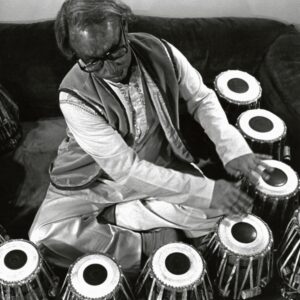
Kamalesh MAITRA
“Raag Kirwani on Tabla Tarang”
Carrying on a string of stunning archival releases from major figures of Indian classical tradition (including releases from members of the Dagar family and Amelia Cuni), Black Truffle presents an unheard recording from tabla master Kamalesh Maitra (1924-2005). For over fifty years, Maitra devoted himself to the rare tabla tarang, a set of between ten and sixteen hand drums tuned to the notes of the raga to be performed. While the tabla tarang has its origins in the late 19th century, Maitra was the first to recognize its potential as a solo concert instrument, using the set of tuned drums to perform full-length raags. Seated behind a semi-circular array of drums, Maitra produced stunning waves of melodic improvisation enlivened with the rhythmic invention of a master percussionist. Across his career, Maitra performed in ensembles led by Ravi Shankar, collaborated with George Harrison, and led his own East-West fusion group, the Ragatala Ensemble. However, it is in the solo setting that his remarkable artistry and the otherworldly timbral qualities of the tabla tarang are most strikingly on display. Recorded during the same 1985 Berlin sessions that produced Maitra's self-released solo LP Tabla Tarang: Ragas on Drums, on Raag Kirwani on Tabla Tarang listeners are treated to Maitra stretching out for over forty minutes on the late-night Raag Kirwani, accompanied by Laura Patchen on tabla and Mila Morgenstern and Marina Kitsos on tanpura. The performance begins with the traditional free-floating exposition section, where Maitra's spacious melodic improvisation at times almost resembles a plucked string instrument (like the sarod, which Maitra also played). For the listener unaccustomed to the tabla tarang, the sound of these microtonally inflected melodic patterns played on drums has a magic quality. As Maitra begins to imply the rhythmic cycles more strongly, Patchen joins on tabla, beginning half an hour of rhythmic-melodic exploration, where virtuosity sits side by side with delicacy and meditative attention. Accompanied by beautiful archival images and extensive liner notes from Laura Patchen, for many listeners Raag Kirwani on Tabla Tarang will be the perfect introduction to the magical world of Kamalesh Maitra, released to coincide with the hundredth anniversary of the master musician's birth.
28,00€
Out of stock
3 LP
Limpe FUCHS – Mark FELL
“Dessogia / Queetch / Fauch”
The 2015 edition of Winnipeg's send + receive festival, focussed on rhythm, turned out to be a generative meeting of minds. There, Mark Fell encountered the music of Will Guthrie, a meeting that was eventually to result in the frenetic acoustic drumkit and digital synthesis pairing heard on Infoldings and Diffractions (2020). At the same festival, Limpe Fuchs first heard and appreciated the music of Mark Fell, planting the seed of a collaboration that came to fruition when Fell (along with his son Rian Treanor) visited Fuchs at her home in Peterskirchen, Germany in September 2022. Black Truffle now presents the release of the results of this extensive session in the audacious form of a triple LP, housing over two hours of music across its six sides. The collaboration might appear unlikely: what common ground could exist between Fuchs, classically trained pianist, legend of improvised music, instrument builder and sound sculptor active since the 1960s, whose group Anima Sound connected the dots between free jazz, krautrock and ritual, and Fell, proponent of radical computer music, known for his bracingly austere productions that twist remnants of club music into algorithmic stutters. For all their seeming disparity in technology, approach and background, the music on Dessogia/Queetch/Fauch makes it immediately evident the pair share a great deal in their essentially percussive approach and ability to, in Fuch's phrase, "establish silence." Recording at her home studio, Fuchs had the use of her entire array of instruments, found, invented, and traditional, and treats the listener to some that don't often make their way to concerts, including extensive passages performed (with Gundis Stalleicher) on pieces of wooden parquetry. Fell also stretched himself, with his contributions ranging from characteristically fizzing pitched percussive pops to swarms of sliding tones and abstract digital noise. Showing both remarkable restraint and improvisational freedom, much of the music consists of duets between a single percussion instrument and a distinctive mode of digital sound, often lingering in one timbral-rhythmic space for minutes at a time. Improvisational forward momentum coexists with a free-floating, wandering quality. Epic in scope, immersing the listener in an entirely distinctive world of sounds, and thrillingly bold in its melding of the most ancient musical procedures with cutting edge technologies, Dessogia/Queetch/Fauch is an unexpected major statement from two of the great mavericks of contemporary music.
46,00€
In stock
LP
Crys COLE
“Making Conversation”
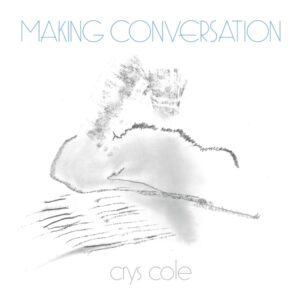
crys cole returns to Black Truffle with Making Conversation, her third solo release for the label. After the intimate song-like constructions of Other Meetings (BT 096LP), Making Conversation documents a different facet of cole's work, presenting three rigorously conceptualized commissioned pieces, each of which extend her signature approach to highly amplified small sounds into new directions. The side-long title piece is a stereo version of an eight-channel sound installation exhibited in 2023 at the Tabakalera Art Center in Donostia/San Sebastian, Spain. The piece uses a multitude of instrumental, vocal, concrete and electronic sounds to evoke the soundscapes cole encountered during nocturnal listening session in Bali, Indonesia in 2018 and 2019. In this world of night sounds, she explains, she "observed the complex interplay between amphibian, lizard, bird and insect communication, domestic animals (roosters, dogs), man-made sounds (airplanes, vehicles, conversations and evening activities) and sounds that were difficult to place." Drawing on field recordings as memory aids (but including none in the finished piece), cole's piece uncannily reproduces the spatiality and pacing of environmental sound without attempting strictly to replicate it. While at times it can be difficult to imagine the source of these sounds, at other points they are clearly instrumental or electronic in origin; in its placement and layering, though, the whole assemblage suggests the glorious, unthinking richness of a non-musical sound environment. Suggesting at once the electronic gardens of Rolf Julius and the little instrument expanses of classic AACM, the piece is a brilliant enactment of the Cage-ian drive to "imitate nature in her manner of operation." "Valid ForeverrRrrRRrrr? (pt. 1)" began as cole's contribution to an Issue Project Room commission to realize a score from Alison Knowles and Annea Lockwood's Women's Work, a 1975 collection of text and conceptual scores by women artists and composers. cole's piece begins from Beth Anderson's "Valid for Life," a complex arrangement of the letter R in various typefaces. Accompanied with extensive liner notes, photographic documentation and a download code, Making Conversation is an exciting next step in cole's work, extending her signature concerns in new sonic and conceptual directions.
28,00€
Out of stock
LP
Léo DUPLEIX
“Resonant Trees”
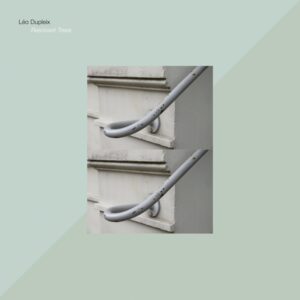
Black Truffle presents Resonant Trees, the first vinyl release from French composer-performer Léo Dupleix. An active member of the international community of younger musicians working with just intonation, Dupleix has composed works for solo instrumentalists and ensembles in Europe and Japan, as well as performing extensively on harpsichord, piano and electronics. His music is distinguished by a formal clarity and elegance of surface, gently shaping pure intervals into delicate melodic patterns and shimmering harmonic planes. Resonant Trees presents two side-long pieces for harpsichord and ensemble, both setting slowly repeating patterns played on harpsichord and guitar within an environment of sustained tones. Dupleix performs on a French double manual harpsichord and Prophet synthesizer, joined by Juliette Adam (bass clarinet), Johanna Bartz (traverso flute), Cyprien Busolini (viola), Fredrik Rasten (6- and 12-string guitars), and Mara Winter (traverso flute). The harpsichord begins "Resonant Tree I" alone, slowly sounding out a series of arpeggiated chords that emphasize the unique (and for unaccustomed listeners, sometimes unsettling) harmonic and timbral qualities of justly tuned intervals. Long tones from synthesizer, bass clarinet, viola and Baroque traverso flutes slowly creep into the spaces between the arpeggiated chords, joined after several minutes by delicate patterns of harmonics played by Rasten on acoustic guitars. On "Resonant Tree II," a similar structure and ensemble (without the flutes) are used with quite different results. Joined again by long tones from the ensemble, here the viola is particularly prominent and its interplay with the harpsichord creates fascinating acoustic effects. In both pieces, repetition gives the music a static, stable quality while, at the same time, the exact shape of the repeating patterns remains difficult to grasp. As Dupleix writes, these pieces dream of music as "space and a sound that one could grasp in one's hand." As the near-static quality of the repetitions and long tones with little incident make these two stretches of musical time feel like spaces for the listener to inhabit, the small variations on a narrow range of related material act like a three-dimensional object whose each facet is examined in turn. At once austere and seductive, Resonant Trees takes its place beside the work of contemporaries like Catherine Lamb, while also calling up the languorous melodic world of Mamoru Fujieda, the dignified melancholy of Satoshi Ashikawa's classic Still Way and the espaliered chamber atmospherics of the Obscure catalogue.
26,50€
Out of stock

LP
Olivia BLOCK
“The Mountains Pass”
Black Truffle announces The Mountains Pass, a major new work from Olivia Block. A key player in Chicago's vibrant experimental music scene since the late 1990s, Block has developed an extensive body of work grounded in a personalized, at times emotive approach to the studio-based practices of the musique concrète tradition, while also encompassing improvisation, orchestral pieces, sound installations, and a sustained engagement with the piano. On The Mountains Pass, recorded by Greg Norman at Steve Albini's Electrical Audio and meticulously edited and constructed over the course of three years, Block pushes into new terrain, introducing her singing voice and drums played by Jon Mueller into flowing assemblages that move seamlessly from ruminative organ tones and fragmented piano airs to explosions of sizzling synths and thundering percussion. Like many of Block's past works, which include, for example, a sculptural installation using the sound of oyster beds, The Mountains Pass draws inspiration from nature and the animal world. Time spent in a particular mountain range in Northern New Mexico informs this suite of pieces, whose lyrics and titles refer particularly to animal life in the area. The music sometimes suggests the great outer-limits works of '70s Italian prog figures like Franco Battiato or Arturo Stalteri in the languorous drift of synthesizer, organ, and piano tones and the meticulous yet organic flow of its construction. Block's crystalline voice and rich piano chords at times call up the restrained chamber songs of Janet Sherbourne, but fragmented and threaded through passages of woozy pitch-bent keyboards, hypnotic distant thuds, tinkling bells, and searing distorted synth tones. On "f2754," the freedom of the roaming wolf surges through dense layers of rapid keyboard attacks and long organ tones over a propulsive drum performance straight out of Animal Magnetism-era Arnold Dreyblatt. This distinctive sound world is then reencountered in a darkened mirror image in the uneasy, metallic shimmer of the closing "Ungulates," named in reference to a heard of elk roaming through the mountains. Like Battiato's Clic or Gastr del Sol's Upgrade & Afterlife, The Mountains Pass inhabits the underexplored terrain where the beauty of song coexists with a radical formal openness, illuminating the deep musicality and warmth that have been present in Block's work all along.
26,50€