
In stock
LP
Peter ZINOVIEFF & Lucy RAILTON
“RFG Inventions for Cello and Computer”
‘RFG Inventions for Cello and Computer’ is a steeply adventurous, highly structured and rewarding electro-acoustic collaboration between pioneering British/Russian inventor and engineer Peter Zinovieff and preeminent cellist Lucy Railton.
The collaboration is notably issued as Peter Zinovieff’s first album and also becomes the follow-up to Lucy Railton’s acclaimed solo debut ‘Paradise 94’ for Modern Love. It finds Zinovieff, co-founder of London’s influential EMS Synthesizer company and owner of the world’s first home computer, using custom computer software to create and orchestrate a “soft” version of Railton’s vast instrumental vocabulary, modelled from a large series of cello improvisations inspired by objects such as an Egyptian figure, pots, and old computer boards, as well as tales of pre-revolution Russia from his grandfather. Railton added solo cello to the manipulated results, before these quasi-improvisations were recombined into the work’s filigree matrix during final co-production with members of ZKM in Karlsruhe, Germany.
Initially conceived as a live project and performed at festivals including Norberg, Atonal, Rewire and FAQ between 2016-2017, the final 35 minute recording thrillingly sustains the duelling, visceral tension and unpredictability of their live shows in its brute scrapes across 17 variated sections. But, with the ability to unstitch/embroider sounds outside the structures of real-time live performance, the resulting structure is confoundingly labyrinthine, assiduously swerving the prosaic and sentimental in pursuit of explorative, emotively in/human expressions of complexity and unpredictability in a namanner that has always been key to the ideals of experimental music.
In effect, the pair speak as one through an electro acoustic prism in a symbiotic, syncretic process of transformation. Railton is here the catalyst for some of Zinovieff’s definitive work in a career spanning 60 years. Her performances provide a radical variable - a sort of spirit in the machine - which is diffused, inverted and scattered by Zinovieff using various software applications, so that Railton plays around herself like a fractal mise en abyme, cutting her warped image to ribbons in a double refraction of the “real”, the instrumental, and its virtual allegory. In this (un)common, metaphoric language and poly-temporal syntax, they incisively speak to ideas of an uncanny valley of perception between the haptic and the intangible, conducting an absorbing dialogue that transcends and bends the story of avant-garde and electronic music in beguiling, free fashion.
20,00€
In stock
2 LP
Stine JANVIN
“Fake Synthetic Music”
PAN tout a real beauty with Stine Janvin’s scintillating vocal suite ‘Fake Synthetic Music’ - a transfixing and distinguished demonstration of the voice as a hugely flexible instrument, presented in a range of minimalist yet extreme, probing scenarios providing a radical new perspective on familiar sounds.
Conceived as a full-body physical and ambient live performance for theatres, clubs and galleries, ‘Fake Synthetic Space’ is an intently focussed and singular follow-up to Stine’s previous solo LP ‘In Labour’ [Pica Disk, 2014] and her input to last year’s Native Instrument release ‘Camo’ for Shelter Press. Where both of those releases found her vocals combined with field recordings in myriad ways, the Norwegian artist’s latest side is stripped right back to vocals and FX, offering a visceral investigation of her full frequency range with results that explore the deeply uncanny auditory phenomena of otoacoustic emissions in melodic, minimal sequences referencing pop, techno, and trance.
Placed in a broad history of extended vocal investigation ranging from Dadaist poetry to the resonant acoustics of Alvin Lucier, the minimalist abstraction of Steve Reich, and the unearthly sonic spectrum covered by Maja Ratkje, ‘Fake Synthetic Music’ is anchored in the modern day by its use of clinically technoid pulses and repetition, and not least by its ambiguous title, especially in the age of fake news. Through the prism of the voice, Stine both literally and metaphorically reflects contemporary obsessions with authenticity and artifice, using trickery and illusion to strangely reinforce her own sense of self and likewise provide listeners with a life affirming experience.
Between the alien cadence of ‘Mood’, the playfully invasive sounds elicited from Glitch’, and most strikingly in the mesmerising stereo swing of ‘Like Right Now’, Stine presents genuinely shocking rearrangements of her voice quite unlike anything out there right now, and by the time the escalating pitches of ‘Tripple A’ and the whooping avant-jazz-techno of ‘Zen Garden’ have exerted their effect, it’s becomes patently, piercingly clear that Stine’s sound art operates on a remarkably incisive plane of synaesthetic perception
27,00€
In stock

LP
Jenna SUTELA
“Nimiia vibié”
Aspiring to connect with a world beyond our consciousness and our planet, nimiia vibié sounds the interactions between a neural network, audio recordings of early Martian language, and microscopic footage of extremophilic space bacteria. Here, the computer is a medium, channeling messages from entities that usually cannot speak.
However, it is also an alien of our creation. Drawing on nimiia cétiï, Jenna Sutela’s project on machine learning and interspecies communication, the record manifests a more-than-human language. This language is based on the computer’s interpretation of a Martian tongue from the late 1800s, originally channeled by the French medium Hélène Smith and now voiced by Sutela, as well as the movement of Bacillus subtilis, an extreme loving bacterium that, according to recent spaceflight experimentation, can survive on Mars. The bacterium is also present in nattō, or fermented soybeans, a probiotic food considered as a secret to long life. Beyond Bacterial-Martian culture, or Martian gut bacteria, the project attempts to express the nonhuman condition of computers that work as our interlocutors and infrastructure.
Jenna Sutela works with words, sounds, and other living materials. Her audiovisual pieces, sculptures, and performances seek to identify and react to precarious social and material moments, often in relation to technology. Sutela’s work has been presented at museums and art contexts internationally, including Guggenheim Bilbao, Museum of Contemporary Art Tokyo, and Serpentine Galleries. She is a Visiting Artist at The MIT Center for Art, Science & Technology (CAST) in 2019-20. The project originates in n-dimensions, Google Arts & Culture’s artist-in-residence program at Somerset House Studios. Machine learning in collaboration with Memo Akten and Damien Henry. Miako Klein in the contrabass recorder and Shin-Joo Morgantini in the flute, with sound production by Ville Haimala.
Original price was: 20,50€.12,00€Current price is: 12,00€.
In stock
LP
HELM
“Chemical Flowers”
Luke Younger returns to PAN with an eight-track album of his most direct work to date.
Composed alone at NO studio in the Essex countryside, to start an album with a piece called ‘Capital Crisis (New City Loop)’ seems an intentional misnomer. Long, sustained periods in the rural studio setting see Younger working with an array of fragmented, disassociated sound sourcesto build upon 2015’s ‘Olympic Mess’. It shares a similarly inclined vision of the urban environment, but here ‘Chemical Flowers’ makes reference to paradoxical notions of authenticity and creative practice by way of questioning the structures around us.
Collages are assembled and dismantled, temporal and spatial boundaries fluctuate and movement is an overarching theme. Surrealist drowned world atmospheres sculpted far enough away from the source of inspiration leave plenty of room for ambiguity. The nocturnal nature of the recording process is self-evident, and pieces like ‘Leave Them All Behind’ tap into a deep psychedelic undercurrent. Confused narratives, emotions and aleatory hallucinations ebb and flow throughout. ‘I Knew You Would Respond’ evokes murky soundtrack terrain with eerie repetitive strings and ambient respite, disrupted periodically by brief bursts of granular noise. It’s one of the records most unnerving moments, possibly as it’s one of the most recognisably human.
The album navigates dense passages with recurring signifiers. Hollow percussion, modulating delay and curious field recordings come and go, maintaining a perpetual state of flux where nnothing stays the same for long. The drowned world theatricals return on the swamp-like ‘Lizard in Fear’ whilst string rhythms creep in on the penultimate track to incite momentary electroacoustic harmony. Floating synthesis slowly washes over and the title track unfolds - five minutes of reverb-laced portamento, visions of decay and Editions EG influenced world-building. ‘Movement is key’..
Original price was: 20,00€.14,00€Current price is: 14,00€.
In stock

CD
HELM
“Chemical Flowers”
Luke Younger returns to PAN with an eight-track album of his most direct work to date.
Composed alone at NO studio in the Essex countryside, to start an album with a piece called ‘Capital Crisis (New City Loop)’ seems an intentional misnomer. Long, sustained periods in the rural studio setting see Younger working with an array of fragmented, disassociated sound sourcesto build upon 2015’s ‘Olympic Mess’. It shares a similarly inclined vision of the urban environment, but here ‘Chemical Flowers’ makes reference to paradoxical notions of authenticity and creative practice by way of questioning the structures around us.
Collages are assembled and dismantled, temporal and spatial boundaries fluctuate and movement is an overarching theme. Surrealist drowned world atmospheres sculpted far enough away from the source of inspiration leave plenty of room for ambiguity. The nocturnal nature of the recording process is self-evident, and pieces like ‘Leave Them All Behind’ tap into a deep psychedelic undercurrent. Confused narratives, emotions and aleatory hallucinations ebb and flow throughout. ‘I Knew You Would Respond’ evokes murky soundtrack terrain with eerie repetitive strings and ambient respite, disrupted periodically by brief bursts of granular noise. It’s one of the records most unnerving moments, possibly as it’s one of the most recognisably human.
The album navigates dense passages with recurring signifiers. Hollow percussion, modulating delay and curious field recordings come and go, maintaining a perpetual state of flux where nnothing stays the same for long. The drowned world theatricals return on the swamp-like ‘Lizard in Fear’ whilst string rhythms creep in on the penultimate track to incite momentary electroacoustic harmony. Floating synthesis slowly washes over and the title track unfolds - five minutes of reverb-laced portamento, visions of decay and Editions EG influenced world-building. ‘Movement is key’..
12,50€
Out of stock
CD
PUCE MARY
“The Drought”
"Bringing together introspective examination with literary frameworks by writers such as Charles Baudelaire and Jean Genet, Puce Mary’s compositions manifest an ongoing power struggle within the self towards preservation. The traumatised body serves as a dry landscape of which obscured memories and escape mechanisms fold reality into fiction, making sense of desire, loss and control. The Drought presents both danger and opportunity; through rebuilding a creative practice centred on first person narrative and a deliberate collage of field recordings and sound sources Puce Mary injects an acute urgency across the album seeking resilience. "
12,50€
Out of stock
LP
PUCE MARY
“The Drought”
"Bringing together introspective examination with literary frameworks by writers such as Charles Baudelaire and Jean Genet, Puce Mary’s compositions manifest an ongoing power struggle within the self towards preservation. The traumatised body serves as a dry landscape of which obscured memories and escape mechanisms fold reality into fiction, making sense of desire, loss and control. The Drought presents both danger and opportunity; through rebuilding a creative practice centred on first person narrative and a deliberate collage of field recordings and sound sources Puce Mary injects an acute urgency across the album seeking resilience"
20,50€
Out of stock
CD
Tujiko NORIKO
“Kuro (OST)”
"Composed and recorded during the editing of the film in Berlin, the Kuro OST by Tujiko Noriko (with contributions from Joji Koyama, Sam Britton and Will Worsely), is a crucial and integral part of the film, acting not only as a glue to bind the layers of the film together, but along with the sonic palette of the film’s sound design, evokes it’s claustrophobic atmospheres and moments of haunting beauty.
I tried to think of the pieces in abstract terms, like moods and atmospheres. In a way, the process was quite similar to how I usually make music, in the sense that I have images in my head. Of course in this case there were actual images and a lot of them very close to me, but I didn't want to get overly conscious about them either—I didn't want to get stuck by trying to be too specific."
-Tujiko Noriko
12,50€
Out of stock

12"
Lee GAMBLE
“B23 Steelhouse – Motor System (Extension)”
Limited pressing, white label featuring two unreleased tracks.
‘B23 Steelhouse’ is a rework of ‘Steelhouse Chaconne’, itself an unreleased Lee Gamble dub from 2013. On the flip is ‘Motor System’, a track taken from last year’s Koch album and extended. Both tracks have been remastered and sound much louder and dynamic than the album cuts - primed for the DJs.
Original price was: 16,00€.5,00€Current price is: 5,00€.
In stock

2 LP
Valerio TRICOLI
“Clonic earth”
The experimental Italian composer returns to PAN with a new LP, titled ‘Clonic Earth’. His ongoing output for the label has long-presented his electroacoustic sound compositions where since the mid-’00s, he has utilized analogue live sampling and real-time editing of field and studio recordings by means of manipulation of 1/4 inch tape.
Asides from being a founding member of the Italian avant-rock group 3/4HadBeenEliminated, he has worked extensively with various musicians, choreographers and multimedia artists including Thomas Ankersmit, Antoine Chessex, Werner Dafeldecker, Anthony Pateras, and Robert Piotrowicz.
His studio compositions, documented on few records, often explore themes of the internal – represented both by the psychological and the physical – and of the occult, which with the use of spoken text makes them often deeply existential works, self-investigations of the psychological, emotional and irrational horror within.
The new record, ‘Clonic Earth’ is a perturbing, compelling and eventually mind-expanding work, marked by compositional strategies of exploded narratives, psychological insight and oracular literary references, where questions about the boundaries of spatial perception in the decoding processes of acousmatic music are overturned into existential, metaphysical questions.
Tricoli’s allegorical and philosophical universe takes the form of an unhinged mind’s landscape swarming with estranged sound objects, and sometimes reminiscent, in the complexity of details and surrealistic effects, of Hieronymus Bosch’s larger paintings. Compared to his previous works, the content of ‘Clonic Earth’ explores more synthesized and heavily processed sounds, especially vocals, often appearing in the form of a religious, electrified chanting.
The record is described by its author as a natural consequence of the internal collapse depicted in his previous record, ‘Miseri Lares': “As if all the debris left inside my loudspeakers have been ignited to expand into the ether, to find a justification at the principle of Chaos, or Cosmos alike.”
This movement is expressed by references to the theme of fire as original matter in the Chaldean Oracles which, together with the later work of Philip K. Dick, are the main sources for the vocal/text elements of the composition. Fire, intended as the convulsive principle of existence, but also an ontologically terminal element – hence a representation of the infinite decay and a mean of communication with the otherworldly – serves the author a metaphor for the acousmatic listening experience itself: a borderline perception of sounds eternally fixed in their spasmodic disappearance, which could eventually drag us into a different layer of reality, drastically changing, subverting, or expanding the space in which they are diffused. A ritual, somehow, which may link the listener and the perceptive space that he inhabits with whatever lies beyond the loudspeakers, beyond the vibrating surface of the world.
The 2xLP is mastered and cut by Rashad Becker at D&M, featuring artwork by Bill Kouligas.
Original price was: 25,50€.14,00€Current price is: 14,00€.
Out of stock
LP
Pan DAIJING
“Lack”
*** Back in stock ***
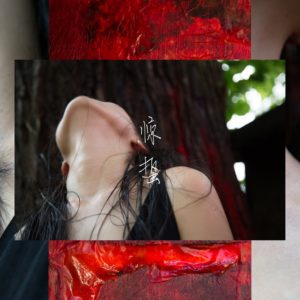
Culminating as the purgative ‘finale’ to her improvisational live performances, Pan Daijing’s debut album also offers an insight to her future works. The process was intuitive and raw, born out of her previous explorations. Over the past 2 years, she has composed, recorded and edited different concerts and field recordings across Europe, China, and Canada, forming the basis of the record. Arriving as her first full-length album, ‘Lack’ was crafted from this long, painstaking mental and physical practice.
Daijing’s pieces are created around a very intense and intimate mental catharsis, often expressed through a close physical interaction with strangers in her live sets which seek to engage them in a highly personal way. “When I was finalising this album, they didn’t feel like tracks to me anymore, but more like a psychoanalytical process,” she says. “I saw myself being this absurd, mad person ‘acting’ out the sounds… It’s rather physical, and became like a mindgame. All things came out naturally as part of me.”
The narrative of the album presents a perspective of the world as ‘the theatre of our minds’ – where Daijing sees the record as an ‘opera piece’ in its storytelling and drama.
The release is mastered by Rashad Becker at D&M, featuring photography by Ralf Marsault, and artwork by Bill Kouligas.
20,00€
In stock
LP
Tujiko NORIKO
“Kuro (OST)”
"Composed and recorded during the editing of the film in Berlin, the Kuro OST by Tujiko Noriko (with contributions from Joji Koyama, Sam Britton and Will Worsely), is a crucial and integral part of the film, acting not only as a glue to bind the layers of the film together, but along with the sonic palette of the film’s sound design, evokes it’s claustrophobic atmospheres and moments of haunting beauty.
I tried to think of the pieces in abstract terms, like moods and atmospheres. In a way, the process was quite similar to how I usually make music, in the sense that I have images in my head. Of course in this case there were actual images and a lot of them very close to me, but I didn't want to get overly conscious about them either—I didn't want to get stuck by trying to be too specific."
-Tujiko Noriko
Original price was: 20,50€.12,00€Current price is: 12,00€.
In stock
CD
VISIONIST
“Safe”
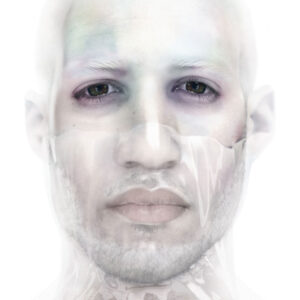
Having recently partnered with Bill Kouligas to relaunch his Lost Codes imprint as Codes, Visionist takes a defining step forward with the release of his PAN debut album, ‘Safe’.
The South London artist born Louis Carnell broke during a period of experimentation in UK music when, with the disintegration of the dubstep scene, emerging producers began looking to juke and Chicago house for inspiration. A pair of EPs on Lit City Trax (and a collaboration with Fatima Al Qadiri) in 2013 and ’14 introduced Visionist’s minimalist take on fractured R&B and liquid grime, establishing him as a leading voice in new-wave UK soundsystem culture.
On ‘Safe’, Visionist sculpts and extends that signature into new terrain and makes his most personal statement yet. Distilling his influences down to a sparse palette of manipulated folk, pop and R&B acapellas, icy synths, and metallic drum samples, he plays off ever-present anxiety and his own battle not to let it overwhelm him. “Comfort, protection, salvation—this is what we search for,” he says. “We are taught that a life of no worries is better for us, and therefore we try to create one that is ‘Safe.”
But while safe as a musical concept implies conformity, ‘Safe’ as an artistic statement is anything but. At a moment when the UK scene, once known for innovation, has settled into rehashing old tropes, Visionist continues to propel his sound into more experimental territory. The album traces the arc of an anxiety attack, from its onset through to recovery. Following the stately discord of brief opener “You Stayed,” the grimy, ballistic assault of “Victim” sends its targets diving into mirrored corners. “I’ve Said” is a brutal, almost militant advance, its sound cutting in and out as though transmitted via shortwave radio. “Too Careful To Care” trades in skittering paranoia, with the soporific “Sleep Luxury” closing out affairs.
Since 2012, Visionist has toured extensively throughout Europe, Unites States and Asia, appearing at industry standard clubs and festivals like Fabric, Berghain, Sonar and Unsound and as well as various underground venues. He has scored music for Kenzo, Liam Hodges and Roxanne Farahmand in the world of fashion, and remixed Kelis, Ghost Poet and Glasser. In 2014, he supported FKA Twigs on her first-ever UK tour.
Mastered by Jeremy Cox. It features photography & artwork by Daniel Sannwald and layout by Bill Kouligas.
Original price was: 15,00€.5,00€Current price is: 5,00€.
In stock

2 LP
Lee GAMBLE
“Koch”
Following up from the success of his emphatic PAN releases “Dutch Tvashar Plumes” and “Diversions 1994-1996” in 2012, PAN is excited to announce “Koch” (pronounced “cotch”), the new album from London’s Lee Gamble.
Sharing some stylistic affinity with his previous records, which excavated his deeply personal history with UK jungle and rave, and techno, this new work dives even deeper to reveal a singu- lar and intimate musical vantage point, shifting to approaching music as projection, state, hallucination, an other place. In ‘Koch’, we experience an artist constructing a future after time spent deconstructing the past.
In the music we witness such dimensional abstraction, zooming between epic macro scenery and claustrophobically close detail, disorientation and absolute focus. Rhythms fuse together and phase apart, club tracks tunnel into an anxious wilderness, with themes and textures emerging as threads throughout the record, wormholing between each track.
There is a sense of the seen and the unseen, an honest tension between music as function (for this world) and as artistic exploration (for another world) as cracks in the surface appear to reveal the odd and alien minutiae within.
‘Koch’ represents an intimate and revelatory new phase in Lee Gamble’s practice. Producing tracks that can live and grow on their own in a club or personal listening environment, the artist’s exploratory framework creates threads of consistency and tension between disparate spaces, locations, and mental states.
28,00€