
Out of stock
LP
Jérôme NOETINGER / Robert PIOTROWICZ / Anna ZARADNY
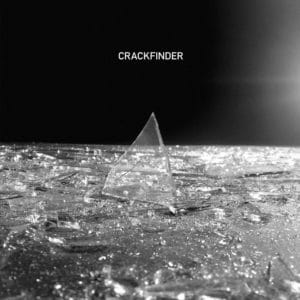
“Crackfinder”
Jérôme Noetinger - revox tape machine, electronics . Robert Piotrowicz – synthesizer, electronics. Anna Zaradny - saxophone, computer.
Zaradny is a composer, instrumentalist and visual artist; Piotrowicz a composer, author of sound installations and virtuoso of analog synthesizers. They founded and curated the Musica Genera festival and label. Noetinger, an improviser, publisher and instrumentalist, specializes in electroacoustic collages full of permutations on his tape recorder and using all sorts of electronics. What connects these musicians are their methods of work: experiment as the basis of action, controlled accidents, repetition, processing and processuality.
Crackfinder is intense and saturated, intriguing with fragments that are rhythmic yet distant from the repetitiveness of minimalism. They give a degree of structure to the otherwise loose amalgam of raw electroacoustics and instrumental improvisation at times evoking free jazz (when Zaradny reaches for the saxophone). At any time, however, the division of roles is clear, an impressive feat at such a high density of sound texture.
Crackfinder the album comprises of two distinct parts. The first is extremely intense and eventful, creating a strong tension, giving the sense of an immense effort or even wrestling between the musicians; a clash of ideas and values. This dialog is not monotonous but dynamic, full of changing and new hypotheses – as if in a process of reaching the truth. We can suppose that these investigated issues are philosophical and existential, giving the impression of greatness and overwhelming significance.
The second part evokes a kind of a soothing stabilization. One may think that the interlocutors have reached a consensus. However, no-one is celebrating, and the mood is somewhat melancholic. The discovery proved to be depressing and the truth is not liberating – it becomes a burden. There is a poignant feeling of failure or unfulfilment, despite concluding and solving the task.
Finally, we are left with silence, and even emptiness – with a symbolic and absolute dimension of the end. The effort of the first part, motivated by the conviction of the significance and need for proving something, is confronted with the disillusion brought by the end of the road. The effort, however, was not in vain – the discovery of the truth, although painful, can be purifying.
Edited, mixed and premastered by Robert Piotrowicz. Mastering and cut by Rashad Becker at D&M Berlin.
12' LP, 140 gr, 150 clear, 50 black vinyl
16,00€
In stock
LP
Robert PIOTROWICZ
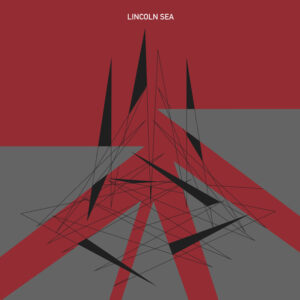
“Lincoln sea”
Composed and recorded by Robert Piotrowicz in 2010-2012. Performed on modular analogue synthesizer. Design and graphics: Robert Piotrowicz. Visual adviser: Igor Krenz. Mastering and vinyl cut: Rashad Becker. “Lincoln Sea is Robert Piotrowicz’s second release in 2013 after the acclaimed ’When Snakeboy is Dying’. ’Snakeboy’ opened windows with it’s sophisticated weaving of guitar, piano and vibraphone, along with Piotrowicz’s more recognisable modular synth work. Praised from the likes of Brian Olenwick (Just Outside), Massimo Ricci (Touching Extremes) ’Snakeboy’ saw Piotrowicz take a confident leap into new
realms of sound. With Lincoln Sea, the potential of Piotrowicz’ vision is greatly expanded whilst exclusively focussing on modular synthesis. The result is a dizzying journey into the nature of machines and the elements of natural order that can be coerced out of them. Comprising of a single long form work split over 2 sides, Lincoln Sea is a complex multilayered combination of sonic architecture and narrative drama. Investigation of sound mass as an architectural form expands the work beyond the exploration of a single instrument resulting in significantly more vast and expansive sound landscape. The management of the electronic matter aligns itself with the logic and even sound world of an orchestra with wailing strings flying amongst the brass-like explosions of the bass. The tension resulting from the pull between the sonic world and the emotional capacity of the electronic microtonal explorations make for one of the years assured releases. On one hand, Lincoln Sea can be perceived as an exhilarating audio experience, one of immense thrills, intensity and a rich sonic experience.
With further listens, the intrinsic layers and idiosyncrasies will become more apparent providing further aesthetic experience as one hears new sounds, new corners, new worlds. Piotrowicz’s role as despot composer has created a remarkable release which incorporates an evolving landscape, human gestures, an absence of chaos, the orchestral (and rock?) organisation of sound, the false
ends and an extreme combination of scientific/architectural design seeped in abstraction and human emotion. This is a landmark release from one of Poland’s most revered musicians”. Mark Harwood
16,50€
In stock
LP
Robert PIOTROWICZ
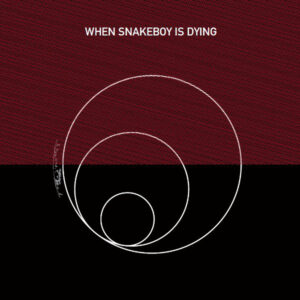
“When snakeboy is dying”
140 gram white vinyl, 370 copies. Composed and recorded by Robert Piotrowicz in 2009, mixed in 2011. All instruments: modular synthesizer, guitar, piano, vibraphone, software by Robert Piotrowicz. Mastering and cut: Rashad Becker. “When Snakeboy is Dying” is the first album of Robert Piotrowicz in which he deploys a broad spectrum of instruments. Most of his previous published compositions were committed to creating a multilayered electronic sculpture built with analogue modular synthesizer. Performing on all instruments by himself alone and using a variety of composing methods, Piotrowicz created an album which strikes with internal integrity and organic complexity whilst leaving the recipient with an impression of listening to an ensemble. In terms of tonal reduction and assigned function of individual instruments, the score recalls the spirit of minimalism, however the density and dynamics of narration remains in vivid contrast to such associations. The strength of Piotrowicz’s work reveals itself in the complexity of events as well as the rich palette of colours and the mobility of architecture in the overall sound picture. The instruments are organized in careful relations with each other, to build not only the horizontal tensions but the vertical ones as well. The beauty of microtonal constructions is amplified by strong impacts and vitality of electronics. What at first might seem like a fragile recording, with every further second it builds and maintains drama and intensity.
18,00€
In stock
LP
Robert PIOTROWICZ
“Walser”
“Oleh Rami Pohon” (riverside performance for five / hut blow for any number of
participants and one muted mmempekík player).
“Tingal” (sylvan setup for two).
“Elok Pada Masa” (nighttime gathering for two and any numbers of attendees)
“Automatu” (for those who rebuild past events in memory).
“Udara Rosak” (for two anxious performers).
“Utara” (for one who heard everything / small band including strings,
percussion and electronics).
“Dimana” (for any number of pianists and one bad doublebass player).
Composed, recorded and mixed by Robert Piotrowicz. All instruments: double bass, piano, percussions, electronics and objects performed by Robert Piotrowicz. Accompanying texts by Grzegorz Jankowicz, Burkhard Stangl and Jon Wozencroft. Mastering and cut by Rashad Becker at D&M Berlin.
The music originally appeared as a 5.1 soundtrack to “Walser”, film directed by Zbigniew Libera.
The new album by Robert Piotrowicz Walser is a reiteration of the artist’s composition for the namesake film by Zbigniew Libera where a fictitious Concheli tribe enacts its ritual gestures through music and performance. Rather than following a traditional soundtrack format where music is written after the film is cut to illustrate the cinematic form, Piotrowicz treats the film music as a point of departure to create an autonomous sound work altogether. While its aesthetic narrative echoes the one that we are submerged into throughout the film, the record’s underlying structure and dramaturgy were reconfigured and reworked into a new spatial and affective arrangement.
Unlike Piotrowicz’s previous works, Walser is predominantly an acoustic album with a nod to his previous projects that imagined fictional music ensembles (such as Rurokura and Eastern European Folk Music Research Volume 2).
The idiosyncratic sound of instruments is a result of multifaceted composition process, which took as its starting point custom-made instrument design (wind, percussive and string), prototyping the music structure and meaning, and composer-led choreography of actors’ gestures that took place during the film shoot and in its predeceasing performance workshop.
In the film Walser, Piotrowicz’s original music score is thus enacted by body of sound rather than by actors on the filmset as it fills up the metastructure devised by the composer. Of course music always influences the way one views a film, but in Walser it becomes a cinematic language of its own kind, an extension of the camera apparatus, an omnipresent observer and narrator that sculpts our experience of watching and listening.
In the album Walser sound returns to its first and foremost dimension, time, and while the storyline is no longer in the foreplan, its immaterial traces persist in the LP structure and narrative, incorporating a myriad of mood changes and dramatic turns. The album is an analogue recuperation of the primal, original sound where music finds a new form of embodiment and occupies a new territory beyond the screen and beyond the image. It is a sensuous body of sound that carriers meaning beyond traditional ways of verbal and pictorial communication.
16,50€
In stock
LP
Anna ZARADNY
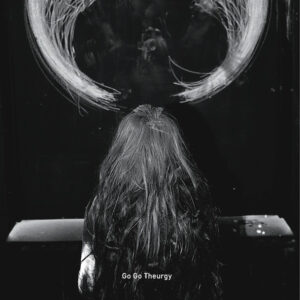
“Go Go Theurgy”
Composed and recorded by Anna Zaradny in 2015. Electronics, analogue and digital synthesizers. Photo by Magda Wunsche. Drawing by Anna Zaradny. Design by Lasse Marhaug. Mastering an Cut by Rashad Becker at D&M Berlin. Produced by Musica Genera. Coproduction Bocian & Musica Genera.
“Go Go Theurgy”, the first Anna Zaradny’s album in eight years, consists of two majestic compositions. Strikingly charismatic and intense, they teem with sensuality and anxiety, while their palpably dense and detailed texture is constantly filled with tension and sense of urgency. The crystal-clear narration of these structurally complex pieces creates a framework for Zaradny's uniquely intricate and emotional sound. This music celebrates performativity and defies genre limitations. Although bravely experimental, it is precisely structured at the same time, and sometimes builds a momentum usually connotated with pop music. “Go Go Theurgy” recalls the primordial but also cultural references, creating its own idiosyncratic value.
-----------------------------------
“ “Go Go Theurgy” is an intricately woven tangle of synthetic and natural textures and modulations; the next step for the Zaradny's unique sound; very organic, and somewhat seductive. The idea of sound sculpture, found in her earlier pieces, is particularly significant for “Go Go Theurgy” . Its loops and cycles create a specific rhythm completely without percussion, based solely on the pulse and dynamics of the composition itself. A high intensity of intersecting layers of sound and repetitions refers directly to the title, a kind of ritual suspended between dance and performance, and the concepts of rebellion and power, purification and liberation by the movement of the body.
Zaradny's works have often included a theme of a ritual stripped of mystical aura, reduced to the tension between cultural roles and their phantasms (e.g. in “Castration class” (2010), “The sweetest sound of circulating firmament” (2011), “GEN IUS” (2014), “Punctus Contra Punctum” (2014)), but for the first time it takes the form of a sound composition.
“Go Go Theurgy” has a clear sonic architecture and contains echoes of the space where the sound resonates and returns in subsequent cycles. The composition becomes not only a reflection of the ritual documented on the photos, but also a metaphor of the resounding open space. Elements that we hear in the initial parts of the composition return in a processed form, an effect of a redefined echo which becomes an independent sound object detached from its source. This physical multidimensionality of sound is another step towards a sound sculpture. An attempt at stopping the moment, experiencing trance, looping movement and gesture.” Daniel Bro ek
17,00€
Out of stock
CD
Yoko HIGASHI – Lionel MARCHETTI
“Okura 73°N-42°E”
“Musica Genera presents another album from French musique concrète composer Lionel Marchetti (in 2005 MG had released the CD “Docteur Kramer (you are not you)” by Lionel Marchetti and Emmanuel Petit), this time realised together with his artistic partner Yôko Higashi, Japanese performer, dancer and vocalist. The album contains three compositions of musique concrète, one by Marchetti, one by Higashi and a collaborative work by both artists. Each of the tracks is an elaborate sound construction of individual characteristics and unique sound aura. “Pétrole 73” is the artistic fruit of Marchetti’s stay at the “Stubnitz” trawler, the one of a kind ship rebuilt as a floating cultural centre. Analogue drones, radio voices and mechanical sounds of working hull create the atmosphere that contrasts with next composition. “Okura” was realised by Higashi basing on the sound material gathered in Mozambique. Field recordings of African nature and surprising electronic interventions interweave with fragments of ethnic music, leading the listener towards the final, collaborative track. “Pétrole 42” captivates with it’s sonic depth and uncanny, ethereal aura created by delicate synthesiser passages, distant, unearthly voices, chants, breaths, punctuated with disturbing, aggressive concrète sounds.”
12,00€
In stock
CD
Anna ZARADNY
“Mauve cycles”
“Mauve Cycles by Anny Zaradny is a significant release. It is the first solo CD by the artist with already considerable output including improvised music, composing for theatres, collaborations with visual artists and sound installations. Also, the involvement of women in the contemporary experimental music still seems to be perceived as unusual (hence the compilation releases such as “Women in Electronic Music” from 1977 or “Her Noise” exhibition from 2005) and in Poland it is a marginal phenomena. What immediately captures attention in Anna’s music is the diversity of colour and texture: noisy, harsh, prepared, digitally manipulated. The unusual thing is the almost baroque ornamentation. The production of the recording, emphasising the dynamics of sound, reveals the remarkable abundance of textural detail, especially at high volume. The rich arrangements make one think of orchestral momentum, which is not surprising in the context of Zaradny’s classical music education. Sensitivity rooted in the aesthetics of ’60 sonoristic avant-garde Pauline Oliveros, David Tudor, Gordon Mumma), combined with years of experience and collaborations with world’s leading free-improv and sound artists (Tony Buck, Burkhard Stangl, Cor Fuhler, Zbigniew Karkowski) result in the two parts of “Mauve Cycles”. At structural level, Anna’s music is built of interweaving, constantly evolving sound and rhythm blocks, organised into the title cycles.
Even if the elements of this sound mosaic can be categorised (drone, field recordings, extreme sonoristics, oscillator rhythms), every now and then the order is shattered by violent, out of context sound intrusions. The feeling of constant unease, both at compositional and sound levels, is one thing that makes the record stand out. The other
is the focus on compositional aspect of the music, which distinguishes Anna’s ideas from many other recordings in similar sound convention. The multilayer, spatial nature of the recordings resemble sound sculptures of Harry Bertoia, Christina Kubisch or Kaffe Matthews. “Mauve Cycles” seems to correspond with the output of these artists as well as Eliane Radigue’s or Delia Debyshire’s, contributing to women’s voice in the field of electronic preparations. Anna is also responsible for the cover design, including the
surprisingly romantic contribution from famous Polish graphic artist Marek Raczkowski. Recent musical activities indicated Anna’s growing sensibility in the field of sound art, and this latest recording is the full expression of her experiences. It is another gem in the
compositional series of Musica Genera label.” Daniel Brozek
12,00€