
In stock
LP
PAPIRO
“La finestra dentata”
Papiro’s approach to music is never technical, but always personal. Since the mid-Nineties, he has released a handful of noteworthy albums, each carefully put together and seemingly self-contained, yet all sharing an unmistakable musical language and a certain escapist aura.
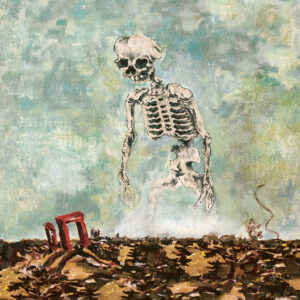
La finestra dentata (The Toothed Window), is no exception. It includes both studio and concert recordings from 2016–2020. The sounds on this album appear infinite and full of marvels, ingenious in portraying imaginary creatures and environments.
The title track and Anelli take up most of the first side and include live outtakes. Papiro likes to describe his performances as therapeutic. These swirly symphonies are specifically intended as immersive deep-listening experiences for concert venues, and have been edited for this album to meet the physical demands of vinyl and domestic use. Imagine the younger cousins of Laurie Spiegel’s Concerto Generator performance, or Terry Riley’s Shri Camel.
However, those who know Papiro only from the stage might be unaware of a different side to his oeuvre; starry-eyed miniatures that may appear frivolous in comparison to the more heady tracks, but are nonetheless well worth discovering. Each piece adds a chapter to a phantasmagoric world populated by such characters as "Giant Duckling", "King Hard-Beard", or the "Bodulator". Tracks like the opener Odilon or Il triciclo nascosto, meanwhile, emanate a candor rarely found in the domain of serious music, and revisit Papiro’s early days of instrumental storytelling.
24,00€
In stock
LP
David FENECH & KLIMPEREI
“Rainbow de nuit”
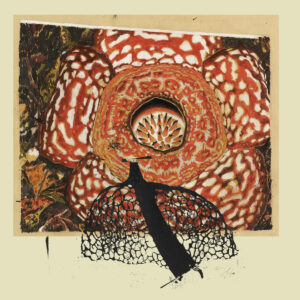
Maestro melodist Christophe Petchanatz (aka Klimperei) and all around music fanatic David Fenech engage remotely in a repetitive exchange of recordings and overdubs on their debut album titled ‘Rainbow de Nuit’, sporadically spanning over the last decade. Evocations of experimental and improvised jazz, chansonesque songs, bluesy folk, and outsider music undulate harmoniously across the record. From music boxes and walkie-talkies down to plastic straws, plucking various stringed instruments such as the charrango and banjo, kazoos and snake-charmer ocarina and flutes, all the way through the sweet accordion and melodica, found and traditional tuned percussion - there is far from a shortage of sound sources on this freakishly inviting record. What germinates as an imaginative and emotional chord progression played by Klimperei, evolves with Fenech layering additional recordings, which would then find their way back home to Klimperei yet again, and so on, and so forth. This recursive compositional and improvisational loop, combined with Fenech’s musique-concrete-like mixing and editing techniques, transforms the acoustic recordings by way of compression, saturation, and reverberation or simple pitch changes - resulting in the duo’s recordings seemingly sound like they may very well be an octet in real time. While the majority of the recordings have been ping-ponged remotely, David and Christophe unite under one roof to record the closing track of the album.
The pieces presented on ‘Rainbow de Nuit’ treat the ears to a carousel ride waltzing through a multiverse made up of surrealist puppet theaters, dramatic film noir act changes, and a mosaic of polyphonic instruments and toys alike. In other words, a score to a fable brought to life with haunting yet charming melodies and occasional hallucinatory voices reminiscent of laughter and infantile epiphanies which we hear on Tarzan en Tasmanie and Madrigal for Lola. This is taken a step further by Fenech, to a brief libretto of incomprehensible tongues on Pocarina. Amid the mysterious and dark (Septième Ciel and Rugit Le Coeur) also lies tender and simple compositions (Rainbow de Nuit and Chevalier Gambette), murky suspenseful melancholy (Levy Attend and Eno Ennio), and casually slipping into pensive psychedelic backdrops (Un Cercueil à Deux Places) - forming a colorful blend of sounds. A world of echoes. A tale of tales. One persistent earworm that you’ll likely be whistling and humming along to on a first listen.
24,00€
Out of stock
LP
Pierre BASTIEN
“Tinkle Twang ’n Tootle”
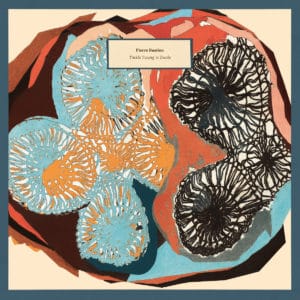
Pierre Bastien orchestrates his meccano marionettes on Tinkle Twang ‘n Tootle to form the charming imaginative ensemble that’s he’s been known for since the late 80s.
Equal parts composer, inventor, mechanic, and performer - Bastien translates his imagination into instruments and compositions that defy any musical categories. Whether it’s preparing instruments like playing a trumpet underwater or through a kazoo, using belt-driven motors and mechanical components to perform cumbersome yet surprisingly musical operations on traditional instruments and household items, or using a fan to hit the strings of a kundi harp with flowing paper - Bastien’s love for tone, rhythm, noise and harmony is poetically reflected across his quite extensive oeuvre.
Playful and melancholic, the sound sculptures that Bastien invents and plays with are partly inspired by the work of Raymond Roussel, a visionary French author who in the first few decades of the twentieth century wrote a unique form of literature which inspired and guided artists from the surrealist and pataphysical movement and was declared by Michel Foucault as one of structuralism’s founding fathers. On that note, the influence of literature and syntax on Bastien’s work cuts all the way through to the palindromes he uses for his track titles - which, much like his machines, infinitely loop.
True to its adorable title, Tinkle Twang ‘n Tootle is a music box of unfolding whimsical structures, half broken rhythms, detuned harmonies, and fantastical sound collages that evoke a childlike sense of wonder and an urge to explore the spaces in between the sounds.
16,50€