
Out of stock

2 CD
Laetitia SONAMI
“Dangerous Women: Early Works 1985-2005”
2025 release
Laetitia Sonami was born in France, where she studied with Eliane Radigue. She moved to the United States to study electronic music, first with Joel Chadabe at SUNY Albany, then at Mills College where she was mentored by Robert Ashley and David Behrman. Laetitia Sonami is not only a gifted composer/designer of electronic music, but a compelling presence on stage. This collection of early works covers a period when Sonami transitioned from live mixing with cassettes, homemade analog synths and objects in the early eighties, to working with MIDI, MAX software and "off the shelf" synths and samplers. At the same time, she begins a long collaboration with Melody Sumner Carnahan, using her dramatic texts to evoke characters and behaviors to inhabit musically and visually. All but two of the works on this release utilize Sumner Carnahan's stories, and all but one use Sonami's famous invention, the lady's glove, an arm-length tailored glove fitted with movement sensors allowing the perform to fluidly control digital sound parameters and processing, as well as motors, lights and video playback. Sonami has since moved on to works for another of her inventions, the Spring Spyre, which applies Machine Learning to real time audio synthesis.
23,50€
Out of stock

CD
Robert ASHLEY
“Foreign Experiences”
This new release from Lovely Music features Robert Ashley's famous ensemble, the "band" who interpreted his work for 20 years, from 1992 through 2012. They included Sam Ashley, Thomas Buckner, Marghreta Cordero, Tom Hamilton, Jacqueline Humbert, Joan La Barbara, and Amy X Neuburg. This recording was made at the Hebbel Theater, Berlin on May 12, 1995. The opera was also heard live at the Festival d'Avignon, the Brooklyn Academy of Music, Musica Strasbourg, and Site Santa Fe. Foreign Experiences is one of the opera tetralogy that Ashley wrote in the early 1990s, following Perfect Lives (LCD 4917CD/LDVD 4917DVD) and Atalanta (Act of God) (LCD 3301CD, LCD 3303CD). He would give it the overall title (also the name of one of the component operas) Now Eleanor's Idea. These four operas would follow the stories of some of the characters who populated Perfect Lives a decade earlier. We met Don last year when Lovely Music released a CD of a new Ashley "band" performing Improvement (Don Leaves Linda) (LCD 5002CD) at the Kitchen, New York. In Foreign Experiences "Don gets a job at a small college in the southwest. Once there, against all expectations, everything goes wrong. He loses his family and friends, he loses his car, he fears that he will lose his mind." He comes to believe that he has been given a mission, to learn about premonitions and he embarks on a journey to find the wise man who will give him priceless information. Linda thinks he plan is foolish; Don thinks he has no choice. But is the opera really "about" Don and Linda? "Opera likes to simplify and enlarge its characters to make them fit grand themes. Mr. Ashley goes in the opposite direction and arrives at the cosmos just as easily. Mundane chitchat about good eating habits or car repair turns to metaphysics, ontology, epistemology, not to mention psychiatry, before we know it." -- Bernard Holland, The New York Times (November 21, 1994) The live recording was made by Tom Hamilton and Cas Boumans, and this release has been edited mixed by Tom Hamilton. A slipcase includes a jewel case with a four-page folder, and a 96-page booklet of the full libretto.
18,00€
In stock
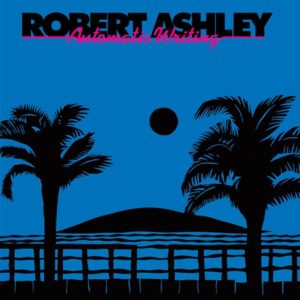
LP
Robert ASHLEY
“Automatic Writing”
“Robert Ashley, Cynthia Liddell, Mary Ashley, Mary Lucier, and Barbara Lloyd,The Brandeis University Chamber Chorus, Alvin Lucier, Director. Three of Ashley’s landmark recordings, Automatic Writing (1979), Purposeful Lady Slow Afternoon (1971) and She Was A Visitor (1967). Composed in recorded form over a period of five years, Automatic Writing is the result of Robert Ashley’s fascination with involuntary speech. He has recorded and analyzed the repeated lines of his own mantra and extracted four musical characters. The result is quiet, mysterious, melancholy and an early form of ambient music. Purposeful Lady Slow Afternoon, and She Was a Visitor are excerpts from an opera entitled That Morning Thing that was composed in 1966-67, as a result of Ashley’s impulse to express something about the suicides of three friends, in particular the intellectual problem of the idea of suicide. The opera takes the form of an alternation of scenes of rationalizations (or explanations) and scenes of descriptions. Purposeful Lady Slow Afternoon is a woman’s description of a sexual experience. It is Ashley’s attempt "to demonstrate the dichotomy between the rational-whatever can be explained in words-and its opposite-which is not irrational or a-rational, but which cannot be explained in words." The lead voice, the processed back-up chorus, the recurring bell tone, and the pervading tape hiss, create an unsettling mood. She Was a Visitor is another form of description, it is intended to be understood as a form of rumor. The chorus is divided into groups, each headed by a leader. A lone speaker repeats the title sentence throughout the entire performance. The separate phonemes of this sentence are picked up freely by the group leaders and are relayed to the group members, who sustain them softly and for the duration of one natural breath. The time lag between the group leaders’ phoneme choices and those phonemes being picked up by members of the group produces a staggered, chant-like effect, with the sounds moving outward from the nearest performer to the farthest. Booklet notes by Robert Ashley.”
27,00€
In stock
2 CD
Robert ASHLEY
“Improvement (Don Leaves Linda)”
"Like John Bunyan's Pilgrim's Progress (1678), Improvement (Don Leaves Linda) is an allegory for an individual's self-realization. The opera takes its imagery from the history of the Jews --beginning with their expulsion from Spain in 1492 and ending 500 years later in the United States. Improvement (Don Leaves Linda) was first conceived as a recording for Nonesuch Records (1991). Ashley followed with three other operas, making up a quartet or tetralogy under the name Now Eleanor's Idea (LCD 1009CD), and all four operas were performed often during the first half of the 1990s. The opera was revived in 2018-19, with a new cast: Gelsey Bell as Linda; Brian McCorkle as Don, Mr. Payne, and Companion; Paul Pinto as Junior, Jr.; Aliza Simons as Now Eleanor; Dave Ruder as The Doctor; Amirtha Kidambi as Mr. Payne's Mother; Robert Ashley (on tape) as Narrator I; Amirtha Kidambi and Aliza Simons as Narrator II. Improvement (Don Leaves Linda) was presented by the Kitchen, February 7th through 16th, 2019. Live Sound and Processing: Tom Hamilton. Live cast recording by Eric Sherman and Tom Hamilton. CD mixed by Tom Hamilton."
27,00€
In stock
CD
Paul DEMARINIS
“Music as a second language”
***2019 repres***
Paul De Marinis : performer-electronics. “Speech melodies extracted from sources as various as language instruction recordings, hypnotists and televangelists are resynthesized and applied to digital musical instruments, becoming eerily beautiful, "the singing of voices more ancient than language.”
15,00€
Out of stock
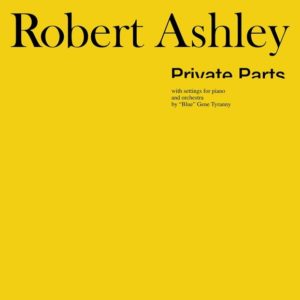
LP
Robert ASHLEY
“Private parts”
Lovely Music presents a reissue of Robert Ashley's Private Parts, originally issued in 1978. This newly mastered LP release is a must-have for aficionados as well as a perfect introductory work to Ashley's oeuvre. Among Lovely Music's first six releases, it came to be known as "the yellow record". No one had ever heard anything like it; Ashley presented an unvarnished exposition of the inner workings of a man's mind. And on the other side, those of a woman. These two episodes were the foundation for Ashley's seven-part opera, Perfect Lives (LCD 4917CD, 2017), which was performed by his ensemble throughout the 1980s and was completed for television broadcast by Britain's Channel Four. New arrangements of Perfect Lives, notably Varispeed's site-specific version, continue to intrigue and enchant. Recorded at the Center for Contemporary Music, Mills College, Oakland, California, July 1977, produced by Ashley. Personnel: Robert Ashley - voice; "Blue" Gene Tyranny - keyboards; Kris - tablas. 180 gram vinyl, Stoughton Old Style sleeve, includes libretto.
25,00€
Out of stock
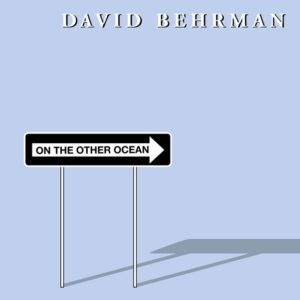
LP
David BEHRMAN
“On the Other Ocean”
Lovely Music present a reissue of David Behrman's On the Other Ocean, originally issued as one of Lovely Music's first six releases in 1978. This newly-mastered LP is a must-have for Behrman aficionados or a perfect introduction to his work.
"I've been engaged for many years in an exploration of ways to make music and intermedia installations in which software and electronic devices interact with human performers. I've wanted to make works that have personalities, which remain distinct and recognizable, yet are open to surprising changes that can come about when they are performed or exhibited." --David Behrman
"Remarkable achievements on a purely technological level. Behrman's carefully programmed Kim-I system listens to tones played by the live performers, instantly analyzes the situation, and responds by playing back electronic tones of its own. This is undoubtedly the first time that humans and electronic sound equipment have communicated with one another with high degrees of spontaneity and intelligence on both ends of the wire. But the music that results is perhaps even more remarkable. Subtle, sustained, serene, sophisticated, super." --Tom Johnson, The Village Voice, Dec. 18, 1978
Recorded at the Center for Contemporary Music, Mills College, Oakland, California, Sept. 18, 1977, and at the Electronic Music Studio, State University of New York at Albany, June 9, 1977. Personnel: On the Other Ocean: David Behrman - electronics; Maggi Payne - flute; Arthur Stidfole - bassoon Figure in a Clearing: David Behrman - electronics; David Gibson - cello. 180 gram vinyl, Stoughton Old Style sleeve.
22,50€
Out of stock

CD
David ROSENBOOM – Anthony BRAXTON
“Two lines”
“David Rosenboom, MIDI Grand Piano, HFG (Hierarchical Form Generator), Responding Sampled Piano; Anthony Braxton, Sopranino, Soprano and Alto Saxophones, Clarinet and Flute. Two legendary composer-performers join forces on this recording to unite composition with improvisation, "new music" with "new jazz." Starting from Rosenboom’s notated score for Two Lines and his musical computer program, these musicians have achieved, to paraphrase Rosenboom, a composition that is immediately heard. Duets with interactive HMSL software. Includes Rosenboom’s Two Lines, plus compositions in collaboration with Braxton: Lineage, Enactment, Transfiguration and Transference.”
Original price was: 14,00€.9,00€Current price is: 9,00€.
Out of stock
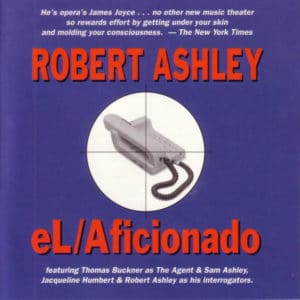
CD
Robert ASHLEY
“eL-Aficionado”
1994. Featuring Thomas Buckner as The Agent and Jacqueline Humbert, Sam Ashley and Robert Ashley as his interrogators. Orchestration by Robert Ashley. Engineering and mixing by Tom Hamilton. 1 CD + Booklet with full libretto. This is the fourth opera in Ashley’s Now Eleanor’s Idea tetralogy: Junior, Jr.’s story. A group of scenes from the life of an Agent. The scenes are a kind of debriefing to a jury of Interrogators, in which the Interrogators challenge the Agent in various forms of musical dialogue. The mood of the opera owes much to our fascination with espionage and with the character of those people who lead double lives.
14,00€
Out of stock
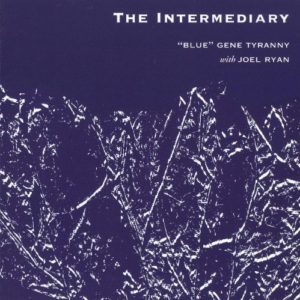
CD
“Blue” Gene TYRANNY with Joel RYAN
“The intermediary”
“Blue” Gene Tyranny: prose, music, piano improvisation and sample-burst electronics.
Joel Ryan: computer afterimages and pre-conditions. Reissue of this 1982 record. “In this self-generating composition, a live "shadowing" electronic network records, processes and returns the sounds of an improvising performer on an acoustic instrument or voice, creating sounds that can seem to be both "messages" for the performer(s) to act upon and-or reflective "shadows" for the listener(s) of what the performer has already played. In a truly spontaneous performance, the performer is continually in an intermediate state or situation, where he or she discovers themselves playing things he or she never conceived of before, where something other than conscious intention seems to have taken over. The performer is spontaneously playing and listening and "calculating" (following kinetic impulses, the movement of brief inevitabilities of gesture and phrase, etc.) at the same time. The live electronic setup amplifies this active music-making for an audience for whom this internalized task of the performer would normally remain completely hidden. The electronics remember (record and sample) the performer’s sounds, change them (through a specified network of pitch and amplitude followers and other processors given in the score), and re-introduce the changed sound back into the performance situation - a constant, "intermediate", full feedback state of changing conditions, with the performer both as sender and receiver (as in a dream, waking or sleeping). For the initial recording, the piece was firstly separated into its component parts rather than recorded in the full setup. A spontaneous improvisation of was recorded in a studio in Geneva, Switzerland, at 4 o’clock in the morning (a time of day guaranteed to find this particular performer especially susceptible to musical and other influences) in the winter of 1980. The shadowing electronics part was realized with an Apple II computer program created by composer Joel Ryan - a series of oscillators created delicate shimmerings and dramatic bass tones. The two parts were then interlaced in the final production studio to create the concert effect mentioned above.” BGT, March 6, 2002.
Joel Ryan: computer afterimages and pre-conditions. Reissue of this 1982 record. “In this self-generating composition, a live "shadowing" electronic network records, processes and returns the sounds of an improvising performer on an acoustic instrument or voice, creating sounds that can seem to be both "messages" for the performer(s) to act upon and-or reflective "shadows" for the listener(s) of what the performer has already played. In a truly spontaneous performance, the performer is continually in an intermediate state or situation, where he or she discovers themselves playing things he or she never conceived of before, where something other than conscious intention seems to have taken over. The performer is spontaneously playing and listening and "calculating" (following kinetic impulses, the movement of brief inevitabilities of gesture and phrase, etc.) at the same time. The live electronic setup amplifies this active music-making for an audience for whom this internalized task of the performer would normally remain completely hidden. The electronics remember (record and sample) the performer’s sounds, change them (through a specified network of pitch and amplitude followers and other processors given in the score), and re-introduce the changed sound back into the performance situation - a constant, "intermediate", full feedback state of changing conditions, with the performer both as sender and receiver (as in a dream, waking or sleeping). For the initial recording, the piece was firstly separated into its component parts rather than recorded in the full setup. A spontaneous improvisation of was recorded in a studio in Geneva, Switzerland, at 4 o’clock in the morning (a time of day guaranteed to find this particular performer especially susceptible to musical and other influences) in the winter of 1980. The shadowing electronics part was realized with an Apple II computer program created by composer Joel Ryan - a series of oscillators created delicate shimmerings and dramatic bass tones. The two parts were then interlaced in the final production studio to create the concert effect mentioned above.” BGT, March 6, 2002.
12,00€
In stock
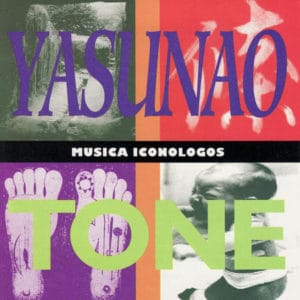
CD
Yasunao TONE
“Musica iconologos”
“Yasunao Tone and Craig Kendall, image selection and processing; Craig Kendall, computer programming, digital sound creation and manipulation; John D.S. Adams, assistant producer and audio consultant. A surprising release from the radical Fluxus composer--an encoded description of the visual image in utmost detail. In the mythical future somebody can translate the sounds of this compact disc back into pictures. 1. “Jiao Liao Fruits”. 2. “Solar Eclipse in October”.”
14,00€
In stock
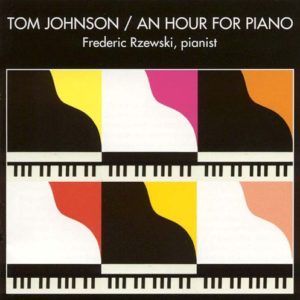
CD
Tom JOHNSON
“An hour of piano”
A trance music piece (1974) made up of repeating 4/4 cells in which an absolutely steady eighth-note motion predominates. Often several cells are going on simultaneously, and one cell frequently mutates into another through the addition or subtraction of a note or two. One has to step back far enough to get a perspective on the large-scale shifts in density and tonality before the impact of An Hour For Piano can be felt. Frederic Rzewski plays very percussively throughout, giving the piece an intense forward motion.
12,00€
Out of stock
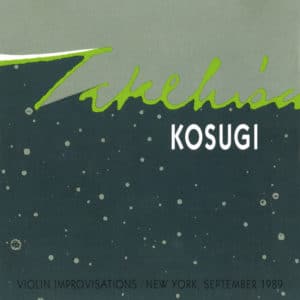
CD
Takehisa KOSUGI
“Violin improvisations”
Takehisa Kosugi, electric violin. "1990 CD release of solo violin & electronics recorded in NYC in September of 1989. Kosugi is of course the main "Taj Mahal Traveler" and a key player in Fluxus-related activities during the sixties. This is some of the most beautiful mathematical-relationship inspired solo performance grate/scrape out there, it’s really hard to believe that all present glossed-out cavern/tank sonics are derived from a single violin & a digital delay unit. Just enough trace of certain ’Eastern’ micro-tonalitites & alien gesture to keep your ears dancing on end. Sublime.”
12,00€
Out of stock
CD
Robert ASHLEY
“Your money my life goodbye”
An opera (1999) commissioned by Bayerisher Rundfunk Munich’s Hörspiel und Medienkunst department about an internationally renowned swindler, who almost took down the European and American banking system. Featuring the voices of Robert Ashley, Sam Ashley, Thomas Buckner, Jackie Humbert, and Joan La Barbara. Recorded and mixed by Tom Hamilton.
14,00€
In stock
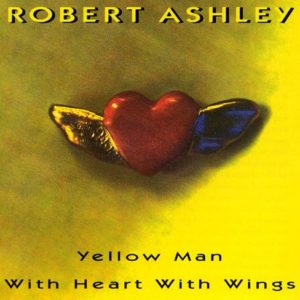
CD
Robert ASHLEY
“Yellow man with heart with wings”
1978. Robert Ashley, English voice and all instruments; except "Blue" Gene Tyranny, clavinet; Spanish voice, Guillermo Grenier.
“A two-part composition with narration (part one in Spanish and part two in heavily altered English) commissioned by public radio station KUNM in Albuquerque, this music has a plain, serene beauty. Part one is a narration by Guillermo Grenier in dreamy, flatly inflected Spanish, backed by a four-note synthesizer track, and punctuated by mysterious, heavily processed vocalizations. Ashley throws in extensive sound washes and other electronic figures which flutter in and out of the mix. The text, "Ideas from The Church," will later show up in the 1994 opera, Foreign Experiences. It is included in the liner notes. In part two, the four-note synthesizer line returns, this time backing an ethereal, sustained chord, and the vocals sound "like a distant rendering of the earth’s electromagnetic halo.”
12,00€
Out of stock
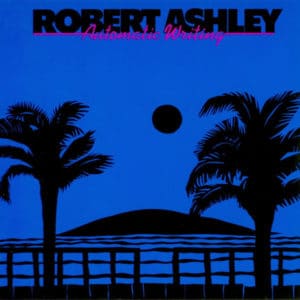
CD
Robert ASHLEY
“Automatic writing”
“Robert Ashley; Cynthia Liddell, Mary Ashley, Mary Lucier, and Barbara Lloyd; The Brandeis University Chamber Chorus, Alvin Lucier, Director.
Three of Ashley’s landmark recordings, Automatic Writing (1979), Purposeful Lady Slow Afternoon (1971) and She Was A Visitor (1967). Composed in recorded form over a period of five years, Automatic Writing is the result of Robert Ashley’s fascination with involuntary speech. He has recorded and analyzed the repeated lines of his own mantra and extracted four musical characters. The result is quiet, mysterious, melancholy and an early form of ambient music. Purposeful Lady Slow Afternoon, and She Was a Visitor are excerpts from an opera entitled That Morning Thing that was composed in 1966-67, as a result of Ashley’s impulse to express something about the suicides of three friends, in particular the intellectual problem of the idea of suicide. The opera takes the form of an alternation of scenes of rationalizations (or explanations) and scenes of descriptions.
Purposeful Lady Slow Afternoon is a woman’s description of a sexual experience. It is Ashley’s attempt "to demonstrate the dichotomy between the rational-whatever can be explained in words-and its opposite-which is not irrational or a-rational, but which cannot be explained in words." The lead voice, the processed back-up chorus, the recurring bell tone, and the pervading tape hiss, create an unsettling mood. She Was a Visitor is another form of description, it is intended to be understood as a form of rumor. The chorus is divided into groups, each headed by a leader. A lone speaker repeats the title sentence throughout the entire performance. The separate phonemes of this sentence are picked up freely by the group leaders and are relayed to the group members, who sustain them softly and for the duration of one natural breath. The time lag between the group leaders’ phoneme choices and those phonemes being picked up by members of the group produces a staggered, chant-like effect, with the sounds moving outward from the nearest performer to the farthest. Booklet notes by Robert Ashley.”
12,00€
Out of stock
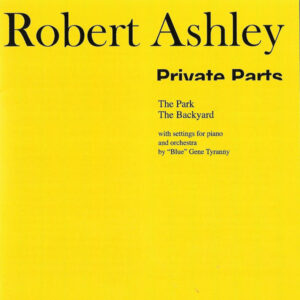
CD
Robert ASHLEY
“Private parts (the record)”
1977. Robert Ashley: voice. “Blue” Gene Tyranny: keyboards. Kris: tablas.
“Centered around the mesmerizing voice of Robert Ashley, this early version (released on LP by Lovely Music in 1979) of The Park and The Backyard is a masterpiece in its simplicity of form and in the purity and intensity of its effect on the listener. These two pieces were later to become the opening and closing segments of the seven part opera for television, Perfect Lives.”
14,50€
In stock

CD
Pauline OLIVEROS
“Crone music”
Pauline Oliveros, solo accordion; Panaiotis, processing and mixing. “Commissioned by Mabou Mines, the experimental theater group from New York, for their interpretation of "King Lear," Oliveros’ Crone Music is a subtle and haunting electronic music endeavor. Interfacing an abundance of digital delay processors, reverb effects and foot pedals to bend pitches from piercing to twisted, sonorous tones, with her one-of-a-kind expanded accordion, Oliveros produces rich, eerie textures. "Studio recordings from 1989-90, ’commissioned by Mamou Mines, the New York based experimental theater collective, for their production of Lear by William Shakespeare.’ In use herein is a fairly complex series of pitch-modulated foot-controlled digital delay units which render Oliveros’ solo accordion playing into a full accordion ensemble. This all results in seriously dense overtone/ghost chord action, complete with microtones and countermelodies emulating something like a grand-pipe-organ jam session. Heavy. By far the most ear-triggering of all Oliveros’s explorations with said instrument."
14,00€
In stock
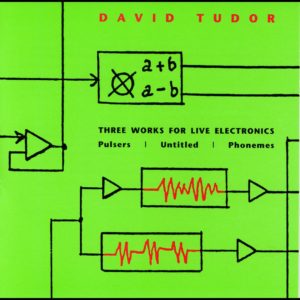
CD
David TUDOR
“Three works for live electronics”
David Tudor, electronics; with Takehisa Kosugi, electronic violin and vocals; produced and recorded by David Tudor, Nicolas Collins, and John D.S. Adams. Originally released on LP in 1984 and rereleased in September 1996, just following Tudor’s death on August 13, with the addition of Phonemes. “Pulsers explores the world of rhythms created electronically by analog, rather than digital, circuitry. With analog circuitry, the time-base common to the rhythms can be varied in many different ways by a performer, and can eventually become unstable. Untitled is a part of a series of works composed in the 1970s that were developed through experiments in generating electronic sound without the use of oscillators, tone generators, or recorded natural sound materials. Composed in 1972, it was designed for simultaneous performance with John Cage’s vocalization of his Mesotics re Merce Cunningham. The work was revived in 1982, and performed with improvised vocals by Takehisa Kosugi. Phonemes was commissioned by the Merce Cunningham Dance Company for Cunningham’s dance Channels/Inserts, a work made both as a "filmdance" and for the stage. Phonemes employs two discrete processes which provide input source material for an array of sound modifying electronics, thus creating a multitude of outputs.”
14,00€
In stock
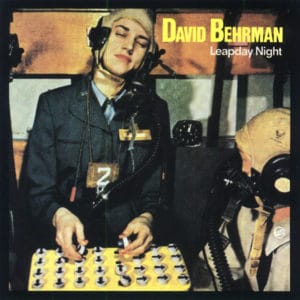
CD
David BEHRMAN
“Leapday night”
David Behrman, electronics; Takehisa Kosugi, violin; Ben Neill and Rhys Chatham, trumpets...A series of three pieces/suites; ’Leapday Night’, ’A Traveler’s Dream Journal’, and ’Interspecies Smalltalk’ involving Rhys Chatham/Ben Neill (on trumpet/mutantrumpet), Fluxus mainstay Takeisha Kosugi (violin), and Behrman himself on electronics. Behrman creates thickly layered liquid sounds utilizing this complex computer music system which absorbs, actually hears, the sounds of instrumentalists, then plays off their improvisations with its own synthesized reactions. The system consists of pitch sensors ("ears" with which it listens to the performing musicians), various music synthesizers (some homemade), a computer graphics color video display and a personal computer. "Heavy period-synth float with bare accompaniment, thankfully just-pre DX-7."
15,00€
In stock
CD
David BEHRMAN
“On the other ocean”
David Behrman, electronics, Kim-1 microcomputer; Maggi Payne, flute; Arthur Stidfole, bassoon; David Gibson, cello. Recording engineers: "Blue" Gene Tyranny and Richard Lainhart. Originally released by Lovely Music on LP in 1978; reissued on CD in 1996.
“On the Other Ocean is an improvisation by Maggi Payne and Arthur Stidfole centered around six pitches which, when they are played, activate electronic pitch-sensing circuits connected to the "interrupt" line and input ports of a microcomputer, Kim-1. The microcomputer can sense the order and timing in which the six pitches are played and can react by sending harmony-changing messages to two handmade music synthesizers. The relationship between the two musicians and the computer is an interactive one, with the computer changing the electronically-produced harmonies in response to what the musicians play, and the musicians influenced in their improvising by what the computer does.
Figure in a Clearing, made a few months before On the Other Ocean, was the first piece of Behrman’s to use a computer for music. For Figure, the Kim-1 ran a program which varied the time intervals between chord changes. The time intervals were modelled on the motion of a satellite in falling elliptical orbit about a planet. David Gibson’s only "score" was a list of 6 pitches to be used in performance, and a request that he not speed up when the computer-controlled rhythm did. The timbral richness and concentrated eloquence of his playing sprang from his own sources.
Charming booklet notes by David Behrman.”
12,00€
In stock
CD
Alvin LUCIER
“Sferics – Music for solo performer”
“Sferics is the shortened term for atmospherics, natural radio-frequency emissions in the ionosphere, caused by electromagnetic energy radiated from nearby or distant lightning. These signals - resonant clicks and pops, called tweeks and bonks by scientists - occur in the audible range of humans and may be picked up by antennas and amplified for listening. They are best received at night, far from power lines. Occasionally, certain sferics get caught on and travel long distances along the magnetic flux lines around the earth, producing whistlers - downward-gliding signals which may last up to two or three seconds. My interest in sferics goes back to 1967, when I discovered in the Brandeis University Library a disc recording of ionospheric sounds by astrophysicist Millett Morgan of Dartmouth College. I experimented with this material, processing it in various ways - filtering, narrow band amplifying and phase-shifting - but I was unhappy with the idea of altering natural sounds and uneasy about using someone else’s material for my own purposes. I wanted to have the experience of listening to these sounds in real time and collecting them for myself. When Pauline Oliveros invited me to visit the music department at the University of California at San Diego a year later, I proposed a whistler recording project. Despite two weeks of extending antenna wire across most of the La Jolla landscape and wrestling with homemade battery-operated radio receivers, Pauline and I had nothing to show for our efforts. About ten years later composer Ned Sublette, who was interested in radio waves of all kinds, recommended a book by Calvin R. Graf, Listen to Radio Energy, Light and Sound, which describe a simple method of building a large loop antenna with which to receive these natural phenomena. Sferics was recorded by the composer on August 27, 1981, in Church Park, Colorado. The sound material was collected continuously from midnight to dawn with a pair of homemade antennas and a stereo cassette tape recorder. At regular intervals the antennas were repositioned in order to explore the directivity of the propagated signals and to shift the stereo field.”
15,00€
In stock
CD
Alvin LUCIER
“Still lives”
Three new pieces for piano soloist with accompanying pure wave oscillation. Titles: “Music for Piano with Slow Sweep Pure Wave Oscillators”(performed / composed for Marilyn Nonken), “On the carpet of leaves illuminated by the moon” (performed / composed for Ryuko Mizutani), and “Still Lives” (performed / composed for Joseph Kubera). All pieces exhibit Lucier’s unique take on performance-environment concepts. Quiet, melancholy, rather soothing. Gaining age with grace I suppose.” Hrvatski
14,00€
In stock
CD
Alvin LUCIER
“Theme”
New 1999 release previously unrecorded Lucier works from the mid-90s. Features: “Music for Piano with Magnetic Strings” (performed by Lois Svard, piano), “Theme” (Sam Ashley, Thomas Buckner, Jacqueline Humbert and Joan La Barbara, voices set to a poem by John Ashbery) and “Music For Gamelan Instruments, Microphones, Amplifiers and Loudspeakers” (performed by the Wesleyan University Gamelan Ensemble). “ ‘Music For Piano...’ is a work in which the strings of a piano sound by themselves. Several EBows (small electromagnets used primarily with electric guitars) are placed on the strings of the piano. The pianist works from a prose score which describes the process and suggests (s)he freely position and reposition five EBows on the piano strings, creating strands of sounds of varying density and texture. Much of the pianist’s time is spent listening for harmonics, audible beating, occasional rhythms produced as one or more magnets vibrate against adjacent strings, and other acoustic phenomena. ‘Theme’ sets a poem of John Ashbery’s to music. Lucier didn’t want to violate the flow of the words of the poem by fragmentation or any other cut-up method. The stanzas seemed musical enough just as they were, and he wanted the audience to hear the poem more or less in its pristine state. So working intuitively and by ear, he wrote out the poem for four readers in the order it was written, repeating words and phrases, overlapping and superimposing them in various ways. To ’set’ the poem, he inserted microphones into the mouths of various vessels, including a small milk bottle, a sea shell, a vase , and an empty ostrich egg, to pick up the words as they were sounding inside the vessels. The readers speak normally, alllowing the pitches of their voices which match those resonances of the vessels to create musical sounds.”a
14,00€
Out of stock
CD
Alvin LUCIER
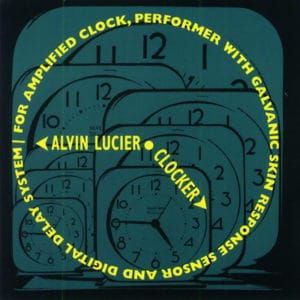
“Clocker”
“For amplified clock, performer with galvanic skin response sensor, and digital delay system; Alvin Lucier, performer; recorded by Nicolas Collins. Through the means of a galvanic skin response sensor driving a digital delay on a miked clock, Lucier creates the illusions of time expanding and contracting, and of a room that is changing in size. Another classic Lucier catalog item, a 45-minute recording made in 1991 of this piece that he first conceived in 1978. The piece is for: amplified clock, performer with galvanic skin response sensor and digital delay system. The sounds that emanate are beautifully shifting patterns of tock-collage that reveal dramatic sonic detailings. "I wanted to make a work in which a performer could speed up and slow down time, stopping it, if possible, simply by thinking. I bought a Westclox Silver Bell Monogram in a local store and ordered a galvanic skin response sensor through the Edmund Scientific Catalogue. A GSR is designed to measure differences in skin resistance caused by changes in emotional state. A small current is sent through the body, the response to which is amplified, producing an output voltage which can be used to control various devices...later I added a bank of fixed delays which, as they splay out from the voltage controlled delay, create multiple reflections that almost convince the listener that the room is changing size.”
14,00€
In stock
CD
Alvin LUCIER
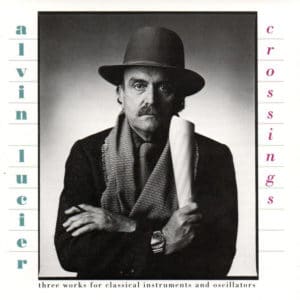
“Crossings”
1990 CD reissue of prime-era Lucier product, with works from 1982-85. Features ’In Memoriam Jon Higgins (for clarinet in A and slow-sweep pure wave oscillator)’, ’Septet for Three Winds, Four Strings and Pure Wave Oscillator’, and ’Crossings (for small orchestra with slow-sweep pure wave oscillator)’. Said slow-sweep pure wave oscillator produces slowly swept pure waves that oscillate (on separate occasions) a clarinet, three winds and four strings, and a small orchestra. Maximum beat frequency heterodyning, often at an audible pitch. Similar acoustic phenomena as Tony Conrad/Penderecki string work and just as aurally stimulating (for those with lazy ear-ciliae). Hrvatski.
12,00€
Out of stock
CD
Alvin LUCIER
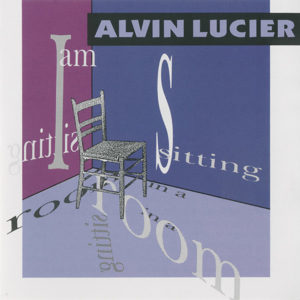
“I am sitting in a room”
Alvin Lucier, recorded voice. “In this fascinating exploration of acoustical phenomena, Alvin Lucier slips from the domain of language to that of music in the course of 40 minutes and 32 repetitions of a simple paragraph of text. In I am sitting in a room, several sentences of recorded speech are simultaneously played back into a room and re-recorded there many times. As the repetitive process continues, those sounds common to the original spoken statement and those implied by the structural dimensions of the room are reinforced. The others are gradually eliminated. The space acts as a filter; the speech is transformed into pure sound. All the recorded segments are spliced together in the order in which they were made and constitute the work. I am sitting in a room was composed in 1970 and was first performed at the Guggenheim Museum in New York City that same year. A second version was made in 1972 to accompany the dance, Dune, performed by the Viola Farber Dance Company at the Brooklyn Academy of Music. Since that time, numerous versions of this composition have been realized in various ways by other musicians, including a Swedish radio broadcast version. This recording was made by Alvin Lucier on October 29th and 31st, 1980, in the living room of his home in Middletown, CT. The material was recorded on a Nagra tape recorder with an Electro-Voice 635 dynamic microphone and played back on one channel of a Revox A77 tape recorder, Dynaco amplifier and a KLH Model Six loudspeaker. It consists of thirty-two generations of Alvin Lucier’s speech and was made expressly for Lovely Music, Ltd.”
12,00€
In stock
CD
Alvin LUCIER
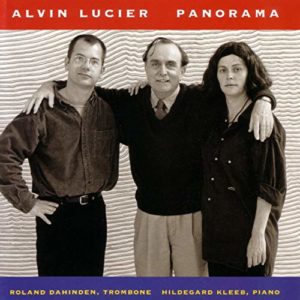
“Panorama”
Consists of 1990-94 recordings, released in ’97. "A gorgeous recording of works for trombone and piano, transformed by Lucier’s electronics and oscillators. ’Wind Shadows’ (1994), ’Music for Piano with One or More Snare Drums’ (1990), and ’Panorama’ (1993) -- were written for the Swiss musicians Roland Dahinden and Hildegard Kleeb, who play them on this CD. Also included: ’Music for Piano with Amplified Sonorous Vessels’ (1990), which was originally written for Margaret Leng Tan."
14,00€
In stock
CD
Alvin LUCIER
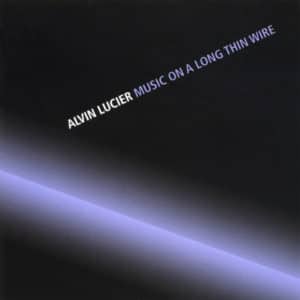
“Music on a long thin wire”
Alvin Lucier, concept & design; the Wire. “A 50-foot length of taut wire passes through the poles of a large magnet and is driven by an oscillator; the vibrations of the wire are miked at either end, amplified and broadcast in stereo. The thin wire is set vibrating four times at four different frequencies; what results is not the low drone one might expect from a long, vibrating wire, but a complexity of evocative, ethereal chords. First released on Lovely Music in 1980, Music on a Long Thin Wire is a classic example of Alvin Lucier’s investigations into the physics of sound and the sonic properties of natural processes.”
12,00€
Out of stock
3 CD
Robert ASHLEY
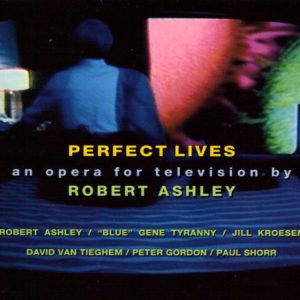
“Perfect lives”
Robert Ashley, solo voice; Jill Kroesen and David Van Tieghem, chorus; "Blue" Gene Tyranny, keyboards; David Van Tieghem, non-keyboard percussion; Peter Gordon, music producer; Paul Shorr, soundtrack producer. 3 CDs.
“Perfect Lives has been called "the most influential music/theater/literary work of the 1980s." At its center is the hypnotic voice of Robert Ashley. His continuous song narrates the events of the story and describes a 1980’s update of the mythology of small town America. Perfect Lives is populated with myriad characters revolving around two musicians --"R", the singer of myth and legend, and his friend, Buddy, "The World’s Greatest Piano Player". They have come to a small town in the Midwest to entertain at the Perfect Lives Lounge. As Robert Ashley describes in the opera synopsis, "they fall in with two locals to commit the perfect crime, a metaphor for something philosophical: in this case, to remove a sizable about of money from The Bank for one day (and one day only) and let the whole world know that it was missing."
The eloping couple, Ed and Gwyn, the old people at the home, the sheriff and his wife (Will and Ida) who finally unravel the mystery, and Isolde who watches the celebration of the changing of the light at sundown from the doorway of her mother’s house are some of the characters who journey through the seven episodes of the opera.
Derived from a colloquial idiom, Perfect Lives transforms familiar material into an elaborate metaphor for the rebirth of the human soul. It has been called a comic opera about reincarnation.”
“Perfect Lives has been called "the most influential music/theater/literary work of the 1980s." At its center is the hypnotic voice of Robert Ashley. His continuous song narrates the events of the story and describes a 1980’s update of the mythology of small town America. Perfect Lives is populated with myriad characters revolving around two musicians --"R", the singer of myth and legend, and his friend, Buddy, "The World’s Greatest Piano Player". They have come to a small town in the Midwest to entertain at the Perfect Lives Lounge. As Robert Ashley describes in the opera synopsis, "they fall in with two locals to commit the perfect crime, a metaphor for something philosophical: in this case, to remove a sizable about of money from The Bank for one day (and one day only) and let the whole world know that it was missing."
The eloping couple, Ed and Gwyn, the old people at the home, the sheriff and his wife (Will and Ida) who finally unravel the mystery, and Isolde who watches the celebration of the changing of the light at sundown from the doorway of her mother’s house are some of the characters who journey through the seven episodes of the opera.
Derived from a colloquial idiom, Perfect Lives transforms familiar material into an elaborate metaphor for the rebirth of the human soul. It has been called a comic opera about reincarnation.”
30,00€
Out of stock
2 CD
Robert ASHLEY
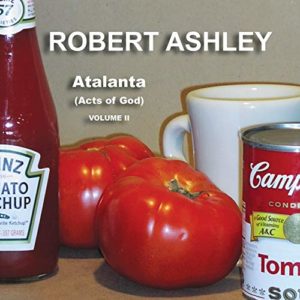
“Atalanta (Acts of God) Volume II”
Robert Ashley, Jacqueline Humbert, voices; Tom Hamilton, mixing and electronics. Three of the satellite songs from Ashley’s opera Atalanta (Acts of God) - each inspired or revolving around one of the main characteris of the opera, Max, Willard and Bud. Atalanta (Acts of God) was written in the 1980s, begin while Ashley was still in production for the television opera, Perfect Lives. The many hours of material were performed throughout the world in many different configurations, but this is the first time these songs have been available on CD.
26,00€
Out of stock
2 CD
Robert ASHLEY
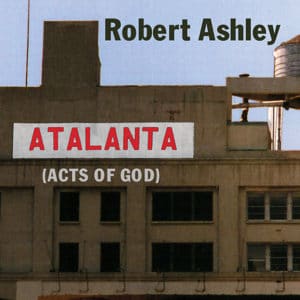
“Atalanta (Acts of God)”
Robert Ashley, solo voice; with Thomas Buckner, Carla Tato, Jacqueline Humbert, voices; “Blue” Gene Tyranny, keyboards; Paul Shorr, mixing and electronics. Recorded live at the Teatro Olimpico in Rome. Sung in English and Italian. “Ashley makes use of the story of “Atalanta” - a royal princess, discarded by her family, who was raised by the animals to become the fastest-running human, and who was later reclaimed by her father to marry her off for dynastic purposes-to present the character aspects of the "successful suitor." These three aspects of character are presented in the opera as anecdotes about three extraordinary men of our times: Max Ernst (surrealist painter), Willard Reynolds (shaman storyteller) and Bud Powell (composer pianist). The genius of these three men can be taken to represent three aspects of the opera itself: image, narrative and music. In the imaginary setting of Atalanta (Acts of God), one companion (singer) reminds her of her excellence (the “Odalisque” arias); another recommends to her the characteristics of excellence in men (the “Character Reference” arias); and a third amuses her with anecdotes, as if told to her by each of the three men (the “Anecdotes”).”
26,00€