
In stock

CD
LETHE
“Catastrophe Point #5”
“The latest in Kuwayama Kiyoharu’s signature series of compositions that explore the charged, mysterious atmosphere of disused industrial sites. For this album, Lethe turns his attention to an abandoned warehouse by a pier in his hometown of Nagoya, Japan, using objects discovered in situ to perform a ritual of sonic resurrection. He brings a dead space back to life, giving it a voice and allowing it to speak. Metal chains, sheet metal, broken machinery, and factory debris are bowed, struck, and dragged across the concrete floors of the massive hall, reverberating and responding as Kuwayama and his microphones scuttle across the desolate terrain. Growling cello and unstable horns underscore the torrents of percussive clatter. Catastrophe Point
5 is a haunting album of volatile, malevolent ambience. For fans of Christoph Heemann, Surface of the Earth, The New Blockaders, Z’ev, or Organum.”
4,00€
In stock

CD
NMPERIGN
“Ommatidia”
“Nmperign are one of the most celebrated and influential bands in contemporary improvised music. Yet surprisingly, more than a decade after their debut, Greg Kelley (trumpet) and Bhob Rainey (soprano sax) have never recorded a studio album as an unaccompanied duo... until now ! Intransitive is proud to present the nmperig album that fans have been waiting for: the core duo, beautifully recorded in an actual studio with excellent microphones. The music is spare and peerlessly inventive as always, but the mood remains light and joyful, with a subtle undercurrent of absurd humor. While improvised music can sometimes seem airless and precious, Ommatidia opens the window on a sunny afternoon... the album’s gusts of breath, percussive splatter, and controlled explosions form six succinct pieces that feel alive and vital, while still speaking in nmperign’s utterly unique sonic language. A perfect way in for newcomers and a revelation for long-time fans, Ommatidia is the essential Nmperign.”
4,00€
In stock

CD
FAILING LIGHTS
“Failing lights”
“An evocative work of bleak electronic atmosphere and suffocating dread, Failing Lights is the intensely personal vision of Michigan (via Lexington, KY) artist Mike Connelly. While he has toured the world as 1-3 of legendary industrial-noise units Hair Police and Wolf Eyes, Connelly spends his days crafting a much different sound on his own. Under the Failing Lights flag, he has self-published a nearly uncountable number of cassettes and CDRs of rough drones, detuned improvised grit, blown-out burl, and unstable acoustics in tiny editions that quickly vanish into collector-land. Intransitive is proud to present the defining - and first widely available - Failing Lights statement, an album of sinewy horror with a fine-tuned beauty within its darkness. A single piece in five sections, Failing Lights begins with disquietingly barren negative space. As the album creeps forward, it steadily dispenses sheets of diffuse throat-scratch and skittering strings, culminating in a blast of molten organ. Not noise, ambient, improv, black metal, or anything else: this is pure Failing Lights.” label info “Mike Connelly’s Failing Lights CD is a deep trip into darkness, density and dimension. This work is not random noise. Connelly is able to bend sound and texture at will, with a great deal of control. He sculpts huge amounts of space and intensity with a great deal of grip. Really good!” Henry Rollins
4,00€
In stock

CD
Roel MEELKOP
“5 (ambiences)”
The music of 5 (Ambiences) deals with ways of approaching and conceptualizing ambient sound, of abstracting sounds from the world until they become much more than documentary observations. The music plays with some referential material (are they field recordings ? digitally generated ? does it matter ?), a very wide dynamic range (to encourage active listening), evocative and even dramatic structures but also forbiddingly impersonal distance. It toys with the notion of ’ambient music’ (as New Age wallpaper) by using ambiences to create deeply involving compositions which change as one changes one’s listening focus. This music is open to any interpretation, or no interpretation at all. This is Meelkop’s second CD on Intransitive. He is also a member of Kapotte Muziek, Goem, THU20, and the Audio.nl label.”2,502,503,00
4,00€
In stock

CD
KAPOTTE MUZIEK & LETHE
“Tsurumai”
Recorded in the industrial city of Nagoya, Japan, Tsurumai is an expansive album of rough electro-acoustic music. Starting from a few small clicks, the music steadily grows outward, uneasily shifting and expanding. Rude bumps interrupt narcotic drones, the telltale human hands of improvisation disappear into a mysterious group sound, acoustic and digital elements blur, vision fails, and time stops...Frans de Waard began his Kapotte Muziek (literally ’broken music’) project in Nijmegen, the Netherlands, in 1984, and went on to found the Korm Plastics label. In Nagoya, KM met up with Kuwyama Kiyoharu, aka Lethe, an omnivorous multi-instrumentalist whose work typically takes advantage of some acoustic peculiarity of the space in which it is recorded."
4,00€
In stock
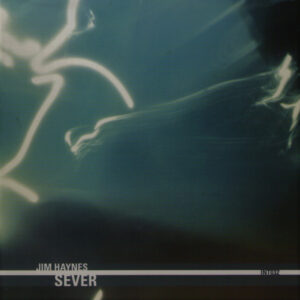
CD
Jim HAYNES
“Sever”
“It gives me great pleasure to present Sever, the third solo album by San Francisco-based composer Jim Haynes, whose singular music evades simple attempts to describe it. The process of decaying and wearing down materials is implied in Sever; its passages of rough clang and cyclic scraping metal seem implacably tangible, as if one is witnessing time-lapsed erosion in action. For me, Sever conjures images of oncoming storms, abandoned industrial sites, huge empty warehouses, creaking glass, ships rocking in a port, the middle of the ocean far from land. Sever is an engaging album of evocative, highly visual drone music made up of layers upon organic layers that are in constant motion, and yet seem somehow still. Jim Haynes has exhibited at Westspace (Melbourne, Australia), Diapason (New York), Jack Straw Productions (Seattle), and Works (San Jose), Eyedrum (Atlanta). He has collaborated with Loren Chasse (as the duo Coelacanth), Keith Evans, Steve Stapleton (Nurse With Wound), and irr.app.(ext.). He runs the acclaimed Helen Scarsdale label, and works as the Editorial Director for 23five, a nonprofit organization dedicated to the development and increased awareness of sound arts within the public arena. He has written extensively on sound art, noise culture, minimalism, and general music experimentation for The Wire, The San Francisco Bay Guardian, Metro Pulse, The Sound Projector, and Chunklet.”
4,00€
In stock

CD
SEHT & STELZER
“Exactly what you lost”
“This first album of cross-hemisphere hum by Seht (the nom de musique of one Stephen Clover) and Howard Stelzer emerged organically via tapes shared through the post between New Zealand and Boston over the course of a year or so. Without any spoken agenda or external organizing concept from the start, the music willed itself into a darkly psychedelic, implacably melancholy haze. A quick scramble of caffeinated tape action kicks things off, then the album rapidly dissipates into a thick, black sleep of environmental debris and humid fog. Worn loops were played into various outdoor acoustic environments (playgrounds, front porches, trees, other prosaic spots), then fed back into low-tech machines for further harmonic decay. Shapes form in the shadows and slip away as the edges blur. After a few attempts to heave itself up onto its feet, Exactly What You Lost eventually huffs its last breath and dissolves in a cavern of industrial tics. “
4,00€
In stock

CD
NERVE NET NOISE
“Dark garden”
“Dark Garden, the new album of thrillingly idiosyncratic analog buzz by Nerve Net Noise (aka homemade synth duo of Hiroshi Kumakiri and Tagomago) , is the perfect entry-point for listeners new to their singular sonic world. This album of short, song-like synthesizer pieces might take its cues from manga, science fiction, early electronic music, and minimal techno… but as always, the Tokyo band resides firmly in their own inexplicable universe. Dark Garden assimilates fractured beats, stuttering pulses, naked static, and impatient drones into an album that’s somehow both playfully alive and coldly menacing. In his liner notes, synth builder Kumakiri describes spirits that lurk in the shadows and watch people go about their lives, existing in a parallel world that bring to mind fairy tales and myth. Nerve Net Noise’s music is similarly just out of reach, present in the natural world but not quite a part of it. For fans of Klaus Schultze, Jessica Rylan, Henri Pousseur, or Pan Sonic…”
4,00€
In stock

CD
C. Spencer YEH
“1975”
“Intransitive Recordings is extra-proud to present 1975, the debut solo album of tightly-coiled, crackling electronic ambience by C. Spencer Yeh. While “debut” may seem a strange word to use to describe an album by a guy with such a deep discography, Yeh explains that 1975 is like nothing anyone has heard from him before. “One thing is I really wanted to focus on a certain feeling of stasis. So much of what else I do just kinda pushes and pushes forward. 1975 is more vertical than horizontal, even though one can’t escape the horizontal completely.” Taking a confident step away from his familiar work as an improvising violinist and vocalist, from the mythology of his rock/noise band Burning Star Core, and from his recent forays into pop music, the omnivorous Yeh here reveals himself to be a composer of unsettling electro-acoustic miniatures. Yeh approached his source material with a desire to be transparent, even literal, and to avoid straightforward narrative. The literal is there in the deceptively matter-of-fact track titles - “Drone”, “Voice”, “Shrinkwrap from Solo Saxophone CD”, “Two Guitars” - but knowing which sound source is buried beneath these tones does little to remove 1975’s sense of enveloping mystery. This is sensual abstract music with a light touch, a confident minimalism that only reveals its unsettling depth, sharp corners, and playful malevolence with repeat listens. For fans of Eliane Radigue, Hecker, Pita, or Kevin Drumm. Born in Taiwan, and now based in Brooklyn NY, C. Spencer Yeh is the one constant of the “band” Burning Star Core, whose other members have included Mike Shiflet and Trevor Tremaine & Robert Beatty of Hair Police. He has collaborated with a staggeringly diverse range of artists, including John Wiese, Tony Conrad, New Humans w/ Vito Aconcci, Aaron Dilloway, Okkyung Lee, Evan Parker, Yellow Swans, Greg Kelley, Paul Flaherty, Don Dietrich (of Borbetomagus), and Chris Corsano (to name just a few).”
4,00€
Out of stock

CD
KOMMISSAR HJULER & MAMA BAER
“Asylum Lunaticum”
“Intimate, absurd, feral and aggressive in its homemade weirdness, the music of Kommissar Hjuler & Mama Bär has been a well-kept secret for too long. Hjuler & Bär have self-published their dada-esque sound poetry experiments on small-edition lathe-cut LPs, tapes, and CDRs for years, usually adorning them with elaborate junk sculptures and paintings. Intransitive is proud to collect their best recordings so far onto a single, widely available CD so that anyone can hear the music without making a major financial investment. The husband and wife duo uses deceptively simple means - typically just their voices, a cassette-tape recorder and a microphone - to create astonishing suburban dramas that are somehow both sweetly charming and staggeringly psychotic, sometimes at the same time. Join Kommissar Hjuler and Mama Bär as they perform acts of banal heroics, like exploring the basement… taking their son for a bicycle ride… walking with a red shirt into a field of cattle… pondering reforms made to the Danish police system… all viewed through the unhinged lens. Kommissar Hjuler & Mama Bär are painters, sculptors, film-makers, and musicians based in Flensberg, Germany, near the Danish border. Their artwork has been exhibited in galleries and at festivals around the world. They collaborated with like-minded artists such as Thurston Moore, Arnulf Meifert, John Weise, Runzelstirn & Gurgelstock, Jan Iwers, and Af Ursin, among many others.”
4,00€
In stock

CD
Howard STELZER
“Bond inlets”
“Ten years after his debut CD, Stone Blind (Intransitive, 1997), Howard Stelzer presents Bond Inlets, his first widely available solo cassette-tape composition. Boston-based sound artist Stelzer was never happy with his first album, and threw away most of the pressing as soon as it returned from the factory. He took the occasion of his label’s tenth anniversary to dissect the source sounds of that work and filter it through the lens of the interceding decade in order to build a piece that more accurately reflects what his intentions were then and what his aesthetic is today. Bond Inlets is subtly emotional work of foreground drone that beats its head against the plastic walls of cassette-tape technology, laying bare the physicality of the process of its creation. The dying motors of cassette players, tape-saturated percussion, and blown-out condenser-mic wail are mixed with elements of new live improvisations and field recordings taken in his neighborhood to create oceans full of no-fidelity murk and evocative hiss. There is an implacable melancholy to Bond Inlets, with fragments of distant melodies that surface only to be subsumed again into the grime.”
4,00€