
Out of stock

2 LP
Norbert MÖSLANG
“Patterns”
With Sascha Armbruster, sopranosax. Kelsey Maiorano, oboe. Toshiko Sakakibara, clarinet. Jens Bracher, trompet. Stephen Menotti, trombone, Janne Jakobsen, tuba.
Mastering + recording: Pierre Bendel. Artwork: Albert Oehlen. Recorded November 10, 2018.
"Sonoristic experiments, strange timbres, extended playing techniques, exotic or unusual instrumental compilations, home-made resonators and innovative ways of improvising – the music of “Patterns” is fundamentally based on free improvisation and has many relations to experimental, spectral and contemporary academical music. Saxophone, clarinet, oboe and trumpet are the leading instruments. They contain the basic of the melody line which is driving filled with stunning passages, furious growls and full blasts. Vivid, elegant or intriguing and aggressive saxophone, expressive moving clarinet brings the basics of avant-garde jazz – free improvisation, spontaneous solos, sudden jumps from the one mood to another, strange, eclectic and exclusive musical decisions, dizzy passages and gorgeous ornaments are the main elements of saxophone improvisations. The improvisers get on shrieky exclamations, tremendous culminations with persecuting hysteric sequences, repetitive series and intriguing turns. More compounds related to avant-garde and modern jazz, and free improvisation, as well, are brought in by trumpet. It’s rigorous, bright and wild fullfilled with full blasts, hot growls, bursts of energy, thrilling, breaking, waining and vital solos, transcendental passages which are suddenly passing to subtle, silent and minimalistic mood. Here repetitive series, monotonous tunes, deep harsh sounds and haunted pieces make a great combo with trombone. A trombone keeps a stable basement of melody line – its deep bass line passing to bright cracking solos and reaching tremendous, luminous and vibrant culminations gives more stable, deep and solemn sound to the compositions. On the contrary, an oboe is more related to contemporary academical music and academic avant-garde – sonoristic experiments, evocative ideas, extravagant decisions, modern expressions and original instrumentation based on extended playing techniques related to contemporary academical music. That makes an effort to suggestive, inspiring and evocative sound. Deep heavy tuba’s solos form a stable bass line. As a result, a nice compilation is made by mixing up reeds and brasses of various ranges – oboe and tuba makes a strong relation to contemporary academical music, trumpet, trombone, saxophone and clarinet are completely based on free improvisation and avant-garde jazz. That makes an evocative and original sound." (from https://avantscena)
28,00€
Out of stock

LP
Jerzy PRZEZDZIECKI & Andrzej KARALOW
“Pedestal’s Complement”
Live at Ambient Festival – Gorlice 2019. Andrzej Karałow: grand piano / guitar / guitar effects. Jerzy Przeździecki: Buchla Music Easel / Eurorack System.
16,00€
Out of stock
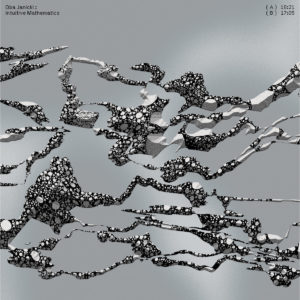
LP
Qba JANICKI
“Intuitive Mathematics”
Qba Janicki played drums since he was four. Form an early age, he's been affiliated with the community functioning at the Mózg club. He's played hundreds of concerts with various artists, including Roscoe Mitchell, Toshinori Kondo, Peter Brotzmann, Fred Frith, Jarzy Mazzoll and Sławek Janicki and currently appears in bands such as Wojtek Mazolewski Quintet.
“Intuitive Mathematics” is illustrative improvisation registered with the use of percussion instruments amplified by piezoelectric sensors and an instrument I constructed myself called the Soundboard. I mounted metal springs, screws and tongues onto a pine board. Highly enhanced piezo amplification brings all sounds closer to the audience’s ears and allows them to hear rich harmonies of the percussion set as well as “non-musical” elements such as friction, shrieking or vibrations that occur inside a highly resonating set of mechanisms. All amplified instruments are transferred to an analogue mixer, which sends signal to speakers located behind the percussion, which allows me to play constantly on the verge of feedback controlled by correcting the frequency, changing the tension of particular membranes, placing various objects on the drums or changing the position of my body against the instruments and speakers.
16,00€
Out of stock

LP
Jerzy MAZZOLL and Jerzy PRZEZDZIECKI
“Melodnie”
Jerzy Mazzoll is a key figure of polish music over last twenty years. He is a bass clarinet virtuoso that goes deep into the tradition of Polish improvisers and contemporary music composers of the mid-twentieth century. He played in many bands such as Arhythmic Perfection, Pieces of Brain, Mazzoll & Arhythmic Memory. He cooperated, among others with musicians such as Roscoe Mitchell, Greg Fox, Django Bates, Peter Brotzmann, Jon Dobie, Alfred Harth, Peter Kowald, Vytutas Labutis, Jeffrrey Morgan, Tony Oxley, Olga Szwajgier and Tomasz Stańko,
Jerzy Przeździecki is an electronics producer. He successfully performs at contemporary music festivals such as Warsaw Autumn or in clubs presenting techno music. Music has no limits for him. He cooperates with pianist Andrzej Karałow but also with other electronic music producers such as Jacek Sienkiewicz (Tumult Hands). Recently, performing improvised music in duets with virtuoso of classical instruments, he significantly reduces his impressive music setup by limiting itself to simple sound generators. He stays away from the beaten formulas and surprises with his sound. The most important thing for him is improvisation, from which the essence of the musical structure emerges.
Artistic experiences of these two made up the template for this kind of music , which is governed by its own rules and uses all possible means to achieve a goal.
On Melodnie their sound is firmly anchored in the aesthetics of contemporary compositions, free or noise.
16,50€
In stock

CD
TRIGGER + Jérôme NOETINGER
“Camera Obscura”
Trigger is an acoustic wind instrument trio working in the context of experimental music. Together they aim for the creation and shaping of a homogenous overall sound. The three instruments function as generators of noise and sound and blend together in a complex sound mass, which is permanently moving, changing and renewed. By using advanced playing techniques such as circular breathing, multiphonics and a vast palette of air sounds the instruments are removed from their traditional context and resemble electro acoustic sound sources, which interact by imitating and contrasting with the specifically use of timbre, density and dynamic. The players react to each other immediately, allowing fast changing sound constellations with a compositional awareness for structure and duration.
Nils Ostendorf | trumpet
Matthias Müller | trombone
Chris Heenan | contrabass clarinet
Jérôme Noetinger | Revox tape recorder
Recorded december 14th 2014 at NK Berlin. Editing: Nils Ostendorf. Mixing and Mastering: Werner Dafeldecker
10,00€
Out of stock

CD
Hélène BRESCHAND plays Éliane RADIGUE and Kasper T. TOEPLITZ
“Octopus”
Hélène Breschand (harp) plays :
- Occam Ocean XVI, composed by Eliane Radigue (27:12)
- Convergence, Saturation & Dissolution, composed by Kasper T. Toeplitz (26:23)
11,00€
Out of stock

LP
Joanna JOHN
“No End”
From Felt Hat Reviews site : "I guess it's pretty difficult to look beyond the profile of a certain label if you think of new releases coming from it. With Bocian records who releases improvisational stuff or modern composition, sometimes more or less obscure drone noise aspects of the former two, I was pretty surprised to hear about Joanna's album. It was also intersting since I know her from her visual art side which doesn't change the fact that it was a bit surprising to see her upcoming release on Bocian. (...) Joanna's debut album is a nice promise to something, I am sure, she will develop in her own time. It has lots of subtle hues and undertones. An element of mystery and even whimsicality. An aspect of arcane eroticism and even synergy of the elements. It has a rubber stamp of her associations with the creative background which by all means is not a blemish. And foremostly there is something else. A courage to step into a larger world with something that creates a new profile, a new aspect of expression. Re-modelling, re-defining, self-actualising and at the end of the day self-discovery is growing pains in artist's life but hats off to those who do it. Well done!"
16,50€
Out of stock

LP
Wojciech PUŚ
“Endless: Music for Performers”
Since 2016, Wojciech Puś has been developing Endless, a sensual architecture of images, light, and sound that serves as a base structure for a poetic essay, a dream about identities in process.
The music result is a fascinating electronic masterpiece showcasing his talent as a performer and producer creating his own unique universe
This works sound very ancient and probably very alien as well. This is music of hope, love, despair and sadness and probably all at the same time.
16,00€
Out of stock

2 CD
Kasper T. TOEPLITZ & ZEITKRATZER
“Agitation / Stagnation”
CD1. Zeitkratzer plays "Agitation | Stagnation" by Kasper T. Toeplitz. With Isabelle Duthoit, clarinet Hild Sofie Tafjord, French horn, Hilary Jeffery, trombone, Reinhold Friedl, piano, Burkhard Beins, percussion, Lisa Landgraf, violin, Burkhard Schlothauer, violin, Nora Krahl, violoncello, Ulrich Phillipp, double bass, Martin Wurmnest, sound. Kasper T. Toeplitz: conductor & electronics.
Recorded by Martin Wurmnest at Festival Sacrum Profanum, October 4th 2016, Kraków.
CD2. Kasper T. Toeplitz, "Agitation | Stagnation", electronic composition.
Disc 1 contains Zeitkratzer's instrumental interpretation of Toeplitz's electronic score from Disc 2.
Though these works are intended to be heard separately, the two discs can also be played simultaneously.
13,50€
Out of stock

LP
Reinhold FRIEDL
“String quartets”
“String Quartet 1, 2 et 3” composed by Reinhold Friedl (Zeitkratzer) and performed by Quatuor Diotima.
“Reinhold Friedl’s string quartets do not pretend to be string quartets, they are anti-Goethe. There is no sophisticated conversation of four elder gentlemen, sitting in armchairs. The music is physical work for the performers and intended to be physical pleasure for the listeners. All three quartets are based on the same idea: smooth transformations from a given texture into another one. The random-driven details vary between the pieces and the parts of the pieces. Meanwhile Reinhold Friedl developped a sotware in the frame of a PHD projects at Goldsmiths University London to help him modeling these texture transpositions.
The CD version is available here.
16,00€
Out of stock

LP
Burkhard STANGL
“Zwölf”
12 short live solo guitar, like a portrait of the Austrian musician at a time of his course, oscillating between minimalism, American primitive, improvisation or noise. Guitar's lover will be pleased.
Some tracks with field recordings from Steve Bates.
Mastered by Martin Siewert.
16,00€
In stock
CD
BLIP
“Dead space”
Blip is a duo collaboration between Jim Denley and Mike Majkowski: two of Australia’s most prominent improvising musicians. They began playing together in 2002, as members of The Splinter Orchestra, and formed Blip in 2009. They have been developing their own approach to the woodwinds/strings duo arrangement, deconstructing and reconstructing this format. Blip music focuses on duration, the subtleties of sound, the pitch within timbre and texture, as well as pulse. With this Blip move from clear and simple structures to multi-layered complexities.
Original price was: 10,00€.5,00€Current price is: 5,00€.
Out of stock

In stock

CD
SLEAZE ART
“Infra”
“Sleaze Art is a quartet of bass players: Eryck Abecassis, Frederick Galiay, Jb Hanak and Kasper T. Toeplitz, the latter also being listed as the composer of the piece. His compositions are usually, as far as I know, along the graphical side of things, and rather giving instructions than specific notes to play. Toeplitz is a man with a background in modern classical music but with penchant for all things quite loud. Loud and bass-heavy of course, as the bass is his primary instrument. […] This release is causing serious damage to my speakers, because of the bassiness of the music (and I have to seriously consider my relationship with neighbours all around here: the bass sound is more penetrating that the high end sound to surrounding areas; good to know if one of them has a loud party which I would want to end). At seventy minutes this is also quite a long work and not one that one easily digests. Heavy bass drones, loud bass
noise, sounding almost like the sound of plane engine from time to time, the work takes quite some time to develop”. (FdW, in Vital)
8,00€
Out of stock

LP
Kevin DRUMM
“Crowded”
Recorded, mixed, edited at Pathetic Bubble Studio 2009-2012. Source material for Repetitive Algae recorded in 2007. Spectral editing and time domain consultation on Repetitive Algae by Russell Haswell. “[…] The two side long pieces here seem to be two different sides of the same coin. ’Rediki’ is a piece of electronics, loud at times, swirling-beating-oscillating most of the times and piercing right through your ears, without mercy, but it’s also, at the same time, not y’r typical noise record. The deep end has a menacing/treating/oppressing sound that adds a lot of tension to the piece. Here is where the true power of the piece lies, and what sets the great composer aside from those who try their hands at noise. But alright it’s a noise indeed, and for me the really great/even better piece of music is on the other side, ’Reptitive Algae’, which seems to me all acoustic, and perhaps if not all, then at least for a greater part. Maybe it’s here where Drumm got the idea for the title of the record. One side is crowded with buzzing and ringing of tones and on the other it’s just crowded with sounds. Multi-layered with tons and tons (it seems) of acoustic sounds, rubbing against each other. Sound source: unknown. There is a bit of electronica in there, but don’t ask me how this works. Well, perhaps I could guess: lots of loops of different lengths playing at the same time, so that they hardly make the same connection very soon again. Music with a great deal of tension, like a horror movie soundtrack. The graveyard shakes and all the bodies rise like one man, rattling their cages. This record is reminder I should play some Kevin Drumm soon again.” (-) Frans de Waard, Vital Weekly.
15,00€
In stock

LP
Kevin DRUMM
“Phantom jerk”
6 oscillators recorded July 2013 at Single Room Occupancy, Chicago IL. Vinyl issue of his 2013 CDr release, “Phantom Jerk”. In the tradition of “Imperial Distortion”. Black vinyl.
15,50€
Out of stock

LP
Jérôme NOETINGER – ENSEMBLE PHOENIX
“Les voix de l’invisible”
“In June 2012, Ensemble Phoenix Basel commissioned me to create a work for them to play.
It was the first time in my life I had received such a request. After several months of reflection, I accepted and began working on a way of communicating a music with other musicians.
Not knowing classical notation, I decided to do what I do know: that being, working with recording and loops, and thereafter, ask the musicians to play by ear.
After a first session, having their interpretations in mind, I could reorganise it all taking into account the physical limits of each instrument.
I am very happy with this experience and warmly thank everyone in the Ensemble Phoenix for having made this possible.
The title, “Les voix de l'invisible” (The voice of the invisible) is inspired by Pascal Quignard's book, “La haine de la musique” (The hate of music).” Jérôme Noetinger (translated by Liz Racz)
Ensemble Phoenix Basel. Christoph Bösch, flute. Toshiko Sakakibara, clarinet. Raphael Camenisch, saxophone. Samuel Wettstein, synthesizer. Maurizio Grandinetti, electric guitar. Aleksander Gabrys, doublebass. Daniel Buess, percussion and electronics. Thomas Peter, electronics.
Jérome Noetinger, composition, Revox tape machines.
Recorded live at Gare du Nord Basel, 14 & 15 June 2013.
Recorded, mixed and mastered by Alex Buess.
16,00€
Out of stock

LP
Ikue MORI – Maja S.K. RATKJE
“Scrumptious sabotage”
Now as a vinyl also. “A recording of live performances which brought together two essential figures of the contemporary scene: an oustanding Norwegian composer and vocal artist Maja S.K. Ratkje and a celebrated improviser and composer, former DNA drummer, Ikue Mori. The common sound territory, created together by Mori and Ratkje, balances between quietly growing tension and powerful outbursts of unrestrained, relentless noise. Within this harmony, Ratkje takes adventurous excursions towards the borders and unknown facets of sound, using treated voice as well as an acoustic and electronic workshop, while Mori’s thoughtful laptop provides a strong frame and a sense of deep focus. In these carefully crafted, long and nuanced compositions, both artists maneuver between meditative, ritual areas and irregular, elusive noise blots. The most astonishing element of this superb performance is the realization that even though the compositions are entirely intuitive, created without any previous planning, guidelines or negotations, the listener can sense a nearly palpable sense of deep connection and understanding between the artists. Their knowledge and keen, immediate communication create an invisible harness, which naturally directs the stream of improvisation. This engaging, exhaustive listen is a contemplative retreat and a daring, dizzying somersault at once”. (-) Olga Drenda. All music composed and performed by Maja Solveig Kjelstrup Ratkje and Ikue Mori. Recorded live by Barry Hollywood at Black Box, Belfast, March 31, and by Dan Fox and Simon Hanson at The Lanternhouse, Ulverston, March 29, 2012 UK. Mixed and mastered by Maja S.K. Ratkje in Svartskog, Norway. Cover design by Lasse Marhaug.
16,00€
Out of stock

CD
INNER EAR
“Return from the Center of the Earth”
Mikolaj Trzaska, saxophones, bass clarinet. Steve Swell, trombone. Per- Åke Holmlander, tuba. Tim Daisy, drums. All compositions by Inner Ear. Recording during concerts in Chicago: Hideout (02.03.2011) & Elastic (30.08.2012). Mixing by David Zuchowski. Cover Design: Marek Wajda.
15,00€
Out of stock

CD
WOLFRAM
“Atol Drone ±”
A former member of trio Neurobot, since 2000 a solo artist who also performs in spontaneously created lineups (eg. with Thomas Ankersmit, Alexei Borisov, Xavier Charles, Phil Durrant, Facial Index, David Galbraith, Janko Hanushevsky, Martin Koller, Robert Piotrowicz, Ignaz Schick, Andrew Sharpley, Torben Tilly, Viön & Mem). He has played in Poland, Germany, Austria and France. He made 3 records with Neurobot: Normal Subjects (1998), Tarcza 9800 (2000), l.i.v.e.v.i.l. (2001) and 6 solo records Projekt Drei (2000), Mind Locations (2001), Atol Drone (2002), Superrecombination_sys (2002), Habitat (2004), Thinking Dust (2005). Neurobot’s music explored the areas of improvised noise and power electronics, however, Wolfram’s solo projects incline towards ambient music mixing blurred sounds in the foreground with the noise elements receded into the background. His slowly developing, mostly minimalist compositions are based on ambient and noise. The result of this fusion is music which seems calm, but is a full of tension underneath. Wolfram’s latest album "Thinking Dust" has received enthousiastic reviews from music critics in Poland. Co-released with Bô t Records. 1, 2, 4, 6 taken from Atol Drone album previously released in 2002 on Polycephal. 3, 5, 6 taken from Superrecombination_sys mini-album previously released in 2002 on Mik.Musik.!
“Atomic Fears. Rarely you remember the moment you listen to a record for the first time as something clear and tangible - what is retained in the memory is the atmosphere and the emotions that the music evokes, but not much else. Atol Drone (Polycephal 2002) was an altogether different case. It broke through into my mind surreptitiously like a high Pacific wave and for years it held sway over the area of my musical memory responsible for the rough sea, atomic fears, sea fever, incomplete Morse signals nobody can decipher anymore, spectral sounds from a sunken orchestra which keeps on playing, stray radio waves picked up at random by a stranded survivor, and sounds of an approaching freighter, possibly bringing relief and rescue. The world Wolfram conjures up on Atol Drone is an oneiric and delicate one, weaved from delicate samples. Somewhere in the background you can make out murmurs of unrest from a volcano, silence of a never-ending calm interrupted by the sound of a bird gliding in the sky, sea waves rhythmically crashing against a coral reef, sounds of an impending disaster and, finally, violence and cruelty of the enraged Ocean. So intense and powerful is the sense of unrest this album seems to convey that virtually each of its pieces could work as a soundtrack to a film. Its narration, well thought-out composition, and drama-like structure makes it a soundtrack ready to be used in that medium. Ten years having passed since, the re-issue contains an addition of four new tracks to the original four: GameLAN, Smokgame, Minimumgame, and specially composed for this release Back to the Atol. Yet again, despite the changes I felt the same atomic fears I felt back then. Apparent suspension and calm (SE), soothing drones of cicadas (GameLAN) and nostalgic beauty (Flashback) seem a mere prelude to an imminent disaster (Smokgame, Minimumgame) but a past or a future one? Wolfram makes time freeze - after all, an atoll’s exotic, unusual, circular structure imposes repetitions and recurring motifs which may equally be of the present (Back to the Atol) and the past (NW). Both the original and the re-issue bonus tracks evoke a similar rush of emotions and fuel one’s imagination in the same way: a landscape extending under the scorching sun, pristine sand on the beaches unspoilt by human foot, the murmur of the sea, palm tree groves waving in slow-motion - the bliss soon to be shattered by an approaching disaster. Tremendously nostalgic and oneiric in each of its track, a perfect collection of atmospheric drone music, born of an exceptional imagination of a Polish artist”. (-) Monika Powalisz (transl. Przemek Chojnacki).
10,00€
Out of stock

CD
VENN CIRCLES
“veNN circles is a typical Bocian release, therefore definitely not for the faint of heart. Gerard Lebik (electronics), Piotr Damasiewicz (trumpet) and RED Trio’s Gabriel Ferrandini (dr) draw you down to their personal hell consisting of distant, muffled, agonized cries that seem to come out of a huge anthill populated by tiny, spooky creatures. The sounds are intimidating echoes, the electronics cause a ringing in the ears providing an atmosphere of constant drizzle. Ferrandini’s percussion remind of objects falling down from nowhere, while Damasiewicz’s style seems to be based on Nate Wooley’s more adventurous albums. This could be an alternative soundtrack for David Lynch’s Eraserhead - creepy, painful, but also exciting!” (http://www.freejazzblog.org)
10,00€
Out of stock

CD
SEC_
“Moscaio”
Composed, edited and mastered by SEC_ between December 2010 and September 2011 using: Revox tape recorder, computer, no-input feedback, field recordings, radio, microphones and pick-ups. The first version of this piece has been produced in the framework of the serie “A short guide to becoming-bat”, curated by Stefano Perna for ORF Ö1 Kunstradio - Radiokunst in 2011. “Long time before humans began to exploit the properties and the uses of the electromagnetic spectrum, animals had already developed a sophisticated system for the manipulation of waves and the transmission of sound signals for the purpose of communication and orientation. Ethologists and natural scientists have shown that many species of animal like dolphins, whales and insects live into an undulatory space made of signals and calls, of frequencies and amplitudes, a radically temporalized space, a pulsating space, that constantly changes, evolves, expands and contracts.
But what an insect feels ? How does it perceives the environment, itself, the other living beings ? Science, on one side, can give us some answer in the form of concepts and theories; this way we can understand the process. Music, on the other side, can assemble for us swarms of perceptions that drag our senses and bodies toward zones where man and insect become indiscernible; there, we are affected by the process. In that region, one is suddenly caught in a becoming-animal that alters its organs, environment, space and time. It let us enter into a waveform space, whose geometry is unknown, a kind of non-human spatiality populated by forces and signs to which our perceptual system is not correctly attuned.
This is the way this composition works. No naturalistic descriptions, no documentary impulses, no metaphoric translations. Here we have a contraption. And, like all machines, this device doesn’t ask to be read or interpreted. You have to activate it, to put it into work, so it can start extracting from your body ways of perceiving of which you were not aware. An insect body appears: weight loss, oblique speed, exhausting slowness, entangled spaces. A shift in the umwelt happens: an imperceptible and obscene sensorial universe comes to the senses, done of buzz, drone, tiny sounds, sudden appearances, unpredictable trajectories and sharp movements.
But these sounds are very far from any desire of reproduction, a simplistic acoustic mimesis of the natural world. Everything here comes from a deeply altered technical world.
In fact, unlike all machines, this device avoids functionality, it works through series of faults: the ambiguous analog autoeroticism of no-input feedbacks, the uptake of radio signals, interferences, the unauthorized excavation of electromagnetic fields, quirky bits of digital data, all stuffed into shreds of tape abominably manipulated. All communication technologies, once designed to preserve information and to exchange watchwords, are brought to the threshold of collapse. And now they start talking an unprecedented language: a nomadic population of traces and marks that, like a swarm made of millions of flying hungry insects, flutter rapidly in the space, than suddenly flock around a piece of meat and then, again, dissolve into chaos”. (-) Stefano Perna
10,00€
Out of stock

CD
NEW MONUMENTS
“Long pig”
“New Monuments is a trio of C. Spencer Yeh on violin and electronics, Ben Hall on trap set (looking at the cover I believe this to be drums) and Don Dietrich on saxophone and electronics. Hall is for me the unknown factor here and Yeh and Dietrich earned their wings in the world of improvisation, the latter through his alliance with Borbetomagus - for me the best group ever when it comes to noise and saxophones. The recordings here where made at Studio L in New York on May 8th 2012 and it's what you expect this to be. If your expectations would have been some mild jazzy improvisation record, then you clearly don't know the history of these men (although, thinking about it: it would be nice for a radical change of tune one day). This is very much along the lines of Borbetomagus, except it's not two saxophones and a guitar, but drums, violin, saxophones and electronics. I expect a lot of electronics actually. It's screaming with noise and distortion, especially on the violin and saxophone side, with the drum kit being splattered around like animal from the Muppet show. It’s forceful, it’s loud, and it’s wild even while it has a moment of quietness here and there. It's not one blast from beginning to end, but rather well defined pieces with a beginning and an end. It sometimes even rocks, like good free rock should be when Hall plays more consecutive rhythms. Much mayhem, much excitement.” (FdW in Vital)
10,00€
Out of stock

CD
Tomasz KRAKOWIAK
“Moulins”
“Tomasz Krakowiak’s latest work on Bocian Records is a purely sonic affair. Performed on acoustic percussion instruments, it has little to do with percussion music. Each piece is named after a particular location and/or a sonic event present there. Krakowiak’s monotonous playing a specific instrument seems to achieve an effect of a field recording made at the given location. What makes this effort successful is a broad range of his techniques and sonic intuition. These excellent recordings oscillate between subtle, single vibrations of metal and meaty wall of sound, with mechanical rasping in the middle of the spectrum. Abstract, yet very physical, and surprisingly direct. This is one of the most interesting free improv projects of this year, even though it isn’t typical improvised music as it features structures characteristic of sound sculpture - no dramatic effects or themes, it is all about the texture of sound and interaction between its layers. Moulins seems to be an example of an interesting trend among drummers who play with free-improv groups but in their solo work focus on purely sonoristic explorations - see the latest releases from Will Guthrie (Sticks, Stones and Breaking Bones, 2012), Chris Corsano (Cut, 2012) or Eli Keszler (Cold, 2011). Krakowiak’s release stands out here, though, owing to its originality. [Daniel Bro ek "Canti Iluminati"]”
10,00€
Out of stock

CD
Reinhold FRIEDL
“Golden quinces, Earthed”
In April 2003, Reinhold Friedl was invited by Elke Moltrecht, the former music curator at Podewil in Berlin to perform a piano recital on the Neo-Bechstein. She had the idea to bring him together with David Balzer, a Berlin-based piano constructor, who owns a beautiful Neo-Bechstein of which there are only seventeen known exemplars world-wide. Friedl’s concept was to create an “orchestra sound” using his inside-piano-techniques on the Neo-Bechstein
About instrument: Between 1929 and 1931 the physicists Walther Nernst and his assistant Hans Driescher developed the Neo-Bechstein Grand Piano at the Heinrich Hertz Institute in Berlin. The idea was to construct an instrument for live radio transmission, because good quality microphones did not exist for this purpose. This was coincidently a difficult time for the piano industry. Piano makers tried to be modern and Bechstein even had their own department for electronic music instruments, as this seemed to be the future!
The main difference to a traditional piano is that instead of amplifying the strings with the help of a wooden soundboard, they are transformed by eighteen humbucker pickups into electrical signals. These signals are sent to a valve amplifier and emitted by a mono loudspeaker. As the piano did not need
a soundboard anymore, the traditional hammer mechanics had to be made differently and much lighter. A lot of sophisticated technical transformations were made. The instrument was built in co-operation with Telefunken who were responsible for the electronic devices and Bechstein who designed the mechanical parts of the instrument. No more than 150 copies of the instrument were produced and it is assumed that only a few instruments still exist, ten are now known to be in various museums. A curiosity of the instrument was the built-in radio receiver. This receiver made it possible to route both the radio signal and the instrument signal simultaneously to the output and mix them. A soundboard in a traditional piano does not only amplify the tone, it also cuts the very high frequencies and damps the oscillation of the strigs due to its mass...” Recorded mixed and mastered by Rashad Becker.
10,00€
Out of stock

CD
Reinhold FRIEDL
“Mutanza”
“This CD presents compositions for piano using the instrument in an unorthodox way. The strings are bowed with nylon strings, stimulated by E-Bows, rubbed with metal, the keys’ sound is examined as a corrugated surface and staccato rhythms are repeated in a narrow register. On the one hand, the pieces introduced here explore new ways of playing the piano. In this sense they are "enlarged playing techniques", as they have been developed for most instruments in the second half of the twentieth century. On the other hand, the works confine themselves to selected material and raise the question to what extent the material already is the composition. To me, it seems less interesting to answer this question, which can hardly be answered unambiguously than to observe that the development of the present music was substantially inspired by electronic music. Mario Bertoncini has expressed this, Helmut Lachenmann has introduced the concept of a "musique concrete instrumentale", Phill Niblocks’ loop-like composed music was inspired by the interference between his Harley Davidson and a droning truck ascending the serpentines of the Rocky Mountains. The present CD is a homage to electronic music and moreover, it documents attempts to clear out a gentrified piece of furniture and technically, to catapult the piano into the present”. “Guero” (Helmut Lachenmann), “Epitaff” (Reinhold Friedl), “Music in Fifths” (Philip Glass), “An American Dream” (Mario Bertoncini), “Mutanza” (Witold Szalonek), “Music for Piano with Magnetic Strings” (Alvin Lucier), “Pan Fried 11” (Phill Niblock). Co-released with Bô t Records.
10,00€
Out of stock

CD
Paal NILSSEN-LOVE & Mats GUSTAFSSON
“Sin-gas”
Mats Gustafsson, tenor, baritone and bass saxophone. Paal Nilssen-Love, drums. Recorded by Martin Siewert in Vienna 2013.
10,00€
Out of stock

CD
Mike MAJKOWSKI
“Bright astonishment of the night”
Mike Majkowski, double bass. Recorded July 2014 in Berlin by himself. Mastered by Werner Dafeldecker.
10,00€
Out of stock

CD
Kasper T. TOEPLITZ
“Fluster”
Composition for electric bass from Zbigniew Karkowski performed by Kasper T. Toeplitz. One hour of extreme sound divided into 3 parts between sub-bass, wall of noise and high frequencies. A commission from GRM.
10,00€
Out of stock
CD
Ikue MORI – Maja S.K. RATKJE
“Scrumptious sabotage”
“A recording of live performances which brought together two essential figures of the contemporary scene: an oustanding Norwegian composer and vocal artist Maja S.K. Ratkje and a celebrated improviser and composer, former DNA drummer, Ikue Mori. The common sound territory, created together by Mori and Ratkje, balances between quietly growing tension and powerful outbursts of unrestrained, relentless noise. Within this harmony, Ratkje takes adventurous excursions towards the borders and unknown facets of sound, using treated voice as well as an acoustic and electronic workshop, while Mori’s thoughtful laptop provides a strong frame and a sense of deep focus. In these carefully crafted, long and nuanced compositions, both artists maneuver between meditative, ritual areas and irregular, elusive noise blots. The most astonishing element of this superb performance is the realization that even though the compositions are entirely intuitive, created without any previous planning, guidelines or negotations, the listener can sense a nearly palpable sense of deep connection and understanding between the artists. Their knowledge and keen, immediate communication create an invisible harness, which naturally directs the stream of improvisation. This engaging, exhaustive listen is a contemplative retreat and a daring, dizzying somersault at once”. (-) Olga Drenda. All music composed and performed by Maja Solveig Kjelstrup Ratkje and Ikue Mori. Recorded live by Barry Hollywood at Black Box, Belfast, March 31, and by Dan Fox and Simon Hanson at The Lanternhouse, Ulverston, March 29, 2012 UK. Mixed and mastered by Maja S.K. Ratkje in Svartskog, Norway. Cover design by Lasse Marhaug.
10,00€
Out of stock

CD
Howard STELZER & Frans de WAARD
“Pink pearl”
Composed in Lowell MA (USA) and Nijmegen (NL) by HS and FdW, 2011-2012.
All sounds were extracted from live, studio and mail collaborations 2002-2011.
Cover photography by Ashley Stelzer. Cover design by Mirt. Mastering by SEC_. Frans de Waard (1965) has been producing music since 1984. First as Kapotte Muziek, but throughout the years, he also worked as Beequeen (with Freek Kinkelaar), Goem (with Roel Meelkop & Peter Duimelinks, both of whom are also a member of Kapotte Muziek these days), Zebra (with Roel Meelkop) and such solo projects as Freiband, Shifts as well as his own name. He played various solo concerts as Goem-FDW in Japan, as part of a package tour with Pan Sonic. Frans de Waard also likes to play sets of improvised music with whoever is available, just as he did with people like Guiseppe Ielasi, Jaap Blonk, Howard Stelzer, Roel Meelkop, Andrew Liles, Radboud Mens and the mayor of his home city Nijmegen. In 2008 film maker Harrie Timmermans made a small documentary about his work with Kapotte Muziek under the title “What You See Is What You Hear”. He has given workshops and lectures at various places, such as Extrapool, the art academy of Maastricht en ’s-Hertogenbosch, the Glinka Conservatorium in Moscow and Lithuania. With Scott Foust he formed the duo The Tobacconists in 2009 and with Wouter Jaspers the duo Ezdanitoff in 2010. Howard Stelzer has been active as a composer and performer of electronic music since 1992. His music exploits the unique sonic and physical qualities of cassette tapes and tape players: gritty hiss, the squeal and hum of cheap motors taxed until (and sometimes well beyond) their breaking point, amplified plastic clatter, and play speed altered by pressure from fingers applied to the tapes’ reels. Early work was stubbornly low fidelity, with awkward pauses and jarring a-musical transitions assembled roughly into rather linear collages. Stelzer’s music has evolved over the years, and now seems to sit still for longer durations. Tapes and cassette artifacts are densely layered, treated, layered some more, thrown into a bin and shaken up, then smoothed back out into pleasantly boring stasis with lots of sharp tacks buried within. Stelzer ran the Intransitive Recordings label from 1997 until 2012.
All sounds were extracted from live, studio and mail collaborations 2002-2011.
Cover photography by Ashley Stelzer. Cover design by Mirt. Mastering by SEC_. Frans de Waard (1965) has been producing music since 1984. First as Kapotte Muziek, but throughout the years, he also worked as Beequeen (with Freek Kinkelaar), Goem (with Roel Meelkop & Peter Duimelinks, both of whom are also a member of Kapotte Muziek these days), Zebra (with Roel Meelkop) and such solo projects as Freiband, Shifts as well as his own name. He played various solo concerts as Goem-FDW in Japan, as part of a package tour with Pan Sonic. Frans de Waard also likes to play sets of improvised music with whoever is available, just as he did with people like Guiseppe Ielasi, Jaap Blonk, Howard Stelzer, Roel Meelkop, Andrew Liles, Radboud Mens and the mayor of his home city Nijmegen. In 2008 film maker Harrie Timmermans made a small documentary about his work with Kapotte Muziek under the title “What You See Is What You Hear”. He has given workshops and lectures at various places, such as Extrapool, the art academy of Maastricht en ’s-Hertogenbosch, the Glinka Conservatorium in Moscow and Lithuania. With Scott Foust he formed the duo The Tobacconists in 2009 and with Wouter Jaspers the duo Ezdanitoff in 2010. Howard Stelzer has been active as a composer and performer of electronic music since 1992. His music exploits the unique sonic and physical qualities of cassette tapes and tape players: gritty hiss, the squeal and hum of cheap motors taxed until (and sometimes well beyond) their breaking point, amplified plastic clatter, and play speed altered by pressure from fingers applied to the tapes’ reels. Early work was stubbornly low fidelity, with awkward pauses and jarring a-musical transitions assembled roughly into rather linear collages. Stelzer’s music has evolved over the years, and now seems to sit still for longer durations. Tapes and cassette artifacts are densely layered, treated, layered some more, thrown into a bin and shaken up, then smoothed back out into pleasantly boring stasis with lots of sharp tacks buried within. Stelzer ran the Intransitive Recordings label from 1997 until 2012.
10,00€
Out of stock

CD
Fred LONBERG-HOLM – Ken VANDERMARK
“Resistance”
Personnel: Fred Lonberg-Holm, cello, electronics; Ken Vandermark, reeds.
“Resistance recorded live in 2013 is an expected performance of unforeseen music. That said, it boosts Vandermark’s stock (not that he needs it) as a soloist. He has, of late, stepped out of his role as composer, arranger, and organizer of ensembles to perform solo and in improvising duos with Nate Wooley, Agustí Fernandez, Mats Gustafsson, and Tim Daisy. Freed from all the duties associated with large ensembles, he can focus on improvising. Here his saxophone and various clarinets weave, bounce, and at times, collide with Lonberg-Holm’s cello and electronics. The music here, all improvised, fills a gap in both their discographies, and it was a long time coming”. (www.allaboutjazz.com)
“Resistance recorded live in 2013 is an expected performance of unforeseen music. That said, it boosts Vandermark’s stock (not that he needs it) as a soloist. He has, of late, stepped out of his role as composer, arranger, and organizer of ensembles to perform solo and in improvising duos with Nate Wooley, Agustí Fernandez, Mats Gustafsson, and Tim Daisy. Freed from all the duties associated with large ensembles, he can focus on improvising. Here his saxophone and various clarinets weave, bounce, and at times, collide with Lonberg-Holm’s cello and electronics. The music here, all improvised, fills a gap in both their discographies, and it was a long time coming”. (www.allaboutjazz.com)
10,00€