
Out of stock

LP
Max EASTLEY – Steve BERESFORD – Paul BURWELL – David TOOP
“Whirled Music”
“Black Truffle is honored to present the first ever reissue of Whirled Music by Max Eastley, Steve Beresford, Paul Burwell and David Toop, one of the key documents of the inventive and energetic scene around the London Musicians Collective in the late 1970s and early 1980s. Originally released on Toop’s own Quartz label in 1980, the LP features a remarkable series of performances made entirely with whirled and swung instruments and objects.
Part of the second generations of British free improvising musicians, the prolific scene centered around the performers heard here chafed at the limitations present within the music and ideology of improvising legends such as Derek Bailey, Evan Parker, Tony Oxley and John Stevens. Where the first generations of British free improvisers often demonstrated a rigorous commitment to non-idiomatic free improvisation and instrumental virtuosity, musicians like Beresford reconnected with the dada antics of figures like Han Bennink and surrendered to joyful musical promiscuity, gleefully disrupting expectations around ‘serious’ improvised music through quotations (of anything from Betthoven to reggae) and deliberate amateurism.
However, where many recordings by various groupings of these musicians made around this time are gloriously anarchic real-time collages – see the classic Alterations LPs – Whirled Music is a singularly focused affair. Beginning in 1979, Whirled Music was the title given to a series of performances in which a variety of instruments and objects, both home made and store bought, traditional and invented, would be whirled to produce sound. In addition to variations on traditional instruments such as the bullroarer, Whirled Music also made use of whirled whistles, hand drums, radios and microphones. Due to the danger this represented for both performers and audiences, the performers wore protective masks and were separated from the audience by a net.
As Toop points out in the newly commissioned notes contained in this reissue, these events were somewhere between ‘composition, installation, and improvisation’, at once sharply focused and wildly uncontrolled. Presented in glorious cassette-recorded room fidelity, the LP’s first side features a single extended live performance in which percussive chattering, resonant gong-like tones, mysterious wind tones and swells of delirious noise join together to create a sonic landscape as reminiscent of an environmental recording (wind in the trees, the squawking of birds) as of an ethnographic recording of the music of an unknown civilization. Although purely acoustic, the music has an unstable, dispersed quality reminiscent of the pioneering live electronics of the Sonic Art Union or even early Voice Crack. The LP’s second side presents a series of shorter excerpts, including some beautifully sparse outdoor recordings where the sounds of the whirled instruments blend indistinguishably into the backdrop of environmental sounds.
A stunning document from a still under-recognised moment, Whirled Music is here presented in a stunning gatefold sleeve and 24-page booklet containing new liner notes by David Toop alongside contemporary reviews, flyers, notes on the instruments and performance documentation. Remastered and cut at 45RPM by Rashad Becker at D&M Belin for maximum fidelity.” Francis Plagne
Part of the second generations of British free improvising musicians, the prolific scene centered around the performers heard here chafed at the limitations present within the music and ideology of improvising legends such as Derek Bailey, Evan Parker, Tony Oxley and John Stevens. Where the first generations of British free improvisers often demonstrated a rigorous commitment to non-idiomatic free improvisation and instrumental virtuosity, musicians like Beresford reconnected with the dada antics of figures like Han Bennink and surrendered to joyful musical promiscuity, gleefully disrupting expectations around ‘serious’ improvised music through quotations (of anything from Betthoven to reggae) and deliberate amateurism.
However, where many recordings by various groupings of these musicians made around this time are gloriously anarchic real-time collages – see the classic Alterations LPs – Whirled Music is a singularly focused affair. Beginning in 1979, Whirled Music was the title given to a series of performances in which a variety of instruments and objects, both home made and store bought, traditional and invented, would be whirled to produce sound. In addition to variations on traditional instruments such as the bullroarer, Whirled Music also made use of whirled whistles, hand drums, radios and microphones. Due to the danger this represented for both performers and audiences, the performers wore protective masks and were separated from the audience by a net.
As Toop points out in the newly commissioned notes contained in this reissue, these events were somewhere between ‘composition, installation, and improvisation’, at once sharply focused and wildly uncontrolled. Presented in glorious cassette-recorded room fidelity, the LP’s first side features a single extended live performance in which percussive chattering, resonant gong-like tones, mysterious wind tones and swells of delirious noise join together to create a sonic landscape as reminiscent of an environmental recording (wind in the trees, the squawking of birds) as of an ethnographic recording of the music of an unknown civilization. Although purely acoustic, the music has an unstable, dispersed quality reminiscent of the pioneering live electronics of the Sonic Art Union or even early Voice Crack. The LP’s second side presents a series of shorter excerpts, including some beautifully sparse outdoor recordings where the sounds of the whirled instruments blend indistinguishably into the backdrop of environmental sounds.
A stunning document from a still under-recognised moment, Whirled Music is here presented in a stunning gatefold sleeve and 24-page booklet containing new liner notes by David Toop alongside contemporary reviews, flyers, notes on the instruments and performance documentation. Remastered and cut at 45RPM by Rashad Becker at D&M Belin for maximum fidelity.” Francis Plagne
21,00€
Out of stock

LP
Keiji HAINO – Jim O’ROURKE – Oren AMBARCHI
“This Dazzling, Genuine “Difference” Now Where Shall It Go?”
With This Dazzling, Genuine “Difference” Now Where Shall It Go, Black Truffle presents the 8th full-length release from the trio of Keiji Haino, Jim O’Rourke and Oren Ambarchi. Over the course of four LP sides, the October 2014 concert documented here ranges from rock power trio dynamics to maelstroms of analogue electronics. Once again, the three demonstrate their commitment to pushing into new areas of instrumental exploration and group interaction. Where previous releases from the trio have often featured extended vocal workouts from Haino, at times suggesting abstracted folk song, Haino’s vocalizations here are restricted to the occasional impassioned cry, putting the focus squarely on instrumental interplay. More than ever before, this feels like the work of three equals, with O’Rourke or Ambarchi taking the lead role as often as Haino does.
The four pieces presented here each focus on extended development. The first side is propelled by Ambarchi’s busy, Jack DeJohnette-esque cymbal and tom work, which provides a skittering yet insistent pulse over which Haino and O’Rourke’s FX-saturated strings rise and fall, momentarily converging for passages of near stasis before again pulling apart to continue wandering through areas of gently sour discord; O’Rourke’s use of a six-string bass here boosts the harmonic density of the music and often makes his contribution difficult to distinguish from Haino’s guitar. On the second side, O’Rourke uses his pedals to make his bass near unrecognizable, generating a squelching, harmonically unstable riff that Ambarchi accompanies with a semi-martial snare pattern, the two driving home the idea for the duration of the side while Haino moves between frenetic octave-doubled fuzz riffing and streams of feedback.
The third side presents some of the most abstract music heard from the trio since their first release (Tima Formosa, BT04). Continuing Haino’s explorations of new instruments, the side opens with a long passage of toy piano, an instrument that in his hands is at once childlike and imbued with a mysterious gravity. Alongside occasional vocal interjections from Haino (singing in English), Ambarchi creates delicate textures on cymbals and metallic percussion while O’Rourke, for the first time in this group, performs on the EMS Synthi. In a long passage in the middle of the side, he provides ample evidence of his mastery of the instrument, crafting a complex texture from pointillist stabs and rapid sweeps that possesses the same unpredictable yet controlled feeling of classic live-electronics documents like Pierre Henry’s ‘Corticalart’ series. With Haino joining in with his own electronics, the side eventually builds to a chaotic climax.
Beginning with a sequence of ‘fourth world’ drums and flute, the final side unfolds an epic build-up over a hypnotic foundation of pounding toms. Moving from flute to vocals to electronics, Haino eventually picks up the guitar in the second half of the piece, igniting a spectral blur over driving rhythms from bass and drums that eventually builds to a frenzied climax.
The four pieces presented here each focus on extended development. The first side is propelled by Ambarchi’s busy, Jack DeJohnette-esque cymbal and tom work, which provides a skittering yet insistent pulse over which Haino and O’Rourke’s FX-saturated strings rise and fall, momentarily converging for passages of near stasis before again pulling apart to continue wandering through areas of gently sour discord; O’Rourke’s use of a six-string bass here boosts the harmonic density of the music and often makes his contribution difficult to distinguish from Haino’s guitar. On the second side, O’Rourke uses his pedals to make his bass near unrecognizable, generating a squelching, harmonically unstable riff that Ambarchi accompanies with a semi-martial snare pattern, the two driving home the idea for the duration of the side while Haino moves between frenetic octave-doubled fuzz riffing and streams of feedback.
The third side presents some of the most abstract music heard from the trio since their first release (Tima Formosa, BT04). Continuing Haino’s explorations of new instruments, the side opens with a long passage of toy piano, an instrument that in his hands is at once childlike and imbued with a mysterious gravity. Alongside occasional vocal interjections from Haino (singing in English), Ambarchi creates delicate textures on cymbals and metallic percussion while O’Rourke, for the first time in this group, performs on the EMS Synthi. In a long passage in the middle of the side, he provides ample evidence of his mastery of the instrument, crafting a complex texture from pointillist stabs and rapid sweeps that possesses the same unpredictable yet controlled feeling of classic live-electronics documents like Pierre Henry’s ‘Corticalart’ series. With Haino joining in with his own electronics, the side eventually builds to a chaotic climax.
Beginning with a sequence of ‘fourth world’ drums and flute, the final side unfolds an epic build-up over a hypnotic foundation of pounding toms. Moving from flute to vocals to electronics, Haino eventually picks up the guitar in the second half of the piece, igniting a spectral blur over driving rhythms from bass and drums that eventually builds to a frenzied climax.
24,00€
Out of stock

LP
Keiji HAINO
“ 1973 live – milky way”
Black Truffle is thrilled to present the first vinyl issue of Keiji Haino’s Milky Way. Originally released as a limited CD in Japan by the short lived Mom ‘n’ Dad Productions in 1993, this release documents a blistering live performance recorded in Kyoto in 1973, five years before the formation of the first line-up of Fushitsusha, and eight years before Haino’s first solo album. Working with a mysterious set-up including primitive electronics, homemade acoustic instruments, piano and voice, Haino lets loose a single 48-minute psychedelic maelstrom, marrying the immersive echo-fields of kosmische music to the rough and ready hands-on feel of classic 1960s live electronics à la MEV or Ashley’s Wolfman. Despite the absence of guitar, this recording clearly lays the groundwork for the epic blowouts which were to make Haino’s name in years to come, building up to a point of almost unbearable intensity in its final minutes as Haino’s voice wails over a wall of distorted DIY electronics. At times presaging the psychedelic noise of C.C.C.C., Milky Way shows Haino’s singular intensity and ritualistic performance style already in full flower at this early date in his long career. Presented in raw and immediate room fidelity (complete with dramatic tape drop-out), this is both an essential historical document and a classic performance in its own right.
Presented in a deluxe heavyweight sleeve with an inner sleeve featuring Haino’s poetry in Japanese, with English translation by Alan Cummings Original design by Keiji Haino & Yasunori Arai. LP reissue design via Stephen O’Malley
Presented in a deluxe heavyweight sleeve with an inner sleeve featuring Haino’s poetry in Japanese, with English translation by Alan Cummings Original design by Keiji Haino & Yasunori Arai. LP reissue design via Stephen O’Malley
20,00€
Out of stock

LP
John DUNCAN
“Klaar”
“Black Truffle is thrilled to announce the first ever vinyl reissue of legendary performance and sound artist John Duncan’s forgotten gem Klaar, originally released by Extreme in 1991 and partly created in collaboration with Andrew McKenzie (The Hafler Trio). Duncan is perhaps most well known for his notorious early performances pieces, which explored violence, self-denial, and the establishment of extreme psychological and physical states in both artist and audience. Alongside these transgressive experiments, Duncan began to create audio works primarily using short wave radio. Where some of Duncan’s earlier recordings are composed of magnificently sculpted but abrasive walls of noise, Klaar, recorded while Duncan was living in Amsterdam, occupies a more meditative territory.
Opening with ‘Delta’, which layers long tones seemingly sourced from slowed down voices over a distant, watery field recording, the remainder of the first side is occupied with the epic title piece, which arranges shortwave radio abstraction, vocal experiments, and field recordings (street sounds, fireworks, monastic chants) into an episodic cinema for the ear. The second side is dominated by the long, brooding ‘The Immense Room’, where layers of shortwave interference and field recordings are gradually built up into a pulsing, wavering bed of sound infused with a subtly disturbing sense of psychological unrest. This rises to the surface near the end of the piece as sexual moans and ominous rumbles crisscross the stereo image before being abruptly brought to a halt.
A singular work of electroacoustic composition, Klaar is both compositionally sophisticated and infused with a sense of mystery and a vital reality often lacking in more academic experimental music; it sits proudly alongside contemporaneous recordings by Duncan’s friends and collaborators Jim O’Rourke and Christoph Heemann and is a must for anyone interested in their work.” - Francis Plagne
Opening with ‘Delta’, which layers long tones seemingly sourced from slowed down voices over a distant, watery field recording, the remainder of the first side is occupied with the epic title piece, which arranges shortwave radio abstraction, vocal experiments, and field recordings (street sounds, fireworks, monastic chants) into an episodic cinema for the ear. The second side is dominated by the long, brooding ‘The Immense Room’, where layers of shortwave interference and field recordings are gradually built up into a pulsing, wavering bed of sound infused with a subtly disturbing sense of psychological unrest. This rises to the surface near the end of the piece as sexual moans and ominous rumbles crisscross the stereo image before being abruptly brought to a halt.
A singular work of electroacoustic composition, Klaar is both compositionally sophisticated and infused with a sense of mystery and a vital reality often lacking in more academic experimental music; it sits proudly alongside contemporaneous recordings by Duncan’s friends and collaborators Jim O’Rourke and Christoph Heemann and is a must for anyone interested in their work.” - Francis Plagne
17,00€
In stock

LP
Eyvind KANG & Jessica KENNEY
“Reverse tree”
Black Truffle is thrilled to announce Reverse Tree, the new LP from the acclaimed duo of Eyvind Kang and Jessika Kenney, two musicians who have established themselves as powerful voices working at a unique intersection of contemporary composition, improvisation, and Asian traditional music forms. Either individually or as a pair, they have worked in contexts ranging from performances of traditional Persian and Javanese music to collaborations with Sunn O))), but their work together as a duo (documented on The face of the earth and Aestuarium, both released on Ideological Organ/Editions Mego) most clearly represents the central concerns of their diverse practices: a music of the inner life of sound, demanding ritualistic focus and promising heightened sensations.
On Reverse Tree, the duo expand their work together into the realm of the chamber ensemble, presenting two side-long works that feature Kenney’s voice and Kang’s viola alongside a multitude of other instrumentalists. Kang’s Thoughts on Being Exiled to the Frontier, for Lord Wei, inspired by a text by the Tang dynasty poet Hsueh T’ao, features an all-star international ensemble: Kang, Kenney, maverick Israeli conductor Ilan Volkov on violin, Icelandic cellist Hildur Gu nadóttir, and guitarists Oren Ambarchi and Stephen O’Malley. The piece is primarily composed of irregular patterns of pizzicato notes and guitar harmonics, gently falling in and out of sync and providing a subtly unstable support for Kenney’s voice, which sings long, wavering tones, at times reminiscent of Michiko Hirayama’s classic performances of Scelsi. Drawing on 20th century instrumental techniques, alternate tuning systems, non-western music and the experience of nature (the irregular rhythms of the piece calling to mind nothing so much as drops of rain), the piece opens a space both serene and subtly uneasy.
Kenney’s ‘Elm features Kenney and vocalist Nova Ruth (of Filastine & Twin Sista) alongside an ensemble of strings and Seattle’s Gamelan Pacifica, performing on Javanese instruments tuned to the slendro scale. An uncanny timbre created by bowing the keys of the Gamelan’s instruments, supported by bowed harmonics from the strings, is heard consistently throughout the piece. After a long introductory section in which this harmonic cloud slowly descends from shimmering high notes to rumbling bass, the vocalists enter, singing a slow and stately setting of a 19th century Surakarta poem (attributed to Mangkunegara the IV). The melody is sung as a rich and wavering heterophony, with the ensemble sometimes rising up to support individual notes. The poem deals with the idea of a form of knowledge achieved through deeds, as a practice and state of the heart. This is music in slow motion, in which, in Kenney’s words,
‘scouring the edges of each syllable, each vocalist is kneeling on a sheep hide, searching for the possibilities of what this knowledge might be, shared and private, through layers of history, culture, colonialism, distance, desire’.
Features an all-star international ensemble with Kang and Kenney alongside maverick Israeli conductor Ilan Volkov on violin, Icelandic cellist Hildur Gu nadóttir, and guitarists Oren Ambarchi, Stephen O’Malley, vocalist Nova Ruth and Seattle’s Gamelan Pacifica.
Presented in a deluxe sleeve designed by Stephen O’Malley. Mastered and cut by Rashad Becker at D&M, Berlin June 2016. Cut at 45rpm for maximum fidelity.
On Reverse Tree, the duo expand their work together into the realm of the chamber ensemble, presenting two side-long works that feature Kenney’s voice and Kang’s viola alongside a multitude of other instrumentalists. Kang’s Thoughts on Being Exiled to the Frontier, for Lord Wei, inspired by a text by the Tang dynasty poet Hsueh T’ao, features an all-star international ensemble: Kang, Kenney, maverick Israeli conductor Ilan Volkov on violin, Icelandic cellist Hildur Gu nadóttir, and guitarists Oren Ambarchi and Stephen O’Malley. The piece is primarily composed of irregular patterns of pizzicato notes and guitar harmonics, gently falling in and out of sync and providing a subtly unstable support for Kenney’s voice, which sings long, wavering tones, at times reminiscent of Michiko Hirayama’s classic performances of Scelsi. Drawing on 20th century instrumental techniques, alternate tuning systems, non-western music and the experience of nature (the irregular rhythms of the piece calling to mind nothing so much as drops of rain), the piece opens a space both serene and subtly uneasy.
Kenney’s ‘Elm features Kenney and vocalist Nova Ruth (of Filastine & Twin Sista) alongside an ensemble of strings and Seattle’s Gamelan Pacifica, performing on Javanese instruments tuned to the slendro scale. An uncanny timbre created by bowing the keys of the Gamelan’s instruments, supported by bowed harmonics from the strings, is heard consistently throughout the piece. After a long introductory section in which this harmonic cloud slowly descends from shimmering high notes to rumbling bass, the vocalists enter, singing a slow and stately setting of a 19th century Surakarta poem (attributed to Mangkunegara the IV). The melody is sung as a rich and wavering heterophony, with the ensemble sometimes rising up to support individual notes. The poem deals with the idea of a form of knowledge achieved through deeds, as a practice and state of the heart. This is music in slow motion, in which, in Kenney’s words,
‘scouring the edges of each syllable, each vocalist is kneeling on a sheep hide, searching for the possibilities of what this knowledge might be, shared and private, through layers of history, culture, colonialism, distance, desire’.
Features an all-star international ensemble with Kang and Kenney alongside maverick Israeli conductor Ilan Volkov on violin, Icelandic cellist Hildur Gu nadóttir, and guitarists Oren Ambarchi, Stephen O’Malley, vocalist Nova Ruth and Seattle’s Gamelan Pacifica.
Presented in a deluxe sleeve designed by Stephen O’Malley. Mastered and cut by Rashad Becker at D&M, Berlin June 2016. Cut at 45rpm for maximum fidelity.
15,00€
Out of stock

LP
Crys COLE
“Sand – Layna”
Limited edition LP of Canadian sound artist crys cole’s first full-length solo release.
She is known for her work with Keith Rowe, Oren Ambarchi and in Ora Clementi, her acclaimed duo with Australian composer James Rushford.
The LP comprises of two side-long works. Sand, recorded in 2004, crafts a sustained texture from rubbed surfaces that transcends academic sound art tropes to recall the haunted environments of Massimo Toniutti and Small Cruel Party. Layna, constructed between 2012 and 2013, lets loose a volatile stream of microscopic activity. Adding extremely amplified voice and domestic field recordings to the mix, the piece inhabits a space of bodily, almost sensual intimacy, moving beyond the Cageian tradition of small sounds to somewhere uncomfortably human.
Artwork design by Lasse Marhaug. Vinyl cut made by Rashad Becker at Dubplates & Mastering, Berlin
LP only release, edition of 300
Sand / Layna is the first full-length solo release by Canadian sound artist crys cole. While cole is known to many through her collaborative work with a host of Canadian artists and internationals such as Oren Ambarchi, Keith Rowe and James Rushford, this LP presents the first opportunity for an extended appreciation of her singular approach to amplified sound. Using contact and other microphones to amplify her interactions with small objects and the surfaces on which they rest, cole’s work exists in a lineage of heavily amplified 'small sound' that stretches back to Cage’s Cartridge Music. cole’s approach to these materials and techniques is distinguished by its single-mindedness: rather than simply searching for interesting or attractive sounds, her performances attempt to illuminate the sonic properties of the specific objects and amplification devices she uses. Devoid of looping and complex processing, the sonic outcome of her work always retains an audible link to the handling of microphones and what they amplify. The awkward and sometimes even 'ugly' sounds of manipulated microphones and recording equipment thus sit comfortably alongside the mysterious crackle of amplified salt and the deep, musical resonance of a rubbed tabletop.
This LP presents two pieces, recorded almost ten years apart. Sand, recorded in 2004, crafts a sustained texture from rubbed surfaces that transcends academic sound art tropes to recall the haunted environments of Massimo Toniutti and Small Cruel Party. The seemingly static structure of the piece allows the multitude of dynamic and timbral variations caused by the basic instability of cole's sound sources to come to the fore. In contrast, Layna, constructed between 2012 and 2013, lets loose a volatile stream of microscopic activity. Adding extremely amplified voice and domestic field recordings to the mix, the piece inhabits a space of bodily, almost sensual intimacy, moving beyond the Cageian tradition of small sounds to somewhere uncomfortably human.
She is known for her work with Keith Rowe, Oren Ambarchi and in Ora Clementi, her acclaimed duo with Australian composer James Rushford.
The LP comprises of two side-long works. Sand, recorded in 2004, crafts a sustained texture from rubbed surfaces that transcends academic sound art tropes to recall the haunted environments of Massimo Toniutti and Small Cruel Party. Layna, constructed between 2012 and 2013, lets loose a volatile stream of microscopic activity. Adding extremely amplified voice and domestic field recordings to the mix, the piece inhabits a space of bodily, almost sensual intimacy, moving beyond the Cageian tradition of small sounds to somewhere uncomfortably human.
Artwork design by Lasse Marhaug. Vinyl cut made by Rashad Becker at Dubplates & Mastering, Berlin
LP only release, edition of 300
Sand / Layna is the first full-length solo release by Canadian sound artist crys cole. While cole is known to many through her collaborative work with a host of Canadian artists and internationals such as Oren Ambarchi, Keith Rowe and James Rushford, this LP presents the first opportunity for an extended appreciation of her singular approach to amplified sound. Using contact and other microphones to amplify her interactions with small objects and the surfaces on which they rest, cole’s work exists in a lineage of heavily amplified 'small sound' that stretches back to Cage’s Cartridge Music. cole’s approach to these materials and techniques is distinguished by its single-mindedness: rather than simply searching for interesting or attractive sounds, her performances attempt to illuminate the sonic properties of the specific objects and amplification devices she uses. Devoid of looping and complex processing, the sonic outcome of her work always retains an audible link to the handling of microphones and what they amplify. The awkward and sometimes even 'ugly' sounds of manipulated microphones and recording equipment thus sit comfortably alongside the mysterious crackle of amplified salt and the deep, musical resonance of a rubbed tabletop.
This LP presents two pieces, recorded almost ten years apart. Sand, recorded in 2004, crafts a sustained texture from rubbed surfaces that transcends academic sound art tropes to recall the haunted environments of Massimo Toniutti and Small Cruel Party. The seemingly static structure of the piece allows the multitude of dynamic and timbral variations caused by the basic instability of cole's sound sources to come to the fore. In contrast, Layna, constructed between 2012 and 2013, lets loose a volatile stream of microscopic activity. Adding extremely amplified voice and domestic field recordings to the mix, the piece inhabits a space of bodily, almost sensual intimacy, moving beyond the Cageian tradition of small sounds to somewhere uncomfortably human.
19,00€
Out of stock
LP
Charlemagne PALESTINE
“Godbear”
Reissue.
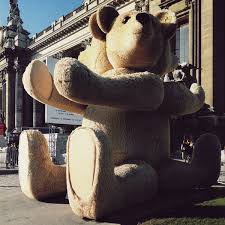
Black Truffle is pleased to present the first vinyl release of Charlemagne Palestine’s Godbear, a 1987 solo piano recording originally scheduled to sit alongside Sonic Youth and Swans in the catalogue of Glenn Branca’s Neutral Records but eventually released on CD by the Dutch Barooni label in 1998. Although Palestine has worked in an enormous variety of media, his long form performances for solo piano are perhaps his most acclaimed works. Palestine immersed himself in the study of overtones throughout the 1960s, working first with carillons and then with electronic synthesis, searching for the ‘golden sound’. Beginning in the early 1970s he continued his exploration of the complexities hidden within seemingly simple tones and intervals on the Bösendorfer Imperial Grand Piano, the ‘Rolls Royce’ of pianos. With the piano’s sustain pedal constantly depressed, Palestine hammers out rapidly repeated notes, allowing a complex cloud of overtones to rise above the percussive texture of the struck keys. Initially working with simple intervals such as octaves and fifths, Palestine gradually expanded the harmonic range of his piano performances over the years, while still retaining their ecstatically single-minded nature.
Revisiting his signature piano style in 1987 after several years focusing on visual art, Godbear presents three distinct variations that demonstrate the development of his piano music after the classic recordings of the early 1970s. Occupying the entire first side, “The Lower Depths” stages a slow descent from the piano’s mid-range to the Bösendorfer’s cavernous additional low octave, building into a thundering swarm of booming overtones. Breaking entirely with the stereotype of clinical minimalism, Palestine’s journey to the depths embraces passages of darkly romantic melody before slowly ascending to its starting point. The version of “Strumming Music” performed here condenses the developmental arc of the piece into eleven minutes, fanning out from a single octave to a complex harmonic wash that calls to mind Palestine’s enthusiasm for Debussy and Ravel. “Timbral Assault” is like an evil twin of “Strumming Music”, transforming its insistency and harmonic complexity into aggressive intensity and creeping dissonance, foreshadowing Palestine’s later collaborations with Christoph Heemann.
A classic release, and one that, because of the variety of approaches surveyed within, serves as an ideal introduction to Palestine’s ecstatic and mysterious sound world.” - Francis Plagne
Godbear is presented in a deluxe gatefold sleeve designed by Stephen O’Malley and has been remastered and cut by Rashad Becker at D&M, Berlin.
Black Truffle is pleased to present the first vinyl release of Charlemagne Palestine’s Godbear, a 1987 solo piano recording originally scheduled to sit alongside Sonic Youth and Swans in the catalogue of Glenn Branca’s Neutral Records but eventually released on CD by the Dutch Barooni label in 1998. Although Palestine has worked in an enormous variety of media, his long form performances for solo piano are perhaps his most acclaimed works. Palestine immersed himself in the study of overtones throughout the 1960s, working first with carillons and then with electronic synthesis, searching for the ‘golden sound’. Beginning in the early 1970s he continued his exploration of the complexities hidden within seemingly simple tones and intervals on the Bösendorfer Imperial Grand Piano, the ‘Rolls Royce’ of pianos. With the piano’s sustain pedal constantly depressed, Palestine hammers out rapidly repeated notes, allowing a complex cloud of overtones to rise above the percussive texture of the struck keys. Initially working with simple intervals such as octaves and fifths, Palestine gradually expanded the harmonic range of his piano performances over the years, while still retaining their ecstatically single-minded nature.
Revisiting his signature piano style in 1987 after several years focusing on visual art, Godbear presents three distinct variations that demonstrate the development of his piano music after the classic recordings of the early 1970s. Occupying the entire first side, “The Lower Depths” stages a slow descent from the piano’s mid-range to the Bösendorfer’s cavernous additional low octave, building into a thundering swarm of booming overtones. Breaking entirely with the stereotype of clinical minimalism, Palestine’s journey to the depths embraces passages of darkly romantic melody before slowly ascending to its starting point. The version of “Strumming Music” performed here condenses the developmental arc of the piece into eleven minutes, fanning out from a single octave to a complex harmonic wash that calls to mind Palestine’s enthusiasm for Debussy and Ravel. “Timbral Assault” is like an evil twin of “Strumming Music”, transforming its insistency and harmonic complexity into aggressive intensity and creeping dissonance, foreshadowing Palestine’s later collaborations with Christoph Heemann.
A classic release, and one that, because of the variety of approaches surveyed within, serves as an ideal introduction to Palestine’s ecstatic and mysterious sound world.” - Francis Plagne
Godbear is presented in a deluxe gatefold sleeve designed by Stephen O’Malley and has been remastered and cut by Rashad Becker at D&M, Berlin.
15,00€
Out of stock

LP
Annea LOCKWOOD
“Tiger Balm”
“Black Truffle is honored to present a new issue of Annea Lockwood’s classic 1970 tape piece Tiger Balm, unavailable on vinyl for over thirty years, accompanied by two exquisite unreleased works for percussion and voice.
Created while Lockwood was living in the UK, the side-long Tiger Balm is a singular work within the cannon of tape music. Inspired by research into the ritual function of music, the piece explores the possibility of evoking ancient communal memories through sound. Breaking entirely with the dynamic language of the musique concrète tradition, Lockwood uses a select palette of mainly unprocessed sonic elements chosen for their mysterious and erotic characteristics (a purring cat, a heartbeat, gongs, slowed down jaw harp, a tiger, a woman’s breath, a plane passing overhead), presenting at most two sounds at once. As one sound flows organically into the next, their shared characteristics are highlighted, opening a space of dream logic and mysterious associations between nature and culture, the ancient and the modern.
The B-side presents two pieces for percussion recorded here for the first time. Amazonia Dreaming (1987), performed by Dominic Donato, uses unaccompanied snare drum and voice to evoke the nocturnal soundscape of the Amazon rainforest. Unorthodox techniques and materials (marbles, chopsticks, a plastic jar lid) transform the snare into a resonant field of sensual textures.
Immersion (1998), performed by Donato and Frank Cassara, is a slow-moving exploration of gentle beating tones, performed on marimba, tam tams and gong. Like the other two works presented on this LP, it provides captivating proof of Lockwood’s belief in the complexity that deep listening can reveal within seemingly simple sounds.” Francis Plagne
Presented in a stunning deluxe gatefold sleeve with archival pics and liner notes by Annea Lockwood including the score to Amazonia Dreaming. LP design via Stephen O’Malley. Mastered and cut by Rashad Becker at D&M, Berlin February 2017.
Created while Lockwood was living in the UK, the side-long Tiger Balm is a singular work within the cannon of tape music. Inspired by research into the ritual function of music, the piece explores the possibility of evoking ancient communal memories through sound. Breaking entirely with the dynamic language of the musique concrète tradition, Lockwood uses a select palette of mainly unprocessed sonic elements chosen for their mysterious and erotic characteristics (a purring cat, a heartbeat, gongs, slowed down jaw harp, a tiger, a woman’s breath, a plane passing overhead), presenting at most two sounds at once. As one sound flows organically into the next, their shared characteristics are highlighted, opening a space of dream logic and mysterious associations between nature and culture, the ancient and the modern.
The B-side presents two pieces for percussion recorded here for the first time. Amazonia Dreaming (1987), performed by Dominic Donato, uses unaccompanied snare drum and voice to evoke the nocturnal soundscape of the Amazon rainforest. Unorthodox techniques and materials (marbles, chopsticks, a plastic jar lid) transform the snare into a resonant field of sensual textures.
Immersion (1998), performed by Donato and Frank Cassara, is a slow-moving exploration of gentle beating tones, performed on marimba, tam tams and gong. Like the other two works presented on this LP, it provides captivating proof of Lockwood’s belief in the complexity that deep listening can reveal within seemingly simple sounds.” Francis Plagne
Presented in a stunning deluxe gatefold sleeve with archival pics and liner notes by Annea Lockwood including the score to Amazonia Dreaming. LP design via Stephen O’Malley. Mastered and cut by Rashad Becker at D&M, Berlin February 2017.
24,00€
Out of stock

2 LP
Keiji HAINO – Jim O’ROURKE – Oren AMBARCHI
“I wonder if you noticed “I’m sorry” is such a lovely sound It keeps things from getting worse”
2LP document of the complete set performed by Keiji Haino, Jim O’Rourke and Oren Ambarchi at Tokyo’s legendary SuperDeluxe on March 2, 2014.
This 2LP set marks the seventh chapter in this remarkable series of releases from this acclaimed trio.
Continuing to explore new instrumental and dynamic possibilities while remaining grounded in the trio’s previous work, this set also brings with it a unique pleasure for the non-Japonophone listener: for the first time Haino sings many of his metaphysically brooding lyrics in English.
Deluxe 2LP set with a gatefold sleeve with gorgeous photographs by Jim O’Rourke and design by Stephen O’Malley.
Vinyl cut by Rashad Becker at Dubplates & Mastering, Berlin.
The remarkable series of releases from the trio of Keiji Haino, Jim O’Rourke and Oren Ambarchi continues with I wonder if you noticed “I'm sorry” Is such a lovely sound It keeps things from getting worse , which presents the entirety of an 80 minute set performed at Tokyo’s SuperDeluxe in March 2014. Where their 2012 performance (BT011 and BT012) was divided into two releases, one continuing their exploration of the guitar/bass/drums power trio format and the other emphasizing new instrumental configurations, the single extended performance presented here ranges widely over terrain both new and familiar, from acoustic strings and collective chants to thunderous power trio moves.
Throughout all of its transformations, the music here is some of the riskiest and most abstract the trio have yet committed to record. Beginning with chiming percussion reminiscent of Haino’s classic Tenshi No Gijinka, the first side is dominated by Haino’s impassioned vocals and performance on the bulgari, a traditional Turkish string instrument. Together with the woozy, sliding foundation of O’Rourke FX-laden bass and Ambarchi’s ritualistic percussion, the trio craft a sort of epic, abstracted song that moves through its spontaneous episodes with all of the fluidity of the best free improvisation.
After a haunting passage in which Haino’s voice, descending from angelic high notes to guttural growls, is accompanied only by O’Rourke’s roaming bass, Haino turns to electronics, gradually building a thick cloud of cosmic sludge as Ambarchi’s drumming goes into free fall. The end of the second side presents a special treat: Haino’s first recorded outing on the contrabass harmonica, from which he coaxes bizarre, wheezing textures against a backdrop of spacious bass and percussion. When Haino eventually picks up the guitar midway through the epic performance, the spaciousness and sense of volatility remain, with the trio often moving in an instant from crescendos of ecstatic noise to near-silence.
O’Rourke and Ambarchi rarely adopt here the classic rock roles essayed on earlier releases. O’Rourke’s bass, which takes centre stage surprisingly often, is sometimes so heavily processed by his array of pedals that it becomes a shifting electronic mass; at other times his roving chromaticism suggests a sort of fuzzed-out free jazz. Ambarchi spends much of the set exploring areas of tumbling free pulse; and even when he locks into a constantly repeated figure on the set’s third side, he gestures as much toward Ronald Shannon Jackson’s stuttering marching band funk as toward any classic rock moves.
When the trio finally move in the final quarter of the performance into an extended passage of rock riffing, the payoff is immense, as they craft a thudding one-chord epic reminiscent of some of the early Fushitsusha classics, before Haino returns to the bulgari, bringing the set back to where it began. Continuing to explore new instrumental and dynamic possibilities while remaining grounded in the trio’s previous work, this set also brings with it a unique pleasure for the non-Japonophone listener: for the first time Haino sings many of his metaphysically brooding lyrics in English.
This 2LP set marks the seventh chapter in this remarkable series of releases from this acclaimed trio.
Continuing to explore new instrumental and dynamic possibilities while remaining grounded in the trio’s previous work, this set also brings with it a unique pleasure for the non-Japonophone listener: for the first time Haino sings many of his metaphysically brooding lyrics in English.
Deluxe 2LP set with a gatefold sleeve with gorgeous photographs by Jim O’Rourke and design by Stephen O’Malley.
Vinyl cut by Rashad Becker at Dubplates & Mastering, Berlin.
The remarkable series of releases from the trio of Keiji Haino, Jim O’Rourke and Oren Ambarchi continues with I wonder if you noticed “I'm sorry” Is such a lovely sound It keeps things from getting worse , which presents the entirety of an 80 minute set performed at Tokyo’s SuperDeluxe in March 2014. Where their 2012 performance (BT011 and BT012) was divided into two releases, one continuing their exploration of the guitar/bass/drums power trio format and the other emphasizing new instrumental configurations, the single extended performance presented here ranges widely over terrain both new and familiar, from acoustic strings and collective chants to thunderous power trio moves.
Throughout all of its transformations, the music here is some of the riskiest and most abstract the trio have yet committed to record. Beginning with chiming percussion reminiscent of Haino’s classic Tenshi No Gijinka, the first side is dominated by Haino’s impassioned vocals and performance on the bulgari, a traditional Turkish string instrument. Together with the woozy, sliding foundation of O’Rourke FX-laden bass and Ambarchi’s ritualistic percussion, the trio craft a sort of epic, abstracted song that moves through its spontaneous episodes with all of the fluidity of the best free improvisation.
After a haunting passage in which Haino’s voice, descending from angelic high notes to guttural growls, is accompanied only by O’Rourke’s roaming bass, Haino turns to electronics, gradually building a thick cloud of cosmic sludge as Ambarchi’s drumming goes into free fall. The end of the second side presents a special treat: Haino’s first recorded outing on the contrabass harmonica, from which he coaxes bizarre, wheezing textures against a backdrop of spacious bass and percussion. When Haino eventually picks up the guitar midway through the epic performance, the spaciousness and sense of volatility remain, with the trio often moving in an instant from crescendos of ecstatic noise to near-silence.
O’Rourke and Ambarchi rarely adopt here the classic rock roles essayed on earlier releases. O’Rourke’s bass, which takes centre stage surprisingly often, is sometimes so heavily processed by his array of pedals that it becomes a shifting electronic mass; at other times his roving chromaticism suggests a sort of fuzzed-out free jazz. Ambarchi spends much of the set exploring areas of tumbling free pulse; and even when he locks into a constantly repeated figure on the set’s third side, he gestures as much toward Ronald Shannon Jackson’s stuttering marching band funk as toward any classic rock moves.
When the trio finally move in the final quarter of the performance into an extended passage of rock riffing, the payoff is immense, as they craft a thudding one-chord epic reminiscent of some of the early Fushitsusha classics, before Haino returns to the bulgari, bringing the set back to where it began. Continuing to explore new instrumental and dynamic possibilities while remaining grounded in the trio’s previous work, this set also brings with it a unique pleasure for the non-Japonophone listener: for the first time Haino sings many of his metaphysically brooding lyrics in English.
20,00€
In stock
2 LP
Crys COLE & Oren AMBARCHI
“Hotel Record”
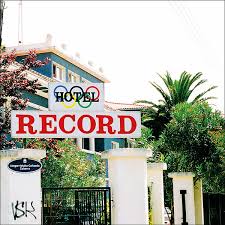
Hotel Record is the second release from the duo/couple of crys cole and Oren Ambarchi, following on from Sonja Henies Vei 31 (Planam, 2014). Where their debut recording presented a disquieting portrait of the erotic dimension of romantic intimacy, the follow-up continues to explore the pair’s simultaneously musical and romantic relationship in a more subtle fashion, presenting four long-form pieces that touch on the variety of forms the life of this couple takes: as a musical duo, as a pair of travelers to exotic locations, as opponents in a game of cards…
Each of the 2 LP’s four sides presents a distinct sound-world, yet each manages to attain the same suspended, half-sleeping feeling, outlining a space where improbable combinations of the electronic and the acoustic, of extreme closeness and amorphous distance, occur with the gentle insistence of a dream.
The opening Call Myself calmly unfolds a fabric of long tones from electronic organ and guitar, combining the sliding, aleatoric effects of classic David Behrman with a more hands-on feel. Over the top of this slowly shifting tonal bed, cole’s voice mutters unintelligibly into a Buchla synth, teasing the listener by suggesting a meaning that remains always out of the ear’s reach. Francis Debacle (Uno) builds on the foundations of a heavily amplified session of the titular card game, overlaying vocal murmurs and exhalations and mysterious room-sounds to create an impossible aural environment. On Burrata, a palette of vintage 1980s digital synthesizer sounds combined with guitars create an irregular texture of lush chords and bubbling melodic details, into which cole’s voice processed by a vocoder, is interwoven, reading fragments of romantic correspondence. Finally, on Pad Phet Gob, field recordings made in Thailand become an ambiguously acoustic/electronic rainforest, eventually giving way to a mysterious, wavering electronic tone-field punctuated by sibilant, popping mouth-sounds.
Carving out an intimate and human sonic space across a diverse array of compositional approaches, sound sources, fidelities and textures, Hotel Record is the latest dispatch from the continuing explorations of a unique duo. Ambarchi and cole reimagine electro-acoustic music, not simply as ‘abstract’ sound, but as a diary, a love poem, a dream.
Deluxe gatefold sleeve with photography by crys cole and LP design via Stephen O’Malley.
Mastered and cut by Rashad Becker at D&M, Berlin February 2017
Each of the 2 LP’s four sides presents a distinct sound-world, yet each manages to attain the same suspended, half-sleeping feeling, outlining a space where improbable combinations of the electronic and the acoustic, of extreme closeness and amorphous distance, occur with the gentle insistence of a dream.
The opening Call Myself calmly unfolds a fabric of long tones from electronic organ and guitar, combining the sliding, aleatoric effects of classic David Behrman with a more hands-on feel. Over the top of this slowly shifting tonal bed, cole’s voice mutters unintelligibly into a Buchla synth, teasing the listener by suggesting a meaning that remains always out of the ear’s reach. Francis Debacle (Uno) builds on the foundations of a heavily amplified session of the titular card game, overlaying vocal murmurs and exhalations and mysterious room-sounds to create an impossible aural environment. On Burrata, a palette of vintage 1980s digital synthesizer sounds combined with guitars create an irregular texture of lush chords and bubbling melodic details, into which cole’s voice processed by a vocoder, is interwoven, reading fragments of romantic correspondence. Finally, on Pad Phet Gob, field recordings made in Thailand become an ambiguously acoustic/electronic rainforest, eventually giving way to a mysterious, wavering electronic tone-field punctuated by sibilant, popping mouth-sounds.
Carving out an intimate and human sonic space across a diverse array of compositional approaches, sound sources, fidelities and textures, Hotel Record is the latest dispatch from the continuing explorations of a unique duo. Ambarchi and cole reimagine electro-acoustic music, not simply as ‘abstract’ sound, but as a diary, a love poem, a dream.
Deluxe gatefold sleeve with photography by crys cole and LP design via Stephen O’Malley.
Mastered and cut by Rashad Becker at D&M, Berlin February 2017
26,00€
Out of stock

CD
Oren AMBARCHI & Thomas BRINKMANN
“The Mortimer trap”
“The Mortimer Trap is an epic 77min “variation” of Morton Feldman’s For Bunita Marcus constructed by German experimentalist and techno icon Thomas Brinkmann and Australian sound artist Oren Ambarchi. Pulsating waves of claustrophobic ambience generated from who-knows-what patiently builds into a throbbing rhythmic pulse of gorgeous sonic density. Since the 80s Thomas Brinkmann has experimented with sound, its textures and its construction methods. His custom built two-arm turntable on Concept 1, the sampling of damaged records on Klick and various experiments with carved-groove vinyl are just a handful of career highlights that mark Brinkmann out as a true musical pioneer. Oren Ambarchi, primarily known for his solo guitar records for the Touch label, has worked with a diverse array of artists such as Keiji Haino, Fennesz, Phill Niblock, Jim O’Rourke, Voice Crack, Keith Rowe and Sunn 0))). Ambarchi and Brinkmann first worked together in in Japan in January 2011 in a trio with Mika Vainio. The Mortimer Trap is their first collaborative work as a duo.”
15,00€
Out of stock

CD
Keiji HAINO – Jim O’ROURKE – Oren AMBARCHI
“now while it’s still warm let us pour in all the mystery”
CD version. Keiji Haino, guitar, flute, voice. Jim O’Rourke, bass. Oren Ambarchi, drums. Special guests on first track, Charlemagne Palestine and Eiko Ishibashi, wineglasses. "Following on from 2012’s acclaimed Imikizushi (BT 007CD/LP), Now While It’s Still Warm Let Us Pour in All the Mystery is the fourth release from the established power trio of Keiji Haino, Jim O’Rourke, and Oren Ambarchi, recorded in January 2012 at their yearly concert at SuperDeluxe, Tokyo. While the trio’s two previous 2 LP releases featured sprawling, side-long performances, the music here is presented in six shorter pieces, each one displaying a different side of the trio’s interactions, from holy minimalism to cave-man rock. The record begins with the trio joined by special guests Charlemagne Palestine and Eiko Ishibashi, conjuring ghostly tones from wine glasses as an accompaniment to Haino’s angelic vocals. This 10-minute piece, which moves from near silence and the sound of onstage footsteps to a stunning passage of clean guitar work from Haino, is steeped in the same mysterious atmospherics as Haino’s great folk-drone project, Nijumu. When Haino turns to the flute on the LP’s second track, a performance that clearly demonstrates the importance of the special concept of space and silence (ma) that Haino has developed from traditional Japanese aesthetics, O’Rourke and Ambarchi transform into the delicate and probing rhythm section of a classic ’70s fusion side. When the trio returns to the crushing free-rock of their last two records, O’Rourke’s heavily effected bass rolling alongside Ambarchi’s tumbling rhythms as Haino’s guitar squeals and slashes above them, their performances display a new purposefulness and concision. Now truly operating as a band after a number of years of playing together, the pieces here feel like instant rocks songs -- O’Rourke and Ambarchi instantly locking into solid riffs over which Haino alternates between jarring no-wave chords, intense soloing and his signature vocalizations. When the trio slow down and stretch out, the rhythm section plods like an abstracted Crazy Horse on the brink of collapse, and Haino elicits long, mournful solos reminiscent of the first classic Fushitsusha double live LP. Perhaps more accessible than the trio’s previous recordings because of its range and concision, Now While It’s Still Warm... exudes the dark, alien quality of Haino’s greatest recordings and testifies to the strength of the musical bond that has developed between these three players. --Francis Plagne, Jan 2013." Limited edition LP in a lavish gatefold with a printed inner sleeve. Design by Stephen O’Malley with high quality live shots by Ujin Matsuo and stunning artwork by Shunichiro Okada.
15,50€