SEARCH
What are you looking for?
  • Account
  • Contact
  • Shipping
Facebook
  • Home
  • Shop
  • Sales
  • Infos
0 0

View Wishlist Add all to cart

0 0,00€ 0

No products in the cart.

Return To Shop
Shopping cart (0)
Subtotal: 0,00€

View cartCheckout

0 0
0 My Wishlist

View Wishlist Add all to cart

0 0,00€ 0
0 Shopping Cart

No products in the cart.

Return To Shop
Shopping cart (0)
Subtotal: 0,00€

View cartCheckout

  • Home
  • Shop
  • Sales
  • Infos
  • My Account
Facebook
Home Shop

David TOOP

Return to previous page
Grid
List
Show

In stock

2 CD

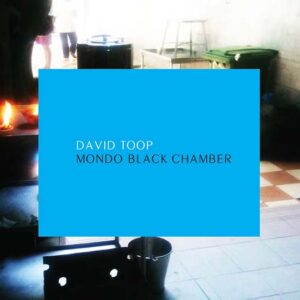
David TOOP
“Mondo Black Chamber”

Sub Rosa recordings 1996-2003: the complete series of works made by David Toop for their label. David Toop (born May 5, 1949) is an English musician and author, and as of 2001, was visiting Research Fellow in the Media School at London College of Communication. He was notably a member of The Flying Lizards. He released New and Rediscovered Musical Instruments (with Max Eastley) on Brian Eno's Obscure label (1975) plus many solo albums including 37th Floor at Sunset (2000) and Black Chamber (2003) on Sub Rosa. He was a prominent contributor to the British magazine The Face. He is a regular contributor to The Wire. Toop published his pioneering book on hip-hop, Rap Attack, in 1984. Eleven years later, Ocean of Sound appeared, described as Toop's "poetic survey of contemporary musical life from Debussy through ambient, techno, and drum 'n' bass."
17,00€
Add to cart

In stock

Book + CD

David TOOP
“Field Recording and Fox Spirits”

Field Recording and Fox Spirits is a collection of personal recordings -- from the field, from performance, from interviews -- that sketch out the breadth of David Toop's work over the past five decades. The recordings exist both as individual memories and as a hazy auditory daydream-like collage woven together by Lawrence English. Additionally, the edition includes a 40-page book, consisting of an extended in conversation with David Toop, which features extensive visual works and photographs from his archive. From David Toop: "What are field recordings? 'My memory is not what it used to be, David,' my grandfather, Syd Senior, said to me as we huddled round a fireplace in 1979. Thanks to a cassette tape I have the memory of his gradual loss of memory, hearing him speak of Queen Victoria's funeral and the severity of patriotism back in those old days, 1901. Syd Senior is long dead, no longer part of the field of living relations but still within the field of memories that can be revived by technology, albeit an old one that squeaks like a mouse, hisses like a cat. Where is the field? The field is populated by all the ravishing, painful, poignant, nondescript moments of remembered life. Field recordings forget, just as memories forget. My recording of Ornette Coleman forgets that he fell asleep as we were talking together. I sat quietly, waiting for him to wake; the tape machine continued its work, oblivious. During lockdown, a warm spring day, I sat working in the garden. A small fox appeared close to me, started, retreated into the shelter of plants by my pond. I took a photo with my phone but when I looked at the image no fox was visible. Earlier that day I had been reading Strange Tales from a Chinese Studio, a collection of short stories written by Pu Songling during the course of his life in the late seventeenth/early eighteenth century. In many of these tales, fox spirits inhabit the physical spaces of living humans in a variety of guises. Some are malicious; some benign. Their presence in the material world is wrong and yet accepted as either a temporary nuisance or a blessing that would later be regretted..."
18,00€
Add to cart

In stock

LP

David TOOP
“Apparition Paintings”

David Toop illustrates the sound from the back of his eyelids in ‘Apparition Paintings’, accompanied by notables such as Áine O’Dwyer and Rie Nakajima to rustle int he undergrowth of Fourth World ambient, atomised jazz-fusion, and country-folk with curiously plasmic results subtly contrasting his recent ace, also for Lawrence English’s Room 40. "Maybe these titles, torn as they are from cinema screens and the pages of literature and philosophy, give a feeling of romantic or sexual love or some dark pool of nostalgia but that’s not it, or it could be if you want it for yourself but not for me, not now; for me it’s about the teeming proliferation of complex events in the world, their vivid, hyperreal intensity as this human life steps closer to its end and their sense of fading, like a mist that thins out to leave not a clear bright day but almost nothing of substance as all that beauty is crushed, burned, dug up, wiped out, to be replaced by banality, so it’s about a language of love and desire in which we speak openly to all the unknowns, the speculative, the ancestral, the forgotten, the different, the extinct, the unimaginably distant and vast, the incomprehensibly small and intimately close, the fast or the slow, as if as we spoke we were becalmed in a wooden galleon off the coast of Java, sleeping microscopically in soil of a thousand years hence, hearing the voice of a dead person from the rim of a vibrating cup, gliding backwards and weightless through the alleyways of a city unrecognisable yet heartbreaking in its poverty, speaking in conference with winged and amphibious beings, crouching in a cavern whose opening only reveals the spectre of many wonders now apprehended as memories of the skin, heard through cheekbones, nostrils, the crepitation as a neck turns, pains of the knee and thumb and some not yet fully understood sensation within the throat which suggests a way of comprehending that which is being lost of this magical place. All I desire is what already exists or once existed, now falling asleep outside the world. Don’t ask me about genre or consistency. Who cares? Half the world is drowning; the other half is in flames. Each story is an animal, a plant, something you drink, a surface you touch, a faint line, some memory emanating from a cardboard box. “’Things’ in themselves are only events that for a while are monotonous,” wrote Carlo Rovelli in The Order of Time. Maybe sounds are melting ‘things’, tired of the monotonous real. Apparition painting is the term used to describe a certain type of ancient Chinese painting of the twelfth and thirteenth centuries. In these works, often associated with Chan (Zen) teachings, the ink used to depict the subject was exceptionally pale, the background lacking in any detail. As Yukio Lippit has written: “This combination results in remarkably self-dissembling images that somehow compromise their own visibility. Apparition painting appears to capture its subjects in mid-fade, as if managing to preserve only a dimly translucent afterimage of a bygone entity.” - David Toop
23,00€
Add to cart


Catalogue


  • BACK IN STOCK
  • SALES

New arrivals :

In stock

CD

Tony CONRAD
“Untitled (Solo for the Building of a Museum)”

This recording (2002) captures the two instruments central to Conrad's practice at the time: his self-built Long String Instrument and his amplified violin. He performed hidden behind a large sheet, and the nature of what unfolded behind it was never disclosed to the audience. Mudam Recorded at the construction site of the future Mudam - Musée d'Art Moderne Grand-Duc Jean, Luxembourg, designed by I. M. Pei - during the Museum Night of October 12, 2002, by invitation of Marie-Claude Beaud. The concert was co-organized by Transhistorics, a coproduction by Sub Rosa and Philippe Franck's Transcultures. Conrad also performed several times in Europe alongside Charlemagne Palestine in the following years, including the October 2005 concert An Aural Symbiotic Mystery. Short Bio Tony Conrad (1940-2016) was an American musician, experimental filmmaker, and composer, active across media since the early 1960s. A pioneer of drone music, he was a central figure in the New York scene of the 1960s and performed as part of the Theatre of Eternal Music. He became known as a filmmaker for his 1966 film The Flicker. Over the following decades he performed and collaborated with a wide range of artists. Interview The recording is accompanied by an extended interview conducted by Philippe Franck, published here as a tribute to him. - Doesn't this relate to intensity - the kind of theatrical intensity largely absent from computer music performance? - When I started performing again with the violin in the 1980s, some people described what I was doing as "expressionism." I was surprised at first - in my own arrogance I thought: this is mine, I invented it. But I took the criticism seriously, and it led me to ask what actually distinguishes expressionism from other forms of expression. - Perhaps we should simply speak of expression, rather than 'Expressionism'? - Exactly. In performance, I like to work at what I'd call the zero degree of sound - harmonic structure itself. I can be entirely satisfied with a pure open fifth: dance, meditation, heroism, all of it is contained within a fifth, provided I can find my way into that sonic space. Once, a student who admired La Monte Young told me I was playing out of tune. I remember thinking thinking: I'm playing music, not notes. I'm making music that speaks to people.  
13,50€
Add to cart

In stock

CD

David TOUB
“Gendarme de la Libertad”

David Toub is a unique voice in American minimalism, a genre that has produced quite a few composers over the past 80 years. Our first contact dates back about fifteen years, and from the very beginning, David struck me as a committed composer, dedicated to building a coherent body of work. But he is also an engaged individual, deeply concerned with the challenges of our time and genuinely generous. In other words, a mensch—a rare kind of person. His music, in some ways, reflects today’s anxieties and uncertainties: repetitive, obsessive, often dark, and questioning. This is the second album of his music that I have recorded, and this time, David has incorporated the human voice to feature a speech given by Che Guevara in 1964. The speech addresses the contradiction between a state's founding principles and its actions. How can a nation advocate for freedom year-round while deliberately acting against minorities, particularly those historically oppressed? The piece does not provide an answer—this question remains just as relevant today, 60 years later. (Stephane Ginsburg) David Toub (b. 1961, Newark, NJ) is largely self-taught, with the only formal composition education consisting of attending music school (Mannes College of Music; Juilliard Pre-College Division) during weekends while in high school. He remains an active composer. While Toub composed serial and dodecaphonic music until 1982, his subsequent works have been described as “minimalist,” although the durations of a subset of his compositions are not at all minimal (1.5 to over 4 hours in some cases).
13,00€
Add to cart

In stock

CD

Mats ERLANDSSON & Gus LOXBO
“Minnets Långa Kedjor”

Minnets Långa Kedjor by Mats Erlandsson & Gus Loxbo is an intimately crafted musical topos moving through landscape of free improvised music, electroacoustic drone and doom metal according to an inherent dream logic. Their collaboration takes its starting point in a long friendship and a common frame of reference shaped by their upbringing environment in Bergslagen, with the specific moods that a shared past geographical location can give rise to. Through associations and memories - geographical, poetic and imaginary - immediate musical impulses shaped by an interplay that has developed over 25 years were captured instantly. These impulses formed the foundational material for a process of transformation where the music has been amplified, obscured and refined through extensive studio work carried out by Mats Erlandsson in the electroacoustic music tradition using editing and audio transformations through digital processing and analogue tape work. As a composer, musician and sound artist, Mats Erlandsson is part of the vibrantly reemerging field of drone music in Stockholm, Sweden, and is associated with practices characterized by the extensive use of sustained sound. Erlandsson presents his work both as a solo artist and in various collaborations utilizing synthesized and recorded analog and digital sound, contaminated field-recordings and extensive tape processing. Gus Loxbo has had a long career in improvised music primarily as a double bass player both solo and with groups such as Pombo and Silence Blossoms. His solo debut album Trådknaster was recorded by Mats Erlandsson and released in 2021 to much acclaim. The album contained nine solo compositions for double bass with no overdubs presenting the abstract sound of Loxbo’s extended performance techniques and a stark highly amplified light. Mats Erlandsson and Gus Loxbo have been playing music together since before either one of them had any notion of the existence of experimental music, and their musical relationship was fundamental in helping each other transform and extend their respective ideas about what could constitute a valid musical expression. The album Minnets Långa Kedjor is their first recorded work presented in public.
17,50€
Add to cart

In stock

LP

Maria W HORN
“Melting Pillars Of Snow”

XKatedral is proud to present a new full-length album by label co-founder Maria W Horn. Melting Pillars of Snow is a collection of new compositions from the renowned Swedish composer written for Contrabass Recorder, Shō, Percussion, Electric Guitar, Voice and Electronics performed by Horn together with a chamber ensemble consisting of Anna Petrini, Mattias Hållsten, Magdalena Meitzner and Mats Erlandsson. The album also features narration by Horn as well as a guest appearance by Michael Gira on the first single Scythe of Saturn. Melting Pillars of Snow sees Maria drawing inspiration from W.G. Sebald’s novel The Rings of Saturn which is a poetic reflection following an unnamed narrator wandering along the Suffolk coast in England. As the landscape gradually shifts the text touches in various ways on the passage of time and the distance between past, present, and future, reflecting both vast temporal scales, such as the cycles of the seasons, deep historical time and microscopic moments and fragments. With the compositions contained in this release Maria evokes a similar sense of stillness - an environment in which the movement of time itself can be illuminated and observed. The instrumentarium found on this album is Horn’s most ambitious to date and sees her adding a complex array of percussion instruments, wind instruments operating at each extreme of the musical range and electric guitar paired with her regular palette of customized algorithmic synthesis and electronic processing to weave a spiraling spectral tapestry through the audio range. Percussionist Magdalena Meizner performs specialized techniques on the overtone triangle, dubachi, timpani and tam-tam, as well as pitched wine glasses and bowed crotales. The low end contrabass recorder played by Anna Petrini and the high frequency Shō performed by Mattias Hållsten add contrasting chordal arrangements set in strict metric structures. The ensemble is completed by Mats Erlandsson performing on electric and acoustic guitars moving from gentle arpeggiated figures to doom-laden drones and feedback howls. Maria W Horn: Electronics, hurdy gurdy and narration Anna Petrini: Contrabass recorder Magdalena Meitzner: Overtone triangle, bowed crotales, tam-tam, dubachi, timpani, pitched wine glasses and specialized percussion techniques Mattias Hållsten: Shō Mats Erlandsson: Electric and acoustic guitars, analog tape treatments Michael Gira: Narration on Scythe of Saturn
27,50€
Add to cart

In stock

LP

Stephen O’MALLEY
“Avaeken”

American experimental composer Stephen O'Malley releases 'Avaeken', two sides of immense, immersive, self-annihilating music via Dais Records. The record preserves site-specific work: O'Malley installed 'Avaeken' as part of 'Wish You Were Here', the exhibition by renowned American artist Banks Violette, underscoring the tension between presence and absence, life and loss. O'Malley and Violette have developed a distinct language of sound, space, and sculpture over the past two decades, reverberating the walls of world-class institutions from The Guggenheim and Centre Pompidou to prominent galleries such as Maureen Paley in London, Gladstone Gallery in NYC, and Antwerp’s TICK TACK, the brutalist space where Wish You Were Here unfolded in early 2026. Emerging now as an LP, 'Avaeken' presents power and phenomena: low-frequency vibrations, deep oscillations, and phase cancellations that translate as innately effective in any environment. Violette’s visual expression — the impossibility of locating yourself within the loss of a friend and the broader decay of culture — now fills the LP sleeve and feels inextricable from O'Malley’s sound, both still without resolution. The origins of 'Avaeken' date back to 2020, when O’Malley was commissioned by the ZWERM electric guitar quartet of Belgium. He rendered the piece, naming it after the millennium-plus-old oak tree on Sweden’s island of Fårö, for four guitarists on standard electric guitars, sustaining microtonal harmony produced with EBows and slides. "Natural harmonic tone coloured by the valves of the amplification is the one desired characteristic," reads the initial notes. "At first I asked, why would I write for another guitar player?" he says. "I realized how amazing it is to be a listener on the other side of the music; together we were able to try all these precisions with intonation, harmonics, specific microtonal ideas." The quartet performed 'Avaeken' several times before O'Malley joined them for a recording session in Muziekcentrum De Bijloke, a 13th-century former hospital with modern acoustics in Gent.
26,00€
Add to cart

In stock

CD

Kassel JAEGER
“Sub Re”

Kassel Jaeger (aka François J. Bonnet) returns to Shelter Press after Swamps / Things, Shifted in Dreams, and the recent reissue of the classic Zauberberg, co-composed with Akira Rabelais and Stephan Mathieu. With this major new album, entitled Sub Re, Bonnet continues his long exploration of the musical possibilities of sound, extending the concrete approach developed at the Groupe de Recherches Musicales, the historic and essential Parisian studio that Bonnet has been directing since 2018. Sub re, in Latin, can mean “under the thing, under the substance, under the matter.” It's precisely this direct approach to music, drawing on the extraction of raw sound material, that forms the basis of this album. Under the matter thus signals the concrete aspect of music, but not the concrete that is transfigured, becoming vapor and form, the substrate of an idea. Rather, it signals the concrete beneath the concrete, in the immanence of sounds, in their becoming, as a driving force, like a tide, like a vault of imperious and powerful matter. To achieve this, Bonnet draws on a multitude of sound sources (acoustic, electronic, natural or artificial, created on purpose or found by chance) and a multitude of contexts and occasions to give them form. The movement, a shell, a bell, a spell, for example, was heard for the first time during a concert organized in Venice in connection with Latifa Echakhch's contribution to the Swiss Pavilion at the 2022 Art Biennale, while the last movement on the record, signalmirror, concluded a piece presented at the first Sound Biennale in Sion (Switzerland) in 2023. These elements, formed and detached from their original context of appearance, of the places and people who made them possible and listened to them, contribute to a complex layering of climates and sonic worlds and help create a contrasting album, where density and tenuity coexist in a succession of moving waves, sometimes laden with memories, sometimes filled with regrets, always set in motion by their own morphology. Sub Re also refers to a chapter in Victor Hugo's Toilers of the Sea, a key passage in which the main character, faced with a colossal task, finds himself alone in the middle of the sea, beneath a gigantic shipwreck caught in the jaws of an isolated reef, surrounded by water, currents, and winds, alone to face the impossible. It is indeed beneath the surface that actions arise, decisions are made, and intuition guides us.  
17,50€
Add to cart

CORTICALART

Mail-order and distribution of experimental music (electroacoustic, improvised music, sound-art, noise, sound poetry), past or present, along with some books, magazines and DVDs.

NEWSLETTER

INFORMATIONS

  • Contact
  • My Account
  • Shipping

CORTICALART / Ass. META
44, rue Camille Sauvageau
33800 Bordeaux
France

© Corticalart 2026    • Terms Of Use    • Legal Notice    • Privacy Policy

• CGV    • Mentions légales    • Politique de confidentialité