
In stock

LP
Charlemagne PALESTINE
“DINGGGDONGGGDINGGGzzzzzzz ferrrr SSSOFTTT DIVINI TIESSSSS!!!!!!!!!”
DINGGGDONGGGDINGGGzzzzzzz!!!!!!! In the newest record by the iconoclastic Brooklyn-born composer Charlemagne Palestine (b. 1947), find two mesmerizing works for carillon, the keyboard-controlled bell tower derived in the 16th century. On side A, a new piece recorded at the artist’s studio in Belgium—a high-ceiling, stuffed-animal-packed paradise he calls Charleworld—among friends and “divinities,” his name for the thousands of plush toys he’s amassed since the ’60s. On the flip side, Blank Forms Editions’ very first and long-out-of-print release appears on vinyl for the first time: a cathartic street recording of the maximalist composer’s 2018 musical eulogy for his late friend Tony Conrad, performed on the bells of St. Thomas Episcopal Church, where the two first met. Two mesmerizing “klanggdedangggebannggg” sessions in the Quasimodo of 53rd Street’s inimitable, trance-induced style.
Perhaps more than any of his contemporaries in the bustling, cross-disciplinary downtown New York arts scene of the ’60s and ’70s, Charlemagne Palestine (b. 1947) has embodied the notion of the artist as playful polymath, testing and transcending nearly every creative form imaginable in his more than six-decade career. Originally trained in Jewish sacred singing to be a cantor, he began his artistic life as a musician, studying piano and accordion, accompanying figures like Tiny Tim and Allen Ginsberg on percussion, using early synthesizers as an assistant to Alwin Nikolais, and eventually landing a long-running gig as the carillonneur at Midtown’s St. Thomas Episcopal. This libertine spirit of experimentation soon led to adventures in other aesthetic arenas: making kinetic light sculptures with Len Lye, devising choreographed performances with Simone Forti, and producing a series of visceral videotapes with the Castelli-Sonnabend collection. In the ’70s, he was particularly prominent on the burgeoning loft movement, becoming well-known for his sparse, intense, and exacting long-form piano concerts that seemed to bend the very nature of time and space. Beginning in the ’80s, he spent decades in self-imposed exile from the new music scene, living variously in Europe and Hawai'i and privately honing his hermetic sonic and visual practice. This was followed by a period of triumphant resurgence beginning in the mid-’90s, since which he has performed and exhibited globally.
28,00€
In stock
CD
Charlemagne PALESTINE
“October 24, 1975 – Performance Icc Antwerp Belgium”
A few months after the release of the legendary Strumming in 1974, Charlemagne gave a masterful and powerful 56 minutes performance in Antwerp in an exciting concert series.
With the work and the precious help of M KHA and Lotte Beckwé, we were able to find this recording. We are pleased to offer you this unreleased performance on cassette and CD.
This release takes place in parallel with the magnificent M KHA exhibition which will begin on September 11, 2021
16,00€
In stock

LP single-sided
Charlemagne PALESTINE
MMXX-06 “Vvvoooodddoooo Ddddooooodddddooooo”
Matière Mémoire presents the MMXX Series. In anticipation of the year 2020, Matière Mémoire asked 20 great artists to create an original 20 minutes piece and an artwork. Throughout this year, each quarter will see the release of 5 new vinyls, available individually or as a bundle. Each record is limited at 500 copies and comes as a crystal clear vinyl featuring an original track of 20 minutes on one side, and a laser engraved artwork on the other. Each contained in a transparent sleeve printed with the MMXX logo, and each coming with a print of the artist artwork.
Original price was: 25,00€.12,00€Current price is: 12,00€.
In stock
LP
Charlemagne PALESTINE
“Dinggg Donggg Dinggg Vs Singgg Songg Singgg”
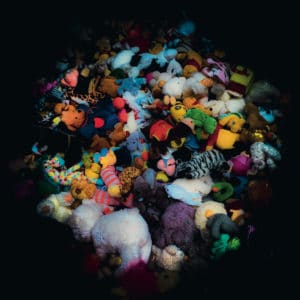
Singing songs while playing ding dongs, Charlemagne Palestine’s solo voice over the bells of his studio carillon is a premiere in his recorded works, and possibly the first voice/carillon record in musical history. All the little shamanic stuffed deities inhabiting the carillon added their souls to the spirit of the reverberating songs, including a song in memory of Mika Vainio.
23,00€
In stock
LP
Charlemagne PALESTINE
“Aa Sschmmettrroossppecctivve”
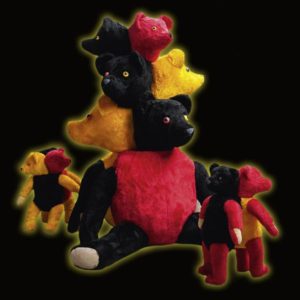
Available on June 1.Published on the occasion of Charlemagne’s “Aa Sschmmettrroossppecctivve” exhibition, audioMER. is proud to present historical piano recordings dating from circa 1974. They were played on a Bösendorfer model 220, regarded by some as the “Rolls Royce” of pianos, at Charlemagne’s 64 North Moore Street studio, Tribeca in New York.The music here represents Charlemagne’s infamous “strumming” technique, which he describes himself in a 2002 interview with Perfect Sound Forever as follows: “My first piano music resembles impressionists like Debussy or Ravel but it’s played through four or five hours, including some little arpeggios and played over and over again in thousands of different ways… Later on, I began to see that I’d played the piano like a flamenco guitar, that many overtones could change and the music that came out had a density and verticality – thanks to the overtones – which was extraordinary.”Based in Brussels for 20 years now, his iconic work consisting of teddy bears, divinities and other enchanting encounters is now exhibited in Bozar (“Aa Sschmmettrroossppecctivve”, 18 May – 26 August 2018). For the occasion, Charlemagne Palestine also presents two exceptional musical performances at the Kunstenfestivaldesarts.
22,00€
Out of stock
LP
Charlemagne PALESTINE
“Arpeggiated Bösendorfer + Falsetto Voice”
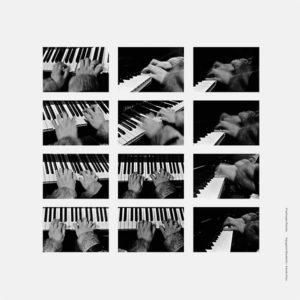
In 1974 Ileana Sonnabend commissioned Charlemagne Palestine to create a limited edition 2 LP in conjunction with a performance to celebrate the opening of her new Soho gallery at 420 West Broadway!
Charlemagne made several recording attempts, first at Swarthmore College in Pennsylvania where they had a Bösendorfer Imperial Piano in their theatre. He recorded “Bösendorfer + Voice”, “Voice Piece” as well as some Bösendorfer tests with Mayo Thompson as producer and Kurt Munkacsi as sound engineer. These ecstatic Swarthmore recordings, recorded late at night in the big empty theatre space represented the original elements on which Charlemagne Palestine later created the piano pieces for “Four Manifestations on Six Elements”.
For more than forty years since these recordings were made Palestine never went back to listen to them, but recently on re-listening to these Swarthmore recordings with alga marghen he found several blissful arpeggiated piano and falsetto voice studies which he feel now deserve to be heard.
Included in the alga marghen VocSon series, this LP is available now in an edition limited to 405 copies.
19,00€
Out of stock
LP
Charlemagne PALESTINE
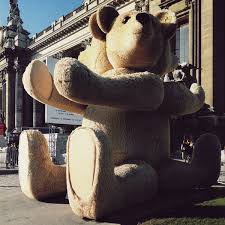
“Godbear”
Reissue.
Black Truffle is pleased to present the first vinyl release of Charlemagne Palestine’s Godbear, a 1987 solo piano recording originally scheduled to sit alongside Sonic Youth and Swans in the catalogue of Glenn Branca’s Neutral Records but eventually released on CD by the Dutch Barooni label in 1998. Although Palestine has worked in an enormous variety of media, his long form performances for solo piano are perhaps his most acclaimed works. Palestine immersed himself in the study of overtones throughout the 1960s, working first with carillons and then with electronic synthesis, searching for the ‘golden sound’. Beginning in the early 1970s he continued his exploration of the complexities hidden within seemingly simple tones and intervals on the Bösendorfer Imperial Grand Piano, the ‘Rolls Royce’ of pianos. With the piano’s sustain pedal constantly depressed, Palestine hammers out rapidly repeated notes, allowing a complex cloud of overtones to rise above the percussive texture of the struck keys. Initially working with simple intervals such as octaves and fifths, Palestine gradually expanded the harmonic range of his piano performances over the years, while still retaining their ecstatically single-minded nature.
Revisiting his signature piano style in 1987 after several years focusing on visual art, Godbear presents three distinct variations that demonstrate the development of his piano music after the classic recordings of the early 1970s. Occupying the entire first side, “The Lower Depths” stages a slow descent from the piano’s mid-range to the Bösendorfer’s cavernous additional low octave, building into a thundering swarm of booming overtones. Breaking entirely with the stereotype of clinical minimalism, Palestine’s journey to the depths embraces passages of darkly romantic melody before slowly ascending to its starting point. The version of “Strumming Music” performed here condenses the developmental arc of the piece into eleven minutes, fanning out from a single octave to a complex harmonic wash that calls to mind Palestine’s enthusiasm for Debussy and Ravel. “Timbral Assault” is like an evil twin of “Strumming Music”, transforming its insistency and harmonic complexity into aggressive intensity and creeping dissonance, foreshadowing Palestine’s later collaborations with Christoph Heemann.
A classic release, and one that, because of the variety of approaches surveyed within, serves as an ideal introduction to Palestine’s ecstatic and mysterious sound world.” - Francis Plagne
Godbear is presented in a deluxe gatefold sleeve designed by Stephen O’Malley and has been remastered and cut by Rashad Becker at D&M, Berlin.
Black Truffle is pleased to present the first vinyl release of Charlemagne Palestine’s Godbear, a 1987 solo piano recording originally scheduled to sit alongside Sonic Youth and Swans in the catalogue of Glenn Branca’s Neutral Records but eventually released on CD by the Dutch Barooni label in 1998. Although Palestine has worked in an enormous variety of media, his long form performances for solo piano are perhaps his most acclaimed works. Palestine immersed himself in the study of overtones throughout the 1960s, working first with carillons and then with electronic synthesis, searching for the ‘golden sound’. Beginning in the early 1970s he continued his exploration of the complexities hidden within seemingly simple tones and intervals on the Bösendorfer Imperial Grand Piano, the ‘Rolls Royce’ of pianos. With the piano’s sustain pedal constantly depressed, Palestine hammers out rapidly repeated notes, allowing a complex cloud of overtones to rise above the percussive texture of the struck keys. Initially working with simple intervals such as octaves and fifths, Palestine gradually expanded the harmonic range of his piano performances over the years, while still retaining their ecstatically single-minded nature.
Revisiting his signature piano style in 1987 after several years focusing on visual art, Godbear presents three distinct variations that demonstrate the development of his piano music after the classic recordings of the early 1970s. Occupying the entire first side, “The Lower Depths” stages a slow descent from the piano’s mid-range to the Bösendorfer’s cavernous additional low octave, building into a thundering swarm of booming overtones. Breaking entirely with the stereotype of clinical minimalism, Palestine’s journey to the depths embraces passages of darkly romantic melody before slowly ascending to its starting point. The version of “Strumming Music” performed here condenses the developmental arc of the piece into eleven minutes, fanning out from a single octave to a complex harmonic wash that calls to mind Palestine’s enthusiasm for Debussy and Ravel. “Timbral Assault” is like an evil twin of “Strumming Music”, transforming its insistency and harmonic complexity into aggressive intensity and creeping dissonance, foreshadowing Palestine’s later collaborations with Christoph Heemann.
A classic release, and one that, because of the variety of approaches surveyed within, serves as an ideal introduction to Palestine’s ecstatic and mysterious sound world.” - Francis Plagne
Godbear is presented in a deluxe gatefold sleeve designed by Stephen O’Malley and has been remastered and cut by Rashad Becker at D&M, Berlin.
15,00€
In stock
LP
Charlemagne PALESTINE
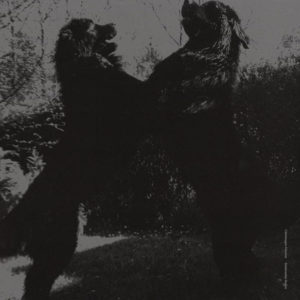
“Relationship studies”
“Relationship Studies LP includes 2 seminal electronic music radical realizations by Charlemagne Palestine, or "Relationship Study No. 1" (1967) and the generally titled "Electronic" from the same year. Sounds in motion like race cars, motor cycles, war planes, rocket ships excited Charlemagne sonic imagination when we was still a young teenager. Then came the experience of listening to the electronic music of Tod Dockstader, Alwyn Nikolais, Pierre Henry and Pierre Schaffer, Xenakis and "Poème Electronique" by Edgar Varese. Immediately fascinated Charlemagne Palestine bought a primitive electronic equipment and started to experiment, creating his original electronicesque language. The two previously unreleased 18 minute masterpieces presented here directly come from this early period of intense experimentations in a fluid ever-changing mix of adding and filtering white noise and simple sine tone generators. Both pieces are late night compositions created at the electronic music studio of the New York N.Y.U. Intermedia Center using Buchla 100 and Buchla 200 systems. Even if dating back from the mid-1960s these intense sonorities might very much recall the best early power electronic scene from the late 1970s, in particular to the first brut music works created by Maurizio Bianchi. For sure they represent a very unique and inspiring approach to electronic creation, sounding more and more actual and surprising nowadays. Edition limited to 350 copies.” label info
23,00€
In stock
LP
Charlemagne PALESTINE
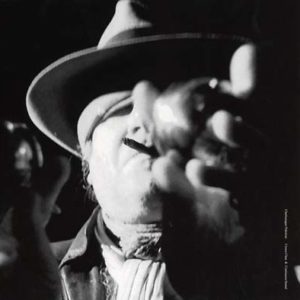
“Two electronic sonorities”
alga marghen proudly presents two seminal electronic music radical realizations by Charlemagne Palestine. These previously unpublished pieces confirm once more how advanced was his Golden Research already in the 1960s, a very personal approach to sound which would have later become so influential for future generations. Continuous Sound, built by an ever-changing mix of adding and filtering white noise and simple sine tone generators, is the most solid sound construction that Charlemagne created in preparation of his lost electronic masterpiece L’Avventura, inspired by the Michelangelo Antonioni movie with the same title. Continuous Sound pre-dates L’Avventura of just a few months and with its suspended atmospheres and its deep sense of mystery represent one of the most fascinating sonic works by Charlemagne Palestine. Crown Chan is an electronic music piece created for a dance by Gus Solomon in 1970. Conceiving music for dancers gave Charlemagne the possibility to experiment and manipulate the reel tapes of some of his electronic sonorities. In a previous collaboration with Gus Salomon, Charlemagne created a new sound by simply superimposing two already existing and accomplished electronic drones. Holy1 and Holy2 thus became a completely new sonority titled Holy1+2 (these works were included in the CD titled Alloy, also issued by alga marghen). In the case of Crown Chan Charlemagne worked in a more structural way, shaping his electronic sound materials into two stereo reel tapes (titled Crown Chan 1&2 and Crown Chan 3&4) which also integrated silent parts and were meant to be played back simultaneously, thus providing a powerful live music for the dancers. Edition limited to 380 copies, with an institutional portrait of the composer on front and back sleeve for you consumers to enjoy.
19,00€
In stock
LP
Charlemagne PALESTINE
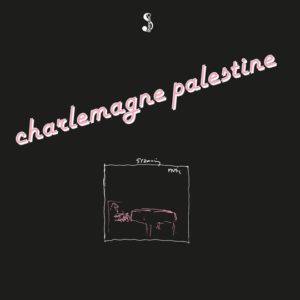
“Strumming Music”
This classic minimal music album is now available again on vinyl for the first time since the 70s.
Primed with a glass of cognac Charlemagne Palestine sits at the keyboard of a Bösendorfer Imperial grand piano. One foot firmly holds down the sustain pedal while both hands perform an insistent strum-like alternation on the keys. Soon Palestine and his Bösendorfer are enveloped in sound and bathed in a shimmering haze of multi-coloured overtones. For 45 minutes this rich pulsating music swells and intensifies, filling the air.
When Strumming Music first appeared on the adventurous French label Shandar during the mid-1970s, it seemed a straightforward matter to place Charlemagne Palestine in the so-called Minimalist company of La Monte Young, Terry Riley, Steve Reich and Philip Glass, whose work also featured in the Shandar catalogue. Palestine too used a deliberately restricted range of materials and a repetitive technique, but as he has often pointed out in more recent times the opulent fullness of his music would more accurately be described as Maximalist.
Strumming Music, recorded in Palestine’s own loft in Manhattan, has no written score. In an age of recorded sound he still feels no need for traditional notation. The surging energy of this particular recording stands comparison with the improvising of jazz visionaries who impressed and inspired him while living in New York, as a young man. But, as Palestine himself has made clear, primarily he brings to music-making the sensibility of an artist rather than a musician.
Although the technique of the piece has roots in Palestine’s daily practice, when a teenager, of playing the carillon at a church, hammering sonorous chimes from a rack of tuned bells, it also draws on his later work as a body artist, staging vigorously muscular, physically demanding and often reckless performances. In addition, Strumming Music can be heard as a sculptural tour de force, while its textures connect with the colour moods, plastic rhythms and tactile space of Mark Rothko’s Abstract Expressionist canvases.
At the time when Philip Glass, Steve Reich and Terry Riley were becoming well-respected and widely heard composers, welcomed in concert halls and opera houses around the world, Charlemagne Palestine actually stopped making music altogether. He relocated to Europe and devoted his creative energies to the making of stuffed animal sculptures including the mighty God Bear, three-headed and six metres high. His involvement with music was revived and renewed during the 1990s, when younger generations of musicians and listeners, attuned to immersive noise and sensual sounds, were rediscovering Strumming Music and recognising that Palestine had blazed an idiosyncratic trail into their emerging world.
Since then he has returned enthusiastically to musical performance and his formerly meagre discography has steadily grown. Still Strumming Music remains the essential index of Palestine’s singular creative vision. Fundamentally this fascinating piece is a collaboration between an artist and an instrument. Palestine had first encountered the Bösendorfer Imperial back in 1969. He had already been playing church organs for several years, relishing their power and presence. Now he had found a piano that satisfied his need for sonic depth and weight. “The Bösendorfer at its best is a very noisy, thick molasses piano,” he has remarked. Charlemagne Palestine embraced its clinging sonorousness, its clangorous resonance and out of that embrace came the voluptuous sonic fabric of Strumming Music.
“My rhythms are sexual, not machine-like.” Charlemagne Palestine, in 2013.
Insert with liner notes by Julian Cowley. Comes with download code. Lacquer cut by Rashad Becker. Lay-out by Jeroen Wille. Re-mastered by Equus. Licensed from FGL Productions. Edition of 1000 copies
20,00€
Out of stock
CD
Charlemagne PALESTINE
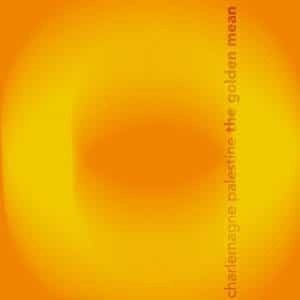
“The golden mean”
“The golden Mean” for two bösendorfer imperial pianos. Chapelle de la Sorbonne, Paris, November 2, 1979, festival d’automne. Recorded by Radio France for a broadcast by Daniel Caux for France Culture (Atelier de Création Radiophonique). Very luxurious object (which explains the price !) : each CD is hand-made, one by one, and each box is fully covered by the velvet material ! The first 1,000 copies will be a limited and numbered edition with a velvet cover specifically designed by Charlemagne himself ! Five different colours will be available, 200 CDs for each colour.
36,00€
In stock
CD
Charlemagne PALESTINE
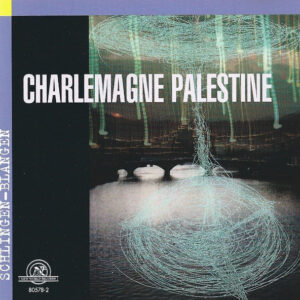
“Schlingen-Blängen”
Schlingen Blängen is an invaluable addition to the slender but precious discography of Charlemagne Palestine, one of the legendary figures of the amazingly fertile New York and West Coast experimental music/art scene of the sixties and seventies. He is considered to be a seminal figure of early minimalism-as important as his better-documented contemporaries. His performances on the giant bells at St. Thomas Church and his evening-length Bösendorfer shows are still spoken of with awe by those who were present. Palestine left the music scene in the mid-seventies to focus on his visual art; he eventually moved to Europe where he still resides.
Schlingen Blängen-a 70-minute long perambulation through the organ’s sonic landscape-was recorded in 1988 (ten years after its initial performance) in a small Dutch church near the North Sea. It is difficult to describe because so little happens in it, yet at the same time an immensity of activity is going on and there is so much of it that it boggles the mind. We experience sounds set into motion by the initial choosing of a chord and its timbres (the setting of the registers or stops); the melodic changes that occur are subtle and few. In short, it is a relentless and uncompromising exploration of the physicality of sound as well as its spiritual dimensions. Palestine’s music left its mark on a number of slightly younger composer-performers, among them Rhys Chatham and Glenn Branca. Absolutely essential for a comprehensive understanding of the roots of minimalism and its offshoots.
15,00€
In stock

CD
Charlemagne PALESTINE
“Nothing to tell, only listen”
Born in Brooklyn, New York in 1947, Palestine began by singing sacred Jewish music and studying accordion and piano. At the age of 12 he started playing backup conga and bongo drums for Alan Ginsberg, Gregory Corso, Kenneth Anger, and Tiny Tim. Throughout the seventies Palestine created records, videos, abstract expressionist visual scores and performed regularly in the company of his stuffed animals! This new release entitled Nothing to Tell, only Listen explores his unique soundscape.
Recorded at Boghossian Foundation Villa Empain January 26, 2015.
20,00€
Out of stock

CD
Charlemagne PALESTINE
“Ssingggg Sschlllingg Sshpppingg”
This awesome full length album by Charlemagne solo has been recorded especially for idiosyncratics. It has been brilliantly engineered by our long term associate Fredéric Alstadt (Angström Studio) and mixed by maestro Aymeric De Tapol.
The artwork is an original collaboration between Charlemagne Palestine, labelboss Yannick Franck and Frau label designer Helena Dietrich, immortalized by photographer Laurent Meurice. It comes with a color 3 panels cardboard and includes the download of the digital version (in the format you want).
“Charlemagne Palestine releases this absorbing 51 minute dronescape that's at once enormous and intimate - and easily a career highlight” Rolling Stone
7 Best Avant Albums of 2015.
“Not only my favourite record of 2015, but maybe the best work I have ever heard from Mr. Palestine” Jim O’Rourke (Wire magazine, dec 2015).
“One of the very best releases in the American maverick’s recent output” Touching Extremes
The artwork is an original collaboration between Charlemagne Palestine, labelboss Yannick Franck and Frau label designer Helena Dietrich, immortalized by photographer Laurent Meurice. It comes with a color 3 panels cardboard and includes the download of the digital version (in the format you want).
“Charlemagne Palestine releases this absorbing 51 minute dronescape that's at once enormous and intimate - and easily a career highlight” Rolling Stone
7 Best Avant Albums of 2015.
“Not only my favourite record of 2015, but maybe the best work I have ever heard from Mr. Palestine” Jim O’Rourke (Wire magazine, dec 2015).
“One of the very best releases in the American maverick’s recent output” Touching Extremes
12,50€
In stock
CD
Charlemagne PALESTINE
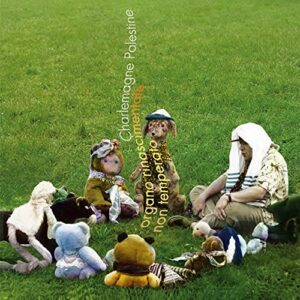
“Organo rinascimentale non temperato”
Charlemagne Palestine organ. “Schlingen Blängen for Organo Rinascimentale Non Temperato” (2004).
“Through my desire to find a sound form that rivaled Abstract Expressionist painters like Rothko, Newman, Still, around 1965 I attempted with the help of a 19th century treatise by Helmholtz, “On the sensation of tone”, and my own exhaustive experimentation with the pipe organ and early electronic synthesizers, to develop a constantly changing molecule like organism as a continuous sound form.
By 1977 those investigations became Schlingen Blängen, a work for electronic oscillators or pipe organ that can last from an hour to several days nonstop in sonic constant chemical acoustic + architectural evolution + transformation in space.”
13,50€
In stock
CD
Charlemagne PALESTINE
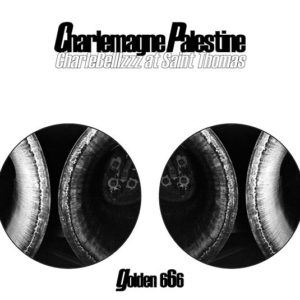
“CharleBelllzzz at Saint Thomas”
HelllszzzBelllszzz!
alga marghen proudly presents “CharleBelllzzz at Saint Thomas”, a CD in tri-folded digipak sleeve including the original Bells Studies by Charlemagne Palestine. Sixth chapter of the “Golden Research” series, these previously unreleased tracks are both some of the earliest recordings by Charlemagne and some of his darkest and most accomplished works ever.
“Bells Carillon” and “St Thomas Bells”, both recorded at unidentified dates between 1966 and 1968, are maximal bells pure resonating frontal attacks, building up in a structure that is already anticipating the later Strumming campaigns. Unique and clashing dissonances created like a spontaneous outburst, “instinctively” and “right away”. Charlemagne played the bells right next to his body. The sounds became physical, visceral, each crack of the clapper was like a small earthquake.
In 1963 while attending the high-school of music and art in NYC, 15 years old Charlemagne Palestine was asked if he’d be interested in playing a carillon with 26 bells at Saint Thomas Episcopal Church down the street from the Museum Of Modern Art. Charlemagne decided that he loved these voluptuous Taylor bells, high up in a tower and accessible only by a spiral staircase, that clanged all over 53rd Street and 5th Avenue… every day of the week from 1963 to 1970 when he left NYC to study and teach at CAL Arts.
Charlemagne soon became known as the “Quasimodo” of Midtown NYC, and his dissonant and “klanggdedangggebannggg” style of playing attracted a diverse group of fans from Moondog to John Cage to Tony Conrad among others. Charlemagne Palestine was able to continue to play his clanging bell soap operas for seven years dinggdonggingggg every late afternoon and sunday mornings!
World premier edition of these legendary seminal works!
alga marghen proudly presents “CharleBelllzzz at Saint Thomas”, a CD in tri-folded digipak sleeve including the original Bells Studies by Charlemagne Palestine. Sixth chapter of the “Golden Research” series, these previously unreleased tracks are both some of the earliest recordings by Charlemagne and some of his darkest and most accomplished works ever.
“Bells Carillon” and “St Thomas Bells”, both recorded at unidentified dates between 1966 and 1968, are maximal bells pure resonating frontal attacks, building up in a structure that is already anticipating the later Strumming campaigns. Unique and clashing dissonances created like a spontaneous outburst, “instinctively” and “right away”. Charlemagne played the bells right next to his body. The sounds became physical, visceral, each crack of the clapper was like a small earthquake.
In 1963 while attending the high-school of music and art in NYC, 15 years old Charlemagne Palestine was asked if he’d be interested in playing a carillon with 26 bells at Saint Thomas Episcopal Church down the street from the Museum Of Modern Art. Charlemagne decided that he loved these voluptuous Taylor bells, high up in a tower and accessible only by a spiral staircase, that clanged all over 53rd Street and 5th Avenue… every day of the week from 1963 to 1970 when he left NYC to study and teach at CAL Arts.
Charlemagne soon became known as the “Quasimodo” of Midtown NYC, and his dissonant and “klanggdedangggebannggg” style of playing attracted a diverse group of fans from Moondog to John Cage to Tony Conrad among others. Charlemagne Palestine was able to continue to play his clanging bell soap operas for seven years dinggdonggingggg every late afternoon and sunday mornings!
World premier edition of these legendary seminal works!
15,00€
In stock
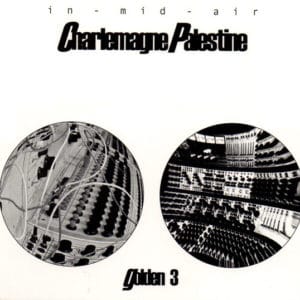
CD
Charlemagne PALESTINE
“In-mid-air”
The first electronically generated sounds that Charlemagne Palestine ever heard came from the machines he encountered in ordinary daily urban life. Machines like the refrigerator electric motor, or electrical generators; but it was especialy the sounds of motion (race cars, motorcycles, war planes, rocket ships) that first excited his sonic imagination as a young teenager. Then he heard the elctronic music of Tod Dockstader, Pierre Henry and Pierre Schaeffer, the famous ’Podme Electronique’ of Varese, Xenakis and ’Gesang der Junglinge’ of Stockhausen. He immediately reacted buying a cheap reel to reel tape recorder, cutting and pasting recording tape and making collage sound experiments. Then, one day, Charlemagne Palestine experienced at an electronic music studio what electronically produced sounds waves looked and sunded like through an oscilloscope and he began studying Helmholtz’s on the sensation of tone. He started dreaming of an expressive continuous evermoving, everchanging sound form; an enormous sonorous, 3-dimensional sculptural canvas in mid-air using electronically produced sounds. The first experiments were done with simple sine tone generators emitting the purest sound waves without any overtones. With access to more complex systems the sound was constructed using the sine/sawtooth/square wave oscillators in a fluid everchanging mix of adding or filtering overtones and white niose to create sonorities constantly changing timbres and weight. Five early electronic compositions including ’Sine Tone Study’ (1967); ’Open Closing’ (1968), created through speed alterations of ’Holy 1+2’; ’Seven Organism Study’ (1968); ’Negative Sound Study’ (1969) and ’Timbral for Pran Nath’ (1970). Late night electronic sonorities created on the Buchlas 100 & 200 systems available at the New York University Intermedia Centre. All compositions previously unreleased. 3-folded digipak cover with original photos and liner notes written by the composer.
15,00€
Out of stock

3 CD
Charlemagne PALESTINE
“The Lower Depths”
Edition limited to 300 numbered copies.
alga marghen proudly introduce you to an historical event, the publication of “The Lower Depths”, a 3CD set of previously unreleased unique piano sonorities by Charlemagne Palestine.
In 1977 Charlemagne Palestine was regularly performing in his red and gold loft on North Moore Street in Tribeca, down the street from Magoos bar where all the local artists hung out back then. He was working on a trilogy called “The Lower Depths”, a work conceived during the crucial moment when he experienced one of the peaks of his creative power.
The trilogy takes its name from the potentials of his Bösendorfer weapon which had lower notes than any other piano. The first section starts in the middle of the piano keyboard and the second section 2 octaves below while the third section arrives till the very bottom of the instrument. It’s a deep, thunderous, rumbling world that we experience. An extreme immersion in the depths of the dark side of strumming music.
“The Lower Depths” is a central work within the history of musical Minimalism, stretching and expanding what we understand and expect of an already singular voice.
Edition limited to 300 numbered copies not to be missed!
alga marghen proudly introduce you to an historical event, the publication of “The Lower Depths”, a 3CD set of previously unreleased unique piano sonorities by Charlemagne Palestine.
In 1977 Charlemagne Palestine was regularly performing in his red and gold loft on North Moore Street in Tribeca, down the street from Magoos bar where all the local artists hung out back then. He was working on a trilogy called “The Lower Depths”, a work conceived during the crucial moment when he experienced one of the peaks of his creative power.
The trilogy takes its name from the potentials of his Bösendorfer weapon which had lower notes than any other piano. The first section starts in the middle of the piano keyboard and the second section 2 octaves below while the third section arrives till the very bottom of the instrument. It’s a deep, thunderous, rumbling world that we experience. An extreme immersion in the depths of the dark side of strumming music.
“The Lower Depths” is a central work within the history of musical Minimalism, stretching and expanding what we understand and expect of an already singular voice.
Edition limited to 300 numbered copies not to be missed!
41,00€