
In stock

2 LP
Alessandro BOSETTI
“Plane/Talea 31-34”
Since a few years Alessandro Bosetti has been collecting voices that become part of the Plane/Talea archive. The creation of the archive stems from dozens of individual meetings and recording sessions, in which each voice is detached from its owner or originator and anonymized. With each new iteration and performance, Bosetti plays the archive as if it were an instrument. He searches for hidden details and correspondences through exploration, immersion and contemplation. Each re-activation of the archive results in a dense and
swarming polyphony made up of thousands of short utterances - shorter than any word bearing a meaning - recombined and interwoven into complex textures. The particularity of the grain of Plane/Talea lies in the autonomous and darting life that each of these fragments lives in a teeming community of voices. Such polyphonies are rich in microtonal detail emerging from the incessant juxtaposition of vocal objets trouvés. Harmonic relationships are sometimes rough and chaotic, other times surprisingly just. The voices are never treated electronically but only recombined and musical tension is provided by the particular grain, inflection, energy of each one of them in counterpoint to the others and to a frugally used instrumentarium (Harpsichord, Ondes Martenot, Cristal Baschet, grand piano, analog synth, Hammond organ). Implicit reference goes to ancient, modern and postmodern forms of vocal polyphony. "Plane/Talea 31-34" - the continuation of the homonymous 2016 LP - is a work of sampling that projects an imaginary community and a disembodied choir. The four arching and extensive tracks were created between 2017 and 2018 and bear the trace of two specific moments: August nights in a country house in Vicobarone, in the hills of Piacenza (31-32) and a week-long residency at the "Studio Venezia", an environment created by French artist Xavier Veilhan in the French pavilion at the 2017 Venice Biennale (33-34).
« Encounters of this sort did happen, with the voice still clinging onto its own origin, and then seen, as it were, coming out of the original mouth and caught saying other things, with a slightly different intonation, a slightly different timbre, maybe due to a little aging, an extra cigarette, a cold. At that point we would come out unsettled, or maybe convinced that it was not the same voice anymore, but another. »
28,00€
Out of stock
LP
Alessandro BOSETTI
“Renard”
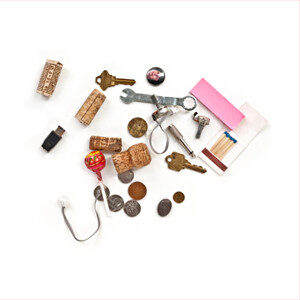
Composed by Alessandro Bosetti. With Alessandro Bosetti (voice, oscillator), Laurent Bruttin (clarinet, bass clarinet), Seth Josel (classical guitar). Recorded at Börne45 by Roy Carroll, June 2012. Mixed by Alessandro Bosetti. Mastered Giuseppe Ielasi. A chamber music project on LP by the Italian composer, sound artist and performer, inspired by an African divination ritual. Renard is a chamber music project by composer Aleassandro Bosetti, commissioned on the occasion of this LP release by the regional fond for Contemporary art FRAC Franche-comté. The inspiration for the collection of pieces comprised in Renard came from a video that Alessandro Bosetti saw at the ethnological museum quai Branly in Paris. The video was showing an african woman divining the future by mean of throwing handfuls of objects on a table and reading their configuration in a relentless sequence of questions and answers to herself. Fascinated by the ritualized simplicity of this practice Bosetti and designer Annette Stahmer, selected a new pool of objects, devised an interpretation code and recorded several divination sessions with a few invited participants. Participants had been instructed on how to "read" the objects and they were able to elaborate answers to each other questions on matters as love, health, family, money, travels and whatever else they may have wished to receive advice on. Distilled fragments of those intimate and emotional exchanges were portrayed in this series of pieces for voice, guitar and clarinet. The ephemeral and conversational nature of the original recordings eventually transformed into its opposite and got frozen into stylized music compositions. All material was derived from the spoken interactions —as it is common practice in Bosetti’s work—although this time speech is often not heard as such but rather used as root material for the creation of geometric melodic patterns that eventually proliferate into thematic constructions.
While Alessandro Bosetti is used to incorporate fragments du reel in his compositions—in the tradition of composer and radio makers like Luc Ferrari and Yann Paranthoen—the particularity of his method this time resides in his avoidance of sampling and recorded reproduction while creating life size casts of the portrayed scenes for voice and instruments in a sort of hand made hyperrealism.
The chosen form is a chamber trio with classical guitar, clarinet and voice with the occasional insertion of sinusoidal waves. It that may loosely remind of Anton Webern’s three songs op. 18 (with piccolo clarinet and soprano swopping roles with bass clarinet and tenor voice ) or of Jimmy Giuffre trio explorations in the 60’s.
The instrumentalists—both adopted Berliners by now - are New Yorker Seth Josel - one of the most in demand new music interpreters on the guitar that has been closely collaborating with composers as Tristan Murail, Helmut Lachenmann, Richard Barret and Phill Niblock and Laurent Bruttin from Lausanne mostly know for his work with the Ensemble Contrechamps in Geneva.
The music—thoroughly notated—is naked, cristalline, highly formal and stripped down to the bone with instruments and voice completely exposed in both fragility and virtuosistic precision. The focus is shifted away from noise and extended techniques and pointed towards the unfolding of melodic and prosodic possibilities as if a speech-melody section would have been added to Nichlas Slonimsky’s thesaurus of scales and melodic patterns.
The name of the project, Renard, reminds of another african divination technique, that of the Dogon people, where the white fox, Renard pale in French, is interrogated overnight by tracing coded drawings on the sand and reading it’s tracks in the following morning.
12,00€