Alessandro BOSETTI
“Renard”
12,00€
Out of stock
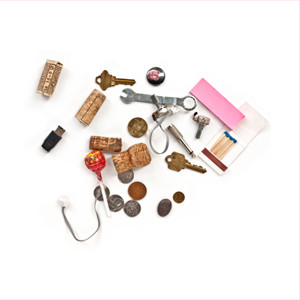
Composed by Alessandro Bosetti. With Alessandro Bosetti (voice, oscillator), Laurent Bruttin (clarinet, bass clarinet), Seth Josel (classical guitar). Recorded at Börne45 by Roy Carroll, June 2012. Mixed by Alessandro Bosetti. Mastered Giuseppe Ielasi. A chamber music project on LP by the Italian composer, sound artist and performer, inspired by an African divination ritual. Renard is a chamber music project by composer Aleassandro Bosetti, commissioned on the occasion of this LP release by the regional fond for Contemporary art FRAC Franche-comté. The inspiration for the collection of pieces comprised in Renard came from a video that Alessandro Bosetti saw at the ethnological museum quai Branly in Paris. The video was showing an african woman divining the future by mean of throwing handfuls of objects on a table and reading their configuration in a relentless sequence of questions and answers to herself. Fascinated by the ritualized simplicity of this practice Bosetti and designer Annette Stahmer, selected a new pool of objects, devised an interpretation code and recorded several divination sessions with a few invited participants. Participants had been instructed on how to “read” the objects and they were able to elaborate answers to each other questions on matters as love, health, family, money, travels and whatever else they may have wished to receive advice on. Distilled fragments of those intimate and emotional exchanges were portrayed in this series of pieces for voice, guitar and clarinet. The ephemeral and conversational nature of the original recordings eventually transformed into its opposite and got frozen into stylized music compositions. All material was derived from the spoken interactions —as it is common practice in Bosetti’s work—although this time speech is often not heard as such but rather used as root material for the creation of geometric melodic patterns that eventually proliferate into thematic constructions.
While Alessandro Bosetti is used to incorporate fragments du reel in his compositions—in the tradition of composer and radio makers like Luc Ferrari and Yann Paranthoen—the particularity of his method this time resides in his avoidance of sampling and recorded reproduction while creating life size casts of the portrayed scenes for voice and instruments in a sort of hand made hyperrealism.
The chosen form is a chamber trio with classical guitar, clarinet and voice with the occasional insertion of sinusoidal waves. It that may loosely remind of Anton Webern’s three songs op. 18 (with piccolo clarinet and soprano swopping roles with bass clarinet and tenor voice ) or of Jimmy Giuffre trio explorations in the 60’s.
The instrumentalists—both adopted Berliners by now – are New Yorker Seth Josel – one of the most in demand new music interpreters on the guitar that has been closely collaborating with composers as Tristan Murail, Helmut Lachenmann, Richard Barret and Phill Niblock and Laurent Bruttin from Lausanne mostly know for his work with the Ensemble Contrechamps in Geneva.
The music—thoroughly notated—is naked, cristalline, highly formal and stripped down to the bone with instruments and voice completely exposed in both fragility and virtuosistic precision. The focus is shifted away from noise and extended techniques and pointed towards the unfolding of melodic and prosodic possibilities as if a speech-melody section would have been added to Nichlas Slonimsky’s thesaurus of scales and melodic patterns.
The name of the project, Renard, reminds of another african divination technique, that of the Dogon people, where the white fox, Renard pale in French, is interrogated overnight by tracing coded drawings on the sand and reading it’s tracks in the following morning.
Composé par Alessandro Bosetti. Avec Alessandro Bosetti (voix, oscillateur), Laurent Bruttin (clarinette, clarinette basse), Seth Josel (guitare classique). Enregistré à Börne45 par Roy Carroll, juin 2012. Mixé par Alessandro Bosetti. Masterisé par Giuseppe Ielasi. Un projet de musique de chambre sur disque vinyle du compositeur, artiste sonore et performer italien, inspiré par un rituel africain de prédiction. Renard est un projet de musique de chambre, développé par le compositeur Alessandro Bosetti en réponse à une commande du FRAC Franche-Comté pour la publication de ce disque vinyle. Les pièces réunies sur Renard ont été inspirées à Alessandro Bosetti par une vidéo vue au musée d’ethnologie du Quai Branly à Paris, montrant une femme africaine qui prédit l’avenir en jetant des poignées d’objets sur une table et en déchiffrant leur configuration, dans une suite inlassable de questions-réponses qu’elle s’adresse à elle-même. Fascinés par la simplicité rituelle de cette pratique, Bosetti et la designer Annette Stahmer décident de sélectionner leur propre ensemble d’objets, mettent en place un code d’interprétation et enregistrent plusieurs séances de prédiction avec des participants invités. Ceux-ci, ayant appris à « déchiffrer » les objets, peuvent alors se répondre mutuellement sur des questions d’amour, de santé, de famille, d’argent, de voyages ou de tout autre sujet sur lequel ils souhaitent prendre conseil. Ce sont des morceaux choisis de ces échanges intimes et sensibles qui sont dépeints dans cette suite de pièces pour voix, guitare classique et clarinette. L’aspect éphémère et spontané des conversations d’origine se retrouve transformé en son contraire, cristallisé en compositions musicales stylisées. Comme c’est souvent le cas dans le travail de Bosetti, tout le matériau sonore découle de ces échanges parlés. Cette fois-ci, cependant, la parole n’est plus audible en tant que telle, mais plutôt utilisée comme matière première pour créer des motifs mélodiques géométriques qui, en proliférant, finissent par susciter des constructions thématiques. Si Alessandro Bosetti incorpore souvent des fragments du réel dans ses compositions – dans la tradition de compositeurs ou d’auteurs de pièces radiophoniques tels que Luc Ferrari ou Yann Paranthoën – la particularité de sa méthode, ici, réside dans un choix de ne rien échantillonner, de ne pas inclure les enregistrements, mais de recréer grandeur nature les scènes représentées, avec la voix et les instruments, dans une sorte d’hyperréalisme fait-maison. La forme choisie est un trio guitare classique-clarinette-voix, avec par moments l’apparition d’ondes sinusoïdales. On pense parfois aux Trois Lieder opus 18 d’Anton Webern (où la clarinette basse et le ténor auraient pris la place de la clarinette piccolo et de la soprano) ou aux explorations du trio de Jimmy Giuffre dans les années 60.
Les instrumentistes – tous berlinois d’adoption, à l’heure actuelle – sont le new-yorkais Seth Josel, l’un des guitaristes- interprètes de new music les plus en vue du moment, qui a collaboré avec des compositeurs tels que Tristan Murail, Helmut Lachenmann, Richard Barrett et Phill Niblock ; et Laurent Bruttin, de Lausanne, qu’on connaît surtout pour son travail au sein de l’ensemble genevois Contrechamps.
La musique, écrite avec une grande précision, est pure et cristalline, extrêmement formelle, réduite à l’essentiel, la voix et les instruments étant mis à nu, tant dans leur fragilité que dans leur virtuose précision. L’accent n’est plus mis désormais sur le bruit et les extended techniques, mais sur le déploiement des possibilités mélodiques et prosodiques, comme si l’on avait ajouté une section « mélodie du langage » au Thesaurus des gammes et des progressions mélodiques de Nicolas Slonimsky.
Le nom du projet, « Renard », renvoie à une autre technique africaine de prédiction, celle des Dogons, qui interrogent le Renard Pâle en traçant des dessins codés dans le sable, et viennent déchiffrer ses traces le lendemain matin.
Related products
In stock