
Out of stock
Out of stock
LP + 7"
RAGLANI
“Real Colors Of The Physical World”
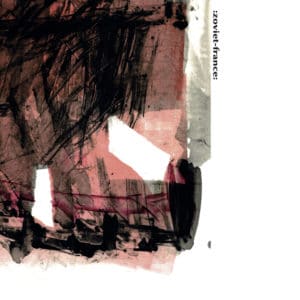
Sounds : Joseph Raglani. Speech : Melissa Meinzer. Mastered & Cut by Rashad Becker. Art: Jeremy Kanappell. “Real Colors of the Physical World” is a title whose parameters of reference may at first seem obvious, but a moment’s consideration renders it strange. The physical world, as opposed to the phenomenal, is, as we are able to suppose through the insights of science, an invisible place, if it is even enough to count as a place. What, then, are the qualities being named here? By way of an answer, it is worth recalling that musique concrete has not only an historical but a conceptual priority over kosmiche musik. The concrete in the cosmic: electronic music concerned itself from the beginning with getting past the emotional, historical, and religious themes that had defined traditional composition in order to head straight into the very matter of sound. For the concrete composers, this meant literal experimentation, stretching, analyzing, and recombining the properties and limits of auditory material and its perception. The kosmiche musicians conserved those approaches through metaphor as much as technique. The continuity between them involves a vocabulary of fundamental concerns: space, time, shapes, speed.... Electronic music arguably allowed for music to become actively self-reflexive, even ontological, for the first time. Its natural epic form has always been the cosmogony. The kosmiche focus on space travel and cybernetic futures has its roots in the earlier electro-acoustic renderings of a universe whose deepest origins are electrical and sonic. Two tacit, convergent metaphors structure the conceptual explorations of both approaches: that "electronic composition" accurately describes the activity of the human nervous system; and that cosmic evolution may be legitimately qualified as an act of modular synthesis. But much electronic music today has lost sight of the ambition to map that convergence, giving way instead to an emphasis on superficial prettiness, period nostalgia, the merely pleasant stupor of the New Age; or else to a vacuous static of technical fiddling. Raglani has never abandoned the grand vision that distinguished his ancestors, and this is his most determinedly comprehensive piece of work. It revisits the promise in the electronic synthesis of sound, implicit from its beginning, to construct a plastic image of the imperceptible dynamics beneath the surface of the world. This is a drama realized at constantly telescoping scales, in all directions. If the disintegration of a divine voice into the skittering communications of machines, or the transformation of a densely alien jungle into the promise of personal redemption, can count as objects of experience, they can do so only here, through the condensation of sound. But this hectic, exotically diffuse rendering has more in common with the world as we know it than does the placid stability of actual things; inner life has its own geometry, its own physics. The cosmic in the concrete: real colors remain within. Raglani has been making electronic music since he saw Otomo Yoshihide perform while under the influence of severe fever. This is his first full length album under his own name since 2006’s Of Sirens Born.” Michael Ferrer
9,00€
In stock
LP + 7"
Tom RECCHION
“Proscenium”
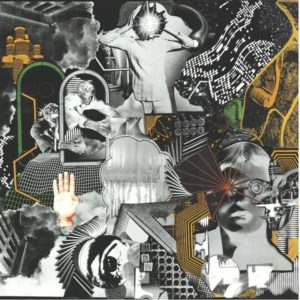
“Proscenium” is a subtle and remarkably controlled collection of atmospheres. The air of mystery, deliberate pacing, the deep tones and unidentified sounds of Recchion’s 2006 album “Sweetly Doing Nothing” have been explored even further here. It’s a logical development but the results are unexpected and strikingly original, sounding wholly unfamiliar and yet like no one’s but Tom Recchion’s. Proscenium’s six pieces mostly began life as music for puppeteer Janie Geiser’s play “Invisible Glass,” an adaptation of Poe’s “William Wilson”. The play’s intricate beauty and the story’s moody confusion have been perfectly mirrored and expanded on by Recchion who used that inspiration as a leaping off point for Proscenium’s rich and surprising compositions.
Tom Recchion has been a sound and visual artist - composer - art director and graphic designer in California since the 1970s. He is the co-creator of the legendary Los Angeles Free Music Society (LAFMS) and has collaborated with David Toop, Christian Marclay, Oren Ambarchi, Keiji Haino, and Max Eastley, among many others. Though Proscenium’ is only his fourth proper album as a solo artist, Recchion has had many recordings released by labels such as Birdman, Touch, PSF, RRR, Idea, Staubgold, and the Cortical Foundation. He also occasionally writes for The Wire magazine. Tom Recchion lives in California.
“Proscenium” consists of one 180-gram virgin vinyl LP inside a black poly-lined sleeve, plus 7” record, each with five-color labels, housed in a full-color gatefold jacket. Included with each copy of this set is a full-color download card featuring access to high-quality MP3s of the complete contents of the vinyl records. This package has been issued in an edition of 500 copies.
25,00€