
Out of stock

CD, Book
eRikm
“Douze horizons”
A sound postcard by eRikm: an instant composition recorded on CD, somewhere between sound performance and radio creation, accompanied by a booklet of photographs.
Since 1992, eRikm, a Marseilles based artist, has extended the field of artistic experimentation on the international scene.
Maintaining a constant fusion between thought, instinct and sensitivity, he pursues a simultaneity of practices and addresses the interplay between various compositional modes, relating to and using all languages.
From his early experience as a guitarist through to his later visual work, he is a maverick genre-bender who breaks down anyone's attempts to conveniently classify him.
Quickly recognised as a virtuoso turntablist and sound artist (1996), eRikm has made a longlife habit of crossing all territories and “world-systems” deemed “independent”, “institutional”.
12,00€
Out of stock
CD, Book
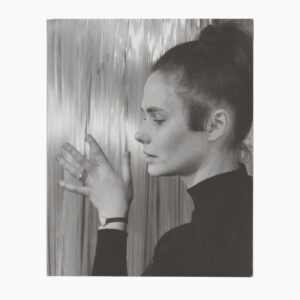
Annea LOCKWOOD
“Glass World”
“I have become fascinated by the complexity of the single sound.” - Annea Lockwood
A note from Lawrence English
To attempt to summarise the journey of Annea Lockwood’s life, as a composer and performer, is difficult if not impossible. For six decades now, she has carved out a multifarious and fluid existence that has orbited various musical movements and approaches. Hers is a life led by intuition, curiosity and listening, one in which passion is paramount and wonderment abounds.
If you were to reflect upon one aspect of her way of being that holds the greatest gravity in her day to day, it is perhaps listening that resonates most vibrantly. It is a practice that she has sought to deepen, with an unwavering dedication across her life, and a it is practice that has sustained her in the absolute. It’s here that Glass World comes into focus for it documents some of her first significant studies into sound, object and listening. It is a recording that captures her in a moment of profound fascination with a rather familiar material, glass.
This recording celebrates many things, amongst them Lockwood’s willingness to allow single sounds to resonate, fully. Across each of the twenty three vignettes captured here, Annea Lockwood invites us to lean into the material nature of sound with her. Glass World shimmers with an almost fanatical incandescence. It radiates a vibrational intensity that holds as strongly today as it did upon its original release in 1970 on Tangent Records. I had the privilege to re-master these recordings, under the guidance of Annea, and sitting with them so intensely was nothing but a delight.
In tandem with this project, Annea and I have undertaken a long-form in conversation, which is collected in the book which sits alongside this edition. The conversation splays outward from Annea’s work on Glass World and it deliberately seeks to visit upon her interests and passions, and through doing so revel a certain perspective that has guided her ways of being, and ways of making.
It’s an honour to have the opportunity to share this edition with you. I hope you too can catch Annea’s resonate curiosity and be as captivated by these sounds as I (and many others) have been.
18,00€
Out of stock
CD, Book
Philip SAMARTZIS
“Atmospheres And Disturbances”
From Philip Samartzis
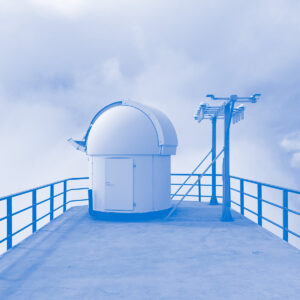
Atmospheres and Disturbances registers the changes in high altitude ecologies caused by increasing global temperatures. The composition is based on field work undertaken at the High-Altitude Research Station at Jungfraujoch, Switzerland where for four weeks I deployed various recording devices around the station, and in the surrounding alpine environment to register natural, anthropogenic and geophysical forces. The project provides new encounters of an endangered alpine environment to enhance the way we perceive and engage with notions of place, community, and environmental dissonance.
During fieldwork I used different microphones to record a variety of acoustic, spatial, atmospheric, and vibration-based phenomena. Omnidirectional microphones registered wind, snow, and ice as well as social, material, and industrial sound emanating from the nearby train terminus and viewing platforms. Hydrophones were placed within water and ice to record geophysical sound resonating within the frozen environment of Jungfraujoch and the adjacent glacier. The recordings capture the pervasive presence of anthropogenic sound permeating throughout the landscape produced by tourists, transport operations and recreational sports. Accelerometers were attached to various surfaces and structures to record solid vibration generated by high-velocity wind, and the process of melting and freezing. The recordings produced by the accelerometers clearly express the stress and fatigue occurring within the material structure of buildings and infrastructure.
Atmospheres and Disturbances is designed to place audiences deep inside an extreme environment to afford embodied experiences of an alpine ecology under duress.
18,00€
In stock

CD, Book
PHAUSS
“Audiodrome”
Phauss is Carl Michael von Hausswolff and Erik Pauser. Formed in the early 1980s, Phauss operated amidst of generation of uncharacteristic Swedish artists concerned with reshaping the edges of practices in sound, light, performance and vision. It was a monumentally fertile period for Sweden in that a confluence of factors allowed artists to dedicate themselves to the relentless excavation of ideas, drilling down to the absolute core of their interests and ways of making.
Von Hausswolff and Pauser, who both operated across sound and installation, used Phauss as a means for deconstructing ideas of composition, situationalism, site-specific works and extended performance methodologies. Across the second half of the 1980s and into the early 1990s, they made connections, through their travels, outward from their homeland into scenes and communities that stretched from the Middle East, through North America and into Asia.
Like their travels, their ways of approaching the work they made was similarly wide-reaching and innately curious. They worked with often quite strict conceptual structures within which they were able to unlock entirely new ways of considering composition and also the material production of sound, through performance, through iteration and through considered experimentation which allowed for failure, just as much as success.
Audiodrome collects together two discreet works that sit somewhere between field recording, chance composition and experimental soundscape. Both pieces pre-date the widespread arrival of field recording as a creative practice, and expand outward the work that had been developed by musique concréte and other experimental music approaches concerned with the intersections of found sound and composition. Both works were devised using the same working methodology, whereby an alarm would sound every few days and wherever and whenever it sounded the pair would start recording their surroundings. Those raw material became the basis for the pieces.
The first composition Zürich - Zürich is a piece that traces a line around the world, Phauss travelling on a round the world air ticket stopping only in countries where conflict was present. This unsettling journey became a meditation on the evolving state of the world in those moments. Voices, traffic, cafes, radios, transportation system and other incidental environments float into one another in a kind of stream of (temporally incongruous) consciousness.
The second work Alger - Lagos brings to mind some of Brion Gysin and William S. Burroughs tape cut-ups. Street musicians are splice against bursts of radio, roadside conversations and searing blasts of industrial noise captured from aircraft and other unfamiliar sources. It is an unsteadying journey where even the sounds of the everyday feel alien and repositioned. The sounds call to us prompting a sensing that is at its heart utterly fascinated, and fascinating.
The edition includes a book featuring an exhaustive collection of photographs, documents and artworks made by Von Hausswolff and Pauser during their journeys undertaken to complete each of the compositions. Many of these images and artworks have never been published previously.
18,00€
Out of stock

CD, Book
PHAUSS
“Nya Sverige – Nothing But The Truth”
Phauss is Carl Michael von Hausswolff and Erik Pauser. Formed in the early 1980s, Phauss operated amidst of generation of uncharacteristic Swedish artists concerned with reshaping the edges of practices in sound, light, performance and vision. It was a monumentally fertile period for Sweden in that a confluence of factors allowed artists to dedicate themselves to the relentless excavation of ideas, drilling down to the absolute core of their interests and ways of making.
Von Hausswolff and Pauser, who both operated across sound and installation, used Phauss as a means for deconstructing ideas of composition, situationalism, site-specific works and extended performance methodologies. Across the second half of the 1980s and into the early 1990s, they made connections, through their travels, outward from their homeland into scenes and communities that stretched from the Middle East, through North America and into Asia.
Like their travels, their ways of approaching the work they made was similarly wide-reaching and innately curious. They worked with often quite strict conceptual structures within which they were able to unlock entirely new ways of considering composition and also the material production of sound, through performance, through iteration and through considered experimentation which allowed for failure, just as much as success.
Nya Sverige - Nothing But The Truth is a recording made in the United States whilst the pair were undertaking an exhaustive tour in 1991 alongside Hafler Trio and Zbigniew Karkowski. This, now legendary, tour was both arduous and rewarding. Living in a van for many weeks at a time, travelling between cities with the most modest of means meant Phauss came to know a very particular vision of the United States, one that existed below plain view. Their’s was an experience had at the rawest edges of cities.
Equally the performances they gave, from which this edition is assembled, were raw and quite frankly dangerous. Fire on stage, sparks flying from short circuiting electronics and intense physical rituals guided so much of their work during this tour and looking back at bootleg videos from the time it’s difficult to imagine the work being able to be presented in the modern world.
One of the flyers from their tour reads ‘Extreme Swedish Industrial’, and as familiar as those words might appear now, in 1991 they held a very different resonance. They were unfamiliar terms of reference and the intensity of Phauss’s music maintains that unknowability to this day. This is a profoundly individual work and sets the stage for a generation of musicians who followed them.
The edition includes a book featuring a long-form in conversation between Carl Michael Von Hausswolff and Erik Pauser with Lawrence English. It also includes never before seen photos and documents from their North American tour and collects together an essential and largely under-documented history of this period of the group’s work.
18,00€
In stock

CD, Book
ZIMOUN
“Guitar Studies I-III”
From Zimoun
With the Guitar Studies series I’ve dealt solely with noises and sounds produced by guitars.
Partly I played the guitars by hand in a more conventional way, but more often I prepared them, or activated them by using small DC motors. I used various microphones for the recordings, as well as the loose contact of a pickup and many different amps; from a small toy amp that was partially defective to a beautiful Magnatone amp with analogue tremolo from the sixties and an old Fender Amp I bought together with my first guitar when I was 10 years old.
I also played recorded sounds back in different environments, for example inside a cardboard tube or in different rooms with various sizes, and then recorded them again. This way I added natural resonate and spatiality to the sounds. I also created a distorted sounds by sending the signal of the guitar to a naked speaker membrane lying on the table, and then put some sand on the membrane itself. The friction between the membrane and the sand then created various forms of distortion. I was trying to test various processes of iteration to discover how transformed the guitar might become.
I did not work with loops in any of the compositions. For each layer in each piece, I recorded whatever I was exploring over the whole period of about an hour. In this way, I put together countless hours of sounds. Through the almost endless overlaying and long recording takes, I have tried to achieve a kind of liveliness, even if at the same time no major changes happen in the composition. It’s never exactly the same, but never going somewhere else either. In that sense these compositions also have a strong sculptural component.
After this process, I started working on the microstructures of the recordings. For example, I recorded slow equalizer shifts in some of these tracks over the whole period of time. I also played these live via various controllers and analogue equalizers. This approach allowed the individual frequencies to become more present over long periods of time or mix with others. Figuratively speaking, this is similar to using a lamp (or various lamps) to illuminate a sculpture from different perspectives, or to create slow changes in light, which affects our perception of the sculpture. At different sonic stages, this can also provoke additional psychoacoustic phenomena. Through these methods I have tried to create a complexity in the microstructures of the sounds and their evolutions.
All three compositions last about an hour each. Digitally, they are released in their full length, while the CD contains shortened versions.
18,00€
In stock

CD, Book
Lawrence ENGLISH
“Viento”
In the summer of 2010 I had the opportunity to visit Antarctica through an invitation extended by the Argentine Antarctic Division. It was nothing short of life-altering, as I am sure anyone would suspect.
Upon departing from Buenos Aires for the iced continent the Hercules transport aircraft, under direction of the Argentine military, made a routine stop at an airbase outside Rio Gallegos.
What was meant to be a few hours layover turned into several days as, on landing, a strong wind storm blew in unexpectedly. Conditions exceeded expectations, and before long it was clear the transport could not take off. The situation was only compounded by adverse weather along the Antarctic Peninsula.
Whilst the scientists and military personnel we were travelling with bunkered down in their quarters, I found myself drawn outside into the howling air. The wind in Patagonia is, well, breathtaking. Literally, there were moments where it was so physical, that it was difficult to catch my breath. Across three days I recorded abandoned buildings, lone trees folded over in fields of tundra-like grasses, quivering road signs, wailing fences and other objects shaken into life by the wind. It wasn't a comfortable experience by any means, but the multiplicity of sounds I was able to capture, I hope, speak for themselves.
The Antarctic recordings were made during two blizzards at Marambio and Esperanza bases. During the blizzard in Marambio, the temperature dropped to -40 degrees centigrade (with wind chill) which made recording particularly challenging. The wind battered the base’s structures and telecommunications equipment, making a range of unsettling, phasing choral drones and deep low frequency vibrations that resonated inside the base itself. The blizzard at Esperanza was mild by comparison, but still strong enough to coat penguins in layer of snow as they huddled together during the worst of the storm.
This year marks the 10th anniversary of completing these compositions and since that time, I have had the pleasure to diffuse them on numerous occasions. With those experiences in mind, as well as the format on which these works are now being made available, I have revisited them and completely remixed and remastered the pieces.
Listening back to these recordings I am struck by the sheer physicality of the wind. It's rare that you feel physically reduced by the motion of air, but in both Patagonia and Antarctica that is just how I felt. A small speck of organic dust in a howling storm.
Recorded on location in Patagonia and Antarctica in the summer of 2010.
Mixed and mastered at Negative Space 2022.
18,00€
In stock

CD, book
Phill NIBLOCK
“G2,44+/x2”
Liner Notes From Bill Meyer
In 2001, Phill Niblock wrote, "You should play the music very loud. If the neighbors don't complain, it's probably not loud enough."
In 2019, Niblock can no longer host his annual 6 hour-long solstice concert at the Experimental lntermedia loft; not only did the neighbors complain, the landlord sued. But the validity of his prescription is undiminished, for it takes sonic volume and spatial confinement to unlock his music's true nature. Give the sound waves a boost and something hard to smack against, and they begin to shiver and multiply so that tones transform tones and every turn of the head (or every new room) yields a new listening experience. But Guitar too, for four is notable in Niblock's oeuvre for its independence from loudness. While it sounds great turned up, the additive process that yielded the CD's two versions has resulted in music that changes most rewardingly, even when heard at modest volume.
Victor Frankl opined that in the hierarchy of essential human motivations, meaning eclipses pleasure. In some ways, this music hews closer to the pleasure principle. Once you let go of the yearning for tunes and grooves, it's a sensuous delight to dunk yourself in the warm sound-bath of his music. And Niblock would be the first person to scotch any efforts to assign the sort of cosmic significance fhaf certain other drone-oriented minimalists did to their art. But consider this notion; Niblock's music is fundamentally social. It only truly happens in spaces where people gather.
While he does much of the composing and assembling of this music alone, Niblock didn't treat Guitar too, for four as finished until he got some more people in on the act. He asked Rafael ToraI and Jim O'Rourke to contribute to a CD edition. And when O'Rourke declined to play on his own production, but instead invited Kevin Drumm, Alan Licht, Thurston Moore, and Lee Renaldo to do the honors, Niblock's reaction was the more, the merrier.
To the extent that connecting people is an essentially meaningful activity, this music is the connective tissue of meaning.
Matte laminate embossed sleeve, insert card, 24 page book with linear notes from Bill Meyer, interview and photos.
18,00€
In stock

CD, book
Philip SAMARTZIS
“Boleskine”
Boleskine comprises an unfolding set of sound recordings made over a three-mile stretch of General Wade’s Military Road set on the south-east shore of Loch Ness. Scattered throughout the luminous countryside are memorial stones, burial ground, and various ruins indicating a long and troubled history. Boleskine situates the metaphysical alongside the prosaic to offer an encounter with a place of curiosity, imbued with atmosphere and shrouded by intrigue.
Philip Samartzis is a sound artist, scholar and curator with a specific interest in the social and environmental conditions informing remote wilderness regions and their communities. His art practice is based on deep fieldwork where he deploys complex sound recording technology to capture natural, anthropogenic and geophysical forces. The recordings are used within various exhibition, performance and publication outcomes to demonstrate the transformative effects of sound within a fine art context. He is particularly interested in concepts of perception, immersion and embodiment in order to provide audiences with sophisticated encounters of space and place. Philip is an Associate Professor within RMIT School of Art, and the artistic director of the Bogong Centre for Sound Culture.
Comes with A4 Booklet Silver Printed on Black Stock.
15,00€
In stock
CD, Book
John WALL – Alex RODGERS
“Soar”
CD and book, 210×148 mm, 20pp; foil-blocked cover.
John Wall : Arranging/composition/sampling/voice manipulation
Alex Rodgers : Voice/texts
Limited edition of 200 copies
Mastered by Paul Richardson
"John Wall’s granular textures once again manipulate and
augment the oblique poetics of Alex Rodgers. The two
have been collaborating for well over a decade now, in a
gambit for Wall to reshape his creative process through
improvisational strategies. Wall’s once meticulously edited
samples have become serpentine, liquid, yet unmistakably
digital. On Soar, his constructions look back to the glitch-
worship electronica of Vladislav Delay, Oval and Pole in
their attempts to shed themselves of the trappings of
techno. A lounge lizard slink is evident throughout Wall’s
brief compositions, allowing plenty of space for Rodgers
to gruffly articulate his existential profundities."
Jim Haynes in The Wire
14,50€
In stock
CD, Book
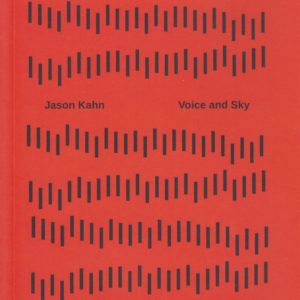
Jason KAHN
“Voice and Sky”
Book 15x14 cm, 74 pages + CD.
Voice and Sky provides both a look at a previous work, On the Breeze – a series of public space interventions and text / sound installation – and an extension of that work in the form of a book and CD publication. My view is that an installation or any kind of work dealing with the idea of space – be it a public space or a designated art space – can only be fully experienced by being in that space first hand. In the case of On the Breeze, using material gathered hiking extensively through the Swiss canton of Appenzell Innerrhoden, the final installation could only really be understood or felt within the context of the place the exhibition was held. The installation’s use of the recordings made during the interventions and the text I wrote during my hikes through the mountains were directly intertwined with the environment one walked through to get to the exhibition, which was scattered throughout the Swiss countryside of Appenzell Ausserrhoden near the small town of Gais. The idea of reconstructing On the Breeze in book and CD form would be impossible. The point of publishing this book, then, isn’t about creating a documentation but quite simply to share my experience working on the public space interventions and the ensuing installation. It is my feeling that the text and recordings on the CD impart something universal and untethered from the context of the original installation. The primary material of On the Breeze was in fact not these texts or recordings but the very space itself and my experience there, inserting myself through voice, movement and text. Voice and Sky chronicles this process.
18,00€