
In stock

4 LP
Fernand VANDENBOGAERDE
“Les Années 1967-1984” (2nd edition)
>>> 4 LP set in 1cm slipcase sleeve + 16 page booklet
Edition of 250 copies, with download code.
Metaphon is thrilled to present this collection of 14 phenomenal electronic and electro-acoustic works by French composer Fernand Vandenbogaerde, realized between 1967 and 1984.
After his science studies Fernand Vandenbogaerde (1946) studied at the Conservatoire de Roubaix and did various classes and courses with a.o. Jean-Etienne Marie, Olivier Messiaen, Pierre Schaeffer, György Ligeti, Karlheinz Stockhausen and Bruno Maderna.
He wrote analytical essays on mathematic music, in particular the work of Iannis Xenakis.
Vandenbogaerde taught electro-acoustic music at various institutions and was director at the National School of Music and Dance in Blanc-Mesnil, near Paris.
As a composer he wrote works for orchestra, instrumental and chamber ensembles, sometimes in hybrid form including tape and electro-acoustic configurations. He also recorded numerous tape compositions in Bourges, Paris, Ghent and at his home studio. His works have been presented worldwide on various leading festivals and events.
The compositions included in this edition are primarily tape works, meticulously recorded and produced, radical and most of all timbre oriented which makes his compositions focus mainly on sound while other parameters hardly change. In Vandenbogaerde’s own words: “What determines my pieces, at least all the ones in this collection, is that it’s the material that dictates me, that will predetermine the form”. This particular approach distinguishes him quite a bit from many of his contemporaries within the field of electro-acoustic music.
Another interesting aspect in Vandenbogaerde’s work is the integration of micro tonal scales (conceived by Mexican composer Julian Carrillo), on the compositions 'Modifications III' and the intriguing trilogy 'Drei Nachdenken über Hymnen an die Nacht'.
All tracks are previously unreleased except the proto power electronics piece 'Anschlag' which was self-released in 1971 on his own Point Radiant label, as a compilation LP which also included a track by Tristan Murail.
60,00€
Out of stock

4 LP
Robert FESLER
“μP RPF78” (2nd edition)
>>> 4 LP set in 1cm slipcase sleeve + 12 page booklet with photos and text by Robert Fesler and Baudouin Oosterlynck.
An anthology of the intensely arresting work of Robert Fesler (1936-2023), revealing many of his compositions (1975 -1987) created with his self-built synthesizers, with as pinnacle the μP RPF78.
Except one, all tracks are previously unreleased.
With profound simplicity and devotion, Fesler paints a hermetic inner world with strong emotions of confronting solitude, sensual alienation and traumatic angst. His music was as much a therapeutic treatment as an artistic expression. Fesler quotes, "Building my synthesizers and working with them enabled me to sublimate my anxieties".
Most tracks were played and recorded real time, often with two synthesizers (the Synthese 756 and the μP RPF78), capturing the heat of the moment in one take, without multitracking. The austere and reductionist approach reinforces the overall spirit of his work, resulting in an engaging, mysterious solitary journey.
It’s quite incredible how one person can put so much technical cerebral content in the development of a machine and use it in such an emotional way.
The music of Robert Fesler might be considered as very Belgian.
To situate it within a close entourage, one can say it has:
the endurance of Baudouin Oosterlynck
the purity of Dominique Lawalree
the mysticism of Arsène Souffriau
60,00€
Out of stock

4 LP
Bernard PARMEGIANI & François BAYLE
“Divine Comédie”
Divine Comedy stands as a magnum opus crafted by two of the foremost composers of their era, boasting a musical ambition akin to Dante’s poem and its visual interpretation by Sandro Botticelli or Gustave Doré. For a long time, this triptych was presented as a two-sided work in which Bernard Parmegiani’s Hell and François Bayle’s Purgatory responded to and extended each other, guided by Michel Hermon’s voice through the listener’s imagination. Because Paradise, a mixed piece co-composed and performed live, had never been released on record before. Indeed, fifty years after its premiere, Paradise is unveiled to our ears, thereby rounding off the very first complete edition of the Divine Comedy.
• 4xLPs
• 60 x 90 cm (24x36 in) foldout poster
• The piece 'Paradis' is exclusive to this new edition
• Embossed gatefold sleeve
47,00€
Out of stock
4 LP
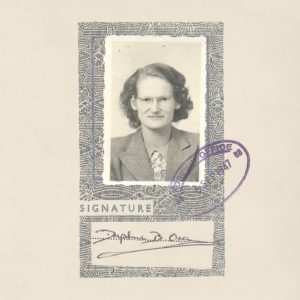
Daphne ORAM
“Oramics”
Throughout her life, Oram was a wildly original musician, inventor and theorist who refused to bow to convention. While Delia Derbyshire had more or less become a household name, it was only when Clive Graham compiled ‘Oramics' for a CD release in 2007 that Daphne's legacy started to extend beyond the fringes. In the intervening years (aided by the work of the Daphne Oram Trust and Oram’s archive at Goldsmith’s in London) there have been countless articles, features, a play, an exhibition at the science museum and even a creative arts building and several record labels and arts awards named in Daphne’s honour - going some way to restore her place as a recognised pioneer of electronic music.
To recap, Oram was the founder of the BBC Radiophonic Workshop, a department she more or less single-handedly created in 1958 camping out at the BBC studios for nights on end splicing tapes and working with various modified machines to carefully arrange her abstract soundscapes. Eventually the BBC bent under her pressure and, in studio 13, created the soon-to-be-legendary Radiophonic Workshop - with Oram its first director.
Among her countless other achievements, Oram is also cited as the first woman to design and build an electronic musical instrument, one that worked around the 'drawn-sound' technique whereby strips of 35mm film would be manipulated before being fed into her home-made 'Oramics' machine which would convert and 'read' the film into sound. She was also a prolific writer and lecturer on electronic music and studio techniques, developing concepts of spatial sound years before terms like "spatial sound” were even used.
Despite her considerable and historic list of achievements, Oram's life and work remained largely unknown by the wider public for many years until Clive Graham compiled this set. Spanning 44 tracks, it demonstrates Oram's work as some of the most varied and groundbreaking electronic music ever made. As opposed to so much of the Radiophonic-era material that has surfaced over the last few decades, Oram's work is often characterised by a much more layered and introspective quality, offsetting playful interludes and commercial recordings with beautiful, immersive pieces like the breathtaking "Pulse Persephone" and "Bird of Parallax” - highly atmospheric and experimental variants of musique concrète and tape music that still take our breath away 45 years later.
45,00€
Out of stock
4 LP
François DUFRÊNE
“Œuvre désintégrale – 4LP”
These are almost the last copies ! “Alga marghen presents one of the most impressive sound poetry anthologies ever published, introducing you to the sound works of the Nouveau Realiste artist Francois Dufrêne. His work, along with that of Gil J Wolman and Brion Gysin, was a strong influence for experimental poets like Henri Chopin, Bernard Heidsieck and Ake Hodell. François Dufrêne could be considered the younger of the first generation sound poets. Already in the Lettrist Group when he was only 16 years old, with his own style marked by an hyper-powerful voice. In 1953, at the age of 23, he became Ultra-Lettrist, starting his first Crirhythms by overpassing the alphabet in the perspective of the physical improvised scream. With the Crirhythms sound poetry enters for the first time in the factory of projective sounds. In the beginning Dufrene uses the tape recorder only to document his creations. These recordings show him that through the tape machine his poems could reached deeper and wider creative dynamics. Since the mid-1950s the tape-machine becomes for him a poetical and experimental tool and Dufrene fully develops its potentials with stereophonic recordings as well as with the superimposition of his Crirhythms. The loudspeakers amplifies sounds while the microphone captures even the most detailed concrete sound produced by his voice. The physical tempest he produces is a real concrete electronic sound attack. Dufrêne produced primitive, brutal poems opening the path of vocal sounds to contemporary composers: it’s known that Pierre Henry was deeply inspired by Dufrêne. The anthology presented here includes 10 Crirhythms from different periods dating from 1965 to 1976. Also included is "Osmose-Art", a long piece from 1969 divided in two suites where Dufrene superimposes his crirhythms to classical music. A similar technique was applied a few years earlier adding jazz music (specially drum and percussion pieces) to poems marked by strong lettristic esthetic. Two of those “Lecture-collage” dating from 1965 are presented here, as well as two “Comptinuum” from his early on-progress works started in 1958. François Dufrêne also developed unique performances, with live reading of his written text. The most famous is Tombeau de Pierre Larousse, published in 1958. This is a work half way between the written text and the sound poem whose unity is achieved through Dufrene performing it. It’s a masterpiece of synthesis of active poetry. “Eryximaque, suite choreographique au Tombeau Pierre Larousse” is also included in this anthology. Apart from the crirythmes that Henri Chopin issued on his Revue OU disc magazine (the complete OU anthology is available from alga marghen as a 4CD set) and a few short pieces issued on obscure sound poetry anthologies in the end of the 1960’s, François Dufrene work is practically unavailable. This 4LP anthology, conceived by the same author and privately issued as a 3 cassette edition in the mid-1970s, includes only previously unpublished sound works that finally fully documents the creativity of such a radical artist. De-luxe heavy boxset edition limited to 345 copies.”
65,00€