
Out of stock
CD
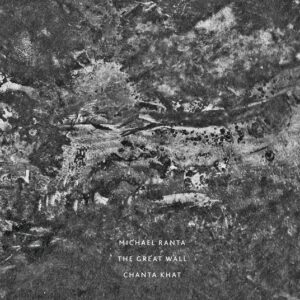
Michael RANTA
“The Great Wall / Chanta Khat”
Michael Ranta has collaborated with Takehisa Kosugi, Toshi Ichiyanagi, Jean-Claude Eloy, Conny Plank, Mike Lewis, and Hartmut Geerken, just to name a few. He was also assistant to Harry Partch and performer in the Gate 5 Ensemble in the 1960s. Additionally, Ranta performed in Stockhausen's ensemble during the 1970 World Expo in Osaka. Ranta's resume also includes recordings by Helmut Lachenmann, Herbert Brün, Toru Takemitsu, Josef Anton Riedl, Mauricio Kagel, among others. Throughout his extensive recordings and live performances, Ranta has furthered the trajectories of contemporary percussion composition alongside works for tape and electronics. His works are fully immersive which evoke vast spaces, ritual, and create an expansive presence for his accompanying multimedia commissions.
For this CD release, two of Ranta's longform pieces are included: "The Great Wall" and "Chanta Khat". Originally scored for the HT Chen Dance Company as a theater production, "The Great Wall" premiered in 1984 at the La MaMa experimental theater in New York. This highly detailed composition for electronics, voice, percussion, and tape offers a massive drone-based accompaniment for Chen's stage presentation of the legend of Meng Jiangnu. Yet, Ranta's composition also creates a fully formed soundtrack that stands beautifully on its own. The atmosphere is very much in the spirit of Kosugi's multimedia masterwork Catch Wave and Jean Claude Eloy's large-scale production Yo-In which also features Ranta.
"Chanta Khat" was completed in 1973. An early version of this piece originally premiered as part of a multimedia installation at the 1972 summer Olympics in Munich. This powerful work for tape and electronics includes Ranta's field recordings documenting his travel in Laos during a lunar eclipse earlier that same year. The piece is a haunting and equally frantic work where the local villagers are heard responding quite emotionally and viscerally to the celestial event of the day. "Chanta Khat" was later reworked and remixed in 1973 at the NHK electronic music studio in Tokyo. This version is featured here in its entirety. Packaged in a six-panel digipak with fully remastered and restored audio. Includes detailed notes by Michael Ranta and features new artwork by Timo van Luijk.
16,00€
In stock
LP
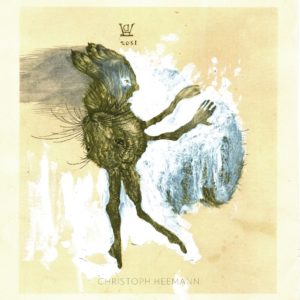
Christoph HEEMANN
“Perception & Association”
Consisting of two side-long pieces, Perception & Association was composed over a period from 2012-2018. Opening side-A is Time and Again, a startling work for tape and electronics which pulses over waves of interlocking spatial relationships. These elements are at once distant, even static, yet Heemann gradually propels the listener along chapters of an unexpected and further revealing sonic narrative. While the deliberate frames and events offer a specific path, even the most active listener will gain new insights with repeated spins. Side-B, The Trains, suggests not merely a travelogue, but a series of meticulously constructed episodes that reference the record's opposite side as well as the album title as a whole. In the spirit of early electroacoustic works by Jacques Lejeune, Eliane Radigue, and Jaap Vink, these new pieces continue to emphasize Heemann's ongoing filmic obsessions and firmly engage the listener with his latest cinéma pour l'oreille (cinema for the ear). Widescreen. Front cover artwork by Ruth-Marie Adam and back cover painting by Fritz Martin.
25,00€
Out of stock
LP
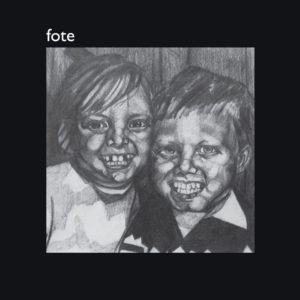
FOTE
“Fote”
Following the short-lived Truth Club with Trefor Goronwy (who later went on to work with This Heat and The Camberwell Now), Fote was formed in 1981 with the trio of Robert Haigh, Deborah Harding, and Trevor Reidy. Releasing two 12" EP's along with one track featured on a split 7" with Truth Club, Fote's entire studio recordings consisted of just 8 tracks. With angular constructs of post-punk, free-form improvisations, and wicked time signatures, these tracks shredded boundaries one can still hear to this day. These early foundations are also heard in much of Haigh's later Sema compositions as well as Reidy's motorik percussion with Nurse with Wound, Danielle Dax, and The Monochrome Set. Curiously, Harding's vocal tensions and outright unhinged polarities in Fote sound like much of the exorcisms and brilliant psychodramas on many of Chrystal Belle Scrodd's (Diana Rogerson) later solo albums. Cut at 45 rpm for maximum fidelity, including all 8 tracks, and featuring the original sleeve artwork by Deborah Harding. An absolutely essential document from the early 80s independent British post-punk scene
25,00€
In stock
LP
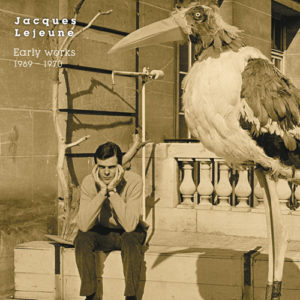
Jacques LEJEUNE
“Early Works 1969-1970”
This LP of early compositions by Jacques Lejeune features three seminal works: “D’une Multitude En Fête” and “Petite Suite”, originally released on the Perspective Musicales series in 1970, and a previously unpublished composition, “Géodes”, from the same period. These three pieces (not included in the recent Parages and other electroacoustic works 3CD set) are some of Lejeune's earliest music for tape and may be considered a "prequel" to his later, more thematic works. Still, his concise musical narrative is ever-present in these first recordings. The sidelong D'une Multitude En Fête (1969) refers to multitude, number, celebration and any crowd situation as a form of ceremony—all evoking a circular gaze, as topics of the different aural events and their anecdotal development emerge, leading to the dream, as a story we tell to ourselves. Géodes (1970) features percussion improvisations by Lauréat Dionne with Jacques' tapework inflecting prisms deep into its thundering, rhythmic core. This concert version appears on vinyl for the first time. Concluding the album is Petite Suite (1970), with each section referencing a traditional musical form using both anecdotal as well as instrumental flourishes. The original drum and guitar elements performed here by Michel Foudrinoy and Jean-Pierre Vassout. These pieces have been compared to Pierre Henry's bold rock themes in Messe Pour Le Temps Present and also recall the peculiar atmospheres of some of the great, early Nurse With Wound records that would follow. In contrast, Lejeune's early approach was heavily steeped in sonic narratives, combining unusual and ambiguous events to create a sound world uniquely his own. Early Works 1969-1970 explores the first precision splices by one of the true visionaries in musique concrète.
25,00€
In stock
CD
AF URSIN
“Murrille”
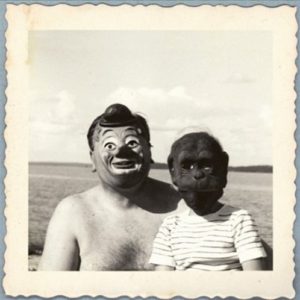
A long overdue CD edition of Timo van Luijk’s first full-length album, originally released in 2002 as a small private edition LP on La Scie Dorée (Belgium). “Murrille” features a collection of extraordinary “songs” integrating a palette of acoustic instruments such as glass harmonium, flute, hand percussion, as well as voice with real time synthesis. With a host of bizarre inflections and aural investigations, Van Luijk’s music recalls some of the of the great experimentation of early krautrock, otherworldly atmospheres of the infamous Futura label, and a pure love of the moments when it all just falls into place. This newly remastered edition sounds fantastic and includes an additional track not included on the original LP release. Mixed by Christoph Heemann. Packaged in a Japanese style tip-on mini jacket that carefully reproduces the original album artwork.
18,00€
In stock

CD
ORGANUM
“Sanctus”
The first album in a trilogy of new material, Sanctus represents the new architecture of the Organum sound. Recorded utilizing an implicit graphic score, the album is comprised of four discrete parts, each a variant of the others. These are not parts as in a movement or continuation of the composition, but rather four distinct audio canvases that represent a continuum of the elements at large. Composed in the spirit of the early Organum material, David Jackman has resurrected the droned-based, percussive turbulence of earlier years with a distinct new form of compositional systems. These new systems are scored for grand piano, Hammond organ, tower bell, and gong. While each element retains its distinct acoustic quality, the whole of each piece resonates the art of its totality. The results convey an ecstatic sense of presence, vast expanse, and, ultimately, infinitude.
18,00€
In stock

CD
Luc FERRARI
“Archives génétiquement modifiées. Société II”
Archives Génétiquement Modifiées (2000). Société II (1967). Robot Records is honored and pleased to present two historic compositions for the first time on CD by the late, great Luc Ferrari. The programme opens with "Archives Génétiquement Modifiées" (Genetically Modified Archives), a work for "memorized sounds" from 2000. This composition (subtitled: Exploitation of the Concepts 3) was the third in a series of later pieces in which Mr.Ferrari revisited aspects of his early concepts and compositional strategies to create wholly new works. The result here is a very bizarre, sensual, and beautifully-paced electroacoustic work of aural memories and (re)collections created by Mr. Ferrari utilizing sounds from his vast archive of musical activities. After a short intermission, the programme continues with a true highlight of Mr.Ferrari’s early instrumental work entitled "Société 2" from 1968. Subtitled "And if the piano were a body of a woman" (for 4 soloists and 16 instruments), this composition appeared opposite "Presque Rien" on the legendary Deutsche Grammophon LP. "Société 2" may be viewed as an erotically charged piece of musical theatre where the soloists "compete" for the attention of a woman (the piano). This concerto with its gestures and a fantastic kaleidoscope of styles and color shows the extravagant qualities of the piano in its "harmony, imagination, and brutality". Packaged in a full color digipak with 20 page bilingual booklet featuring Mr. Ferrari’s early artwork, notations, and programme notes along with an extensive commentary by Jim O’Rourke and Jay Sanders. Remastered sound with audio restoration by fellow INA GRM alumnus Jean Schwarz. A wonderful glimpse into the world of one of the most legendary, unique, and inspiring musical figures of the 20th Century.
15,00€
Out of stock
3 CD
Jacques LEJEUNE
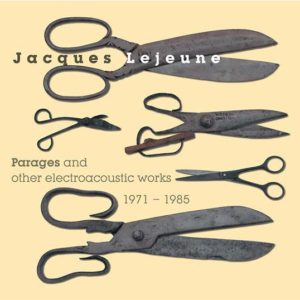
“Parages and other electroacoustic works”
Born (1940) in Talence, France, Jacques Lejeune studied music at the Schola Cantorum with Daniel Lesur, at the Conservatoire National Supérieur of Paris with Pierre Schaeffer, and at the Groupe de Recherches Musicales with François Bayle. He entered the GRM (Musical Research Group) in 1968 and directed the Cellule de la Musique pour L’Image (Music for Images Department) in which various productions for stage and television were produced. In 1978, in partnership between the National Audiovisual Institute, GRM, and the ADAC (City of Paris), Lejeune launched the Ateliers de Musique Électroacoustique (Studios for Electroacoustic Music) designing both its curriculum and program.
Six of Lejeune’s compositions are featured in this 3CD retrospective totaling near three-and-a-half hours of music. Presented chronologically, these works for tape represent a stunning array of themes, images, and destinations covering the years 1971-1985. Throughout Lejeune’s compositional development, the informal content of dreams, reflections on the written fable, and the mythological thinking of our ancestors - all reappear.
Originally released on LP by INA-GRM, both Parages and Symphonie au bord d’un paysage have been remastered and re-released here for the first time on CD. Parages (1973) is a work exploring distances (or vicinities), cycles, and the transparency of the sky. A deep undercurrent of perpetual movement, altitude - flight and fall - is ever-present in the piece, encompassing a procession of auditory colors, places, and events. These elements multiply, uniting beyond their individual musical processes, further immersing the listener within an increasing auditory field. Symphonie au bord d’un paysage (1981) is a composition concerned with motion, panoramas, and geographical relationships - all as if being at the edge of a vast chasm. This expanse projects the listener onto an audio compass, traversing specific territories, while contemplating the path and its spatial trajectories along the way. Also included is Lejeune’s masterwork, Blanche-Neige (1975). This has been regarded as one of the most peculiar and elusive recordings in the whole GRM-related canon. This early LP, also known as Fantasmes, was originally recorded for a theatre/ballet production of the same name. Loosely based on the text by the Brothers Grimm with its narrative symbolism and tale of the deep forest, Blanche-Neige is one of the finest compositions of cinéma pour l’oreille (cinema for the ear) for tape and electronics from the period. Cri (1971) is the earliest piece featured in the set, with an emphasis on the very nature of vocal expression. Integrating mixed landscapes and a spacious use of cyclical elements, this work offers a fantastic prelude to Lejeune’s evolution as a composer. Additionally featured are Entre terre et ciel (1979) and Les palpitations de la forêt (1985). These two works are concerned with the natural world, labyrinths, clusters, and intermingled morphologies of the Earth.
For Lejeune, his methods are always galvanized through tangible images. It is expressed in an acoustic research based on an ambiguity between the anecdotal and the musical. This follows the work of Luc Ferrari, with his notion of anecdotal music; bringing into relation the sounds of everyday reality and the musical narrative. Lejeune’s pieces may be further described as a “character passing through a series of landscapes.”
The boxed set includes a 28 page bilingual booklet (in English/French) with detailed program notes as well as a 32 page booklet of interpretive stanzas surrounding these bizarre and evocative works. Meticulously translated and collected for the first time in print, these writings offer a rare insight into Lejeune’s creative process. Parages and other electroacoustic works 1971-1985 is an essential overview of one of the seminal figures in musique concrète.
32,00€
In stock
2 CD
Jean SCHWARZ
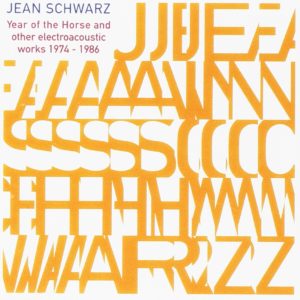
“Year of the Horse and other electroacoustic works 1974-1986”
Born (1939) in Lille, France, Jean Schwarz studied music in Paris and at Versailles Conservatory. He divided his activities between jazz drumming, composition, and the study of non-European music. In 1969, he joined the GRM (Groupe de Recherches Musicales) contributing his unique vision to musique concrète. In the same year, he also worked as an engineer and researcher at the Centre National de Recherche Scientifique in the ethnomusicology department of the Musée de l’Homme in Paris. In 1977, Schwarz created courses for electroacoustic music at Gennevilliers Conservatory. He founded Celia Records in 1980 releasing a vast catalogue of his own works as well as many collaborations.
As a composer, Schwarz favors electronic sounds – the raw material from which he creates large architectural forms and powerful, vigorous sonic structures. Schwarz also takes inspiration from non-European and indigenous musical forms. In his works involving live instruments, he often combines a prerecorded tape with brilliant improvisations by jazz musicians. His compositions include works for concert performance (some purely acousmatic, others employing live instruments), for cinema (music for Jean-Luc Godard, Serge Moati, Michel Deville, Gérard Follin, Michel Léviant, Gérard Blain, Charles Belmont, Mosco, Marlène Ionesco, and Alain Resnais), dance (for the choreographers Carolyn Carlson, Dominique and Françoise Dupuy, Larrio Ekson, Serge Campardon), and equestrian theatre for the French horse trainer Bartabas.
This 2CD collection contains selections from six compositions focusing on Schwarz's theatre and multimedia work. Year of the Horse (1978), Still Waters (1986), and Undici Onde (1978) contain pieces for choreographer and dancer Carolyn Carlson. With performances premiering at l’Opera de Paris, Teatre de Ville (Paris), and La Fenice in Venice, these scores give an in-depth insight into Schwarz and Carlson’s collaborative process. Some scenes incorporate rhythmic or cyclical elements, field recordings, electronics, and others detail purely acoustic resonance. Each musical section relates closely with Carlson's expansive visual poetry. Schwarz’s collaborations in theater continued with L'Enfance De Vladimir Kobalt (1979) for set designer and playwright Petrika Ionecso as well as Maison Rouge (1980) for director Pierre Sala. Both works evoke a wonderfully filmic structure, while integrating key themes across each scenic palette. The earliest work in the set is Fotoband (1974), a 21-minute composition to specifically accompany a 76-meter visual installation piece by German artist Ekkehart Raumstrausch. During the exhibition, loudspeakers were placed every 15 yards to allow the music to be heard while moving horizontally along the painting.
All compositions were originally issued as small edition LP’s on Schwarz’s own Celia Records, except Undici Onde and Fotoband which are previously unpublished and available here for the first time. This 2 CD set has fully remastered audio, including a 12-page booklet of photos, visuals, and detailed notes by the composer.
Year of the Horse and other electroacoustic works 1974-1986 (re)collects nearly two-and-a-half hours of highly evocative surroundings from one of the early visionaries of electroacoustic composition.
23,50€