
In stock
LP
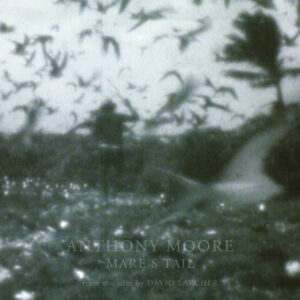
Anthony MOORE
“Mare’s Tail”
In 1969 both Anthony and David were at the start of their respective careers and both were inspired by the ideas of the avant garde and the new technologies becoming available to them. David experimented with the various techniques being explored in the medium of film making and Anthony tested the limits of what could be done with tape recorders. It was an open and co-operative exploration. The results of their first collaboration was the film Mare’s Tail - an unusually long 2:30 hour film of non linear multi layered audio visual collage filmed in a wide variety of locations interspersed with texts coming from readings and talks, Kabalistic texts, recorded phone calls, loops, children’s voices and other found material. The musical dimension is mainly supplied by various struck objects/noise/feedback/field recordings and samples. There are instruments too and we even get treated to a small section of what was to become a Slapp Happy tune. The blurry dreamscape/nightmare that slowly unfolds is laden with late 60s delirium. The original master tapes are long gone and all that remains is the audio track on existing copies of the film and various bits of the make up tapes, most of which were used (but some not), in the final cut. The low grade 16mm audio track (a degraded source to begin with), is further worn with age, subsequent duplication and repeated screenings. It all adds to the haze - a quality that David would have most likely approved. Edition of 500 numbered copies.
27,00€
In stock

3 CD box
Michael Allen Z PRIME
“Bioelectrical Music”
We have not had a physical release by composer and ecologist Michael Prime since the release of Borneo in 2007. This new 3CD set brings us up to date with a series of recordings from across the years. It also sees a new refinement in his working practice as well as a new extension to his original name. Bioelectrical Music by Michael Allen Z Prime consists of recordings that fall into 3 defined categories - Bioelectrical Compositions, Bioelectrical Field Recordings and Bioelectrical Installations. All three use the bioelectrical potentials generated by plants and fungi, although these sound sources are now no longer purely seen as raw material available for multi-tracking or further electronic processing of the signal path. Now, the bioactivity signals themselves form the basis of the music. Following a framework of self imposed rules that restrict the extent that the source sounds can be altered, such that the essential voice of the living sound sources remain identifiable. The development of this framework is a direction that Prime’s music has been moving towards for some years now, and this box set collects various recordings made between 1990 and 2019 that fall into the remit of this new development. The pieces included here range from short sound studies to lengthy compositions and installation recordings made at a wide variety of locations. The 3CDs are accompanied by a 44 page booklet with an essay by Prime outlining the history and development of our understanding of plant neurophysiology. There is also a short piece written by author and fungal enthusiast Merlin Sheldrake.
42,00€
In stock

CD
Adam BOHMAN
“Music And Words 3”
Coming 8 years after Volume 2 and 23 years after the first installment, Volume 3 of Music And Words is the 4th solo release by Adam Bohman on Paradigm Discs. All 4 releases have focused on his earliest recordings, mostly from the 80s, mostly domestic and all using cassette recorders. There are 4 principle styles that are employed in this early phase of Adam’s work - most unexpectedly there are songs, often constructed with trumpet as the lead instrument, then more typically there are improvised experimental pieces using home made stringed instruments. Thirdly we have ‘pause pieces’ - consisting of rapid edit collages using found media (typically radio and bargain bin LPs), and the 4th element is Adam’s spoken word recordings. Anyone who has met Adam will have seen him recording his observations and thoughts onto a small tape recorder, documenting his way through life. In fact the Music And Words CD series is roughly 50% composed from these peripatetic ‘talking tapes’. On Music And Words 3 we hear him at the seaside in both Brighton and Clacton-On-Sea.
Overall the CD ranges widely over these various styles, and bursts with ideas and humour. In addition to the 4 solo releases on Paradigm Discs there is also a compilation track plus his contribution as a member of Morphogenesis on 3 further CDs. I’m proud to say that Adam is by far the most represented artist on the label.
14,50€
In stock
LP
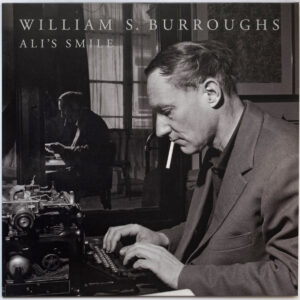
William BURROUGHS
“Ali’s Smile”
**2023 stock**
This record is divided into 2 sections. The first part is the title track and takes up most of side 1. Ali’s Smile was first published in 1971 and was privately released as a one sided LP, in an edition of 99 copies. It came in a plain sleeve with a hardback copy of the spoken text, and was sold exclusively through Unicorn Bookshop in Brighton, UK. Bill Butler, the bookshop owner, was still paying off a viciously punitive fine and associated court costs imposed in 1968 after a guilty verdict in an obscenity trial. Burroughs, a ‘fellow American’, was only too happy to help out by letting him have the rights to the recording. Rumours abound as to how many copies of the LP actually sold and how many were damaged after having been left on a heater, but, whatever the facts, this magnanimous gesture would still have been very handy. This is the first official reissue of this lost audio recording. A tale of revenge, heartless cruelty and amulet power, muddied with frequent recourse to Scientological references.
The rest of the LP is taken up with 30 minutes of audio tape supplied by Burroughs in answer to various questions mailed to him by a freelance journalist. It also includes several readings from material he was working on at the time. The recordings date from 1963, which places them as some of (if not the), earliest in depth recordings of his readings and thoughts. As this material dates from just before the publication of Nova Express, much of it serves as a useful companion and commentary on his Nova mythology. In the end only about 10 minutes of this material ever got broadcast, and was used as part of an illustrated talk on the BBC’s Third Programme.
Released in an edition of 1000 with sleeve notes on a numbered insert.
25,00€
In stock

3 CD box
GENTLE FIRE
“Explorations (1970 – 1973)”
**2023 stock**
You may have heard of Gentle Fire, but could be forgiven for not knowing much about them. They were a 6, then 5 member group of composers/improvisers/performers based in London and Yorkshire. Most of the writings that cover the pioneers of experimental, electronic and improvised music have given them scant attention. In addition to this, their recorded output is slim, the main item being a long out of print LP (for EMI Electrola), featuring their interpretations of graphic scores by Cage, Earle Brown and Christian Wolff. Despite recordings for BBC Radio 3 and many German radio stations, it seems extraordinary that there were no other substantial releases of their repertoire, or any of the 6 Group Compositions they created.
Most of the existing Gentle Fire archive was kept privately by Hugh Davies. After Hugh died in 2005 it was shared between various institutions. This release owes much to Hugh’s meticulous record keeping as well as the archives at the British Library and Special Collections at Goldsmiths, University of London. Listening sessions at the British Library were a revelation, it was like discovering a missing link in the evolution of experimental music, but above all it sounded so undated and fresh.
The release is divided into 3 sections. The first CD, recorded between 1970 and 1971 contains 4 studio and 2 concert recordings of graphic and text scores: 2 parts of Stockhausen’s Aus den sieben Tagen, and one piece each by Earle Brown, John Cage, Toshi Ichiyanagi and Christian Wolff. Gentle Fire were active between 1968 and 1974 and were especially active during the early 70s, appearing at numerous European avant garde festivals, playing their own Group Compositions and a wide variety of experimental scores. They even ended up in Iran playing in Stockhausen’s Sternklang, and improvising at dawn at Hafez’s tomb. The text and graphic scores that they were innately drawn towards have large elements of interpretive freedom to them, where the composer provides a skeleton and steps back allowing the players to give it flesh. They were in regular communication with the composers of these piece, so it’s no surprise that their interpretations were sought after by concert organisers and composers alike. There are very few examples of groups working at this time with direct contact to the composers, which makes these recordings especially precious.
CD2 and 3 focus on their own works, CD2 dates from 1973 and was recorded during a 2 day residency at Radio Bremen. The 5 pieces on this disc cover a wide variety of styles and include a 23 minute version of Group Composition VI which is their only text based piece and uses processed and filtered speech.
CD3 is a recording of their appearance at ICES 72, a legendary festival that took place at the Roundhouse in London. Over the course of 2 chaotic weeks a vast number of the world’s experimental musicians took to the stage. Miraculously the whole of the Gentle Fire concert has been preserved. It consists of a performance of their Group Composition IV, centred around a large metal sculpture that all members of the group could play at the same time. The piece actually had its première the previous year on the original pyramid stage at the first Glastonbury Fair. There are several photos of the event included in the booklet that accompanies the CDs.
At last it is possible to assess the importance of this group’s work, both their own work and their interpretations of scores, and to give them their proper place in the history of live experimental/electronic music as well as indeterminate and intuitive composition.
Released in an edition of 500 with a numbered 48 page booklet.
38,00€
In stock

CD
Rev. Dwight FRIZZELL & ANAL MAGIC
“beyond the black crack”
“Beyond the Black Crack was the concept of Reverend Dwight Frizzell, a musician, film maker, Doctor of Metaphysics and minister in the Universal Church of Life. It remains a little known classic, and one of the most unique listening experiences in modern experimental music. Recorded between 1974 and 1976 in locations as diverse as factories, the pyramid opposite Harry Truman’s grave site as well as more ’conventional’ concert settings. Beyond the Black Crack is a dark, dizzying and exhilarating journey through free jazz, electronics and environmental sound, all shattered by Frizzell’s radical tape editing. This CD re-release adds further material to the original LP: - "The Wandering Madness of Basilea", a suite from 1977 unheard until now, as well as unreleased material from the Black Crack sessions. Beyond the black crack was originally released in mono in an edition of 200 copies by Cavern Custom in 1976 (cat. no. 6104-12), to commemorate the First Annual End of the World Celebration, November 18 1976.”
13,00€
Out of stock

LP
William S. BURROUGHS
“Curse go back”
William Burroughs was in and out of London from the mid-50s through to 1974 and for several years quite settled in a flat near Piccadilly. During this latter time he developed and refined the techniques he used for creating cut-ups on tape. Working closely with Ian Sommerville, who helped acquire, and no doubt maintain, the various tape recorders that Burroughs used and abused in these experimental works.
The work here is in 2 sections, which in their original form lasted for over an hour and first appeared in 1998 under the name Electronic Revolution as a free CD with Issue One of the French magazine Crash. The CD was quickly withdrawn with maybe only 100 copies finding their way into circulation.
This edition is edited down to 46 minutes and comprises the core of the original recording. It employs the now familiar techniques of random drop-ins and cut-ups of readings. The readings themselves also being cut-ups of words on the page. The first section of the tape uses further processing by means of a 2nd tape recorder.
Recorded in Duke Street circa 1968, the tape was then passed on to Brion Gysin in Paris where it remained in his archive until 1998. This is the first readily available edition of an hypnotic and meditative recording that examines the hidden power of words. Closer to a work of sound poetry than anything literary.
The album includes a 12”x12” insert with an essay by Ben Harper and several previously unseen portrait photos of Burroughs, taken by Harriet Crowder in her Hammersmith flat during a drug experiment. The back cover uses another Crowder image - the very next frame after the famous shot that appeared on the cover of the English Bookshop/ESP “Call Me Burroughs” LP.
Pressed at Optimal on transparent vinyl in a first numbered edition of 500.
The work here is in 2 sections, which in their original form lasted for over an hour and first appeared in 1998 under the name Electronic Revolution as a free CD with Issue One of the French magazine Crash. The CD was quickly withdrawn with maybe only 100 copies finding their way into circulation.
This edition is edited down to 46 minutes and comprises the core of the original recording. It employs the now familiar techniques of random drop-ins and cut-ups of readings. The readings themselves also being cut-ups of words on the page. The first section of the tape uses further processing by means of a 2nd tape recorder.
Recorded in Duke Street circa 1968, the tape was then passed on to Brion Gysin in Paris where it remained in his archive until 1998. This is the first readily available edition of an hypnotic and meditative recording that examines the hidden power of words. Closer to a work of sound poetry than anything literary.
The album includes a 12”x12” insert with an essay by Ben Harper and several previously unseen portrait photos of Burroughs, taken by Harriet Crowder in her Hammersmith flat during a drug experiment. The back cover uses another Crowder image - the very next frame after the famous shot that appeared on the cover of the English Bookshop/ESP “Call Me Burroughs” LP.
Pressed at Optimal on transparent vinyl in a first numbered edition of 500.
18,50€
In stock
LP
Rev. Dwight FRIZZELL & ANAL MAGIC
“beyond the black crack”
Beyond the Black Crack was the concept of Reverend Dwight Frizzell, a musician, film maker, Doctor of Metaphysics and minister in the Universal Church of Life. It remains a little known classic, and one of the most unique listening experiences in modern experimental music. Recorded between 1974 and 1976 in locations as diverse as factories, the pyramid opposite Harry Truman’s grave site as well as more ‘conventional’ concert settings. Beyond the Black Crack is a dark, dizzying and exhilarating journey through free jazz, electronics and environmental sound, all shattered by Frizzell's radical tape editing. This 40th anniversary LP re-release has been remastered from the tapes and adds a 4 page booklet with photos from the time. Pressed at Optimal in a numbered edition of 500.
Beyond the black crack was originally released in mono in an edition of 200 copies by Cavern Custom in 1976 (cat. no. 6104-12), to commemorate the First Annual End of the World Celebration, November 18 1976.
Rev. Dwight Frizzell (tenor saxophone, clarinet, oscillator, objects, percussive objects), Mike Roach (clarinet, vocals, tenor saxophone), Kurt Eckhardt (flute, percussion, percussive objects), Rev. Tommy Gomersall (percussive objects, piano, vocals), Rich (percussion), Rush Rankin (clarinet), Rev. Jim Rogers (kazoo), Gary Jeffers (sousaphone, percussion), Bill Jones (sousaphone), Sylvia Thomas (harmonica), Radio Rich Dalton (guitar), Bill Scanlan (percussion, tapes)
19,50€
In stock
LP
Lars-Gunnar BODIN – Bengt Emil JOHNSON
“Semikolon;”
LP, 500 numbered, 4 page insert. Originally created as a 6 part radio series in 1965, and released in 1966 by Sveriges Radio. This is the first LP recording by either of these composers. Recorded at EMS (Elektron Musik Studion), the newly established studio facility at Swedish Radio. This pioneering work did not easily fit in any category that existed at the time. Inspired by the work of Öyvind Fahlström (who was a pioneer of concrete poetry along with the Lettrists and Futurists), a few young Swedish artists began exploring new text based experiments. The only other artist releasing records of similar soundworks at this early time in Sweden was Åke Hodell who had released two 7” singles. These Swedish sound poets differ in style from their other European counterparts mainly due to their easy access to the high quality facilities available at EMS, with its own in house engineers and sophisticated studio equipment. Given the close relationship at that time between EMS and the national Swedish radio station, their works often have a strong narrative (radio art) quality. Semikolon is one such work, but it also uses found sounds, musique concrète and electronics to create a collage, the likes of which had not been heard before. By 1967, Bodin and Johnson had together finally agreed upon a term for this particular style of sound poetry; text-sound composition. This term was then taken up by other Swedish artists working in the same field including Hodell and Sten Hanson, and soon became internationally recognised. The following year Bodin and Johnson in association with Fylkingen inaugurated the first annual festival of text-sound composition. This international festival, and the commissions it gave rise to, became a major part of the work at Fylkingen and EMS. The festival ran for 10 years. 7 LPs from the early years were released by Sveriges Radio and more recently Fylkingen have compiled the series as a 5CD set. Naturally, both artists were included in the festivals, but they also created a large body of work which appeared on many of the essential anthologies of European sound poetry at the time, including the OU Revue and Klankteksten (released by the Stedelijk Museum in 1970 to accompany their exhibition of concrete poetry), as well as other international compilations. Both artists have also worked in the area of pure electro-acoustic composition, and these works are also mostly available on compilations. This record though, is a collaboration rather than a compilation and retains a timeless contemporary feel that is shared with other radio art projects like the Hörspiel Heute series released by Luchterhand in the 70s. This new vinyl edition of the original LP adds an extra 7 minute composition by Bodin, also taken from the original Semikolon radio series.
17,00€
In stock
LP
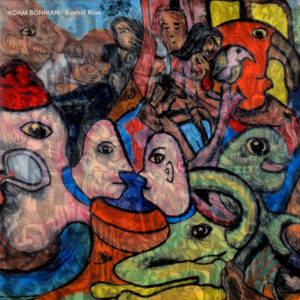
Adam BOHMAN
“Bunhill row”
LP in standard sleeve. “1980 was an incredibe year for London’s experimental music scene with many different strands. Recommended Records were rereleasing the first two Faust LP’s, L. Voag had found ‘the way out’, Swell Maps were ‘in occupied Europe’. Throbbing Gristle and other industrialists were giving plenty of live actions. Nurse With Wound had just released their first LP, as had This Heat. The other great LP on Piano Records by Steve Beresford was also on the shelves. Meanwhile, elsewhere in the capitol Adam Bohman was making his first recordings working with two budget cassette recorders. Bunhill Row was the first complete album of material, but whilst the aforementioned artists were pressing up their recordings and making them easily available via Rough Trade or the Recommended Records ‘shop’, Adam’s releases remained in tiny cassette editions made for friends or exchanged on the mail art network.
So here for the first time is Bunhill Row, released as it should have appeared at the time - on vinyl. It must be said that this is quite unlike any of Adam’s other releases, and quite unlike his work with Morphogenesis, or his work as one half of The Bohman Brothers. This is ‘songs’ - 30 in all, and the main instrument used is a trumpet (an ordinary trumpet), along with a variety of other acoustic instruments and objects, many of which are still part of the Bohman armoury as known. The overall feel sits somewhere between R. Steevie Moore and Caroliner Rainbow, but this is British of course. Somehow it all works, and all in all opens another window on to the incredibly fruitful astral alignment that occured over London at this time. Adam also has a solo CD on Paradigm Discs, and also appears on ’Variations - a London compilation’ the first CD released on Paradigm Discs.”
17,00€
Out of stock
CD
KARUNA KHYAL
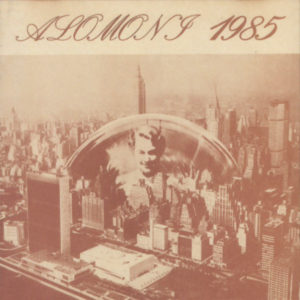
“Alomoni 1985”
“Alomoni 1985” was originally released on Voice Records, VO-1002. Reissued 1998. On this occasion Paradigm Discs has decided to reissue 2 LP’s of what can only be described as rock music, minus the drum kit. These two records are something of a mystery. No group information was ever given, and no production date or location is indicated. It would seem though, that these records are both by the same group of Japanese people and that they were recorded in the mid seventies in Japan. In common with Magical Power Mako, the musical influences here are much more Germanic than anything Japanese, with long hypnotic free form rock hysteria, comparable to Faust in the use of experimentation and heavily fuzzed electric guitar. The emotional wordless vocals echo those of Damo Suzuki from Can. But unlike Can the rhythms are wrought from hand drums, sleigh bells, tambourine, bass drum and other simple means. Hard blown harmonica is a strong feature on this somewhat crazed mantric rock along with recorder, flute, zither, mandolin, acoustic guitar and synth. There is also a strong use of tape loops, electronics, environmental sounds, backwards tapes and what sounds distinctly like the hysterical laughter of Stan Laurel.
15,00€
In stock
CD
GRAVITY ADJUSTERS EXPANSION BAND
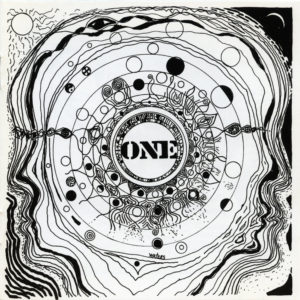
“One”
The GAEB started in 1967 and remains one of the the America’s long lost and underestimated groups who explored the areas of free jazz, improvisation and experimental music. Drummer Lee Charlton shifts moods from jazzy phrasing to more abstract sound sculpture; in this world the GAEB mainly reside, using the self-invented percussive and bowed instruments of multimedia artist Richard Waters, many of which incorporate water filled resonators to bend and tune. Other improvisers at the time--AMM, MEV, Sonde and Taj Mahal Travellers--made extensive use of homemade and adapted instruments, but the GAEB are a very different concern with their own unmistakable identity. Their first LP One appeared in 1973 on Nocturne Records, a small Californian label (the first of their two LPs, the second appearing some eight years later). Paradigm Discs’ CD edition contains the entire first LP, plus fifteen minutes of extra material from the time.
13,00€
In stock
CD
Trevor WISHART
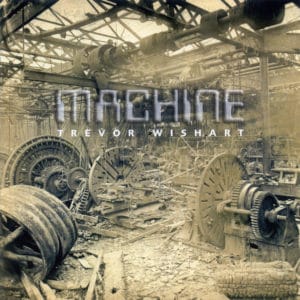
“Machine”
“Although Machine was completed in 1971 it was not released until 1972, shortly after the release of Journey Into Space. Machine is therefore the first major composition by Trevor Wishart. It was composed at York University and was originally issued on vinyl as 3 sides of a highly adventurous 3LP box set called Electronic Music From York, released by the University’s own record label. In common with Journey Into Space (also on Paradigm Discs), Machine makes use of a large number of volunteer contributors, mostly from the student body at York. With this recording, however, there are no instruments used. Instead, the music of Machine is made up entirely from a combination of spoken text and carefully directed improvising choirs that take their lead from prerecorded factory sounds. These are extensively mixed and edited with yet more collected machine sounds and other sources of musique concrète, as well as occasional use of basic electronic sources. The scale of this work, and the degree of preparation involved in scoring it, seem to have more resonances with the world of theatre or film rather than tape composition. Much of Wishart’s early work involved the use of musicians and artists being directed to perform in new ways, outside of their usual remit. A combination of late 60s openness, detailed scores that provide frameworks for improvisation and slavish editing have resulted in an incomparable sound work. With a continuous playing time of one hour, the wild and previously unexplored terrain covered by this pioneering work of British experimental music moves in turn through the full range of possible audio landscapes from the oceanic calm of the doldrums to earsplitting factory mayhem. Jewel case cd with 12 page booklet.”
13,00€
Out of stock
CD
Trevor WISHART
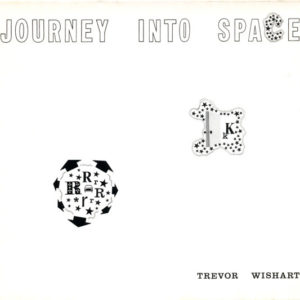
“Journey into space”
York University’s music department houses one of the UK’s first ever electronic music studios, and during the early seventies it was a hotbed of creative activity. Much of the released output from the studio at this time revolved around the work of the dynamic composer Trevor Wishart. Journey Into Space was his first release, composed between 1970 and 72, and was privately pressed (shortly before the formation of YES records), as two separate LP’s in 1973. (The CD cover amalgamates the 2 original designs). Along with other early private releases of experimental music in the UK (ie the LP of sound poems by Cobbing/Jandl, or the LP of musique concrète by Desmond Leslie), this record is also a total anomaly in the canon of British experimental music and has little to do with the current, or even subsequent work by Wishart. The vast length of this piece has many different styles. There are acoustic sections, mostly of junk and toys (bike bells, squeeze horns, bottles, metal tubes, combs etc.) as well as flute and brass sections that are used as raw material. There are also sections of everyday field recordings, scraps of NASA Apollo transmissions, as well as plenty of multitracking, editing, vocal acrobatics and musique concrète. Among the 48 participants credited on the original sleeve are a whole roster of York University alumni including nearly all the artists who were showcased on the then unreleased 3LP box set ’Electronic Music From York’, along with other noteworthy students as diverse as Steve Beresford, Jonty Harrison, Roger Marsh, Dominic Muldowney, Bernard Rands and Jan Steele. The co-operative spirit of York’s music and drama departments, plus the raw enthusiasm and open attitude of the participants involved in the project gave this music an immediacy, similar to the later LAFMS scene.
14,00€
Out of stock

CD
Pauline OLIVEROS
“Electronic works”
Released 1997. I of IV was made in July 1966 at the University of Toronto Electronic Music Studio and was first released by CBS alongside works by 2 other young composers - ’Come out’ by Steve Reich and ’Night music’ by Richard Maxfield. It is really only in recent years (born out of the more radical elements of dance music, electronica and ambient music) that music like this is being rediscovered by a growing number of people interested in all manner of experimental electronics. Track 2 was also made in the summer of 1966 at the University of Toronto Electronic Music Studio, and track 3 was made at the San Francisco Tape Music Center in 1965. The 3 pieces on this CD are all live experiments, which at the simplest level use either an array of oscillators or filters, a mixer and one spool of tape feeding a series of (variously set up) stereo tape machines. Long delay lines, pile ups of noise and rich sonorities are the stuff of this music. The third piece also samples a chunk of Pucini’s ’Madame Butterfly’, which only makes this music seem even more contemporary.
11,50€
Out of stock
2 CD
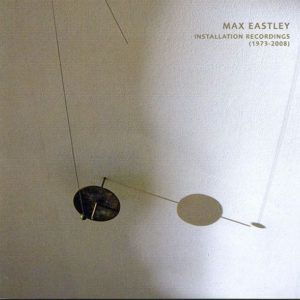
Max EASTLEY
“Installation recordings (1973-2008)”
“This 2CD is essentially a retrospective of Eastley’s installation work. As such, it updates and adds many new examples to the 1975 release “New and Rediscovered Musical Instruments”, which was released as a split LP with David Toop on Brian Eno’s Obscure Records. This is Eastley’s first solo CD. Of the 35 tracks, only the last 2 have any guests or “playing” (the most virtuosic moment being George Lewis playing a grass blade). All the other pieces are either powered by the natural forces of wind and water, or else are motor driven gallery installations. The etherial sounds of the aoelian harps, the haunting aeolian flutes, and the violent tension of his aerophone installations are hallmark Eastley sounds. These sounds, and many others, sit amidst a wide range of acoustic settings, from windy hill tops to quiet brooks, residential street scenes to coastal shores. The indoor recordings are no less varied, ranging across a rich variety of acoustics and gallery spaces from tiny micro sounds to large scale amplification. Wood, metal and stone are brought to life with electricity. Although there are many photos in the 20 pages booklet, much is left to the imagination to work out how the sounds are made. With this limited access to the visual, the focus is pulled towards the musicality of the sounds themselves. This musicality is reinforced by the slow crossfades of most of the pieces from indoors to outdoors to form a series of suites. The recordings mostly date from the mid 70s, but there are pieces from later decades. Nearly everything was recorded either to Revox or Uher and occasionally cassette, using what microphones were available at the time. Recent recordings are digital. The varying quality of the recording set-ups across this 2CD adds yet another dimension to the shifting sound fabric of this anthology.”
20,00€
In stock
2 CD
Gus COMA
“Color him coma”
“The first CD in this set is a reissue of an obscure cassette release from 1983 that was originally released in a small edition on the London based, It’s War Boys label. This C60 consisted of 2 distinct halves. Side 1 was formed around several mixes of an experimental track, constructed from a room-sized 24 track loop. A version of this track first appeared on the LP Flagellation by The Just Measurers (who were C. D. Greyt, Yakkö Banovic and Narki Brillans).
Side 2 is a collage of mostly unused (and some remixed), excerpts from what became the title track of the Milk From Cheltenham LP, Triptych of Poisoners. This LP track consisted of a tape collage of the live mixdown of 17 cassette recordings of locked record grooves, simultaneously, with stray radio and an infernal matchbox. The full Milk LP is now available on CD via Alga Marghen. Both these LPs were also originally It’s War Boys projects.
As with other releases by these guys nobody worked under the same name twice, but if you are familiar with their soundworld then there will be no mystery, only astonishment. Nearly all the session material here was engineered by Chris Grey, best known for his work with The Homosexuals.
No production master was ever found for CD1, so one of the actual cassette edition had to be used in its place. However, whilst looking through the archive for the master tape, an alternative version of the tape was found, which although it followed a similar blueprint to CD1 it also contained some very different music, some primitive disco drum programming, and a somewhat more sophisticated sound quality. It was difficult to choose which version to release, so both versions appear here, but at the generous price of a single CD.
Each CD also contains an additional much longer bonus track at the end that was originally intended as working material for the unfinished Milk From Cheltenham LP 2.
The guest musicians on this CD set are many and varied, but it’s all put together by Gus Coma, Lepke B’s dwarfish cousin, who renounced show-biz to work as a Heavy Goods Vehicle driver. All in, the material here is the strangest and most experimental music to come from the It’s War Boys scene. Expect gigantic tape loop symphonies, sundry plunderphonics, lo- fi Sparks and the voice of JFK, a William Burroughs interview (on one track), and a worn out teach yourself English tape. Color Him Coma !” label info
Side 2 is a collage of mostly unused (and some remixed), excerpts from what became the title track of the Milk From Cheltenham LP, Triptych of Poisoners. This LP track consisted of a tape collage of the live mixdown of 17 cassette recordings of locked record grooves, simultaneously, with stray radio and an infernal matchbox. The full Milk LP is now available on CD via Alga Marghen. Both these LPs were also originally It’s War Boys projects.
As with other releases by these guys nobody worked under the same name twice, but if you are familiar with their soundworld then there will be no mystery, only astonishment. Nearly all the session material here was engineered by Chris Grey, best known for his work with The Homosexuals.
No production master was ever found for CD1, so one of the actual cassette edition had to be used in its place. However, whilst looking through the archive for the master tape, an alternative version of the tape was found, which although it followed a similar blueprint to CD1 it also contained some very different music, some primitive disco drum programming, and a somewhat more sophisticated sound quality. It was difficult to choose which version to release, so both versions appear here, but at the generous price of a single CD.
Each CD also contains an additional much longer bonus track at the end that was originally intended as working material for the unfinished Milk From Cheltenham LP 2.
The guest musicians on this CD set are many and varied, but it’s all put together by Gus Coma, Lepke B’s dwarfish cousin, who renounced show-biz to work as a Heavy Goods Vehicle driver. All in, the material here is the strangest and most experimental music to come from the It’s War Boys scene. Expect gigantic tape loop symphonies, sundry plunderphonics, lo- fi Sparks and the voice of JFK, a William Burroughs interview (on one track), and a worn out teach yourself English tape. Color Him Coma !” label info
13,00€
Out of stock
2 CD
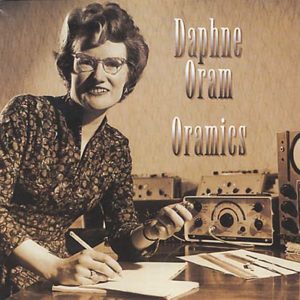
Daphne ORAM
“Oramics”
“Daphne Oram is best known for her design of her Oramics system, and also for co-founding the BBC Radiophonic Workshop in 1957, but until now the only easily available piece of music by her on CD has been the 8 minute long ‘Four Aspects’. There was also a 7” EP from 1962 on HMV, released as part of the ‘Listen, Move and Dance’ series that was specifically designed to help children dance. Although the short pieces on this record are very basic it could be argued that this is the first ever electronic dance record !
Now for the first time is a survey of nearly all the major pieces that she produced since her departure from the BBC in January 1959 until her final tape piece in 1977. During this time she worked independently in her home studio, and thanks to a grant from the Gulbenkian Foundation in 1962 she was able to persue her interests. In Britain there were no state funded studios other than the Radiophonic Workshop which mainly existed at the behest of the drama studio and was not generally seen as a place to develop personal artistic ideas. There were also no university studios at this time, so it was necessary for British electronic composers to be self funded. Throughout this period she devoted her attention to developing her Oramics ‘drawn sound’ system, which consisted of a large machine that enabled drawn patterns to be converted into sound. This system was eventually fully realised in the late 60’s and several pieces here incorporate its use.
The 2 and a half hours of music on this 2CD set covers the whole range of Oram’s post BBC output. All of the music is electronic with some occassional use of real instruments, especially small percussion and piano frame. There is also some use of musique concrète techniques. The works fall roughly into the following catagories: works for TV and cinema advertising, film soundtracks, music for theatre productions, installations and exhibitions as well as concert pieces and several studio experiments. There are also a few short pieces that resulted from an experimental music course given by Oram at a high school in Yorkshire in 1967.”
Now for the first time is a survey of nearly all the major pieces that she produced since her departure from the BBC in January 1959 until her final tape piece in 1977. During this time she worked independently in her home studio, and thanks to a grant from the Gulbenkian Foundation in 1962 she was able to persue her interests. In Britain there were no state funded studios other than the Radiophonic Workshop which mainly existed at the behest of the drama studio and was not generally seen as a place to develop personal artistic ideas. There were also no university studios at this time, so it was necessary for British electronic composers to be self funded. Throughout this period she devoted her attention to developing her Oramics ‘drawn sound’ system, which consisted of a large machine that enabled drawn patterns to be converted into sound. This system was eventually fully realised in the late 60’s and several pieces here incorporate its use.
The 2 and a half hours of music on this 2CD set covers the whole range of Oram’s post BBC output. All of the music is electronic with some occassional use of real instruments, especially small percussion and piano frame. There is also some use of musique concrète techniques. The works fall roughly into the following catagories: works for TV and cinema advertising, film soundtracks, music for theatre productions, installations and exhibitions as well as concert pieces and several studio experiments. There are also a few short pieces that resulted from an experimental music course given by Oram at a high school in Yorkshire in 1967.”
17,00€