
Out of stock
CD
Ken IKEDA / Eddie PRÉVOST
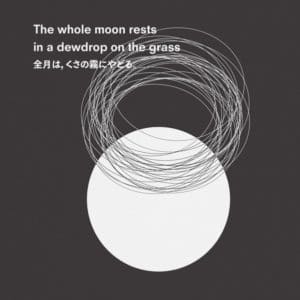
“The whole moon rests in a dewdrop on the grass”
Ken Ikeda, electronics, Eddie Prévost, percussion. Recorded at Cafe Oto, London 8th January, 2018.
Experimental combination of electronics and mostly bowed percussion.
"Rare duo set from Japanese musician and artist Ken Ikeda - who has composed and recorded for David Lynch and Moriko Mori amongst others - and English percussionist Eddie Prevost, the seminal figure of free improvised music since the 1960s." - Cafe OTO
12,00€
Out of stock
CD
N.O. MOORE / John EDWARDS / Eddie PRÉVOST
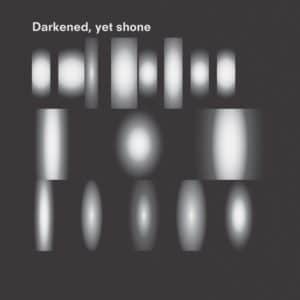
“Darkenend, yet Shone”
N.O. Moore, electric guitar, John Edwards, double bass, Eddie Prévost drums.
Recorded 2017at Iklectic, London.
"The trio of Eddie Prévost (drums), NO Moore (guitarism), and John Edwards (bass) combines improvisation, free jazz, rock, and electronic sound into a sonorous aggregate that avoids collapsing into any one category, being something in its very own right. Propulsive rhythm, new sounds, and energetic improvisation will be called down, with expectations both met and mangled." mkgallery.org
12,00€
Out of stock
CD
AMM
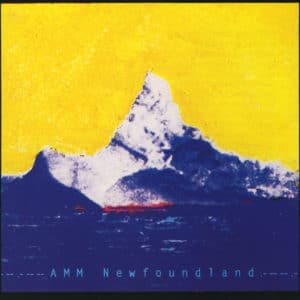
“Newfoundland” (1992)
“This music speaks for itself. So any attempt at characterization should be hedged with a warning that it might deflect the listener’s attention. The very fact of the attempt supposes the pre eminence of ‘character’. In Epilogue , one of his Essays Before A Sonata, Charles Ives made a strong case for what he called ‘substance.’ Substance, he wrote, “has something to do with character.” But what of sheer beauty? For Ives, ‘beauty’ was a problematical concept: “We like the beautiful and don’t like the ugly: therefore, what we like is beautiful, and what we don’t like is ugly - and hence we are glad the beautiful is not ugly, for if it were we would like something we don’t like. So having unsettled what beauty is, let us go on.” Ives contrasted ‘substance’ with ‘manner’ which “breeds a cussed cleverness only to be clever (a satellite of super industrialism) and perhaps to be witty in the bargain - not the wit in mother wit, but a kind of indoor, artificial, mental arrangement of things quickly put together which have to be learned and studied.” Well, there is nothing mannered about AMM. In place of the ‘indoor’ and the ‘artificial’, we discover breath taking openness and inventiveness. The sound of AMM is preterhumanly spacious and it makes sense to characterize this music less in human terms (as ‘lively’ and ‘graceful’, for example) than in terms of landscape. However, any landscape suggested by an AMM improvisation is light years from the affectively pastoral. It is akin perhaps to the paradoxically abstract landscapes of musique concrete. This writer’s own description, written for his own benefit, of the recorded performance in Newfoundland frequently resorts to Arctic and aquatic imagery. So there are dangers in knowing even a little! It is surely too easy to resort to adjectives such as ‘rumbling’, ‘juddering’, ‘thudding’, rippling’ and ‘growling.’ This music is so stunningly immediate, so palpable, that it makes a nonsense of such musings.” Howard Skempton September 1993.
14,00€
Out of stock
CD
AMM
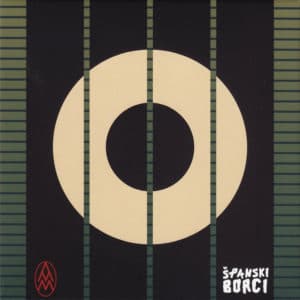
“Spanish fighters”
John Tilbury, piano. Eddie Prévost, percussion. Recorded at the festival Neposlusno (Sound Disobedience) in Ljubljana, Slovenia in 2012, the AMM duo of Eddie Prevost on percussion and John Tilbury on piano perform an extend improvisation of tension and dynamic, delicately balancing sound in a rich dialog.
12,00€
Out of stock
CD
AMM
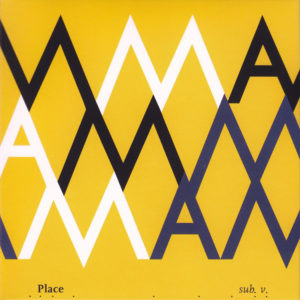
“Place sub.v.”
John Tilbury, piano. Eddie Prévost, percussion. An AMM concert in Lublin, Poland, May 16, 2012. Atmosphere of place pervades the music - place from the Latin platea and Greek plateia - ‘open space’. Open space is what AMM music thrives upon. New open spaces offer new challenges. Acoustics too are different, as is the piano and often the percussion. Materially they can be different. Sense of place is also coloured by cultural context.[…] A poetic whisper of what may be possible i human creativity and affairs.
12,00€
Out of stock
CD
AMM
“Two London concerts”
John Tilbury, piano and Eddie Prévost, percussion. Two London concerts recorded in 2011.
14,00€
Out of stock
CD
AMM
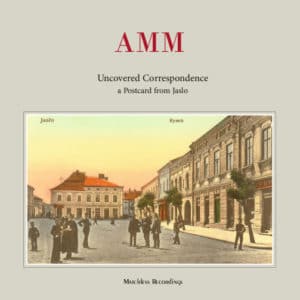
“Uncovered Correspondence”
“John Tilbury - piano. Eddie Prévost - percussion. Recorded at the concert hall of the Jasielski Dom Kultury (Jaslo Cultural Centre) in southern Poland on 15th May 2010. The performance represented by this CD took place on 15th of May 2010 in the concert hall of the Jas o Cultural Centre in southern Poland. I had spoken to John Tilbury in 2007 about the possibility of AMM performing in Jas o, but for various reasons the project did not come to fruition until three years later. We had not planned for a CD release of the concert; in fact, we only spoke about recording the day before. There was no opportunity for the usual setup procedures. The recording was only intended as a document of the occasion.
The concert began with John Tilbury using the piano to produce a gamelan-like quality, which was quickly followed by Eddie Prévost bowing a cymbal producing subtle metallic sounds. One could feel an electric atmosphere of concentration and note the exceptional care and elegance with which the performers selected even the tiniest details of the complex sound structure. Intriguing phrases from the prepared piano and sonorous tones from percussion instruments wafted around the huge expanse of the hall - whose excellent acoustics let the audience immerse themselves in the music - savouring the subtle sounds emerging from the silence. The changes within the slow stream of improvisation occurred in such a natural way introduced by either musician by turn. Sometimes a highly abstract motif seemed to be a logical development rather than a step into the unknown — which in reality it was. The dominant impression was that such an advanced level of intuitive understanding between the two performers was the result of many years of collaboration. In my view each sound produced during the concert was not only ‘desirable’ but also essential (inevitable) and created its own profound aesthetic justification. Especially noteworthy was the compelling way in which both musicians made use of silence, whose role in AMM is as important as sound. The performance of a shorter or longer period of silence entailed the same creative intervention as did playing a sound or motif. The moments when the sound structure intensified and thickened became less frequent yet did not disappear completely. Particularly embedded in my memory are two moments: one was an exceptionally loud and shattering fragment of sound when dust could be seen rising out of the piano. And, when Eddie got up from his percussion and went to the wood-panelling, playing the wall with a beater generating a very low and vibrating sound —
a convincing demonstration that any object may be used as a means to create music. It is only because I attended the concert, and can recall it in my mind, that now when listening to the recording I can identify the sources of those extraordinary sounds. The music presented on this CD requires a serious commitment from the listener. However, anyone familiar with the music of AMM would expect nothing else.
To uncover the hidden beauty of these lovingly crafted improvised sound abstractions requires an appropriate level of concentration on the part of the listener. Such effort will be rewarded by a profound aesthetic experience. In organising this concert I feel honoured I have been able to contribute, albeit inadvertently, to the release of another AMM CD. Andrzej Serwa — August 2010” label info
The concert began with John Tilbury using the piano to produce a gamelan-like quality, which was quickly followed by Eddie Prévost bowing a cymbal producing subtle metallic sounds. One could feel an electric atmosphere of concentration and note the exceptional care and elegance with which the performers selected even the tiniest details of the complex sound structure. Intriguing phrases from the prepared piano and sonorous tones from percussion instruments wafted around the huge expanse of the hall - whose excellent acoustics let the audience immerse themselves in the music - savouring the subtle sounds emerging from the silence. The changes within the slow stream of improvisation occurred in such a natural way introduced by either musician by turn. Sometimes a highly abstract motif seemed to be a logical development rather than a step into the unknown — which in reality it was. The dominant impression was that such an advanced level of intuitive understanding between the two performers was the result of many years of collaboration. In my view each sound produced during the concert was not only ‘desirable’ but also essential (inevitable) and created its own profound aesthetic justification. Especially noteworthy was the compelling way in which both musicians made use of silence, whose role in AMM is as important as sound. The performance of a shorter or longer period of silence entailed the same creative intervention as did playing a sound or motif. The moments when the sound structure intensified and thickened became less frequent yet did not disappear completely. Particularly embedded in my memory are two moments: one was an exceptionally loud and shattering fragment of sound when dust could be seen rising out of the piano. And, when Eddie got up from his percussion and went to the wood-panelling, playing the wall with a beater generating a very low and vibrating sound —
a convincing demonstration that any object may be used as a means to create music. It is only because I attended the concert, and can recall it in my mind, that now when listening to the recording I can identify the sources of those extraordinary sounds. The music presented on this CD requires a serious commitment from the listener. However, anyone familiar with the music of AMM would expect nothing else.
To uncover the hidden beauty of these lovingly crafted improvised sound abstractions requires an appropriate level of concentration on the part of the listener. Such effort will be rewarded by a profound aesthetic experience. In organising this concert I feel honoured I have been able to contribute, albeit inadvertently, to the release of another AMM CD. Andrzej Serwa — August 2010” label info
13,00€
Out of stock
CD
AMM
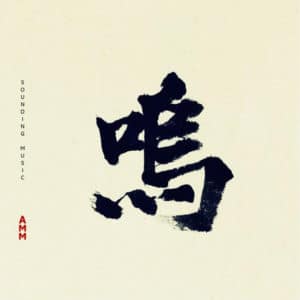
“Sounding music”
“John Butcher (tenor & soprano saxophones), Ute Kanngiesser (cello), Eddie Prévost (percussion), John Tilbury (piano) and Christian Wolff (piano, bass guitar, melodica). Recorded at the “Freedom of the City” festival, Conway Hall, London on Sunday 3rd May 2009. Calligraphy from Qu Lei Lei and text from Harry Gilonis.
12,00€
Out of stock
CD
FREE JAZZ QUARTET
“Memories for the future”
“The late Paul Rutherford (trombone), Harrison Smith (saxophones, bass clarinet), Tony Moore (cello) and Eddie Prevost (drums); this is a newly discovered recording of a concert given in Bristol in 1986.” “A lazier title would have been Memories Of The Future, a predictable contradiction that succeeds as word-play but flirts with nostalgia. The ‘for’ is important because it implies effort, a conscious decision to store up something for later use. Here is, or are, momentary occasions that resist the temporal sift and refuse to be blown away. Here is, to adapt the title of a fine book on architectural heritage, a future for the past. In its first incarnation, now twenty years ago, the Free Jazz Quartet cast its music in an urgent future tense. The track titles on Premonitions, the group’s only previous CD, were all cast as warnings: ‘Roman Geese’, ‘Tocsin’, ‘Eddystone’, which is not just the name of a great lighthouse that warns of dangerous sands, but a pun on the drummer’s name and his sound, and ‘Red Flags’, which neatly combines a beach warning with the bloodied shirt of demonstrators turned into banners of protest. ‘Old Moore’s’ referred to a famous annual publication which offers predictions for the year ahead, but also to an old LP by the trombonist, which went out as Old Moers Almanac. Paul Rutherford is no longer with us, but the music here captures him, as well as saxophonist Harrison Smith, cellist Tony Moore and percussionist Eddie Prévost in one of their finest performances. Each has moved along individual paths over the years, sometimes converging, sometimes deliberately not. Each has taken a step away from jazz, sometimes away from music altogether. Prévost has committed his ideas to writing; Moore to the visual and plastic arts. Smith has refined a saxophone voice that is not so much a vehicle for self-expression as an aspect of personality, which is a far more difficult and disciplined route. ” extract from liner notes by Brian Morton.
12,00€
Out of stock
CD
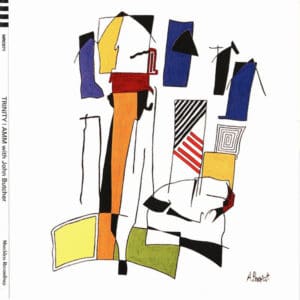
AMM with John BUTCHER
“Trinity”
Eddie Prévost, percussion. John Tilbury, piano. With John Butcher, soprano and tenor saxophone. Recorded at Trinity College of Music, Greenwich, England on 13th January 2008. Recording and mastering Sebastian Lexer. Cover design ’Lamberton Court’ by Andrew Prévost.
12,00€
Out of stock
CD
AMM
“Norwich”
First AMM CD in a while, featuring the new duo AMM (Keith Rowe is no longer a member). Eddit Prévost on percussion and John Tilbury on piano. "AMM at UEA. Eddie Prévost and John Tilbury recorded at a concert given at The School of Music, University of East Anglia, Norwich, England on 14th February 2005." From Simon Waters’ liner notes: "Despite availing themselves of entirely different technologies, they can produce sounds which are almost identical, or fuse sounds through awesome real-time skill and intimate awareness of their vastly different resources: a moment where John’s piano clusters isolate and make explicit the pitches in Eddies bowed cymbal is one magical example here."
13,00€
Out of stock
CD
AMM
“Fine”
“AMM (John Tilbury, Keith Rowe, Eddie Prévost) with Fine Kwiatkowski... Music for dance, another great and somehow different work from the masters. Every sound counts.”
12,00€
Out of stock
CD
AMM
“Tunes without measure or end”
Rowe/Tilbury/Prévost. Recorded in Glasgow, Scotland May 2000, at the free radiCCAls festival, curated by Evan Parker. First AMM CD since 1996 recording. One continuous 58-minute piece.
13,00€
Out of stock
CD
AMM
“Before driving to the chapel we took coffee with Rick and Jennifer Reed”
Keith Rowe, John Tilbury, Eddie Prévost. Concert in Houston, Texas. 1996.
14,00€
Out of stock
CD
AMM
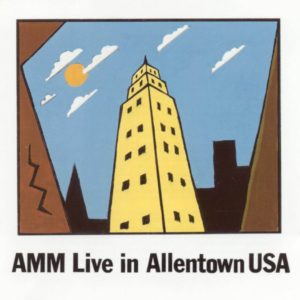
“Live in Allentown USA” (1994)
Prévost-Rowe-Tilbury. “Live in Allentown is an exceptionally fine addition to an already admirable and incomparable canon.” The Wire
12,00€
Out of stock
CD
ORGANUM – Eddie PRÉVOST
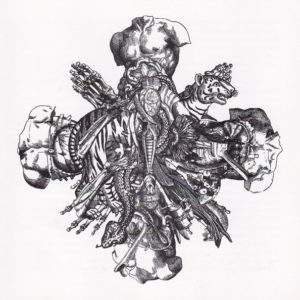
“Crux + Flayed”
“Crux an Organum track. Flayed a drumming sequence played by Eddie Prévost.
“....... anyone used to Prévost’s other ventures might get quite a shock......huge flurries of hyperactive, thunderous drumming. Crux creates similarly resonant, intense soundscapes.” Electric Shock Treatment (U.K.)
“....... anyone used to Prévost’s other ventures might get quite a shock......huge flurries of hyperactive, thunderous drumming. Crux creates similarly resonant, intense soundscapes.” Electric Shock Treatment (U.K.)
13,00€
Out of stock
CD
AMM
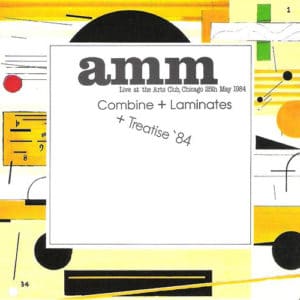
“Combine + Laminates + Treatise” (1984)
“A re-issue of the Pogus LP format with additional material taken from the same concert at the Arts Club, Chicago, USA, 25th May 1984
The difference in the music included on this CD version is the addition of Treatise 84. This, as the audience was aware, was an improvisation inspired and guided, rather than dictated or controlled by Cornelius Cardews graphic masterpiece. There is, of course, no way that this work could be identified as a composition in the accepted sense. There is no universal correlation between the symbols on the page and the sounds the musicians make. Cardew gave no indications as to what any of his graphics might represent. Later, in the Treatise Handbook he offered thoughts upon how such a musical engagement might develop. Nothing however was prescriptive.
Dated entry in Treatise Handbook :
5th January 1966. Joining AMM was the turning point, both in the compositions of Treatise and in everything I have thought about music up to now. Before that Treatise had been an elaborate attempt at graphic notation of music (which I can only describe as a graphic score that produces in the reader, without any sound, something analogous to the experience of music), a network of nameless lines and spaces pursuing their own geometry untethered to themes and modulations, 12 note series and their transformations, the rules or laws of musical composition and all the other figments of the musicological imagination.” Eddie Prévost
The difference in the music included on this CD version is the addition of Treatise 84. This, as the audience was aware, was an improvisation inspired and guided, rather than dictated or controlled by Cornelius Cardews graphic masterpiece. There is, of course, no way that this work could be identified as a composition in the accepted sense. There is no universal correlation between the symbols on the page and the sounds the musicians make. Cardew gave no indications as to what any of his graphics might represent. Later, in the Treatise Handbook he offered thoughts upon how such a musical engagement might develop. Nothing however was prescriptive.
Dated entry in Treatise Handbook :
5th January 1966. Joining AMM was the turning point, both in the compositions of Treatise and in everything I have thought about music up to now. Before that Treatise had been an elaborate attempt at graphic notation of music (which I can only describe as a graphic score that produces in the reader, without any sound, something analogous to the experience of music), a network of nameless lines and spaces pursuing their own geometry untethered to themes and modulations, 12 note series and their transformations, the rules or laws of musical composition and all the other figments of the musicological imagination.” Eddie Prévost
14,00€
Out of stock
CD
ORGANUM
“Veil of tears”
“Collection of recent tracks, recorded by the Organum core of David Jackman, Michael Prime, Dinah Jane Rowe and Jim O’Rourke; further mastering of sound cluster presentation and development.”
15,00€
Out of stock
CD
AMM
“The nameless uncarved block” (1990)
Lou Gare, Eddie Prévost, Keith Rowe, John Tilbury.
15,00€
Out of stock
CD
AMM
“The inexhaustible document” (1987)
Rohan de Saram (cello). Eddie Prévost. Keith Rowe. John Tilbury. “A music desolated by a beauty so bleak and alien to received definitions of the term, yet somehow familiar.” The Wire
12,00€
Out of stock
Out of stock
CD
AMM
“To hear and back again” (1973-75)
Lou Gare (tenor sax) and Eddie Prévost (drums).
“1. And Back to Hear Again.
The music herein, like most of the vital music of the last thirty years, is totally improvised. Such non hierarchic and non idiomatic music is beyond pigeon holes, even though it usually gets pigeon holed as abstract and/or jazz.
Of course, all music is essentially abstract. Even such relatively realistic pieces as Charles-Valentin Alkans LE CHEMIN DU FER and Meade Lux Lewis HONKY TONK TRAIN BLUES do not necessarily reveal what they are depicting unless one knows the title. (They certainly do not have any extra appeal to railway buffs!). The analogy to the visual arts is usually raised to justify calling improvisation “abstract”. Visual arts are called abstract if they do not resemble the real world out there. If any music resembles the sound sequences of the real world out there (apart from trains) it is surely totally improvised music, making it the least abstract of all. If one thinks in terms of the real susbstance of music, which is arguably its emotional content (whatever that may be), then total improvisation gives musicians the most unrestricted scope of expressing their emotions, so once again it is the least abstract of musics since it allows for the fullest expression of the substance.
The most succinct definition of jazz that I have come across is that of Peter Riley Afro-American group instrumental part improvised music. Total improvisation hardly fits in with this, especially as so few Afro-Americans seems to have taken any part or interest in it, and since it contains virtually nothing of the Afro-American tradition that permeates all of jazz. Most total improvisation is inherently non idiomatic or pan idiomatic, and therefore should really not be lumped together with any particular idiom. Some improvisation, like that on this disc, does sound somewhat like jazz, but then so do some of the compositions of George Gershwin and Igor Stravinsky. In both cases the methodology - either total improvisation or total composition - is decidedly non jazz.
It is true that jazz was a major influence on the world of total improvisation, and many (perhaps most) of the practitioners came from a jazz background. However, other musics also had important inputs. For instance, there is the area of music usually known by such egocentric names as classical, legitimate, serious and straight, as if there was nothing else worthwhile. (Since this is by far the most popular area of music worth listening to, I usually refer to it as popular music) Shortly after the middle of this century, several composers were producing scores that amounted to improvise but pay me royalties. Groups like AMM decided, quite reasonably, to improvise and keep any royalties themselves, rather than give them to any absentee composer. The musicians became both the composers and the interpreters, and the recordings became the score preserving the music - recorded sound having made scores somewhat redundant. It should also be remembered that AMM has included musicians who were otherwise composers (Cornelius Cardew and Christian Wolff) or interpreters (Rohan de Saram and John Tilbury) of classical, legitimate, serious, straight music.
2. Back And Again Hearing Two In 1963, Lou Gare answered a saxophonist wanted advertisement in a then music trade paper, and as a result became a member of Eddie Prévost's Band. He later joined Mike Westbrook’s band, which at that time also included Keith Rowe and Lawrence Sheaff. Meanwhile, Gare, Rowe and Sheaff also began to make music with Prévost, and in 1965 they left Westbrook, called themselves AMM, and were subsequently joined by Cornelius Cardew. Virtually all the resemblances to a jazz group were soon discarded as more and more emphasis was placed on total group improvisation - they being one of the very first groups to take this direction. There was a decided preference for bowing and live electronics (including radios) in which the overall sound was so unified that it was often impossible to isolate any individual contributions.
Sheaff’s tenure with the group ended in 1967 (after which he dropped out of music making altogether), and AMM became the quartet it remained for a further four years, sometimes augmented either by Christopher Hobbs or Christian Wolff. By 1970, the electronics had been dropped by everyone except Rowe, who alone was left to create the dense mass of sound that seeped around the others contributions. This became a sort of sonic cushion and/or springboard, rather like (in their very different ways) a baroque continuum or a jazz rhythm section.
At the end of 1971, Cardew and Rowe departed for other things leaving just the tenor saxophone and percussion of Gare and Prévost - an acoustic duo in the age of electronics they had presaged. The absence of Rowe’s swirling veil meant that this duo was the most naked version of AMM - there was nothing for Gare and Prévost to hide behind or amongst. It was also the AMM with the most jazz like sound, revealing that this highly original pair of individuals had long absorbed their early influences of Sonny Rollins and Max Roach. However, as before, the methodology was unlike jazz - absolutely nothing (melody, harmony, rhythm, tempo) was predetermined. (Even the use of Gare’s beautiful tune BURNISHED GOLD at the start of BACK AGAIN was improvised on the whim of the moment.)
The two 1974 recordings are unique in that they include natural unedited AMM silences. These were an integral part of the music of both this duo and the preceding quartet - an influence (like the use of radios, not used by this duo) of John Cage (who was probably the first to package silence). In this era when every space is stuffed with noise (sometimes called disco, muzak or internal combustion engines), these silences will probably be the most difficult part of this music for most people. One needs to stop to think whether it is really necessary to say something when there is nothing to say. (And whether the world would be a much better place if all jukeboxes and all muzak tapes were full of recordings of 4’33”).
By contrast, in between the silences, the music sometimes reaches the ferocity usually associated with the more energetic varieties of free jazz, but without that genre’s all too frequent loss of balance. Things never get out of control, and one is always aware of the saxophone’s melodic lyricism and the percussion’s arhythmic propulsion. Gare and Prévost were (and are) superb exponents of the art of creating something substantive of out nothing.
It was not always tenor and percussion, however. Every so often, Gare would produce and bow a gong (lying on its belly and filled with large stones) and other little instruments would appear. An example of this different area of exploration (also related to certain aspects of the earlier, larger AMM) can be heard on one of the three previously unissued performances include herein.
In 1976, Cardew and Rowe rejoined AMM for some rehearsals that were not very successful. This time it was Cardew and Gare that left, leaving Prévost and Rowe to form the second AMM duo. They were eventually joined by John Tilbury to make the trio that has been the nucleus of AMM ever since. Other musicians who have augmented this trio include Rohan de Saram, Ian Mitchell and, from 1989 to 1991, Lou Gare. With hindsight, the 1971-76 duo of Gare and Prévost can be seen as a unique version of AMM that continued the magnificent tradition of constantly evolving AMMmusic in an untypically Roweless manner.
And To Gain A Hearback In common with virtually all writings about music, the above probably reveals more about the writer than about the music. But then music as good as this speaks for itself.” Martin Davidson 1993
“1. And Back to Hear Again.
The music herein, like most of the vital music of the last thirty years, is totally improvised. Such non hierarchic and non idiomatic music is beyond pigeon holes, even though it usually gets pigeon holed as abstract and/or jazz.
Of course, all music is essentially abstract. Even such relatively realistic pieces as Charles-Valentin Alkans LE CHEMIN DU FER and Meade Lux Lewis HONKY TONK TRAIN BLUES do not necessarily reveal what they are depicting unless one knows the title. (They certainly do not have any extra appeal to railway buffs!). The analogy to the visual arts is usually raised to justify calling improvisation “abstract”. Visual arts are called abstract if they do not resemble the real world out there. If any music resembles the sound sequences of the real world out there (apart from trains) it is surely totally improvised music, making it the least abstract of all. If one thinks in terms of the real susbstance of music, which is arguably its emotional content (whatever that may be), then total improvisation gives musicians the most unrestricted scope of expressing their emotions, so once again it is the least abstract of musics since it allows for the fullest expression of the substance.
The most succinct definition of jazz that I have come across is that of Peter Riley Afro-American group instrumental part improvised music. Total improvisation hardly fits in with this, especially as so few Afro-Americans seems to have taken any part or interest in it, and since it contains virtually nothing of the Afro-American tradition that permeates all of jazz. Most total improvisation is inherently non idiomatic or pan idiomatic, and therefore should really not be lumped together with any particular idiom. Some improvisation, like that on this disc, does sound somewhat like jazz, but then so do some of the compositions of George Gershwin and Igor Stravinsky. In both cases the methodology - either total improvisation or total composition - is decidedly non jazz.
It is true that jazz was a major influence on the world of total improvisation, and many (perhaps most) of the practitioners came from a jazz background. However, other musics also had important inputs. For instance, there is the area of music usually known by such egocentric names as classical, legitimate, serious and straight, as if there was nothing else worthwhile. (Since this is by far the most popular area of music worth listening to, I usually refer to it as popular music) Shortly after the middle of this century, several composers were producing scores that amounted to improvise but pay me royalties. Groups like AMM decided, quite reasonably, to improvise and keep any royalties themselves, rather than give them to any absentee composer. The musicians became both the composers and the interpreters, and the recordings became the score preserving the music - recorded sound having made scores somewhat redundant. It should also be remembered that AMM has included musicians who were otherwise composers (Cornelius Cardew and Christian Wolff) or interpreters (Rohan de Saram and John Tilbury) of classical, legitimate, serious, straight music.
2. Back And Again Hearing Two In 1963, Lou Gare answered a saxophonist wanted advertisement in a then music trade paper, and as a result became a member of Eddie Prévost's Band. He later joined Mike Westbrook’s band, which at that time also included Keith Rowe and Lawrence Sheaff. Meanwhile, Gare, Rowe and Sheaff also began to make music with Prévost, and in 1965 they left Westbrook, called themselves AMM, and were subsequently joined by Cornelius Cardew. Virtually all the resemblances to a jazz group were soon discarded as more and more emphasis was placed on total group improvisation - they being one of the very first groups to take this direction. There was a decided preference for bowing and live electronics (including radios) in which the overall sound was so unified that it was often impossible to isolate any individual contributions.
Sheaff’s tenure with the group ended in 1967 (after which he dropped out of music making altogether), and AMM became the quartet it remained for a further four years, sometimes augmented either by Christopher Hobbs or Christian Wolff. By 1970, the electronics had been dropped by everyone except Rowe, who alone was left to create the dense mass of sound that seeped around the others contributions. This became a sort of sonic cushion and/or springboard, rather like (in their very different ways) a baroque continuum or a jazz rhythm section.
At the end of 1971, Cardew and Rowe departed for other things leaving just the tenor saxophone and percussion of Gare and Prévost - an acoustic duo in the age of electronics they had presaged. The absence of Rowe’s swirling veil meant that this duo was the most naked version of AMM - there was nothing for Gare and Prévost to hide behind or amongst. It was also the AMM with the most jazz like sound, revealing that this highly original pair of individuals had long absorbed their early influences of Sonny Rollins and Max Roach. However, as before, the methodology was unlike jazz - absolutely nothing (melody, harmony, rhythm, tempo) was predetermined. (Even the use of Gare’s beautiful tune BURNISHED GOLD at the start of BACK AGAIN was improvised on the whim of the moment.)
The two 1974 recordings are unique in that they include natural unedited AMM silences. These were an integral part of the music of both this duo and the preceding quartet - an influence (like the use of radios, not used by this duo) of John Cage (who was probably the first to package silence). In this era when every space is stuffed with noise (sometimes called disco, muzak or internal combustion engines), these silences will probably be the most difficult part of this music for most people. One needs to stop to think whether it is really necessary to say something when there is nothing to say. (And whether the world would be a much better place if all jukeboxes and all muzak tapes were full of recordings of 4’33”).
By contrast, in between the silences, the music sometimes reaches the ferocity usually associated with the more energetic varieties of free jazz, but without that genre’s all too frequent loss of balance. Things never get out of control, and one is always aware of the saxophone’s melodic lyricism and the percussion’s arhythmic propulsion. Gare and Prévost were (and are) superb exponents of the art of creating something substantive of out nothing.
It was not always tenor and percussion, however. Every so often, Gare would produce and bow a gong (lying on its belly and filled with large stones) and other little instruments would appear. An example of this different area of exploration (also related to certain aspects of the earlier, larger AMM) can be heard on one of the three previously unissued performances include herein.
In 1976, Cardew and Rowe rejoined AMM for some rehearsals that were not very successful. This time it was Cardew and Gare that left, leaving Prévost and Rowe to form the second AMM duo. They were eventually joined by John Tilbury to make the trio that has been the nucleus of AMM ever since. Other musicians who have augmented this trio include Rohan de Saram, Ian Mitchell and, from 1989 to 1991, Lou Gare. With hindsight, the 1971-76 duo of Gare and Prévost can be seen as a unique version of AMM that continued the magnificent tradition of constantly evolving AMMmusic in an untypically Roweless manner.
And To Gain A Hearback In common with virtually all writings about music, the above probably reveals more about the writer than about the music. But then music as good as this speaks for itself.” Martin Davidson 1993
12,00€
Out of stock
CD
John BUTCHER & Eddie PREVOST
“Interworks”
John Butcher - tenor and soprano saxophones. Eddie Prévost - tam-tam and other percussion. Recorded at Gateway Studios, Kingston-upon-Thames, England on July 17th 2005.
12,00€
Out of stock
CD
John TILBURY – Evan PARKER
“Two chapters and an epilogue”
Blistering fast sax tootling from Parker and raindrop-falling piano from Tilbury are contrasted against lower register clumps of reverberation and flaky, polyphonic seagull impersonations. It’s a glorious, immersive experience. The Wire (UK)
12,00€
Out of stock
CD
Evan PARKER & Eddie PREVOST
“Imponderable evidence”
Evan Parker, tenor saxophone. Eddie Prévost, drums.
12,00€
Out of stock
CD
Eddie PRÉVOST – Evan PARKER – Sebastian LEXER
“Tri-Borough Triptych”
Sebastian Lexer, piano+. Evan Parker, saxophones. Eddie Prévost, percussion.
Hearing Evan Parker make music with Eddie Prévost, on the first of these three lengthy duets recorded in three different London boroughs, is like watching a pair of tai chi masters sparring. Parker’s tenor and Prévost’s bowed and struck percussion draw buoyancy from each other’s energy as they alternately push and yield. Together they move with feline lightness, agility and balance, even when the music’s mood is stormy and turbulent. The event was Freedom Of The City 2012; the venue, Cecil Sharp House in Camden Town, London. The character and dynamics of that occasion change continuously, but there’s never a sense that this exhilarating music is getting locked into a formal shape or falling under the shadow of its performers’ individual identities.
Two other engrossing duets on TriBorough Triptych feature pianist Sebastian Lexer: with Prévost at Old Deptford Town Hall, South London, and with Parker on soprano at Dalston’s Cafe Oto. Lexer’s playing is disciplined and rather sparing, although he clearly enjoys pianistic practices and sonorities, not least perhaps for their historical weight, an element of resistance he can work with or against, just as Parker and Prévost parry the associations clinging to their own chosen instruments. But Lexer’s piano+ set-up involves a personally developed software to analyse and adjust the acoustic output, eliciting textures and durations unexpected from a grand piano, enhancing its scope and introducing an air of instability that calls for sharp reactions. Parker and Prévost are kept in states of heightened attentiveness, and the sustained outcome is lucid and graceful music making.
Julian Cowley - The Wire October 2013
Hearing Evan Parker make music with Eddie Prévost, on the first of these three lengthy duets recorded in three different London boroughs, is like watching a pair of tai chi masters sparring. Parker’s tenor and Prévost’s bowed and struck percussion draw buoyancy from each other’s energy as they alternately push and yield. Together they move with feline lightness, agility and balance, even when the music’s mood is stormy and turbulent. The event was Freedom Of The City 2012; the venue, Cecil Sharp House in Camden Town, London. The character and dynamics of that occasion change continuously, but there’s never a sense that this exhilarating music is getting locked into a formal shape or falling under the shadow of its performers’ individual identities.
Two other engrossing duets on TriBorough Triptych feature pianist Sebastian Lexer: with Prévost at Old Deptford Town Hall, South London, and with Parker on soprano at Dalston’s Cafe Oto. Lexer’s playing is disciplined and rather sparing, although he clearly enjoys pianistic practices and sonorities, not least perhaps for their historical weight, an element of resistance he can work with or against, just as Parker and Prévost parry the associations clinging to their own chosen instruments. But Lexer’s piano+ set-up involves a personally developed software to analyse and adjust the acoustic output, eliciting textures and durations unexpected from a grand piano, enhancing its scope and introducing an air of instability that calls for sharp reactions. Parker and Prévost are kept in states of heightened attentiveness, and the sustained outcome is lucid and graceful music making.
Julian Cowley - The Wire October 2013
13,00€
Out of stock
CD
Eddie PREVOST
“Entelechy”
Mesmerizing solo percussion album for tam-tam, from the founder of AMM. Studio recordings from 2005. Here is Eddie’s description of how the title track of this CD came about: "Entelechy is virtually autonomous. The tam-tam was suspended upon its usual rectangular frame. In this instance a battery driven electric motor was set up alongside the tam-tam with wire threads fanning out from a small rotating wheel. I set this in motion and retired to the control room to watch and listen with the recording engineer (Sebastian Lexer) as the tam-tam (as it were) told its own story. Various processes came into play. The fanning wires beat the edge of the tam-tam and began to set up numerous overtone patterns -- due in part to the irregular shape of the wheel motion. These were enhanced, diverted and changed by a gradual oscillating motion as the rotating beaters began to push the tam-tam on its suspending rope (creating a gentle swinging movement), and by the gradual diminishing power of the motor. This process was played out until the batteries were depleted. As a composer, I am struck by the similarities that this approach has to certain experimental tendencies in the world of composition. Various pieces spring to mind that are concerned with setting up a physical situation and then allowing it to play itself out, with no more than a gentle nudge from the performer. Steve Reich’s ’Pendulum Music,’ Takehisa Kosugi’s ’Micro 1’ and Alvin Lucier’s ’Music on a Long Thin Wire’ are all works concerned with revealing the potentiality of materials and allowing those materials to sound themselves, where, after initiating the process, the performer steps back and listens with the rest of the audience."
12,00€
Out of stock
CD
Eddie PRÉVOST QUARTET
“Continuum +”
Larry Stabbins tenor and soprano saxophones Veryan Weston piano Marcio Mattos double bass Eddie Prévost drums. CD re-release of material previously issued as an LP, together with additional music. The original release of Prévost’s 1983 Bracknell appearance represents one of the few ‘must haves’ of British free jazz. Rubberneck (UK)
12,00€
Out of stock
CD
E. PARKER – B. GUY – K. ROWE – E. PRÉVOST
“Supersession”
NEW EDITION. REMASTERED.
Evan Parker - soprano saxophone, tenor saxophone. Keith Rowe - guitar/electronics. Barry Guy - double bass. Eddie Prévost - percussion. “Music- making of formidable integrity (in all senses of the word) which offers seemingly infinite and inexhaustible prospects.” The Wire (UK)
Recorded at a concert given in London, England on 3rd September 1984.
Re-issued 2015. New edition. Remastered. With new notes by Marc Medwin.
Evan Parker - soprano saxophone, tenor saxophone. Keith Rowe - guitar/electronics. Barry Guy - double bass. Eddie Prévost - percussion. “Music- making of formidable integrity (in all senses of the word) which offers seemingly infinite and inexhaustible prospects.” The Wire (UK)
Recorded at a concert given in London, England on 3rd September 1984.
Re-issued 2015. New edition. Remastered. With new notes by Marc Medwin.
12,00€
Out of stock
CD
Cornelius CARDEW
“Chamber music 1955-64”
Anton Lukoszevieze, cello, conductor. Gordon MacKay, violin. Bridget Carey, viola. Alan Thomas, guitar. Rhodri Davies, harp. Marco Blaauw, trumpet. Andrew Sparling, clarinet. David Ryan, bass clarinet, piano. Sarah Walker, piano, prepared piano. Dave Smith, prepared piano, melodica. Tania Chen, piano. Robert Coleridge, organ. Michael Parsons, conductor, electronic keyboard. Simon Allen, vibraphone, marimba.
“Solo with accompaniment” (1964). “Three rhythmic pieces for trumpet and piano” (1955). “Autumn ’60” (1960) Version I. “Material” (1964) Version II. “Second string trio” (1955). “Piece for guitar (for Stella)” (1964). “Material” (1964) Version I. “Memories of you” (1964). “Autumn ’60” (1960) Version II. “Octet ’61 for Jasper Johns”. Recorded at Gateway Studio, Kingston-upon-Thames on 6 and 7 April 2001.
“Solo with accompaniment” (1964). “Three rhythmic pieces for trumpet and piano” (1955). “Autumn ’60” (1960) Version I. “Material” (1964) Version II. “Second string trio” (1955). “Piece for guitar (for Stella)” (1964). “Material” (1964) Version I. “Memories of you” (1964). “Autumn ’60” (1960) Version II. “Octet ’61 for Jasper Johns”. Recorded at Gateway Studio, Kingston-upon-Thames on 6 and 7 April 2001.
12,00€
Out of stock
CD
Cornelius CARDEW – John TILBURY
“Piano music 1959-70”
“Long overdue recording (made in 1996) of some of Cardew’s pre-political period music. February Pieces, Volo Solo, Unintended Piano Music are just some of the works which reflect Cardew’s then aesthetic preoccupation with sonorities and touch. The piano is exhaustively and lovingly explored. Tilbury, who was one of Cardew’s closest musical associates, collaborates in Cardew’s search for a creative relationship with musician and materials and succeeds magnificently.”
14,00€
Out of stock
3 CD
AMM
“Laminal”
“A three CD set marking thirty years in the making of AMMmusic. Three concert performances: Aarhus, Denmark, 1969. London, 1982. New York, 1994. Featuring variously: Cornelius Cardew, Lou Gare, Christopher Hobbs, Eddie Prévost, Keith Rowe and John Tilbury. Includes an illustrated booklet with commentaries by Jim O’Rourke, Victor Schonfield, Malcolm LeGrice and John Tilbury”. Tremendous historical document of all exclusive material to this box, perfectly packaged, desperately awaited. “AMM moves on or comes together on any plane: it could be volume, speed or density as much as pitch. The most peaceful and united parts might be the ones which are the busiest and most crowded. AMM uses all the dimensions of musical space to create the feeling that sound is a solid object in solid space -- complete with size, shape, performance. It depends where they are sitting, what they are focussing on, how long and at what stage they can concentrate, and how widely or narrowly. There is no whole or centre, only parts. AMM reveals the behaviour of sound, and its anomalies. Low sounds absorb high ones, loud sounds blot out soft ones, but most sounds placed side by side either co-exist, reach out to each other or merge. Sometimes you can hear one sound being squeezed until it splits into two or more. The melody need not be sound changing: it could simply be sound being”.
30,00€