
Out of stock

3 CD
Éliane RADIGUE
“Adnos I-III”
*** Back in stock, new edition ***
Initially produced by Table of the Elements in 2002. Eliane Radigue’s Adnos trilogy was composed between 1973 and 1980 and is among her finest compositions. Adnos is a deeply meditative work of infinite depth and sensitivity; one of the high points of modern minimal electronic composition. Packaged in a heavy duty 3CD jacket much like the recent Eleh releases and containing extensive archival materials.
31,00€
Out of stock

CD
Robin HAYWARD
“Stop time”
Robin Hayward plays microtonal tuba in Catherine Christer Hennix’s ensemble and Stop Time is his first composition to be released on Important Records.
Stop Time was commissioned for a festival of the same name taking place in Leuven in 2013. It is the first piece to use a subset of the three-dimensional physical version of the Hayward Tuning Vine, invented in 2012, as a musical score. The harmonic space implied within the four cubes contained within the subset, based on prime numbers two (octave, colour-coded grey), three (perfect fifth, colour-coded blue) and five (major third, colour-coded red), is explored by the acoustic instruments and projected via the surround-sound system onto the physical space of the performance area. In tonight’s performance, the colour-coding is made explicit through spotlighting each musician according to the colour of the pitch they are currently playing. In the middle of the piece, when the central black ball is sounded, the lighting therefore momentarily disappears. The idea is not so much to simulate synesthesia as to explore possible interactions between sound, vision, space and time. Harmonic space is projected over time onto physical space, thus “stopping time”.
The recording and photos are from a performance taking place at De Bijloke, Ghent, in September 2014.
Bertel Schollaert, Baritone Saxophone. Pieter Matthynssens, Cello. Wannes Gonissen, Electronics. Robin Hayward, Tuba.
Original price was: 15,00€.8,00€Current price is: 8,00€.
Out of stock

3 CD
ELEH
“Retreat. Return. Repose”
Only 10 copies available and it’s already sold out ! This deluxe 3 CD set presents Eleh’s Retreat, Return & Repose together for the first time. The LPs were originally only available via Important Records mailorder. Retreat is a collection of exploratory sound assemblages put together during a cabin sojourn. New timbral richness, tonal expansion and deep synthesis make these pieces rather different from previous work. Return reflects on time away. Repose contains only one piece, the final recording of Circle Two: Coastal Rotation For Dune Loop which was debuted at 2010’s Mutek festival in Montreal. This piece completes the Retreat/Return trilogy with Repose and is intended to stand very much on its own. Rain on your hood. Your heart beats. A beach break roaring in the distance. Isolated pines are played by the wind. A fine spot for repose. You turn around and head home.
Original price was: 36,00€.18,00€Current price is: 18,00€.
Out of stock

LP
Jacob KIRKEGAARD & Niels Lyhne LOKKEGAARD
“Descending”
Descending is a composition consisting of two movements for room resonance, triangles, shakers and horns. The recording was made in August 2015, performed by the Aarhus Jazz Orchestra. Descending is Løkkegaard’s and Kirkegaard’s first collaboration.
The sound artists and composers Jacob Kirkegaard and Niels Lyhne Løkkegaard are both renowned for their ability to convert sound into a form with the character of an artwork and a bodily dimension that can be experienced by more than the ears alone. In his art, Jacob Kirkegaard uses acoustic phenomena that are usually either overheard or inaudible to the human ear. Using a range of sensors and recording methods, the material unfolds in compositions and spatial, visual and sound works. Niels Lyhne Løkkegaard’s art focuses on the multiplication of sound, extending it beyond its usual boundaries to re-emerge in new forms, as well as on the creation of imaginary musical works that the listener has to envisage before their inner ear.
The sound artists and composers Jacob Kirkegaard and Niels Lyhne Løkkegaard are both renowned for their ability to convert sound into a form with the character of an artwork and a bodily dimension that can be experienced by more than the ears alone. In his art, Jacob Kirkegaard uses acoustic phenomena that are usually either overheard or inaudible to the human ear. Using a range of sensors and recording methods, the material unfolds in compositions and spatial, visual and sound works. Niels Lyhne Løkkegaard’s art focuses on the multiplication of sound, extending it beyond its usual boundaries to re-emerge in new forms, as well as on the creation of imaginary musical works that the listener has to envisage before their inner ear.
Original price was: 23,00€.14,00€Current price is: 14,00€.
In stock

LP
ELEH
“Radiant Intervals I”
Eleh’s influential Radiant Intervals I, originally released on CD/LP in 2010, is a meticulously nuanced, restrained exploration of the rhythmic and harmonic relationships inherent in pure analog frequencies using a blend of intuitive and mathematically based tunings. Dense patterns of sound slowly unravel and are woven together again in new ways while harmonics hover and shift overhead. Radiant Intervals is a purely analog recording, made with a Serge Modular system, Mini Moog, Sequential Circuits Prophet 5 and a Pro-One.
Part two in the series will be available in 2017.
25,00€
Out of stock

3 LP
Else Marie PADE
“Electronic Works 1958-1995”
Back in stock.
Else Marie Pade’s Electronic Works 1958-1995 is a heavy duty three LP set which was restored, mastered and cut at Dubplates in Berlin under the watchful ears of curator Jacob Kirkegaard. These monumental works are presented, for the first time, pressed on audiophile grade heavy duty vinyl where they belong. 3LP is pressed in an edition of 500 copies.
“The sounds outside became concrete music, and in the evening I could imagine that the stars and the moon and the sky uttered sounds and those turned into electronic music.” Else Marie Pade
Else Marie Pade (born 1924 in Aarhus, Denmark; currently living in Copenhagen) is a precious golden gem in the world of contemporary electro-acoustic music. She is a true pioneer of Musique Concrete and electronic music recorded on tape. She is Denmarks first lady of electronic music and her piece Syc Cirkler (Seven Circles) became Denmark’s first electronic piece to be performed on the radio.
EMP’s search for sound began in early childhood when she was isolated in her bed for long periods of time due to illness. There she would lie and listen to the sounds around her just as she did years later when she was imprisoned for spying on Nazi compounds in Arhus. Once released from prison she became a piano student at the Royal Danish Conservatory in Copenhagen but chose to instead pursue the nuances of her inner sound world after hearing Pierre Schaeffer in 1952. She began studying with him not too soon thereafter. Her first electronic composition premiered in 1955.
53,00€
Out of stock

CD
Pauline OLIVEROS
“Accordion & voice”
Back in stock. “Utterly essential document of early American minimalism from this pioneering composer. Remastered from the original analog tapes by Carl Saff. Pauline Oliveros (b. 1930) is an accordionist and composer who currently resides in Kingston, New York. Her instrument is tuned in Just Intonation and she often includes it in her meditative improvisational music. Her music is not meditative in the sense that it is intended for listening to while meditating, rather each piece is a form of meditation, such as her aptly titled Sonic Meditations. A central figure in post-war electronic art music, Oliveros is one of the original members of the San Francisco Tape Music Center (along with Morton Subotnick, Ramon Sender, Terry Riley, and Anthony Martin), which was the resource on the U.S. west coast for electronic music during the 1960s. The Center later moved to Mills College, where she was its first director, and is now called the Center for Contemporary Music. Oliveros often improvises with the Expanded Instrument System, an electronic signal processing system she designed, in her performances and recordings. “Accordion and Voice was the first of my recordings as a soloist. I was living in an A-frame house in a meadow just below Mount Tremper at Zen Mountain Center. I had a wonderful view of the graceful saddle mountain top. When away on a performance trip I would imagine the mountain as I played Rattlesnake Mountain. I followed the feelings and sensations of my many experiences of the mountain - the changing colors of the season, the breezes and winds blowing through the grasses and trees. Horse Sings From Cloud taught me to listen to the depth of a tone and to have patience. Rather than initiating musical impulses of motion, melody and harmony I wanted to hear the subtlety of a tone taking space and time to develop. The tones linger and resonate in the body, mind, instrument and performance space. My thanks to Important Records for bringing these pieces to be heard again.” Pauline Oliveros 2007
13,00€
In stock

CD
Pauline OLIVEROS
“The wanderer”
Reissue. “This is the first time The Wanderer has been made available on cd after over 20 years out of print. Included as a bonus track is a lengthy live recording of Oliveros with David Tudor that was discovered on the reels during the digital transfer! Remastered from the original analog tapes by Carl Saff. Utterly essential document of early American minimalism from this pioneering composer. The Wanderer is the sister record to Accordion & Voice also available on cd from Important. The Wanderer is based on a single modal scale (B C
D D
E F
G
) and rhythmic modes based on a meter consisting of 3-4 and 3-8. Part I, Song, is intended to explore the unique resonant qualities of accordion reeds through long sounds. Subtle variations come about from differences in tuning and air pressure. Part II, Dance, demonstrates the sharp accenting power of the accordion bellows in a mixture of cross rhythms characteristic of jigs, reels, batucadas, Bulgars, klezmer forms, Cajun dances, and music of other diverse cultures. The Wanderer was composed in November, 1982 especially for the Springfield Accordion Orchestra, directed by Sam Falcetti. This recording documents The Wanderer’s world premiere, as it was performed 27 January, 1983 at Marymount Manhattan Theatre. The orchestra consists of twenty accordions, two bass accordions, and five percussion, with Pauline Oliveros as soloist, Sam Falcetti conducting. Horse Sings From Cloud, written in 1975, is one of Oliveros’ best known works. Like most of her Sonic Meditations, it can be performed vocally and/or instrumentally, solo or in collaboration. A solo version of Horse Sings From Cloud has been recorded on Accordion & Voice. An early version of the score reads, “Sustain a tone or sound until any desire to change it disappears. When there is no longer any desire to change the tone or sound, then change it.” This time, Horse Sings From Cloud is performed in ensemble. Joining Pauline Oliveros on bandoneion are Heloise Gold on harmonium, Julia Haines on accordion, and Linda Montano on concertina. This quartet version incorporates the microtonal differences in tuning of the selected instruments, creating shimmering reed sounds somewhat similar to the shimmering of a Balinese gamelan.”
D D
E F
G
) and rhythmic modes based on a meter consisting of 3-4 and 3-8. Part I, Song, is intended to explore the unique resonant qualities of accordion reeds through long sounds. Subtle variations come about from differences in tuning and air pressure. Part II, Dance, demonstrates the sharp accenting power of the accordion bellows in a mixture of cross rhythms characteristic of jigs, reels, batucadas, Bulgars, klezmer forms, Cajun dances, and music of other diverse cultures. The Wanderer was composed in November, 1982 especially for the Springfield Accordion Orchestra, directed by Sam Falcetti. This recording documents The Wanderer’s world premiere, as it was performed 27 January, 1983 at Marymount Manhattan Theatre. The orchestra consists of twenty accordions, two bass accordions, and five percussion, with Pauline Oliveros as soloist, Sam Falcetti conducting. Horse Sings From Cloud, written in 1975, is one of Oliveros’ best known works. Like most of her Sonic Meditations, it can be performed vocally and/or instrumentally, solo or in collaboration. A solo version of Horse Sings From Cloud has been recorded on Accordion & Voice. An early version of the score reads, “Sustain a tone or sound until any desire to change it disappears. When there is no longer any desire to change the tone or sound, then change it.” This time, Horse Sings From Cloud is performed in ensemble. Joining Pauline Oliveros on bandoneion are Heloise Gold on harmonium, Julia Haines on accordion, and Linda Montano on concertina. This quartet version incorporates the microtonal differences in tuning of the selected instruments, creating shimmering reed sounds somewhat similar to the shimmering of a Balinese gamelan.”
13,00€
In stock
CD
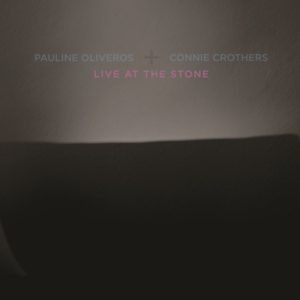
Pauline OLIVEROS and Connie CROTHERS
“Live At The Stone”
Live At The Stone was intended to be Pauline Oliveros’ tribute to the life and work of pianist Connie Crothers who passed away on August 13, 2016. Sadly, Pauline Oliveros passed away on November 25, 2016. This CD, Pauline’s memorial for Connie, is now a memorial for both women.
Pauline’s original dedication: “This recording resulted from my one and only performance with Connie Crothers at her invitation during her amazing residency at The Stone in August 2014. I was honored to play with Connie and did not realize that this would be a memorial recording. We have lost an extraordinarily original musician too soon on August 13, 2016. Here is her statement about her week-long residency: “I will be performing in every set with these great musicians–from Tuesday, August 19 through Sunday, the 24th. I am very happy about this, especially since every set will be very different from the other sets. Not only are the musicians different, the way they approach improvisation is different. A friend, noting this, said, “You like a challenge.” I responded, “Yes, I thrive from a challenge. That is where the fun is.” That's also where the surprises are, and the joy.”
I certainly was challenged by the energy and power of Connie’s performance during our set. Like Connie I thrive with challenges. The concert felt remarkable and very satisfying for me. I am grateful that Connie had the foresight to arrange for this excellent recording. She was looking forward to this release. May this recording be a tribute to Connie Crothers. Her spirit will always be present in the wonderful community of musicians in New York and around the world and most certainly in my heart.”
Pauline’s original dedication: “This recording resulted from my one and only performance with Connie Crothers at her invitation during her amazing residency at The Stone in August 2014. I was honored to play with Connie and did not realize that this would be a memorial recording. We have lost an extraordinarily original musician too soon on August 13, 2016. Here is her statement about her week-long residency: “I will be performing in every set with these great musicians–from Tuesday, August 19 through Sunday, the 24th. I am very happy about this, especially since every set will be very different from the other sets. Not only are the musicians different, the way they approach improvisation is different. A friend, noting this, said, “You like a challenge.” I responded, “Yes, I thrive from a challenge. That is where the fun is.” That's also where the surprises are, and the joy.”
I certainly was challenged by the energy and power of Connie’s performance during our set. Like Connie I thrive with challenges. The concert felt remarkable and very satisfying for me. I am grateful that Connie had the foresight to arrange for this excellent recording. She was looking forward to this release. May this recording be a tribute to Connie Crothers. Her spirit will always be present in the wonderful community of musicians in New York and around the world and most certainly in my heart.”
15,00€
Out of stock
CD
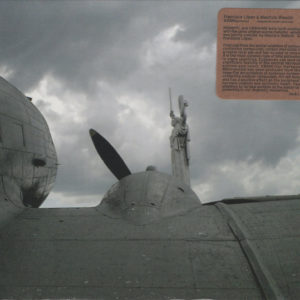
Maurizio BIANCHI & Francisco LÓPEZ
“KRMN”
“KRMN-FL and KRMN-MB were both created with the same original source
materials, jointly created by Maurizio Bianchi and Francisco López. Produced from the partial oxidation of carbon-containing compounds, carbon monoxide is a highly toxic gas and has no odor or colour. It is the most common type of fatal poisoning in many countries. Exposures can lead to significant toxicity of the central nervous system and heart. KRMN (for Karbona Monooksido) has been produced from the impartial de-oxidation of sonorous carbon-containing modular compounds. It’s not toxic and has a positive effect on the peripheral nervous system and symbolic heart. Pay
attention to its fatal antidote to the industrial poisoning in our dogmatic modernity (M.B.).” label info
12,00€
In stock
CD
Francisco LÓPEZ
“Untitled #274”
Untitled
274 was composed by Francisco Lopez and performed by Kasper T. Toeplitz at GRM Studios in Paris, France.
Francisco López is internationally recognized as one of the major figures of the sound art and experimental music. For more than thirty years he has developed an astonishing sonic universe, absolutely personal and iconoclastic, based on a profound listening of the world. Destroying boundaries between industrial sounds and wilderness sound environments, shifting with passion from the limits of perception to the most dreadful abyss of sonic power, proposing a blind, profound and transcendental listening, freed from the imperatives of knowledge and open to sensory and spiritual expansion.
Kasper T. Toeplitz has worked with academic research organizations, such as GMEM, GRM, IRCAM, and Radio-France, as well as with experimental musicians, such as Éliane Radigue, Zbigniew Karkowski, Dror Feiler, Tetsuo Furudate, Phill Niblock and Art Zoyd. Citing Giacinto Scelsi and Iannis Xenakis as influences, his early work was mostly written for traditional instruments.
15,00€
Out of stock
CD
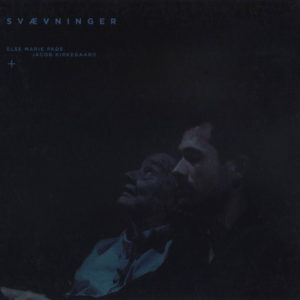
Else Marie PADE & Jacob KIRKEGAARD
“Svævninger”
Gorgeous electronic collaboration between Jacob Kirkegaard and Else Marie Pade. Urgent CD reissue of the sold out LP edition. This CD includes a beautiful 15 minute bonus track not included on the LP release.
Else Marie Pade (born December 2, 1924 in Aarhus) is a Danish composer who pioneered electronic and concrete music in Denmark beginning in 1954 . Pade was active in the resistance movement during the Second World War, and was interned at the Frøslev prison camp from 1944 till the end of the war. An archival collection of Else Marie Pade’s electronic work is now available on Important Records.
Danish artist Jacob Kirkegaard’s works are focused on scientific and aesthetic aspects of sonic perception. He explores acoustic spaces and phenomena that usually remain imperceptible to the immediate ear. Kirkegaard’s installations, compositions & photographs are created from within a variety of environments such as subterranean geyser vibrations, empty rooms in Chernobyl, a rotating TV tower, and even sounds from the human inner ear itself.
Based in Berlin, Germany, Kirkegaard is a graduate of the Academy for Media Arts in Cologne. Since 1995, Kirkegaard has presented his works at galleries, museums, venues & conferences throughout the world. His sound works are primarily released by the British record label Touch and he is a member of the sound art collective freq_out.
"For all the scientific rigour to Kirkegaard's research into the sonic possibilities of various materials, his work reveals an underlying fascination for the mysteries and myths embedded in them. His work channels an access to an inner world." Anne Hilde Neset, The Wire, 07/09
Despite an age difference of 51 years, Else Marie Pade and Jacob Kirkegaard speak a similar musical language and are prominent listeners and communicators of sounds that we tend to overhear. For the first time these two pioneers are collaborating on a new work: Svævninger investigates the variations that one can hear when sound waves collide. Both artists have previously worked on this phenomenon; Jacob Kirkegaard in his work Labyrinthitis (2007) and Else Marie Pade in her work "Faust Suite" (1962). For their new joint piece Svævninger, they remixed some of Pade's early (and hitherto unreleased) sound experiments with some of Kirkegaard's recordings from his own ear, thus leading the audience straight into the undiscovered labyrinths of their own hearing.
15,00€
Out of stock
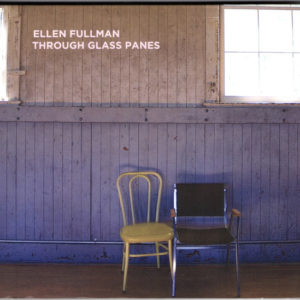
CD
Ellen FULLMAN
“Through glass planes”
“Ellen Fullmans’s first proper full length for Important Records follows her collaborative work with Barn Owl (IMPREC277) and a split LP with Eleh (IMPREC318). She was also featured on The Harmonic Series: A Collection Of Work In Just Intonation (IMPREC272).
In 1981 Ellen Fullman began developing the “Long String Instrument,” an installation of dozens of wires fifty feet or more in length, tuned in Just Intonation and ‘bowed’ with rosin coated fingers. Fullman has developed a unique notation system to choreograph the performer’s movements, exploring sonic events that occur at specific nodal point locations along the string-length of the instrument. She has recorded extensively with this unusual instrument and has collaborated with such luminary figures as composer Pauline Oliveros, choreographer Deborah Hay, the Kronos Quartet, and Keiji Haino. She has been the recipient of numerous awards, commissions and residencies.
Through Glass Panes
In composing “Event Locations No. 2”, I set out to focus more strictly than I ever had on detail in the choreography of my notation. Through writing the piece I designed ways to add more specific information in the score. The tuning uses a set of pitches based in the key of A, in combination with Arnold Dreyblatt’s tuning system based on F. These two roots generate tones in common but also complex or “dissonant” tones. I wanted to find a way to incorporate more dissonance into my sound and intentionally worked with beating frequencies in this piece.
“Never Gets Out of Me”, a duet with cellist Theresa Wong, and “Flowers”, a trio recorded with Travis Weller and Henna Cho, are adaptations from Stratified Bands: Last Kind Words”, originally composed for the Kronos Quartet in the Other Minds Festival. The composition is based on Last Kind Words Blues, a haunting song by Geeshie Wiley recorded in 1930. An excerpt of the lyrics:
If I get killed, if I get killed, please don’t bury my soul, I’d pro’bly just leave me out, let the buzzards eat me whole.
The cello and violin writing for these pieces was influenced by my study of North Indian vocal music. My intention is that the sounds of all instruments mesh into an undulation like water flowing. Composed melodic phrases are based on fragments from the song lyrics in combination with impressions from the overtone melodies produced by the long string instrument. “Flowers” was recorded at Seaholm, a decommissioned electric power plant in Austin, Texas. A flock of sparrows that nest inside the cathedral-like cast-concrete space can be heard chirping on this recording.
“Through Glass Panes” is constructed around a sequence of rhythmic patterns played using the “box bow”. Homage to the harmonica, the box bow is a hand held hollow wooden box with a curved lower surface used to play my instrument percussively. Techniques based on hand drumming inform the articulations of the tool used to strike groupings of strings tuned to chords. Two box bow performers stand facing each other at a double-sided resonator to play hocketed parts providing a stable framework from which to measure spectral changes in the sustained texture.” label info
14,00€
Out of stock
CD
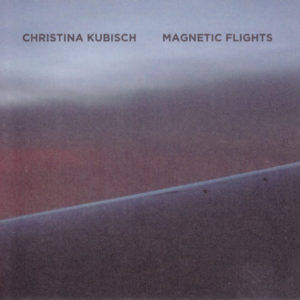
Christina KUBISCH
“Magnetic flights”
“Two brand new pieces from one of the most exciting, active & relevant members of the first generation sound artists. Magnetic Flights is a perfect follow up to Five Electrical Walks (imprec167) and it is being released at the same time as a collection of two of Kubisch’s unreleased archival pieces, also on Important.
Magnetic Flights is entirely made of electromagnetic field recordings of international airports and inside airplanes. The recordings of this piece were made by Christina Kubisch on her travels in 2007 from and to the airports of Bukarest, Manchester, Chicago, Seoul, Munich, Amsterdam, Zurich, Frankfort, Paris, Lisbon, Berlin, Pisa, Milan and London. The sounds were not altered electronically nor changed in any other way. The only tool, which was used for a part of it, was a filtering program (DINR)
All recordings were made with the help of special sensitive wireless headphones, by which the aboveground and underground electromagnetic fields are detected, amplified and made audible. The headphones are custom made and have been develeoped by myself and constructed by the engineer Manfred Fox, Berlin. The sounds are much more musical than one could expect. There are complex layers of high and low frequencies, loops of rhythmic sequences, groups of tiny signals, long drones and many things which change constantly and are hard to describe.
Magnetic Flights consists of three parts with a short special sound at the beginning and another one at the end. The piece starts with an electromagnetic sound recorded just before departure and continues with the material of flight radiations recorded inside different airplanes. These electromagnetic fields slightly change pitch during departure and arrival, but remain quite constant during the flight itself. The relatively high and compact sounds gradually build up a dense layer of vibrations with continuous minimal variations. In the second part some of the previous flight radiations gradually become filtered. The single signals mingle into a mix of small, short, nervous and very rhythmic signals. Their origin might be radio waves, communication signals with the tower , internet and atmospheric disturbances., but this is only a guess. The third part, the situation of arrival or transition, is a mix of typical electromagnetic sounds in the waiting areas of airports such as the deep vibrations of the screens of monitors which slowly fade in and out. The piece ends with the electrical flickering of an electromagnetic field of unknown origin.”
Magnetic Flights is entirely made of electromagnetic field recordings of international airports and inside airplanes. The recordings of this piece were made by Christina Kubisch on her travels in 2007 from and to the airports of Bukarest, Manchester, Chicago, Seoul, Munich, Amsterdam, Zurich, Frankfort, Paris, Lisbon, Berlin, Pisa, Milan and London. The sounds were not altered electronically nor changed in any other way. The only tool, which was used for a part of it, was a filtering program (DINR)
All recordings were made with the help of special sensitive wireless headphones, by which the aboveground and underground electromagnetic fields are detected, amplified and made audible. The headphones are custom made and have been develeoped by myself and constructed by the engineer Manfred Fox, Berlin. The sounds are much more musical than one could expect. There are complex layers of high and low frequencies, loops of rhythmic sequences, groups of tiny signals, long drones and many things which change constantly and are hard to describe.
Magnetic Flights consists of three parts with a short special sound at the beginning and another one at the end. The piece starts with an electromagnetic sound recorded just before departure and continues with the material of flight radiations recorded inside different airplanes. These electromagnetic fields slightly change pitch during departure and arrival, but remain quite constant during the flight itself. The relatively high and compact sounds gradually build up a dense layer of vibrations with continuous minimal variations. In the second part some of the previous flight radiations gradually become filtered. The single signals mingle into a mix of small, short, nervous and very rhythmic signals. Their origin might be radio waves, communication signals with the tower , internet and atmospheric disturbances., but this is only a guess. The third part, the situation of arrival or transition, is a mix of typical electromagnetic sounds in the waiting areas of airports such as the deep vibrations of the screens of monitors which slowly fade in and out. The piece ends with the electrical flickering of an electromagnetic field of unknown origin.”
12,00€
In stock

CD
Catherine Christer HENNIX
“Central Palace Music”
Central Palace Music, performed by Catherine Christer Hennix's just-intonation ensemble The Deontic Miracle, is the first in a series of archival Hennix releases to be issued via IMPREC. This previously unheard piece was taken from an eight day festival organized in the Spring of 1976 at the Museum of Modern Art in Stockholm. The group features Catherine Christer Hennix on Renaissance oboe and custom sinewave generators, Peter Hennix on Renaissance oboe and Hans Isgren on sheng.
Central Palace Music is packaged in a deluxe letterpressed package and is being released at the same time as a recent recording of Hennix's new ensemble live at Issue Project Room.
“…Hennix has created a sound that reliably taps into our subconscious and frees us from linear time…” The Quietus
Catherine Christer Hennix (1948, Stockholm) is an artist, poet, composer and philosopher witha strong interest in logic and formal music theory. She was among the pioneers in Sweden experimenting with main-frame computer generated composite sound wave forms in the late 1960's and in the 1970's she was a key protagonist in the Downtown School along with La Monte Young and Henry Flynt, with whom she has collbaborated with on numerous occasions. She pursued studies with raga master Pandit Pran Nath and led the just intonation live-electronic ensembles Hilbert Hotel and The Deontic Miracle, the recordings of the latter are presently being released by Important Records. She was a professor of mathematics and computer science and assistant to and coauthor with A.S. Esenin-Volpin for which she was viven the Centenary Prize Fellow Award by the Clay Mathematics Insitute in 2000. Hennix's interest in drone music and the meditative, trance-like state it induces is apparent in her exploration of similar music in many other cultures and traditions, drawing inspiration from the Japanese Gagaku music and the early, vocal, thirteenth-century music of Perotinus and Leoninus, for example.
In 2003 she returned to computer generated composite sound wave forms now called Soliton(e)s of which Soliton(e) Star was the first result. Subsequently she formed the just intonation ensemble The Choras(s)an Time-Court Mirage which performs Blues Dhikir al- Salam (Live at the Grimmuseum, vol. 1, Berlin, 2011, Important Records 2012). In 2012 Henry Flynt asked Hennix for a new, expanded realization of ISE for an installation at ZKM in Karlsruhe, Germany, to be featured in his retrospective/ prospective show Henry Flynt Activities 1959 – at ZKM. In response Hennix realized a 4-channel composition, Rag Infinity/Rag Cosmosis, her first 4-channel computer assisted composition since 1969.
18,00€
Out of stock

CD
Catherine Christer HENNIX
“Live At Issue Project Room”
Live At Issue Project Room is the first recording from Catherine Christer Hennix's expanded just-intonation ensemble, the Chora(s)san Time-Court Mirage. This expanded ensemble includes vocalists Imam Ahmet Muhsin Tüzer, Amir Elsaffan and Amirtha Kidambi, an expanded brass section with the addition of Paul Schwingesnschlögl and Elena Kakaliagou as well as the additon of Marcus Pal and Stefan Tiedje on electronics.
Live At Issue Project Room is packaged in a deluxe letterpressed package and is being released at the same time as a recent recording of Hennix’s new ensemble live at Issue Project Room.
“...Hennix has created a sound that reliably taps into our subconscious and frees us from linear time...” The Quietus
Catherine Christer Hennix (1948, Stockholm) is an artist, poet, composer and philosopher witha strong interest in logic and formal music theory. She was among the pioneers in Sweden experimenting with main-frame computer generated composite sound wave forms in the late 1960’s and in the 1970’s she was a key protagonist in the Downtown School along with La Monte Young and Henry Flynt, with whom she has collbaborated with on numerous occasions. She pursued studies with raga master Pandit Pran Nath and led the just intonation live-electronic ensembles Hilbert Hotel and The Deontic Miracle, the recordings of the latter are presently being released by Important Records. She was a professor of mathematics and computer science and assistant to and coauthor with A.S. Esenin-Volpin for which she was viven the Centenary Prize Fellow Award by the Clay Mathematics Insitute in 2000. Hennix’s interest in drone music and the meditative, trance-like state it induces is apparent in her exploration of similar music in many other cultures and traditions, drawing inspiration from the Japanese Gagaku music and the early, vocal, thirteenth-century music of Perotinus and Leoninus, for example.
In 2003 she returned to computer generated composite sound wave forms now called Soliton(e)s of which Soliton(e) Star was the first result. Subsequently she formed the just intonation ensemble The Choras(s)an Time-Court Mirage which performs Blues Dhikir al- Salam (Live at the Grimmuseum, vol. 1, Berlin, 2011, Important Records 2012). In 2012 Henry Flynt asked Hennix for a new, expanded realization of ISE for an installation at ZKM in Karlsruhe, Germany, to be featured in his retrospective/ prospective show Henry Flynt Activities 1959 – at ZKM. In response Hennix realized a 4-channel composition, Rag Infinity/Rag Cosmosis, her first 4-channel computer assisted composition since 1969.
18,00€
In stock
CD
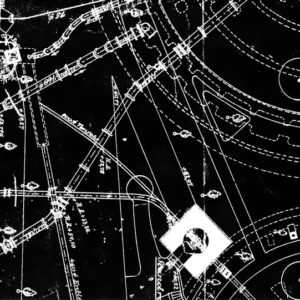
Arnold DREYBLATT
“Turntable history”
“Arnold Dreyblatt (b.1953) is an American composer who has studied with La Monte Young, Pauline Oliveros and Alvin Lucier. He is a member of the German Academy Of Art. He has released work on labels such as Table Of The Elements, Canteloupe, Tzadik, Hat Art and Dexter’s Cigar.
Turntable History is a recording of a 40 minute multi-channel sound composition which was concieved as part of an audio-visual installation installed in the circular vaulted brick space of a historical water container in Berlin in 2009. The original sound content is derived from recordings made by Arnold Dreyblatt of a Magnetic Resonance Imagining Scanner (“Siemens Magnetom Symphony Maestro Class”) in a radiological practice in Berlin. Dreyblatt was fortunate to gain rare permission to record this device in operation without patients being involved. A technician from Siemens manned the machine especially for these recordings, searching for software settings related to their resulting sonic output rather for scanning particular body areas. Dreyblatt treated the device as a giant “Tesla coil”, in which the alignment and resonances of a powerful magnetic field is gradually altered by rotating radio frequencies. Dreyblatt analysed and deconstructed the original recordings and grouped the audio segments by pitch, rhythm and density. The resulting five-channel composition of harmonically resonating, pulsating signals, sounded within this voluminous reflective space (with long delay times) is wonderfully captured in this recording.” label info
12,00€
In stock
3 CD
ELEH
“Floating frequencies – Intuitive synthesis”
“Edition of 1000. This deluxe 3 CD set presents Floating Frequencies/Intuitive Synthesis in its completed 3 part entirety. Metallic silver print on a heavy duty matte black jacket. Intuitive Synthesis/Floating Frequencies takes full advantage of the low noise floor and clarity provided by the digital medium. Mastered by Eleh specifically for the digital environment. This box is not intended to be a replacement of the analog records but an entirely different experience.”
30,00€
Out of stock
3 CD
ELEH
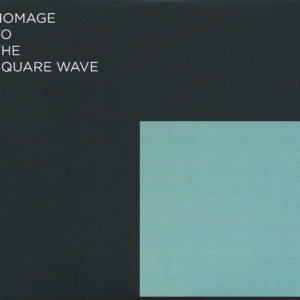
“Homage”
Imprec is proud to present Eleh’s Homage series remastered and on CD for the first time. Certain frequency combinations that were impossible to cut on LP are effectively presented in this digital edition. Packaged in a heavy duty 6 panel fold out jacket with inner printing and a matte finish.
Eleh, an artist who flourishes in restraint, uses a reduced sonic vocabulary to highlight delicate intricacies in a logical path toward harmonious satisfaction. The organization of hypnotic square waves, rippling sine waves and triangle/saw tooth waveforms is a discourse in the infinity, rather than the limits, of reduction. By employing a natural practice of balanced interpretation, Eleh enables an individual reaction free of the clutter of white noise.
40,00€
Out of stock

11 CD
Harry BERTOIA
“Sonambient: Recordings Of Harry Bertoia”
“I don’t hold onto terms like music and sculpture anymore. Those old distinctions have lost all their meaning.” Harry Bertoia, 1976
Harry Bertoia's Complete Sonambient Collection features all 11 of Bertoia's original records newly restored from their master tapes and housed in replica jackets. A heavy duty box, printed with metallic inks, holds the 11 discs as well as a 100 page book containing a lengthy historic essay, Smithsonian interview with Harry Bertoia, exclusive Sonambient era material from the Bertoia archive, modern and archival photos of the Bertoia barn as well as reflections on Bertoia from David Sefton, Tom Welsh, David Harrington (Kronos Quartet) and all three of Bertoia's children. The Complete Sonambient Collection celebrates 100 years of Harry Bertoia in 2015, the centennial of his birth.
In the late 1950's Harry Bertoia (1915-1978), already a renowned American sculptor, began creating long-form, improvised pieces of music utilizing pure acoustic tones evoked from his sound sculptures. Around this time Bertoia came up with the term “Sonambient” to describe the music and environment created by his tonal sculptures and their lush harmonic overtones. In a renovated barn on his property deep in the Pennsylvania woods Harry curated a harmonious selection of his sculptures and gongs, often recording his frequent, intuitive sound experiments using 4 overhead microphones and a 1/4” tape recorder. Bertoia dedicated the last twenty years of his life to his Sonambient work and in 1970 he released the first Sonambient LP. In 1978, in the final months of his life, he selected recordings from his archive and produced 10 more Sonambient records. He would not live long enough to see or hear these records himself. Bertoia died in 1978, at age 63, and was buried beneath a giant gong behind his Sonamient barn.
Bertoia's recordings are as much a celebration of sustained tones, slow decay, healing vibrations and shimmering harmonics as Indian Classical music, singing bowls, The Well Tuned Piano or Benjamin Franklin's glass armonica. Through these rich harmonics, pulsing tones and pure gongs Bertoia was able to more clearly articulate his inner spirit than he could with sculpture alone – a point he made himself many times in interview. Harry’s single greatest piece of art is the totality of his life which is nearly impossible to measure but easy to feel. It’s our hope that somehow this box set evokes some of the same sacred, personal feeling that one has in Bertoia’s barn.
85,00€