
In stock
LP
Reinhold FRIEDL
“Music for Piano, … Spring/Flower/Cracker/Stream”
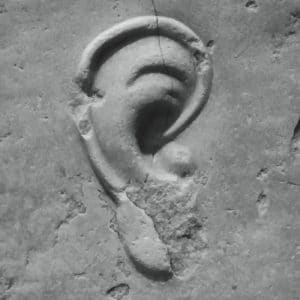
Zeitkratzer’s boss revisits the piano guts some years after his much acclaimed and genre-defying album Inside Piano (2011). While Friedl’s first solo album defined the practice of playing on the strings of a grand piano and revealed the source of sounds we couldn’t identify on some of Zeitkratzer’s recordings, Music For Piano, … Spring/Flower/Cracker/Stream, brings concrete and quasi electroacoustic sounds together with clearly articulated piano notes. In the enigmatically titled Music For Piano, … Spring/Flower/Cracker/Stream, Reinhold Friedl moves freely from plain motifs, to walls of noise and from screeching sounds to pure tones, while keeping strong compositional structures and transparent musical forms. A truly beautiful and ear-pleasing record that unashamedly shows the composer’s and performer’s love for the piano.
Beside his activities as composer and as leader of the internationally acclaimed new music group zeitkratzer, Reinhold Friedl is renowned for his passionate and peerless piano performances. He invented numerous new techniques of playing a grand piano directly on the strings and baptised it “inside piano”. “Reinhold Friedl has developed his “inside piano” technique to such a level of delicacy and precision that the tonalities extracted from the instrument bear little resemblance of their acoustic source.”, wrote The Wire Magazine London. Phosphormagazine stated: “Unbelievable that one can creates such sounds with a grand piano!” and the Australian Realtime attested “tremendous power. Overwhelming!”
Reinhold Friedl studied with piano with Renate Werner and Paul Schwarz in Stuttgart, Alexander von Schlippenbach and Alan Marks in Berlin, composition with Mario Bertoncini (nuova consonanza) and Witold Szalonek. He has collaborated with musicians like Phill Niblock, Elliott Sharp, Alvin Lucier, Keiji Haino, Lou Reed, Carsten Nicolai, Laurie Anderson, ...
14,50€
Out of stock

LP
Stephanos VASSILIADIS
“En Pyri – Bacchae”
Two previously unreleased recordings from one of Greece’s pioneers of electroacoustic music. Stephanos Vassiliadis (1933 - 2004) founded in 1979, together with Iannis Xenakis, the Contemporary Music Research Center (CMRC) and remained its director until his death in 2004. His largely undocumented artistic output consists of works for theatre productions, mostly unfinished or fragmented electroacoustic pieces, as well as numerous children songs. Vassiliadis was also a significant pedagogue and some of his initiatives have reformed the musical education system of Greece.
“En Pyri” (1973).
Recorded in 1976 by Andreas Rodousakis on double-bass and the composer himself on the mixing desk of Radio Sweden Studio in Stockholm, En Pyri presents a previously unreleased version of Stephanos Vassiliadis’s composition for tape and double-bass written in the memory of Jani Christou. En Pyri was composed three years after a multi-fatal car crash that caused the untimely deaths of Anastasia Vassiliadi (first wife of Stephanos Vassiliadis), Jani Christou (acclaimed composer, close friend and collaborator of Stephanos Vassiliadis) and of Christous’s wife Theresia Christou Choremi. The title En Pyri, translating as In Fire, comes from the First Epistle of the Corinthians “..for the day will disclose it, because it is revealed in fire..”, referring to that what remains after death, or in the composer’s words: “man’s song-creation is the only thing that can withstand and overcome destruction”.
The fire is clearly pictured during a particularly long climax starting midway to the end of the piece. The dramatic aspect of this spectrally dense section is even stronger during live shows, with the performer centre-stage fiercely playing double-bass, but failing to be heard over the full-range audio of the 8-track tape. This staged element of En Pyri is inevitably lost with the reproduction of this recording, but the audio alone carries a heavy load. Sounds as if written out of total need and almost physical necessity to deal with death and loss. At the end of the composition, while the performer is still onstage, a quiet tone is “revealed” and held for a few minutes signifying that what remains; that what is “revealed in fire”.
“Bacchae” (1974).
Bacchae was written for a production of Euripide’s tragedy The Bacchae directed [and choreographed] by the distinguished choreographer Zouzou Nikoloudi. This particular play was part of the University of California Intercampus Cultural Exchange Program and was never performed in Greece. From the 25th of September to the 3rd of October 1974, it was staged seven times in different campuses of the University of California (Santa Barbara, Irvine, San Diego, Riverside, Davis, Santa Cruz, Berkeley). These seven shows were to become the only occasions this composition was presented to the public.
Bacchae seems to be Vassiliadi’s first attempt in bringing together his background in electroacoustic music with the music he grew up to. He beautifully achieves this by juxtaposing modular synthesizer tones with samples of greek traditional music from his collection of archival recordings. These two elements ebb and flow throughout the composition, at times becoming indistinguishable from each other. The manner in which Vassiliadis mixes acoustic and synth drones together resembles electronic music of following decades. Developed gradually over a duration of 23 minutes of uninterrupted and texturally thick audio, Bacchae is a kind of proto-ambient, folk-drone electroacoustic piece, luckily rediscovered in the archipelago of recorded music.
This release was made possible thanks to the invaluable support of some close persons to Stephanos Vassiliadis.
Mastering from the original tapes by Nikos Lavdas at Kiwi, Athens, 2017. Cover photo by S. K. (close-up photo of Stephanos Vassiliadis). Insert artwork by Stephanos Andreou. Design and layout by We Are Still Bold and Beautiful.
“En Pyri” (1973).
Recorded in 1976 by Andreas Rodousakis on double-bass and the composer himself on the mixing desk of Radio Sweden Studio in Stockholm, En Pyri presents a previously unreleased version of Stephanos Vassiliadis’s composition for tape and double-bass written in the memory of Jani Christou. En Pyri was composed three years after a multi-fatal car crash that caused the untimely deaths of Anastasia Vassiliadi (first wife of Stephanos Vassiliadis), Jani Christou (acclaimed composer, close friend and collaborator of Stephanos Vassiliadis) and of Christous’s wife Theresia Christou Choremi. The title En Pyri, translating as In Fire, comes from the First Epistle of the Corinthians “..for the day will disclose it, because it is revealed in fire..”, referring to that what remains after death, or in the composer’s words: “man’s song-creation is the only thing that can withstand and overcome destruction”.
The fire is clearly pictured during a particularly long climax starting midway to the end of the piece. The dramatic aspect of this spectrally dense section is even stronger during live shows, with the performer centre-stage fiercely playing double-bass, but failing to be heard over the full-range audio of the 8-track tape. This staged element of En Pyri is inevitably lost with the reproduction of this recording, but the audio alone carries a heavy load. Sounds as if written out of total need and almost physical necessity to deal with death and loss. At the end of the composition, while the performer is still onstage, a quiet tone is “revealed” and held for a few minutes signifying that what remains; that what is “revealed in fire”.
“Bacchae” (1974).
Bacchae was written for a production of Euripide’s tragedy The Bacchae directed [and choreographed] by the distinguished choreographer Zouzou Nikoloudi. This particular play was part of the University of California Intercampus Cultural Exchange Program and was never performed in Greece. From the 25th of September to the 3rd of October 1974, it was staged seven times in different campuses of the University of California (Santa Barbara, Irvine, San Diego, Riverside, Davis, Santa Cruz, Berkeley). These seven shows were to become the only occasions this composition was presented to the public.
Bacchae seems to be Vassiliadi’s first attempt in bringing together his background in electroacoustic music with the music he grew up to. He beautifully achieves this by juxtaposing modular synthesizer tones with samples of greek traditional music from his collection of archival recordings. These two elements ebb and flow throughout the composition, at times becoming indistinguishable from each other. The manner in which Vassiliadis mixes acoustic and synth drones together resembles electronic music of following decades. Developed gradually over a duration of 23 minutes of uninterrupted and texturally thick audio, Bacchae is a kind of proto-ambient, folk-drone electroacoustic piece, luckily rediscovered in the archipelago of recorded music.
This release was made possible thanks to the invaluable support of some close persons to Stephanos Vassiliadis.
Mastering from the original tapes by Nikos Lavdas at Kiwi, Athens, 2017. Cover photo by S. K. (close-up photo of Stephanos Vassiliadis). Insert artwork by Stephanos Andreou. Design and layout by We Are Still Bold and Beautiful.
14,00€
In stock
LP
Ghédalia TAZARTES + Maya DUNIETZ
“Schulevy maker”
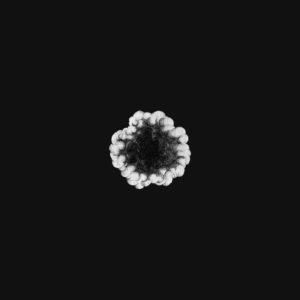
Holotype Editions was founded as a means of bringing out music by some of the most unique and peculiar artists of the last decades. What could be more fitting for the imprint’s seventh release, than the duo of cult artist Ghédalia Tazartès and multi-instrumentalist, composer and singer Maya Dunietz. Recorded live at Cafe Oto, in December 2013, Schulevy Maker documents the duo’s first live appearance. An amalgam of bizarre samples, concrete sounds, live piano and bells, juxtaposed with the otherworldly voices of Dunietz and Tazartès. At times light and humorous, at others dark and ritualistic, Schulevy Maker can hardly be labeled or tagged. The album title refers to Shoemaker-Levy 9, a disrupted comet that collided with Jupiter in July 1994. Tazartès and Dunietz freely reassembled the syllables of the comet’s name, coming up with this obscure title. A truly life-affirming record, by two artists defying categorization, Schulevy Maker comes in a limited edition of 300 copies, pressed on black vinyl with a beautiful cover designed by We Are Still Bold and Beautiful. Recorded live at Cafe Oto, London - December 2nd, 2013 by James Dunn. Mixed by Daniel Meir. Mastered by Nikos Lavdas at Kiwi, Athens, 2017.
14,00€