
Out of stock

CD
Marja AHTI – Manja RISTIC
“Transference”
In the ever-expanding constellation of transnational electroacoustic collaboration, Marja Ahti and Manja Ristić present Transference, a profound investigation into the movement and transformation of energy between distant practices and places, arriving August 8, 2025 via Erstwhile Records. Transference emerges as what the artists describe as "a dialogue of sonic gestures and traces of visits to places and the spirit that occupies them." This collaboration transcends geographical boundaries to create what they term "a map of subtle and drastic differences, a space where the contours of sound and silence merge, and where listening becomes a collaborative act of discovery and associative intuition."
Marja Ahti, the Finnish-born, Netherlands-based artist whose work has consistently pushed the boundaries of electroacoustic composition and field recording, contributes recordings, electronics, objects, piano, percussion, and bass harmonica to this cross-continental dialogue. Her approach to sound as both material and metaphor has established her as a crucial voice in contemporary experimental music, with previous releases demonstrating an acute sensitivity to the relationship between acoustic space and electronic manipulation.
Manja Ristić, the Serbian sound artist and composer whose practice spans installation, performance, and recorded work, adds her own recordings, electronics, objects, piano, violin, and cello to the collaborative matrix. Her work has long explored the intersection of field recording, electroacoustic processing, and the politics of place, making her an ideal collaborator for this investigation into sonic "transference."
The album's conceptual framework positions itself within what the artists call "the ongoing metamorphosis of the sounding world as we observe it." This philosophical approach suggests that Transference functions not merely as documentation but as active participation in the transformation of sonic materials across time and space. The work "suggests the movement, transformation and metabolization of energy between two practices," creating a feedback loop between distinct artistic approaches and geographical contexts. The production involves Taku Unami's mastering, whose work with artists like Taku Sugimoto and Manfred Werder brings a crucial understanding of silence and space to the project.
Marja Ahti: recordings, electronics, objects, piano, percussion, bass harmonica
Manja Ristić: recordings, electronics, objects, piano, violin, cello
mastered by Taku Unami
14,00€
Out of stock

2 CD
Vanessa ROSSETTO
“Pictures Of The Warm South”
Erstwhile presents Pictures Of The Warm South, Vanessa Rossetto's the seventh Erstwhile release, her second ErstSolo. Mastered by Giuseppe Ielasi, designed by Matthew Revert. Double CD, six-panel digipak. Primarily focused on composing works that draw on a diverse pallet of chamber instrumentation, field recordings, electronics and a wide array of different objects, with a practice that explores each through a combination of extended and traditional techniques, Vanessa Rossetto has been working at the boundaries of the American vanguard for well over a decade, producing beautiful and challenging solo efforts for a diverse number of imprints, including Kye, Another Timbre, No Rent, Erstwhile, and numerous others, as well as collaborations with figures like Michael Pisaro, Sarah Hennies, and Lee Patterson.
22,00€
In stock

CD
Eric LA CASA – Jérôme NOETINGER
“Off Tracks”
Within the expanding territories of electroacoustic investigation and field recording archaeology, Éric La Casa and Jérôme Noetinger present Off Tracks, a profound meditation on absence, decay, and the spectral traces left behind in emptied architectural spaces via Erstwhile Records. This collaboration between two masters of contemporary sound art unfolds as "an exploration of buildings emptied of their activities, a crossing of spaces abandoned by their occupants, a drift through the ghostly trace of a vanished presence," as Noetinger describes it. The work stands as both sonic documentation and philosophical inquiry into the nature of abandonment and the material traces that persist when human presence withdraws.
Éric La Casa, renowned for his meticulous approach to environmental recording and spatial acoustics, joins forces with Jérôme Noetinger, whose work with Metamkine and extensive solo practice has established him as a pivotal figure in the French electroacoustic underground. Together, they navigate the liminal spaces between presence and absence, creating what Noetinger characterizes as "a testimony to the general deterioration underway that also applies to the very medium of recording." Off Tracks emerges from a conceptual framework that positions field recording not merely as documentation but as archaeological practice. The duo's methodology involves careful listening to spaces stripped of their intended functions, revealing the subtle sonic signatures that remain when buildings are abandoned by their occupants. Through precise microphone placement and electroacoustic processing, they uncover what Noetinger calls "the ghostly trace of a vanished presence."
The album's approach to deterioration extends beyond its subject matter to encompass the recording medium itself, creating a meta-commentary on the fragility of both architectural and sonic preservation. This self-reflexive dimension places the work within the broader context of contemporary sound art's engagement with entropy and temporal decay, recalling the investigations of Luc Ferrari and Hildegard Westerkamp while pushing into more abstract territories.
14,00€
In stock

2 CD
Kevin DRUMM
“Sheer Hellish Miasma II”
Kevin Drumm - electronics, tapes, microphone, computer assistance
Greg Kelley - trumpet
26,00€
In stock

CD
Ernst KAREL – Bhob RAINEY
“47 Gates”
Ernst Karel: electronics, recordings
Bhob Rainey: electronics, recordings, piano
on tracks 2 and 4:
Andie Tanning: violin
Carrie Frey: viola
Leila Bordreuil: cello
James Ilgenfritz: bass
Vasko Dukovski: clarinets
mastered by Taku Unami
14,00€
In stock

3 CD
Toshiya TSUNODA – Taku UNAMI
“Wovenland 3”
Wovenland became a band. But we never do live shows. Our band activities are mainly editing in a studio. Our goal is to focus on acoustic experiments. No more and no less. We have been active for a total of about 10 days, including meetings, in 7 years. We are now disbanding.
28,00€
In stock

CD
Choi JOONYONG – Devin DISANTO
“Strange Skills”
The first collaborative work by Seoul-based electronic, sound and noise artist Choi Joonyong and NY-based experimental artist Devin DiSanto. Five tracks.
14,00€
In stock

CD
Marc BARON – Mark VERNON
“Post-chance”
Recorded by Marc Baron and Mark Vernon between June 2022 and October 2023
Mastered by Taku Unami
The initial idea was that this collaboration should reflect a dialogue between two artists who have not yet met and that it should express something about the gulf between them, both literally and metaphorically. In the exchange of materials and ideas something is inevitably lost along the way – whether it be misunderstandings due to interpretation, language, slippage of meaning or simply things going astray. From the outset we decided to make a feature out of what might be lost in this interchange due to physical distance and the passage of time, and to devise a process that would make this evident.
Sending batches of unspooled quarter inch tape to each other in the post we made the decision to include a magnet in the package that, over the time it took for it to be delivered, would randomly erase parts of the tapes that it came into close proximity with. Each fragment of tape included a self-determined sound miniature – a short audio sketch or recording experiment. Over the course of a year we accrued heaps of these degraded, partially eroded tape fragments. We would each make a copy of the tapes prior to sending, and on receiving them weeks later the other would decrypt what remained of the sounds at the other end, playing back and recording the tapes digitally.
To further open the process up to chance it was decided that whatever minute past the hour the tape was recorded at would be noted and that in the final arrangement of materials it would appear at that exact point within an hour-long timeline. In the compositional stage the changes in state between the original recording and its degraded ‘ghost’ counterpart were highlighted through extreme stereo separation and hard panning. The bringing together of these fragments on the timeline to mix and arrange the piece was also the first time we met in person after a year of this remote sound correspondence. Up until this point, neither of us had any clue about how these elements would sit together, whether the juxtapositions would work or not, whether the process would bear fruit or turn out to be a complete disaster.
Mark Vernon, winter 2023
15,00€
In stock
3 CD
Taku UNAMI
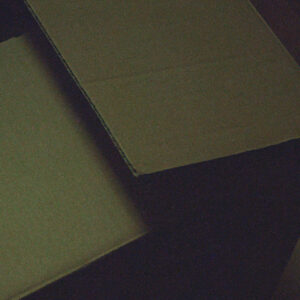
“Bot box boxes”
"After several years of not doing anything since Erstwhile first asked me to do a solo album, I suddenly had the idea to record it last week and it was released within a week or so.
I know some of you are thinking "Anyone can do this...", but in the DIY spirit of doing what anyone can do with what anyone can get, and without any special skills or funds, I tackled improvisation head on, using mostly newspapers and cardboard boxes, which turned out to be this triple CD set."
-- Taku Unami
28,00€
Out of stock
2 CD
Graham LAMBKIN – James RUSHFORD
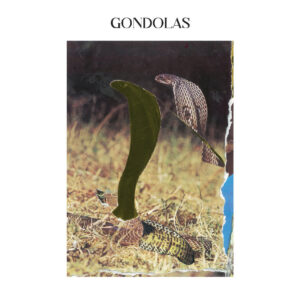
“Gondolas”
First collaborative work between Graham Lambkin and James Rushford. Mastered by Stephan Mathieu, artwork/design by Graham Lambkin. Double CD, eight-panel digipak.
22,00€
In stock
CD
Moniek DARGE – Vanessa ROSSETTO
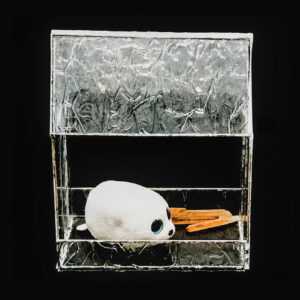
“Dream Soundies”
First collaborative work between Moniek Darge and Vanessa Rossetto. Mastered by Giuseppe Ielasi, designed by Matthew Revert. Six-panel digipak.
15,00€
Out of stock
CD
Antoine BEUGER – Anastassis PHILIPPAKOPOULOS
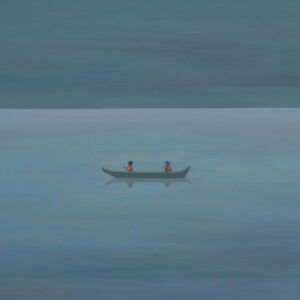
“Floating”
A 74-minute collaboration piece by Antoine Beuger and Anastassis Philippakopoulos. Cover painting by Maria Filippakopoulou. 6-panel digipak. Mastered by taku unami
15,00€
In stock
CD
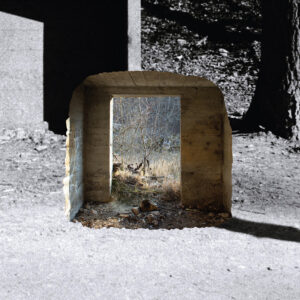
Clara de ASIS – Ryoko AKAMA
“Sisbiosis”
Clara de Asís - electronics, percussion, field recordings
Ryoko Akama - amplified objects, field recordings
Track 1, 2: recorded and mixed by Clara de Asís in Leymen, France in May 2022
Track 3, 4, 5: materials recorded by Ryoko Akama and Clara de Asís in Leymen, France and Hofstetten-Flüh, Switzerland in March 2022, assembled and mixed by Ryoko Akama
Track 6: materials recorded by Clara de Asís and Ryoko Akama in Leymen, France and Hofstetten-Flüh, Switzerland in March 2022, assembled and mixed by Clara de Asís
Mastered by Taku Unami
15,00€
In stock
2 CD
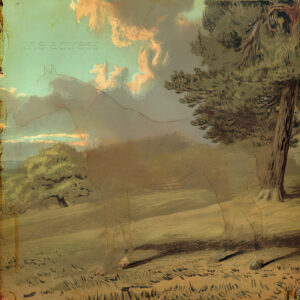
Vanessa ROSSETTO
“The Actress”
Vanessa Rossetto's solo album. Mastered by Giuseppe Ielasi
Designed by Matthew Revert. Double CD, six-panel digipak.
24,00€
In stock

CD
Lasse MARHAUG / Jérôme NOETINGER
“Top”
When our friend and inspiration Peter Rehberg passed suddenly in July 2021, I felt like I had to do something, and what I’m good at is something Peter deeply loved, producing records. so I put together this project with some of his longtime collaborators and friends, Lasse and Jérôme, Marcus Schmickler mastering and Tina Frank designing.
it’s titled Top for multiple reasons but one is that Top was often Peter’s entire reply to a message you’d sent, both concise and supportive. a second is that it can also be read ‘To P’, we miss you buddy.
— Jon Abbey
Lasse Marhaug: MacBooks 2003/2007/2011 with SuperCollider Keränen patches
Jérôme Noetinger: Revox, modular synth, CD player
recorded Sortland/Rives September-November 2021
mastered by Marcus Schmickler
design by Tina Frank
produced by Jon Abbey
for Peter Rehberg (1968-2021)
15,00€
In stock

CD
Vanessa ROSSETTO – Lionel MARCHETTI
“The Tower (The City)”
First collaborative work between Vanessa Rossetto and Lionel Marchetti. Mastered by Giuseppe Ielasi, designed by Matthew Revert. Six-panel digipak.
15,00€
In stock
2 CD
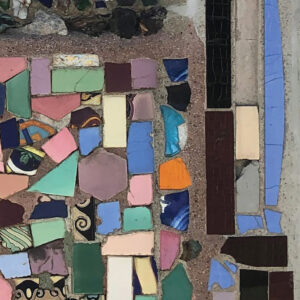
Michael PISARO-LIU
“Revolution Shuffle”
Michael Pisaro-Liu's latest work. 106 tracks, one minute each. Six-panel digipak with two discs.
24,00€
In stock

CD
Keith ROWE
“Absence”
"Friday the 6th of November 2015 was an important day for me. Christian Kobi had invited me to take part in his »zoom in« festival in Bern. Earlier that day I visited the Kunst Museum, looking at the work of Cuno Amiet (1868-1961), recalling the work of an earlier Camille Pissarro, interesting contributions from Felix Vallotton (1835-1925), also an very important exhibition of how photography had influenced Toulouse-Lautrec (1864-1901) called “Lautrec’s Photographic Eye”.
What struck me was how the fashion of the day became aged, yet the TL paintings stayed fresh, and that his drawings were fantastic. Connected to the TL photos was film of the American dancer Loie Fuller’s (1862-1928) Fire Dance. Adolf Wölfli’s (1864-1930) large work Memoriam (1926).
For my solo in the festival I used a long lapstick guitar, Boss RC-3, Boss PS-3, six band EQ, Sony ICF-SW22 and Roberts R984 radios. two contact mics, and a metal strip.
November 2015 marked the end of the first year of living with Parkinson's. During that year the right hand tremor was becoming more and more uncontrollable, to the point I could not conceive of how in the future I could manage solo performances. During that year I had experimented with different anti-shaking set-ups, in attempts to work around the tremor caused by stress and anxiety of performing solos.
It was during the 33min solo on the 6th of November in Bern that I concluded that I did not want to continue performing solos, and almost immediately from that day onwards I declined invitations to perform as a soloist. The only exception was three performances of a 20mins Click piece based on using pre-recorded material, meaning all I had to do was press the start button, these events were performed in complete darkness.
Retirement, or stepping away, is difficult and painful. It requires a recognition of certain realities, that you are not important, that the world does not care that you have stopped performing solos, actually the world does not notice that you have stopped, life outside your bubble continues, get used to it, you are not at the centre of anything. A part of the reality is to try not to leave a big mess for others to tidy up after you have left the departure lounge, retirement is an opportunity where you are able to discard all the junk you’ve accumulated.
I want to share with you a recording of that 33 mins solo from Bern before it too departs for the dustbin. An important moment in the solo is at 12:10 thru 12:21 where the Parkinson's tremor frequency (around 300bpm) can be heard, and it’s around this moment I decide not to solo again."
Keith Rowe
Mastered by Taku Unami
15,00€
In stock
CD
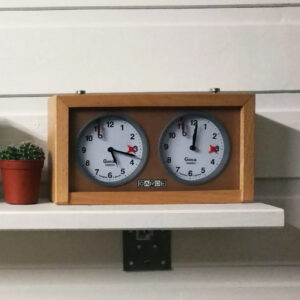
Yan JUN / Zhu WENBO
“Twice”
Yan Jun:
time assignment for layer B
voice on layer A
field recording with fingers and steps on layer B
Zhu Wenbo:
time assignment for layer A
snare drum, digital piano, upright piano, clarinet, audio signal generator on layer A
printer, cassette duplicator, scanner, audio signal generator, taped mandolin on layer B
Yan Jun: recorded in Beijing, Feb 2021
Zhu Wenbo: recorded in Qingdao and Beijing, Sept 2020 - Feb 2021
15,00€
Out of stock
CD
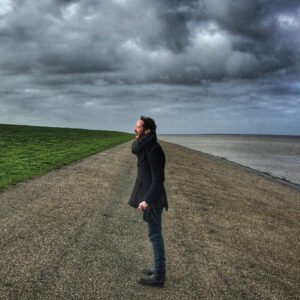
Dean ROBERTS
“Not Fire”
Berlin-based songwriter Dean Roberts' first album in 12 years is a collection of dark and melancholic songs, set in unusual formats based around guitar, electronics, strings, with subtle rhythmic elements, performed by Dean's Dark Moth Ensemble, with additional musicians that include Boris Hauf on piano and The Neck's keyboardist Chris Abrahams on harp.
Dean M Roberts - Vocals, Guitar, Piano, Bass, Percussion, Lap-steel
The Black Moths:
Emanuele Porcinai - Feedback Guitars, Backing Vocals
Chris Abrahams - Harpsichord
Jenny Lange - Piano, Backing Vocals
Leighton Craig - Reeds
Sandra Selig - Vocals and Effects
Valerio Tricoli - Organ
Lucky Paul Taylor - Drums
Andrea Belfi - Drums
Recorded and produced by Dean Roberts, Emanuele Porcinai and Giuseppe Ielasi
15,00€
In stock
2 CD
Toshiya TSUNODA – Taku UNAMI
“Wovenland 2”
For their 2nd collaboration, sound artists Toshiya Tsunoda and Taku Unami present a series of acoustic experiments, each track using a single field recording — fishing spots, birds, a hiking trail, &c, — recording and manipulating those recordings using specific processes, seeking to emulate the way our minds process the senses that we encounter to create our perceived reality.
22,00€
Out of stock
CD
Choi JOONYONG / Jin SANGTAE
“Hole In My Head”
Recording in two locations in Seoul by Taku Unami, electronic, sound and noise artists Choi Joonyong and Jin Sangtae present a series of unusual interactions using sonic events, concrete and acousmatic interjections and aberrant expression, patiently conveying each event with clarity and intention and an almost theatrical sense of drama and narrative.
15,00€
Out of stock

CD
Tucker DULIN / Ben OWEN
“Cat Guarding Geese”
Cat guarding geese is composed of field recordings and performances on Roosevelt island, and a studio recording in Brooklyn, NY.
Tucker Dulin: bells, bowl, can, cymbal, lentils, mallet, whistle
Ben Owen: paper mic, speaker boxes, op amps, cassette
recorded by Billy Gomberg
mastered by Taku Unami
15,00€
Out of stock
2 CD
Áine O’DWYER / Graham LAMBKIN
“Green Ways”
Green Ways documents a collection of live recordings, drawn from in situ performances given in Doon, Dungarvan, Plaistow, Shoreditch, Singö and Stratford across 2018. It celebrates the filíocht of rural and urban acoustic environments with a playful economy of means, and offers a special salute to the rich heritage of Carnahalla.
Mastered by Taku Unami
Layout by Matthew Revert
23,00€
Out of stock
CD
Matthew REVERT / Vanessa ROSSETTO
“Everyone Needs A Plan”
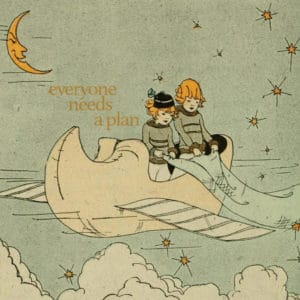
“Everyone needs a plan” records the evolution of communication from its tentative genesis toward an eruption of language that cannot be stopped. It is a documentary of connection and how, as words passed from one to another become refined, a deeper understanding of not just the other, but also the self is achieved. “Everyone needs a plan” condenses years of communication into an essence wherein profundity exists not just in the grandiose, but also within the smallest unit of human experience. As communication blooms, it reveals how one can connect with another and the myriad ways in which this can occur. It is not just what lives within the words spoken, but within the silences, sighs, coughs and laughter. “Everyone needs a plan” is what results when we stop preventing ourselves from groping toward whatever our personal truths may be. Matthew Revert/Vanessa Rossetto
14,50€
In stock
CD
Lucio CAPECE / Marc BARON
“My Trust In You”
Marc Baron: field recordings, tape recorders and other analog devices. Lucio Capece: bass clarinet, slide saxophone, analog synthesizer and filter, drum machines, double looper, equalizers in feedback, regular and telephone field recordings, mini speakers in movement.
Recorded and mixed by Marc Baron and Lucio Capece. Mastered by Taku Unami.
14,50€
In stock

CD
Julien OTTAVI – Dion WORKMAN
“Misenlian”
Julien Ottavi / Dion Workman: GNU/Linux operating systems and free audio software.
“Julien Ottavi and Dion Workman are two of the most extreme of the younger wave of sonic explorers, pushing the boundaries of sound and art. Ottavi hails from Nantes, France and Workman from New Zealand, but their overlapping concerns and aesthetics have drawn them together, and misenlian contains the results of their initial collaborations.
Julien Ottavi studied sound and photography at the art school of Nantes. He is a founding member of Formanex, an electroacoustic quartet performing graphic scores from the 20th and 21st centuries, including works by Cardew, Cage, Wolff, Feldman, Brown, and Ralf Wehowsky, as well as the founder of the Nantes-based experimental music organization Apo33 (responsible for running the label Fibrr among numerous other activities). His most notable previous release is the superb solo CD Nervure Magnétique (Sigma Editions, 2003).
Dion Workman began his career in the improvised rock trio Thela, along with Dean Roberts and Rosy Parlane. After Thela split up, Workman and Parlane founded Sigma Editions in 1998, beginning an exploration of electronic music that has continued to this day. Workman is a meticulous composer, with a Feldman-like sense of development in his pieces, best represented on disc by the perfectly sculpted Ching (Antiopic, 2003), a work which won him the 2003 Max Brand Prize from the Austrian Cultural Forum.
Workman was introduced to Ottavi’s work in 2001 by Parlane, who suggested that Ottavi record for Sigma Editions after seeing him play in London. Later, Workman invited Ottavi to play a series of US shows, where they performed solo sets on the same bill and grew to be good friends. After being invited to record as a duo for Erstwhile, Ottavi came to the US for a month in 2003 and the two performed and recorded constantly. Based in Workman’s Brooklyn apartment, the duo literally improvised for days at a time - when they slept, the computers continued to generate sound, with changes in the PureData patches triggered by microphones placed outside the apartment - and intermittently recorded the results. Ottavi and Workman directly followed up this intense recording period with several long-duration live performances, each set lasting between 3 and 6 1/2 hours. By the end of Ottavi’s stay in the US, the duo had amassed approximately fifty hours of recorded material, which they later selected and shaped into misenlian.
misenlian unites Workman’s glacial, continuous pacing with Ottavi’s love for challenging the limits of dynamic range, resulting in a single remarkable piece as jarring and unsettling in its own way as the fluorescent colors of the CD packaging.”
5,00€
Out of stock
CD
Toshiya TSUNODA – Taku UNAMI
“Wovenland”
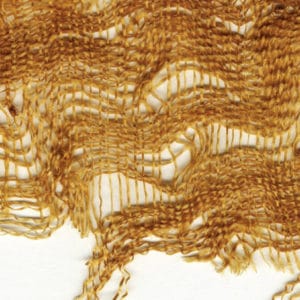
Serie of recordings made by Toshiya Tsunoda & Taku Unami in different locations and then processed through different playback speed, noise gate or parallel editing.
15,00€
Out of stock
CD
Taku UNAMI – Takahiro KAWAGUCHI
“Teatro Assente”
Taku Unami & Takahiro Kawaguchi locked in an empty theater. What do they do ? What do they listen to ? Who is there ? What the fuck is going on ?
15,00€
In stock
CD
Taku UNAMI – Devin DISANTO
A short live set from the 2015 AMPLIFY 2015: exploratory festival in NYC, a wild unexpected ride.
15,00€
In stock
CD
Reed ROSENBERG – Ethan TRIP
“Medium Rude”
Reed Evan Rosenberg-microphones, pedals, max, voice. Ethan Tripp-microphones, motors, junk. recorded in 2014 and 2015. mastered by Joe Panzner. design by Matthew Revert
15,00€
Out of stock
CD
Michael PISARO-Taku SUGIMOTO
“2 seconds-b minor-wave”
“Michael Pisaro and Taku Sugimoto are not generally closely associated, but have quite a bit in common. Both are composers whose primary instrument is the guitar, both have close ties to the Wandelweiser collective (Pisaro is a longtime member), and both have pursued their unique paths without much concern as to how the rest of the world will perceive them. 2 seconds/b minor/wave marks their first collaboration, but these aesthetic overlaps allow their independently conceived recorded parts to fit together remarkably naturally.
Michael Pisaro has been associated with the Wandelweiser collective since just after their formation in the early nineties. The departure points for his music were John Cage’s ideas of the durational frame, Ben Johnston’s work with alternate tunings, Christian Wolff’s opening of the relationship between composition and performance, and Alvin Lucier and James Tenney’s use of scientific hypotheses to explore sound phenomena. Pisaro has spent much of the last decade making field recordings, and occasionally using them in his work. Much of his recent composition, and especially the work with his primary collaborator, percussionist Greg Stuart, has concerned the massing and then the spatialization of sound to create ’homemade’ environments. Pisaro lives in Southern California, teaching at the California Institute of the Arts, running the Experimental Music Workshop, and curating his own recently launched recording imprint, Gravity Wave. This is his first recording for Erstwhile.
Currently Sugimoto’s interest focuses on composition and its performance, rather than improvisation. With Taku Unami and Masahiko Okura, Sugimoto organizes the almost-monthly Chamber Music Concert at Loop-Line and the irregular Taku Sugimoto Composition Series at Kid Ailack Art Hall, both in Tokyo. He runs the label Slub Music, which in addition to Sugimoto’s own recordings has released CDs by other Japanese musicians as well as Wandelweiser mainstays Radu Malfatti and Antoine Beuger. He has just issued the first four discs compiling the abovementioned Composition Series, a strong statement on two 2 CDs documenting his work over the past few years. This is his second recording for Erstwhile after 2000’s seminal The World Turned Upside Down, and he also took part in the AMPLIFY 2002 festival in Tokyo and is featured on the box set of that event.
2 seconds/b minor/wave is a long distance collaboration, with each musician composing and recording their own parts, before hearing what the other had done. Pulse, pitch and wave were the three areas they wanted to explore on the three pieces, and loose rules/guidelines were agreed on beforehand, as follows: ’2 seconds’ was a unit of pulse, either as a basic unit or a point of departure; ’b minor’ was a key, with Sugimoto playing harmony and Pisaro playing melody : and ’wave’, with no further details, simply whatever that word brought to mind. This was the extent of the specific discussion between the two, and thus the entirely fluid melding of the results is a testament to their deep understanding of the other’s aesthetic/s. Yuko Zama’s intuitively empathetic design is a perfect symbiotic fit for the music contained within.” label info
15,00€