
In stock
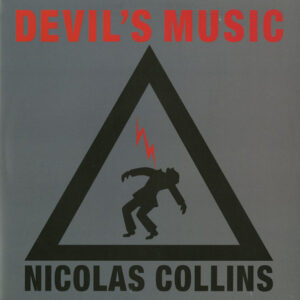
2 LP
Nicolas COLLINS
“Devil’s music”
“LP version: Two LP set in gatefold sleeve. “Devil’s Music” and more! We presents the vinyl reissue of Nicolas Collins’ live radio sampling masterpiece, originally released on vinyl in 1986, served up in all its stuttering glory, a time capsule of the mid-80s New York City airwaves, acclaimed by Philip Sherburne as “an early template for techno”, with a feel somewhat akin to scratching turntablist madness, a block-rocking party put through a blender and reassembled by body-popping demons. And more: “Real Landscape”, a 1987 “remix” recorded in Europe (originally released on cassette).”
25,00€
In stock
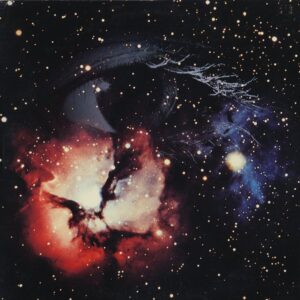
CD + mini-CD
Matsuo OHNO
“I saw the outer limits”
The vinyl version is sold out. CD version + Incl. a bonus mini-CD reissue of a rare “Play on Animals (Choju Gigaku)” + Foldout thick paper sleeve. About bonus disc : A miniature reproduction of “Play on Animals (Choju Gigaku)”, which has been reissued on 7’ (rated as one of 2011’s top releases by Byron Coley of The Wire) + Pressed on a mini-CD (8cm) and packed in a triple foldout sleeve, same style as a original 1970 issue, and is inserted in the EM1098CD sleeve. “I am not interested in sounds that already exist.” Thus spoke the esteemed “onkyo designer” Matsuo Ohno, early in his expansive, influential career. This reissue of his stellar 1978 LP “I Saw the Outer Limits” presents him at the peak of his powers, combining his mastery of classic analog tape music techniques (honed to perfection whilst providing sound design for “Astro Boy” and numerous other films and TV programs) with then-state-of-the-art analog synthesizers. This is a true under-recognized classic, a masterfully recorded, massive-sounding poetic construction of unearthly sound, an undulating, breathing behemoth, with Ohno’s galaxy moving beyond "sounds that already exist" in search of new sonic spaces. Matsuo Ohno was born in Kanda, in central Tokyo, in 1930. The relentless bombing onslaught of the war years, the near-apocalyptic conditions, were defining, formative forces. As a youth he was interested in surrealism and philosophy, and was uninfluenced by music and musicians — an exception being the electronic works of Karlheinz Stockhausen, especially his "Gesang der Jünglinge" ("Song of the Youths"), which inspired him further in his quest to create "unearthly sounds." Other early influences were the film director Fumio Kamei and the dramatist Michio Kato; rather than viewing himself as a musician, and never studying under any masters, Ohno has forged his own path as the original "onkyo sound" artist, defining himself as an "onkyo designer" in the 1960s. His innate independent streak manifested itself early on, when, chafing under creative restrictions and unhappy with the low esteem in which his efforts were viewed by his hierarchical "betters", Ohno left a prestigious post at NHK, Japan’s national broadcaster. But of course his skills were in high demand and he was extremely busy as a freelance sound designer for a wide range of films, television shows and radio programs, developing his ear and his technical savvy. In 1963 he began his most famed efforts, providing sound design for the legendary Japanese animation series "Astro Boy," with Takehisa Kosugi as his assistant. The 1978 LP "I Saw the Outer Limits," reissued here, was the first full-length non-soundtrack release by Matsuo Ohno. The record was a huge step for him, being non-programmatic music, designed to stand alone, free of visual imagery. Ohno himself has stated that he was uninterested in notions of message, expression and representation. Ohno had nothing to do with the title and subtitle of this album. Shinji Hinoki, a producer at Toho Records, approached Ohno with the offer of releasing an album; Hinoki perhaps envisioned something to cash in on the popularity of the synth-driven elements of Pink Floyd — what he got was something much more abstract and otherwordly. Hinoki supplied both title and subtitle, including the latter’s variant spelling of "marijuana," a ploy to evade Japanese censors. On these recordings, made at Sogosha in Tokyo, his private studio, Ohno used the AMS Synthi AKS, which at that time in Japan carried a price close to that of a family car, the newly released Roland System 100 (three of these, in fact), and a custom-made synth. He combined these synthesizers with his virtuosic control of analog tape recording techniques, resulting in a magnificent LP. The original vinyl release was, however, somewhat marred by 50 Hz hum generated during the mastering process at Toho Studios. This EM reissue of "I Saw the Outer Limits" restores the masterpiece to its primal, clear, massive glory.”
22,00€
In stock
CD
Yoshi WADA
“Singing in unison”
Singing in Unison is the latest in a series of recordings from acclaimed sound artist, composer and performer Yoshi Wada. Recorded live over two nights, March 14 and 15, in 1978, at New York City’s legendary performance space The Kitchen, "Singing in Unison" is a dramatic yet meditative work: modal improvisations for three male voices, singing, with great gravitas, in purposeful unison. These previously unreleased recordings, featuring vocalists Richard Hayman, Imani Smith and Wada himself are extremely powerful, with a glacial majesty and a sense of timeless wonder. Wada’s earliest musical memories are of hearing Zen Buddhist ritual chants in his native Japan, and those memories are reflected in the deep vocalisations here; also evident is Wada’s period of intense study with Indian master singer Pandit Pran Nath. Thus there is a definite "Eastern" feeling to "Singing in Unison", with further elements added by Imani Smith’s Sufi background and Wada’s interest in Eastern European vocal styles, but the music is also informed by Wada’s experiences in the Fluxus movement and as a member of the New York avant-garde community. The edgy atmosphere of 1970s New York City pervades these recordings, adding a hint of menace. Despite the fact that this is purely vocal music, fans of the slow-moving heaviosity of Sunn 0))) will appreciate “Singing in Unison”. It is available in two formats: a single CD of the March 15 performance, with gatefold sleeve; or a triple LP set featuring a complete version of both performances, March 14 and 15. “Singing in Unison” is a massive, monumental, monolith of vocal sound. Unstoppable! CD version: Single CD for the March 15 performance. Cardboard /gatefold paper jacket + liners.
16,00€