
In stock

CD
HOX
“Duke of York”
Hox is Edvard Graham Lewis (Wire/Dome/He Said/He Said Omala/Ocsid) and Andreas Karperyd (Omala/He Said Omala/Woodwork). Duke of York is their second release following on from the highly acclaimed ‘it-ness’ in 1999. Duke of York a bittersweet contemporary electronic pop record which could only exist as a result of the unison of these particular, peculiar souls.
At once tender, skewered, sophisticated and unsettling Duke of York is a both a journey through the collective minds of Lewis and Karperyd and a substantial representation of their individual talents. Whilst both tackling the sonic side of the outing Lewis also presents pleasantly paranoid lyrics, Karperyd drapes it all in a distinguished design. This combination presents a substantial study of the sonically impressive, visually inviting and songs rich in brooding, dark atmosphere and melodic content.
The production retains the mood of classic Lewis output whilst achieving a very fresh and radical approach to electronics and studio production with Karperyd. Duke of York is another significant chapter in Lewis’ distinguished and uncompromising career whilst adding to the intriguing output of Karperyd. As with the best experimental pop records, Duke of York, unfolds with repeated listening, revealing infinite charms.
At once tender, skewered, sophisticated and unsettling Duke of York is a both a journey through the collective minds of Lewis and Karperyd and a substantial representation of their individual talents. Whilst both tackling the sonic side of the outing Lewis also presents pleasantly paranoid lyrics, Karperyd drapes it all in a distinguished design. This combination presents a substantial study of the sonically impressive, visually inviting and songs rich in brooding, dark atmosphere and melodic content.
The production retains the mood of classic Lewis output whilst achieving a very fresh and radical approach to electronics and studio production with Karperyd. Duke of York is another significant chapter in Lewis’ distinguished and uncompromising career whilst adding to the intriguing output of Karperyd. As with the best experimental pop records, Duke of York, unfolds with repeated listening, revealing infinite charms.
12,50€
In stock
2 LP
GOODIEPAL
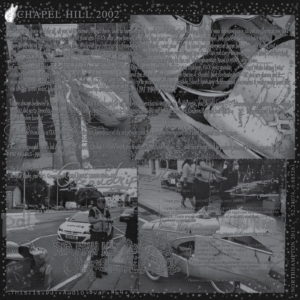
“Red Man K’s Bedrifter – Goodiepal Live, Chapel Hill 2002”
In 2001, Peter Rehberg (then of Mego) asked Parl Kristian Bjørn Vester aka Goodiepal while visiting Austria, if he would be interested in “doing something” for the label. Despite meeting on numerous occasions at various events and happenings around Europe nothing was delivered. One hot August day in 2013, a large package arrived containing lacquers for a double vinyl LP. Here it was! The Goodipal Mego album delivered as lacquers and not a wetransfer link.
To actually hear the audio the lacquers were sent to plant and made into test pressings, which revealed 3 looong sides of audio from a concert in Chapel Hill, NC in 2002. Not exactly 11 in years in the making but more like 11 years in the waiting. The fourth side is made up of a letter to Peter Rehberg etched onto the vinyl explaining amongts other things ’the longer a message have to travel over time the more importance you can add to it’. With this in mind this release has no ’digital footprint’ and is made available only as a physical vinyl LP in gatefold cover.
“And it came to my mind like a flashlight: Goodiepal is not an artist. He is an art critic. Or to be more precise: an art art critic, for he is using his art criticism as an art form. But of course, he would criticise this definition. Ahoi!”
Felix Kubin
To actually hear the audio the lacquers were sent to plant and made into test pressings, which revealed 3 looong sides of audio from a concert in Chapel Hill, NC in 2002. Not exactly 11 in years in the making but more like 11 years in the waiting. The fourth side is made up of a letter to Peter Rehberg etched onto the vinyl explaining amongts other things ’the longer a message have to travel over time the more importance you can add to it’. With this in mind this release has no ’digital footprint’ and is made available only as a physical vinyl LP in gatefold cover.
“And it came to my mind like a flashlight: Goodiepal is not an artist. He is an art critic. Or to be more precise: an art art critic, for he is using his art criticism as an art form. But of course, he would criticise this definition. Ahoi!”
Felix Kubin
19,00€
In stock
CD
Marcus SCHMICKLER
“Palace of marvels (queered pitch)”
Composed by Marcus Schmickler. Recorded and Mastered at Piethopraxis, Köln. January-August 2010. Artwork by Tim Berresheim. Marcus Schmickler’s new release following his acclaimed ’Altars of Science’ is a must have for those interested in the rising field of contemporary Computer Music. It reconfirms Schmickler’s interest in the liaison of sound, phenomenology and cognitive sciences. Schmickler therefore utilizes a new interpretation of 1960’s discovery, the Shepard-tone, discovered by Roger Shepard, which creates the auditory illusion of a tone that continually rises or descends in pitch yet ultimately seems to get no higher or lower. The phenomenon first got imposed to the music world by James Tenney in his piece "For Ann Rising". Similarly, Schmickler has a musical take on the subject by creating Arpeggios, short sequences of tones creating an akin effect. Schmickler’s interest in the field got fired by Ernst Gombrich’s essays on "Art and Illusion" questioning the very foundations of our understanding of the history of the image and it’s representation of our world. Adequately Schmickler’s work ever since can be seen as a play within an anthropology of music. Here in terms of it’s very fundamental parameters rhythm, sound and pitch, as well as music practice wit it’s socio-economic implications. Beyond that, the title Palace of Marvels was found at French intellectual Jacques Attali, who, in his critically acclaimed book, "Noise: The Political Economy of Music", cites one of Leibniz’s little known but "extraordinary" texts, "Drôle de pensée touchant nouvelle sorte de représentation," in which the philosopher describes the "Palace of Marvels." The Palace of Marvels is Leibniz’s idealization of a perfect political organization, which is built in such a way that the master of the house is able to hear and see everything that is being said and done in the premises without himself being perceived by his subjects. Leibniz’s vision of disciplinary society not only predates Foucault’s subsequent versions of surveillance mechanism, the Panopticon, but it also conceptualizes a more effective and absolute form of power through eavesdropping, censorship, and recording, as well as surveillance through visual means. Listening in on, ordering, transmitting, and recording noise are at the heart of the modern State. The idea for the material was originally conceived for a collaborative Installation-piece together with arts-collective Interpallazo. The technical application was realized with the kind assistance of Prof. Dr. Alberto de Campo.
12,00€
In stock

CD
ATOM™ & Marc BEHRENS
“Bauteile”
Recorded on Earth, 1987-2013. Produced, assembled, edited, mixed and mastered at Bowman Suite, Santiago, Chile. Violin: Carlos Zingaro. Design: Volkmar Hoppe and the artists. The over 70 minutes of “Bauteile” (German for "construction parts") were recorded from 1987 through 2013 and edited into a continuous flow over the last three years. Atom™ and Marc Behrens met during the heyday of the German Techno movement and have since ever pursued extensive research in all areas of contemporary music. Their findings, a sonification of their investigations, which span effectively two centuries of musical development, are now released as an album for the first time by Editions Mego.
12,50€
In stock
CD
COH
“Music vol.”
Written and recorded in jan-dec 2015. All music by Ivan Pavlov/COH.
Artwork by Tina Frank.
Opening a sonic space that leads into delicate subconscious spheres, Ivan Pavlov aka COH has created his most sophisticated work up to date. “Music vol.” is a piece of gentle acoustic excitement. Evolving around concepts of silence and sound in a profound sense, each track reveals to the listener a different emotional chamber. The intimacy provoked is deriving from the fact that VOL. is meant literally here. Similar to classical music, Pavlov is putting variations of volume and soft progressions of sound to the fore. It is these gentle, silent tones that force us to pay attention to the inner qualities of each sound, its colour and vibration, while simultaneously revealing its tactile and corporeal qualities. At the same time, COH is creating atmospheric settings that invite us into complete immersion. A condition, close to meditation is provoked, making us intuitively aware of slight alterations. Subtle sensations arise from the exquisite affective dramaturgy that is operating here. Reminiscent of minimalistic film scores, COH is elaborating a very sparse sounddesign, creating a painstakingly continuous arc of suspense, never to be dissolved.
Artwork by Tina Frank.
Opening a sonic space that leads into delicate subconscious spheres, Ivan Pavlov aka COH has created his most sophisticated work up to date. “Music vol.” is a piece of gentle acoustic excitement. Evolving around concepts of silence and sound in a profound sense, each track reveals to the listener a different emotional chamber. The intimacy provoked is deriving from the fact that VOL. is meant literally here. Similar to classical music, Pavlov is putting variations of volume and soft progressions of sound to the fore. It is these gentle, silent tones that force us to pay attention to the inner qualities of each sound, its colour and vibration, while simultaneously revealing its tactile and corporeal qualities. At the same time, COH is creating atmospheric settings that invite us into complete immersion. A condition, close to meditation is provoked, making us intuitively aware of slight alterations. Subtle sensations arise from the exquisite affective dramaturgy that is operating here. Reminiscent of minimalistic film scores, COH is elaborating a very sparse sounddesign, creating a painstakingly continuous arc of suspense, never to be dissolved.
12,50€
Out of stock
CD
Oren AMBARCHI
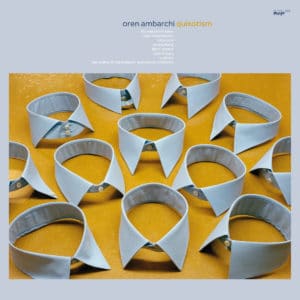
“Quixotism”
Recorded with a multitude of collaborators in Europe, Japan, Australia and the USA, Quixotism presents the fruit of two years of work in the form of a single, LP-length piece in five parts. Ambarchi’s work in recent years has evinced an increasing fascination with the possibilities of combining abstract sonic textures with rhythm and pulse, whether in his drumming with Keiji Haino, the subtly driving ride cymbals provided by drummer Joe Talia in their work together, or the motorik grooves of Sagittarian Domain (Editions Mego, 2012). Quixotism takes this aspect of Ambarchi’s recent work to the next level: the entirety of this long-form work is built on a foundation of pulsing double-time electronic percussion provided by Thomas Brinkmann. Beginning as almost subliminal propulsion behind cavernous orchestral textures and John Tilbury’s delicate piano interjections, the percussive elements (elaborated on by Ambarchi and Matt Chamberlain) slowly inch into the foreground of the piece before suddenly breaking out into a polyrhythmic shuffle around the halfway mark, being joined by master Japanese tabla player U-zhaan for the piece’s final, beautiful, passages. The pulse acts as thread leading the listener though a heterogeneous variety of acoustic spaces, from the concert hall in which the Icelandic Symphony Orchestra were recorded to the intimacy of Crys Cole’s contact-mic textures. Ambarchi’s guitar itself ranges over this wide variety of acoustic spaces, from airless, clipped tones to swirling, reverberated fog. Within the complex web Ambarchi spins over the piece’s steadily pulsing foundation, elements approach and recede, appear and reappear, in a non-linear fashion, even as the piece plots an overall course from the grey, almost Nono-esque reverberated space of its opening section to the crisp foreground presence of Jim O’Rourke’s synth and Evyind Kang’s strings in its final moments. Formally indebted to the sidelong workouts of classic Cologne techno, the long-form works of composers such as Eliane Radigue, and the organic push and pull of improvised performance, Quixotism is constantly in motion, yet its transitions happen slowly and steadily, so that they are often nearly imperceptible, the diverse elements which make up the piece succeeding one another with the logic of a dream.
Anyone who follows Ambarchi’s work knows that it has many facets: explorations of the outer limits of rock with Keiji Haino, psychoacoustic interference and sizzling harmonics in his solo performances, delicate improvisations with Keith Rowe or John Tilbury. To all these projects, Ambarchi brings his particular sensibility, patiently allowing sounds to develop on their own terms without forsaking their intrinsic physical and emotional power. Similarly,
although Quixotism is shaped by its many contributors, the resulting sound world is unmistakably Ambarchi’s own. His most substantial solo release since Audience of One (Touch, 2012), Quixotism represents the summation of Ambarchi’s work over the last few years while also pointing to the future.
Oren Ambarchi, guitars and percussion with Thomas Brinkmann, computable drums with an application to the Entscheidungsproblem, Matt Chamberlain, drums & electronics, Crys Cole, contact mics & brushes, Eyvind Kang,bowed gender & violas, Jim O’Rourke, synths, John Tilbury, piano, U-zhaan, tabla,
Ilan Volkov & the Icelandic Symphony Orchestra. Recorded 2012-2014 in Cologne (Max Ernst Studios), Reykjavik (Harpa), Melbourne, Seattle (Avast! Studios- session co-produced & engineered by Randall Dunn, London, Los Angeles (Cyclops Sound Studio) and Tokyo (Steamroom, engineered by Jim O’Rourke). Mixed Dec 2013 & March 2014 at Chinatown, Melbourne by Joe Talia and Oren Ambarchi. Mastered at Moose, Melbourne March-April 2014 by Byron Scullin. Vinyl cut by Rashad Becker & D&M, Berlin, June 2014. Photography by Estelle Hanania. Design by Stephen O'Malley.
Anyone who follows Ambarchi’s work knows that it has many facets: explorations of the outer limits of rock with Keiji Haino, psychoacoustic interference and sizzling harmonics in his solo performances, delicate improvisations with Keith Rowe or John Tilbury. To all these projects, Ambarchi brings his particular sensibility, patiently allowing sounds to develop on their own terms without forsaking their intrinsic physical and emotional power. Similarly,
although Quixotism is shaped by its many contributors, the resulting sound world is unmistakably Ambarchi’s own. His most substantial solo release since Audience of One (Touch, 2012), Quixotism represents the summation of Ambarchi’s work over the last few years while also pointing to the future.
Oren Ambarchi, guitars and percussion with Thomas Brinkmann, computable drums with an application to the Entscheidungsproblem, Matt Chamberlain, drums & electronics, Crys Cole, contact mics & brushes, Eyvind Kang,bowed gender & violas, Jim O’Rourke, synths, John Tilbury, piano, U-zhaan, tabla,
Ilan Volkov & the Icelandic Symphony Orchestra. Recorded 2012-2014 in Cologne (Max Ernst Studios), Reykjavik (Harpa), Melbourne, Seattle (Avast! Studios- session co-produced & engineered by Randall Dunn, London, Los Angeles (Cyclops Sound Studio) and Tokyo (Steamroom, engineered by Jim O’Rourke). Mixed Dec 2013 & March 2014 at Chinatown, Melbourne by Joe Talia and Oren Ambarchi. Mastered at Moose, Melbourne March-April 2014 by Byron Scullin. Vinyl cut by Rashad Becker & D&M, Berlin, June 2014. Photography by Estelle Hanania. Design by Stephen O'Malley.
12,50€