
In stock
LP
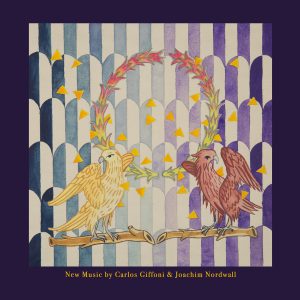
Carlos GIFFONI & Joachim NORDWALL
“New Music”
A meeting of two uncompromising sound artists, New Music fuses pulsating electronic rhythms, immersive drones, and abstract textures into a vivid, physical listening experience. Rising from the outer fringes where abstract techno, noise, and electro-acoustic composition converge, both artists channel their distinct sonic vocabularies into a shared space of tension and transformation. Giffoni’s deep synth drones collide with Nordwall’s ritualistic sense of structure and rhythmic, creating a sound that feels at once mechanical and organic, grounded and cosmic. Moving between dense rhythmic sequences and vast stretches of tonal drift, New Music unfolds like a continuous exploration of energy and decay - music that challenges the boundary between motion and stasis, chaos and control.
For listeners of forward-thinking electronics, this collaboration stands as a compelling testament to the power of sound and the unique chemistry that emerges when two creative worlds intersect. Nordwall explains: “Even though we spent a lot of time together, we never really talked about making music together. But when Carlos visited Sweden, I asked if he’d be into it, as I felt our recordings were starting to sound like they came from the same planet. He kindly agreed and sent me a batch of files to work on. That became New Music - our music, our shared sound.”
Carlos Giffoni is a Venezuelan-born experimental musician and composer known for his visceral approach. A central figure in the 2000s New York noise and experimental scene, he founded No Fun Fest and has collaborated with artists such as Merzbow, Prurient and Jim O’Rourke.
Joachim Nordwall is a Swedish artist and musician exploring industrial, drone, and minimalist, repetitive electronics. As head of iDEAL Recordings and a member of projects like The Skull Defekts and Organ of Corti he remains a key force in Sweden’s experimental music landscape.
22,50€
In stock

CD
FNTC
“Opera”
he experimental landmark Opera by FNTC returns in a remastered CD edition, nearly forty years after its original cassette release on Staalplaat in 1987. A striking document of Europe’s late 80s cassette underground, Opera captures the collective at their most adventurous - merging spontaneous composition, sound collage and performance art into a single immersive experience. As a member of the Fluxus movement, Willem de Ridder brought his conceptual sensibility to the project. Cora Emens, known for her erotic performances, contributed a distinctive vocal presence. Nick Nicole expanded the palette using everyday instrumental objects, while Hessel Veldman shaped and structured the work’s unique soundscape. Also featuring Jon Rose on violin, the recording remains a testament to the fearless creativity that defined the experimental music scene of its time.
Recorded during the summer of 1986, Opera showcases FNTC’s distinctive approach to instant composing and live sound construction. Conceived as a three-dimensional ‘hearplay’, the original performance unfolded across a multi-speaker setup, with the audience blindfolded and reclining on couches. Following its cassette release, Opera was featured in the All Chemix Radio Series, issued by Staalplaat and the Radio Art Foundation on tape and broadcasted internationally. It also became a part of FNTC’s European Instant Composing Tour throughout the late 1980s.
Now available on CD for the first time, this edition restores the full depth and atmosphere of the original performance. The accompanying artwork, discovered in Willem de Ridder’s archive, features a collage created by De Ridder and Peter Pontiac. Faithful to the spirit of the avant-garde and the legacy of Dutch cassette culture, Opera stands as a vivid reminder of a time when pushing boundaries defined the underground.
14,00€
In stock
CD
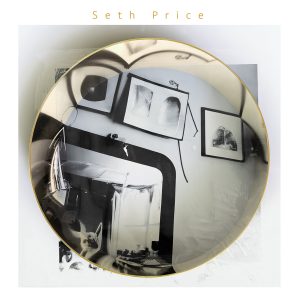
Seth PRICE
“Inner Storm”
Seth Price is an American contemporary artist known for his conceptually driven, multidisciplinary practice spanning video, music, sculpture and writing. His work explores circulation, media systems and the production of images and meaning in contemporary culture. Price has exhibited widely at major international institutions and is also recognized for his influential essays on art and distribution.
Music has long been central to Price’s practice. Beginning in 1994 with a 4-track recorder, his approach was rooted in experimentation, using field recordings, found sounds, feedback and tape loops. For over a decade, music functioned as both an experimental laboratory and an undercurrent to his film and video work. “It was really the emotional soundtrack to my life.”
That sensibility returns here with renewed focus. Inner Storm is rooted in a deeply personal moment and unfolds as an intense document, charged with immediacy. The album comprises four pieces built from single-pass improvisations using a replica of an early synthesizer, requiring real-time manual control. A constant LFO pulse acts as an internal rhythm, unifying the compositions. Effects pedals are adjusted on the fly, making each moment of sound inseparable from the act of its creation. More than a return to music, Inner Storm reaffirms its role within Price’s broader practice: a space where process, emotion and time converge.
14,00€
In stock
CD
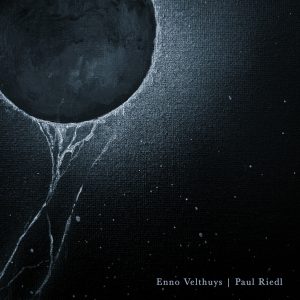
Enno VELTHUYS – Paul RIEDL
s/t
A bridge between generations of ambient exploration, this split release unites two artists connected through mood, texture, and introspection: Enno Velthuys, the late Dutch composer and visual artist whose melancholic ambient works defined a quiet corner of the 1980s cassette underground and Paul Riedl, best known as the creative force behind visionary metal band BLOOD INCANTATION, who here reveals a parallel world of deep ambient sound. Together, these recordings form a contemplative journey across aesthetics: a meeting of two artists who, though separated by time, share a commitment to sound as emotional architecture.
Velthuys’s contributions are drawn from the EXART vaults and carefully selected by Hessel Veldman to serve as an appetizer for an upcoming LP of more unreleased material on Stroom Records. Across four cassettes, Velthuys crafted a deeply personal sound - minimal, dreamlike and steeped in solitude - that would later come to be recognized as a cornerstone of European ambient music. The pieces presented here continue that fragile lineage: meditative, intimate and quietly transcendent.
Flipping over the record, melancholy turns into total darkness and time seems to stand still. Massive slabs of sound and tar-coated melodies emerge from the depths. In contrast yet in harmony, Riedl’s side of the album presents archival recordings that explore a fascination with cosmic sound and isolation. While known for exploring the outer reaches of metal, Riedl has long been devoted to ambient and experimental composition. His selections for this release, curated to complement the music of Velthuys, trace a dialogue between decades and sensibilities, blending analog warmth and deep atmospherics with a sense of timeless drift.
14,00€
In stock
CD
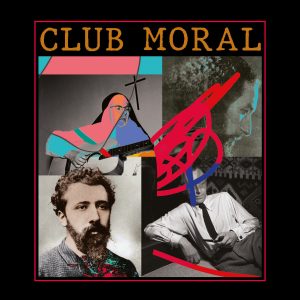
CLUB MORAL
s/t
Club Moral is an organization founded by artists Anne-Mie Van Kerckhoven (AMVK) and Danny Devos (DDV) on January 1st, 1981, in Antwerp, Belgium. From 1981 until 1987, Club Moral functioned both as an industrial band and a venue. The venue, located in Antwerp, became a hub for underground culture, hosting numerous exhibitions, happenings and live performances by artists like Produktion, Boyd Rice, John Duncan and Coupe de Grace. The first event at Club Moral took place on June 19th, 1981, featuring État Brut performing live together with DDV and Mécanique Végétale. Later that year, on September 19th, the band Club Moral made its live debut. They quickly gained a reputation for their confrontational performances, provocative imagery and uncompromising attitude. Between 82 and 87, the group released a series of legendary cassettes, filled with raw industrial sounds, primitive power electronics, noise and conceptual art.
In 1989, the band remained active and recorded their first LP for Cthulhu Records. Around the same time, Frank Gorissen began producing electronic music and hosting a radio program called Radio Militia. He invited Club Moral to perform a live radio session in his studio, where the band played a mix of new versions of familiar tracks and improvised pieces. The recordings were never released, until 2024, when Frank rediscovered the original tapes and produced a new master that perfectly captures the raw energy of the performance. Club Moral agreed on releasing it as an album and AMVK designed the cover art, featuring images of people who were born or died on the date of the performance, March 29th.
In the late 1990s, DDV was a teacher-in-residence at the art school where I was studying. I enrolled in his performance workshop and on the first day, he showed us videos of extreme performance art and then challenged the group to do similar actions. His determination and hardline approach left me impressed and it became an inspiring and intense week for me personally. I’m happy and proud to be able to release this Club Moral CD as a follow up to the Lonely Weekends 7” from 2006.
14,00€
In stock
In stock
LP
Willem de RIDDER & the RADIO ART FOUNDATION
“Radiola”
Between 1978 and 1984, Fluxus artist Willem de Ridder did a weekly radio show called De Radiola Improvisatie Salon. Listeners were invited to send in cassettes recorded at home and would get guaranteed airtime. Willem never listened to any of the tapes in advance. No censorship or personal taste were involved, just total artistic freedom. Long before social media existed, he understood that just providing a platform could ignite boundless creativity. Willem was a visionary, always pushing the boundaries of art and mainstream culture, while his interactive radio shows were breaking down the barriers between listeners and producers.
Unknown home tapers and independent artists would share their freshly recorded bedroom experiments with the world and Radiola became a catalyst for the rising Dutch tape scene. When the show gained popularity, broadcasts became open to the public and people would visit the salon to submit their latest cassettes in person. From these live events a network of independent labels emerged, releasing and exchanging cassettes. Punk was fading away but a new alternative to the mainstream was born.
Nobody seems to know what happened to the Radiola master cassettes, but somehow a few boxes survived and were archived by Marco van Dalfsen in 2022. We went through hours and hours of material and eventually compiled this album. A few names might sound slightly familiar, but our goal was to unearth the most obscure hidden gems of Dutch home taping culture. The result is an eclectic mix of ambient, industrial, lo-fi weirdness and experimental music and offers a unique glimpse into a very specific, but still relevant piece of the past.
23,00€
Out of stock

CD
FANATIC (FNTC)
“Europe in Flames”
The word Fanatic comes from the Latin fanum, temple. A fanatic is someone possessed, by God or the Devil. From 1985 until 1989 Willem de Ridder, Hessel Veldman, Cora Emens and Nick Nicole were the members of post-art ensemble FANATIC (or later FNTC). Willem and Hessel already worked together in the late 70s and early 80s on various radio shows and performed with musicians like Alvin Curran, Francis Marie Uitti and Jon Rose. Together with Cora and Nick they started FANATIC to focus on field recordings, intimate happenings and theatrical storytelling.
As a multi-media project FANATIC was not just obsessed by sound but dedicated to live rituals, producing videos, cassettes and radio plays like Europe in Flames, the pinnacle of this album. It’s a multi-layered piece for which the foundation was recorded by Willem on a boat trip to England. One of his spontaneous field recordings that sounded more like an intricate studio production. In a house near the North Sea on a windswept Autumn evening in 1985 percussion, voices, synthesizer and sound effects were added and when their friend and collaborator William Levy arrived, he listened to the freshly recorded wall of sound, took a short poem from 1978 out of his pocket and started reciting. This final layer of sound complemented the audio perfectly and the result was published on the Neuropa cassette in 1986 and is still chillingly relevant in 2025.
Their haunting, meditative and immersive audio pieces and challenging performances evoke comparisons with groups like COUM Transmissions and Throbbing Gristle. Bleak and raw, but also sensual and poetic. FANATIC released 3 cassettes in the 80s with more material to be discovered in the EXART archives. In addition to the classic Europe in Flames, we dug up 2 unreleased pieces from 87 for a long overdue conspectus.
200 copies. CD wallet with 8 page booklet including photos from a scrapbook, found in Willem de Ridder’s archive.
14,50€
In stock
LP
Robert TURMAN
“Distant Dosage”
2025 repress
Turman first came onto the industrial scene in the late 70’s as the ominous ‘other half’ of legendary noise outfit NON. Shortly after recording the classic 1977 single Mode of Infection, Turman went on to pursue his own unique vision as a solo artist. Fusing every possible influence at his disposal while laying his ideas down on self-released cassettes like Flux (1981), Spirals of Everlasting Change (1987), Way Down (1987) and the massive Chapter Eleven cassette box set (1988). After a hiatus Turman resurfaced in 2005 to team up with seminal noise musician Aaron Dilloway. Since then, he has been gradually adding new titled to his already impressive discography.
For this archival release Turman selected 7 tracks that were recorded between 1980 and 1984. A welcome supplement to his library of avantgarde music that was released in the 80s. This album fits in nicely between the early industrial noise, the long-form minimalism of Flux and the rhythmic industrial of Way Down. Focusing on slowly shifting hypnotic loop-based layers of sound, it covers a specific side of Turman. It feels like there’s a direct link to his earliest works but it’s also a precursor to some pieces that were recorded much later. A missing link that finally gives us the opportunity of a complete overview of his early audio work.
All 7 tracks on this album have a connection to the written word in the form of a poem. Scans of the original typewriter poems are included together with collages and drawings from this specific time frame to create an essential and singular piece of art.
250 copies on clear vinyl with insert.
21,00€