
In stock
LP
A.R LUCIANI
“Elettroencefalogramma”
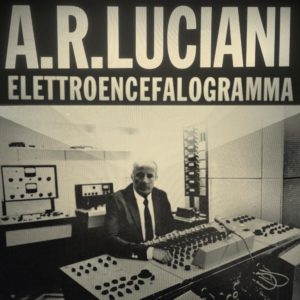
‘Elettroencefalogramma’ scans the full breadth of electronic composition by Italian musical mastermind Antonino Riccardo Luciani, who’s perhaps best known for his library records, but on the showing here had a strong, prescient line in mind-bending, fathoms-deep experimental and academic work with tape and early, pre-synth devices.
Awarded unprecedented access to polymath composer “Tony” Luciani’s archive of inter-disciplinary work, Finders Keepers’ Andy Votel follows his pressing of Maria Teresa Luciani’s ‘Sounds of The City’ with a first compilation survey of her sibling’s vast catalogue, newly issued via the Dead-Cert label he curates alongside Sean Canty and Doug Shipton. The set falls deep within the label’s remit of reissued and previously unreleased work by overlooked and undocumented pioneers of 20th century sound, revealing a distinctive mix of material that nods to contemporary, tape music, neo-classical, jazz, electro-acoustic and counterpoint composition.
Drawn from original tapes recorded during the 1970s, ‘Elettroencefalogramma’ spans the heyday of Luciani’s work, before synth music was popularised. In this sense it’s worth noting Luciani’s links with Teresa Rampazzi and the pioneering electroacoustic group NPS - and namely Serenella “Serena” Marega - with whom he shares a strong affiliation toward embracing the possibilities of new music at the dawn of an unprecedented sonic epoch.
There’s a sense of being in transition between worlds and eras in the opening blend of melancholy strings and bubbling electronic rhythm ‘Battery Farm’, and likewise the cranky mixture of bestial growls and dissonance in ‘The Zoo’, while the rattly rhythm of ‘Offices’ uncannily recalls Trunk’s recent issue of ‘Mechanical Keyboard Sounds’ from the modern day. But Luciani excels at quieter, introspective styles, as with the flute-led vision of ‘Desol 2’, and most remarkably in the stygian, primitive drum machine pulse and clammy string droens of ‘Forest of Chimneys’, which is surely crying out for imagery of Satanic mills, while the rupturing tape of ‘Bombardment’ sets him firmly in a lane of advanced Italian noise that connects him to Gruppo’s Roland Kayn and Maurizio Bianchi.
21,00€
In stock
2 LP
Roger DOYLE
“Thalia”
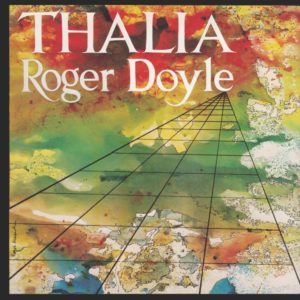
The concrète riddle of ’Thalia’ is the Nurse With Wound-listed and cultishly desired Roger Doyle album withdrawn by CBS Classics shortly after its release in 1978. Less than 200 copies reached shops some three years after his distinctive debut ‘Oizzo No’ (1975) - which was reissued by Finders Keepers Cacophonic label to receptive ears in 2018 - and in retrospect the resurfacing of ‘Thalia’ follows that wonderfully odd LP to cement Doyle’s place among the outsider pioneers of ‘70s electronic and avant-garde tape composition
Arguably one of the most important experimental records to emerge from 20th century Ireland, ‘Thalia’ is coveted for its inventive, unpredictable, near-psychedelic brilliance, yet has remained scarce due to major label politics, meaning listeners had to fork out a ton for a 2nd hand copy.
Now readily available on its intended format, the keening, breezy logic and abstract theatric dramaturgy of Doyle’s work on ‘Thalia’ has been reshuffled to highlight its apparent surreality and frolicking apparitions. Combining his studious research and prep work at Utrecht Institute of Sonology (then home to Roland Kayn, Leo Küpper, Jaap Vink) and the studios of Finnish Radio (Yleisradio) Helsinki with a finely honed improvisational intuition at his home studio in Malahide, Dublin, the record yields a poetic diffusion of electro-acoustic phantasms meshed with politicised and unsettling field recordings, alongside a mad, experimental solo piano piece.
The 3-part title track is the biggest attraction on ‘Thalia.’ Acting as a sort of shamanic extension of Gaelic bardic traditions, Doyle guides the listener through labyrinthine dimensions, vacillating tape FX with stark synth pulses, fragments of ‘Danny Boy’ and the unsettling sound of a woman wailing or even keening (a lament for the dead) in only the first minutes, the piece spirals over two sides between obtuse electronics and jump-cuts to melancholy strums, airborne melody and rabid dissonance with the natural quality of Ireland’s ever-shifting interplay of sun, rain and clouds. The relatively brief ‘Baby Grand’ follows as a sort of playful solo piano palate cleanser for the LP’s purest electronic piece ‘Solar Eyes’, which surely recalls the iridescent expanses of Roland Kayn or Jaap Vink.
24,00€