
In stock
DVD
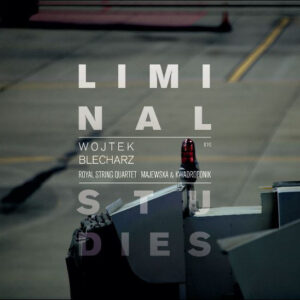
Wojtek BLECHARZ
“Liminal studies”
Wojciech Blecharz is somewhat an exhibitionist. An emotional one, of course.
With his music, he doesn’t create a vision of the contemporary world burdened with disasters, being neither a “digital indigent” nor a fan of algorithmic passages. He’s not even recognized as a political rebel who discloses his outlook on life between the notes. In the centre of his interest remains what’s closest to him – the human psychological condition in the context of experiencing crises and break-ups, traumatic memories. And he is not ashamed of deriving from life experiences, talking about them in interviews, private conversations, programmatic notes but also through musicians performing on stage. He, therefore, creates music that is emotional, even autobiographical and he has no problem with sharing it with the wider audience.
Born in Gdynia (Poland) in 1981, in 2006 he graduated with honors from Frederic Chopin Music Academy in Warsaw (Master of Arts), in 2015 received a Ph. D. in music composition at University of California San Diego. Since 2012 Blecharz has been curating the Instalakcje music festival at Warsaw’s Nowy Theater, featuring non-concert music: sound installations, performance installations, sound sculptures, music videos, music theater and Blecharz has also directed both of his opera-installations Transcryptum (2013) commissioned by Grand Theater National Opera in Warsaw and Park-Opera (2016) commissioned by Theater Powszechny in Warsaw. Currently preparing the third opera installation Body-Opera commissioned by Huddersfield Contemporary Music Festival (premiere November 2016).
Recently composed pieces for Kwadrofonik Ensemble (Warsaw), Forbidden City Chamber Orchestra (Beijing), Klangforum Wien (Vienna), Royal String Quartet (Warsaw), Aviva Endean (Melbourne), International Contemporary Ensemble (New York), Musiques Nouvelles (Brussels).
Original price was: 13,00€.5,00€Current price is: 5,00€.
In stock
CD
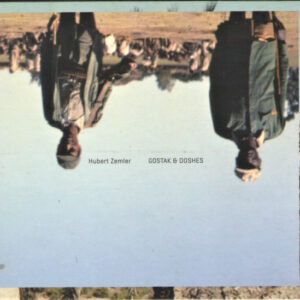
Hubert ZEMLER
“Gostak & Doshes”
It’s Hubert Zemler’s second solo album. In opposition to the fully improvised concert album Moped, this one is filled with pieces which are pre-composed to a much greater extent.
The album also contains two compositions inspired by electronic music, particularly by works of the ensemble Suaves Figures (Piotr Kurek and Sylvia Monnier). In these pieces, Hubert Zemler transcribed the electronically generated sounds to acoustic instruments, supported by an excellent percussionist Mi osz P ka a (Kwadrofonik, Mitch & Mitch, Hob Beats Percussion Group) playing the vibraphone.
The material was registered during night recording sessions in the basement of the Camaldolese church in the Bielany district of Warsaw the place of amazing acoustics with Sebastian Witkowski as a sound engineer.
5,00€
In stock

CD
Slawomir KUPCZAK
“Report”
“You’ve been carrying this suicide for the twentieth year and for the twentieth year in a row you still don’t know what to do about this suicide you’ve been nestling in yourself for twenty years - and, after twenty years now, you still don’t know what to do about the suicide you’ve been carrying for forty years. You go to the kitchen, you make coffee, you forget where you are, your thoughts concentrate only on the defeat you’ve been living with for sixty years, that after sixty years you still have no idea what to do with the suicide you’ve been carrying in yourself for eighty years. And you move on. As if nothing ever happened.” Bô t Records i Niklas Records proudly present a new radio play by S awomir Kupczak (an outstanding young Polish composer of electroacoustic music) to libretto by Pawe Krzaczkowski. The album belongs to a series “Wroc aw Klang”, coproduced by Bô t Records and Niklas Records and devoted to new experimental music created in The European Capital of Culture 2016.
5,00€
In stock

CD
Raphael ROGINSKI
“Plays Henry Purcell”
Raphael Rogi ski, guitar. Olga Mys owska, voice, synth. Sebastian Witkowski, synths.
“I feel a very intimate relation with English culture thanks to my admiration to the music of the 60s. But then there is also William Blake’s Albion, Benjamin Britten and the myths. I have been puzzled by why do I constantly hear the same thing in the music of Bert Jansch and Led Zeppelin, Joy Division and Dead Can Dance. And then in the music of PJ Harvey and Traffic. And in Henry Purcell too, and in John Dowland and William Byrd. I am sure there is a sense of strong continuity in English music. The sound of it is something like a call from moors, delicate and blurred by the wind. Perhaps it does not suit the contemporary English people, maybe it is more of a sound of King Arthur. If I am not mistaken, it was England where the custom of titling pieces originated from. Dream is something totally different from Sarabande. Titles suggest something and this something sticks in your mind when you are playing the piece. Purcell fascinates me because he speaks of profound emotions that we only know as flattened today. Back then feelings were a magic maze. Purcell was a genius who wrote functional music but somewhere in its depths he managed to put his own mantras, as if woven of haze, full of longing and desire.”
13,00€