
Out of stock
LP
Trevor WISHART
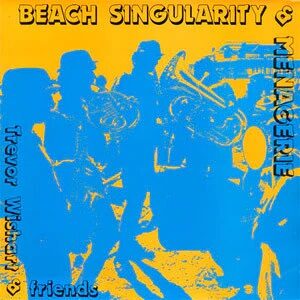
“Beach Singularity – Menagerie”
Trevor discovered a long-forgotten box of this LP, which had never been opened. All copies are "new" but there is some age-related wear & fading to the sleeves, nothing too bad.
Beach Singularity was performed on the beaches at Morecambe, Cleveleys, St Anne's & Southport in the summer of 1977. Beach Singularity is an excerpt from a day long happening in which the composer performed with an ensemble that featured saxophonist Lyn Dobson avant-tuba player Melvyn Poore, vocalist Poppy Holden and clarinet improviser Robin Coombes. This performance was designed somewhat like a social intervention, where the musicians performed in conjunction with tape-music and electronics broadcast from small portable stereo systems scattered along the English sea-side. Menagerie began life in 1974 when Trevor Wishart asked a number of well known British performance artistis to build small assemblages for an exhibition in which each object would be accompanied by appropriate taped sounds. The exhibition, consisting of eleven assemblages, was first prepared for the Birmingham Arts Lab and presented there in January 1975. The accompanying tapes were all made at The University of York Electronic Music Studio by Trevor Wishart.
26,50€
In stock

2 CD
Trevor WISHART
“Red Bird / Anticredos & Voiceprints”
This Double Album brings together many of my major pieces from the last 40 years. "Red Bird" has been held up as a pioneering work, using both a "cinematic" approach to audio, and sound morphing, especially because it predates the use of computers but prefigures many of the techniques later used for making computer sound art. "Anticredos" brought together my research into new vocal sounds, developing new ways to notate sound itself, and uses sound-morphing as a live-performance technique. "Tongues of Fire" was the first full-length piece I made on the Composers Desktop Project, and won an award (the Golden NICA for computer-music) at the Linz Ars Electronica, International Computer Arts Festival, while "Two Women" crossed the boundary into actuality, using and transforming the voices of people in the public eye.
From Allmisic:
Both works feature some of the composer's most striking music, but they belong to two very different realms. "Red Bird" is a 45-minute piece of musique concrète in four movements. Made for the most part of bird sounds, body sounds, and selected mouthed words, it weaves an intricate network of symbols. Completed in 1977, it was made with traditional electro-acoustic techniques. It has a crude tape splicing aspect that aged surprisingly well. Often brutal in its contrasts, it presents interesting sound transformations, but most of all a dense, relentless abstract drama that compares very well to Pierre Henry's best works from the '60s and '70s. The result of four years of work, "Red Bird" is a significant work and conveys ideas of imprisonment and freedom that are beautifully expressed. "Anticredos" dates from 1982. It involves no electronics at all; it is a live performance by the experimental vocal group Singcircle. Wishart scored the piece for six voices, using extended techniques to expand, so to speak, the word "credos." Often the listener is tempted to believe there are electro-acoustic manipulations involved, but on close-up inspection it turns out Wishart simply found ways to make real voices perform sound morphings that some musique concrète composers used to work on relentlessly in the days before the computer age.
16,00€
In stock
CD
Trevor WISHART
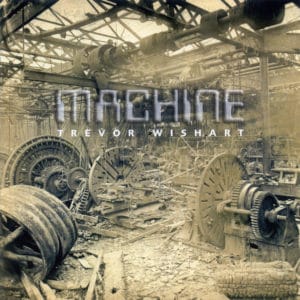
“Machine”
“Although Machine was completed in 1971 it was not released until 1972, shortly after the release of Journey Into Space. Machine is therefore the first major composition by Trevor Wishart. It was composed at York University and was originally issued on vinyl as 3 sides of a highly adventurous 3LP box set called Electronic Music From York, released by the University’s own record label. In common with Journey Into Space (also on Paradigm Discs), Machine makes use of a large number of volunteer contributors, mostly from the student body at York. With this recording, however, there are no instruments used. Instead, the music of Machine is made up entirely from a combination of spoken text and carefully directed improvising choirs that take their lead from prerecorded factory sounds. These are extensively mixed and edited with yet more collected machine sounds and other sources of musique concrète, as well as occasional use of basic electronic sources. The scale of this work, and the degree of preparation involved in scoring it, seem to have more resonances with the world of theatre or film rather than tape composition. Much of Wishart’s early work involved the use of musicians and artists being directed to perform in new ways, outside of their usual remit. A combination of late 60s openness, detailed scores that provide frameworks for improvisation and slavish editing have resulted in an incomparable sound work. With a continuous playing time of one hour, the wild and previously unexplored terrain covered by this pioneering work of British experimental music moves in turn through the full range of possible audio landscapes from the oceanic calm of the doldrums to earsplitting factory mayhem. Jewel case cd with 12 page booklet.”
13,00€
Out of stock
CD
Trevor WISHART
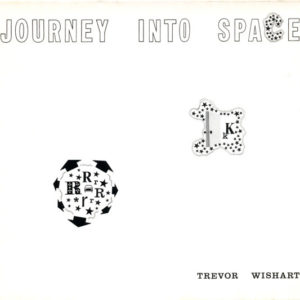
“Journey into space”
York University’s music department houses one of the UK’s first ever electronic music studios, and during the early seventies it was a hotbed of creative activity. Much of the released output from the studio at this time revolved around the work of the dynamic composer Trevor Wishart. Journey Into Space was his first release, composed between 1970 and 72, and was privately pressed (shortly before the formation of YES records), as two separate LP’s in 1973. (The CD cover amalgamates the 2 original designs). Along with other early private releases of experimental music in the UK (ie the LP of sound poems by Cobbing/Jandl, or the LP of musique concrète by Desmond Leslie), this record is also a total anomaly in the canon of British experimental music and has little to do with the current, or even subsequent work by Wishart. The vast length of this piece has many different styles. There are acoustic sections, mostly of junk and toys (bike bells, squeeze horns, bottles, metal tubes, combs etc.) as well as flute and brass sections that are used as raw material. There are also sections of everyday field recordings, scraps of NASA Apollo transmissions, as well as plenty of multitracking, editing, vocal acrobatics and musique concrète. Among the 48 participants credited on the original sleeve are a whole roster of York University alumni including nearly all the artists who were showcased on the then unreleased 3LP box set ’Electronic Music From York’, along with other noteworthy students as diverse as Steve Beresford, Jonty Harrison, Roger Marsh, Dominic Muldowney, Bernard Rands and Jan Steele. The co-operative spirit of York’s music and drama departments, plus the raw enthusiasm and open attitude of the participants involved in the project gave this music an immediacy, similar to the later LAFMS scene.
14,00€