
In stock
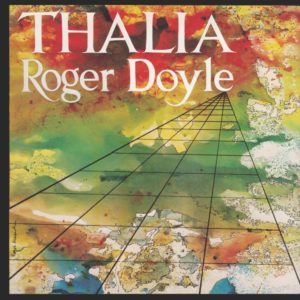
2 LP
Roger DOYLE
“Thalia”
The concrète riddle of ’Thalia’ is the Nurse With Wound-listed and cultishly desired Roger Doyle album withdrawn by CBS Classics shortly after its release in 1978. Less than 200 copies reached shops some three years after his distinctive debut ‘Oizzo No’ (1975) - which was reissued by Finders Keepers Cacophonic label to receptive ears in 2018 - and in retrospect the resurfacing of ‘Thalia’ follows that wonderfully odd LP to cement Doyle’s place among the outsider pioneers of ‘70s electronic and avant-garde tape composition
Arguably one of the most important experimental records to emerge from 20th century Ireland, ‘Thalia’ is coveted for its inventive, unpredictable, near-psychedelic brilliance, yet has remained scarce due to major label politics, meaning listeners had to fork out a ton for a 2nd hand copy.
Now readily available on its intended format, the keening, breezy logic and abstract theatric dramaturgy of Doyle’s work on ‘Thalia’ has been reshuffled to highlight its apparent surreality and frolicking apparitions. Combining his studious research and prep work at Utrecht Institute of Sonology (then home to Roland Kayn, Leo Küpper, Jaap Vink) and the studios of Finnish Radio (Yleisradio) Helsinki with a finely honed improvisational intuition at his home studio in Malahide, Dublin, the record yields a poetic diffusion of electro-acoustic phantasms meshed with politicised and unsettling field recordings, alongside a mad, experimental solo piano piece.
The 3-part title track is the biggest attraction on ‘Thalia.’ Acting as a sort of shamanic extension of Gaelic bardic traditions, Doyle guides the listener through labyrinthine dimensions, vacillating tape FX with stark synth pulses, fragments of ‘Danny Boy’ and the unsettling sound of a woman wailing or even keening (a lament for the dead) in only the first minutes, the piece spirals over two sides between obtuse electronics and jump-cuts to melancholy strums, airborne melody and rabid dissonance with the natural quality of Ireland’s ever-shifting interplay of sun, rain and clouds. The relatively brief ‘Baby Grand’ follows as a sort of playful solo piano palate cleanser for the LP’s purest electronic piece ‘Solar Eyes’, which surely recalls the iridescent expanses of Roland Kayn or Jaap Vink.
24,00€
Out of stock

CD
Roger DOYLE
“The ninth set”
“Irish composer Roger Doyle’s first release on Die Stadt is his prize-winning work The Ninth Set, a 67 minute masterpiece in 5 parts. He was awarded the Magisterium Prize at this years’s Bourges International Electro-acoustic Music Competition in France for parts 4 and 5. The award, which is one of the most important prizes in the world for electronic music, is open to composers having at least 25 years of professional experience in the field, and its objective is “the promotion and diffusion of works that might become milestones in the history of electroacoustic music”. Previous works of Doyle include a 5-cd set Babel which took ten years to compose, where each track corresponds to a room or place within an imagined tower city; and the 3 hour Passades, music made from software that freezes sounds like a freeze-frame in dvd. He’s also known for his project Operating Theater which released the classic “Rapid Eye Movements” album - consisting of 4 works composed between 1968 1980 - on Steven Stapleton’s (Nurse With Wound) own United Dairies label in 1980. Furthermore he guested on Fovea Hex’s “neither speak nor remain silent” EP number 2 “Huge”, alongside among others Clodagh Simonds, Brian Eno, Percy Jones and Colin Potter. The cd comes in a color digipack in a first edition of 600 copies.”
5,00€