
In stock

CD
Rafael TORAL
“Traveling Light”
From out of the dark, the crackle of feed back birdsong signals a return to the land of sound environments exclusive to the music of Rafael Toral. A year and a half after his epochal electric guitar album, Spectral Evolution, Traveling Light finds him sharpening his focus, moving boldly from abstract forms to concrete compositions in the form of a set of jazz standards.
Based on Toral’s discography, this may seem an unlikely endeavor, but happily, Traveling Light transpires to be one of the major accomplishments in his long history, expressing these songs on their own terms through the unique listening lens of his music. It’s nearly a century since the innovation that electrified the guitar, almost a century since the era of songs like “Easy Living” and “Body and Soul.” Since then, guitars and songs have been played hundreds of different ways by thousands of diverse individuals. After a century of progress, they probably should sound like something else again! And they do, as Toral sidesteps the traditional logic of how to play a song, moving outside the framework with which one would expect a standard to be treated.
Three decades ago, in the early years of his practice, Toral used the guitar as a generator, to create discreet texture and droning tones. Later, he abandoned the guitar entirely, focusing on self-made electronics to render his music, and the silence from which it came, with a post-free jazz perspective. For the music of Spectral Evolution and Traveling Light, Toral has combined his methodologies, radically expanding the space within their harmonies with his self-made machines, while engaging directly with his instrument and the chords of the material. The result is a listening experience of these standards, that remains “in the tradition,” even as the elongated harmonies seem to alter time such that, as Toral notes, “the chords become events on their own.” At points, the long tones animate the sacred ennui of liturgic music, the choir or the organ standing in for silent contemplation while rumbling the ground beneath our feet. Another echo of the concentric circling of music in time...
Further time-loops emerge throughout the duration of Traveling Light. The simple, organic quality of these reshaped songs and sounds, arranged by Toral for guitar with sine waves, feedback and bass guitar forms a proxy orchestra of sorts! One of Toral’s self-made devices incorporates a theremin — another near-century old innovation in electronics conceived for use in classical music — to modulate feedback melodies here. Meanwhile, this altered space is visited by canonical jazz sounds on four tracks, as clarinetist José Bruno Parrinha, tenor saxophonist Rodrigo Amado, flügelhorn player Yaw Tembe and flautist Clara Saleiro each guest on one song. In this new landscape, history and tradition are exemplified, like a toast to Earth cultures made on the alien terrain of Mars.
In every contour of Traveling Light’s path — arrangement, improvisation and production — the spring of the old pours through the new in an unstoppable flow. This is the sound of life, a nexus point for the music of the last century and the music ever unfurling toward the far horizons of the next century.
16,50€
In stock

CD
Rafael TORAL
“Sound Mind Sound Body”
Sound Mind Sound Body was inspired in part by the working principles of Fripp & Eno, extrapolated by Rafael via a unique signal path leading out of his guitar. He paid notice to the massive impact of discreet gestures, creating slow-moving tones and spacious orchestral resonances, drifting and droning with glacial majesty, hardly recognizable as guitar much of the time. The first pieces were recorded in 1987; in 1994, a collection was released on Portugal's AnAnAnA, producing an hour’s worth of remarkable sonic equilibrium in this mode. With each subsequent reissue, however, aspects of this sound have been subtly revisited. For the 1998 Moikai CD, "AE 1", one of the earliest pieces conceived, was newly recorded; for the 2018 Drag City LP master, “Textura e Linhas Curvas” was included, "AER 7 E" was re-recorded and the material for "AE 2" was recorded for the first time ever. These performances were executed using the same processes as the original ones. For the current CD, “Loopability II” has been recalled from the AnAnAnA master, “Textura e Linhas Curvas” omitted and yet another brand new version of “AER 7E” inserted in place of the 2018 version. Incredibly, all of these changes augment Sound Mind Sound Body’s expansive intent without altering its essential otherworldly atmosphere.
16,00€
In stock

CD
Rafael TORAL
“Wave Field”
Wave Field, released in 1995, was a departure from the first album into new composition methods involving the dirty textures of rock guitar, sounding in the open ears of many listeners (like Jim O'Rourke, who issued the disc in the US on dexter's cigar) as a synthesis of disparate elements — a nexus where Alvin Lucier, Sonic Youth, My Bloody Valentine and Eno blend together. Here, the clangorous potential of the guitar was emphasized, giving a metallic edge to the two extended pieces and "radio edit" coda. The jacket paid subtle tribute to My Bloody Valentine, which, along with the radio edit, suggested a harmony between musical directions as wildly disparate as minimalist experimental and rock. Today, such a paradoxical intent is more widely considered as a part of the artist's purview.
16,00€
Out of stock
LP
Rafael TORAL
“Aeriola Frequency”
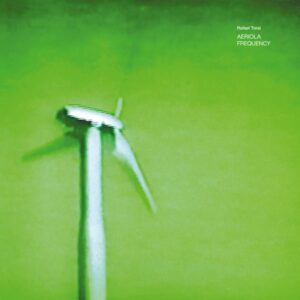
Black Truffle is proud to announce the first vinyl reissue of Rafael Toral’s Aeriola Frequency, originally released by Perdition Plastics in 1998. Toral made his name in the world of mid-90’s experimental electronics with two releases, Sound Mind Sound Body (1994) and Wave Field (1995), both now recognised as classics and reissued on vinyl by Drag City, which saw him exploring the potential of electric guitar and pedals to immerse the listener in seemingly endless waves of sustained tones. On Wave Field, inspired by the striking resonance effects he experienced during a Buzzcocks gig with bad acoustics, he achieved a synthesis—often imitated but never bettered—of rock guitar, Ambient, and the acoustic exploration of Alvin Lucier, a kind of “liquid, abstract flux of rock sound”.
On Aeriola Frequency, Toral continued the explorations of Wave Field but dropped the guitar, creating a series of extended pieces using only a simple feedback loop designed to work with pure electronic resonance. The result is far more delicate than Wave Field, a steady but unstable flow of filtered tones that continually reorder themselves into new forms. On both the LP’s sides, the tones, like growing plants, imperceptibly shift from drifting freely in ambient space to weaving strangely natural melodic patterns, as the loops unfold and the resonance gently outlines recurring rhythmic shapes.
The overall effect is strikingly organic, as David Toop noted in the liner notes included in the original release (and reprinted in this reissue): “A crystal garden, the sound grows in reeds and streams, blown like spider web strands, glittering and invisible, pulsing with translucent colour, bubbling and imploding, fraying and powdering.”
A classic of the non-academic approach to electronics that flourished in the 1990s— and a big influence at the time on Black Truffle head honcho Oren Ambarchi—Aeriola Frequency ushers listeners into an endlessly fascinating world of gliding tones and shifting details that they might never want to leave.
Recorded at Noise Precision, Portugal, December 1997 and April 1998. Remastered by Rafael Toral in 2020.
Images taken from Air Pass, a video by Rafael Toral.
Design by Lasse Marhaug.
Liner notes by David Toop and Rafael Toral.
21,00€