
Out of stock
CD, Book
Philip SAMARTZIS
“Atmospheres And Disturbances”
From Philip Samartzis
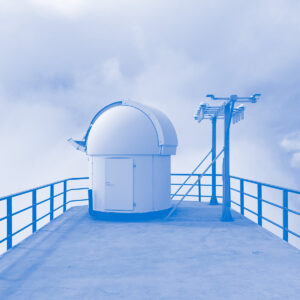
Atmospheres and Disturbances registers the changes in high altitude ecologies caused by increasing global temperatures. The composition is based on field work undertaken at the High-Altitude Research Station at Jungfraujoch, Switzerland where for four weeks I deployed various recording devices around the station, and in the surrounding alpine environment to register natural, anthropogenic and geophysical forces. The project provides new encounters of an endangered alpine environment to enhance the way we perceive and engage with notions of place, community, and environmental dissonance.
During fieldwork I used different microphones to record a variety of acoustic, spatial, atmospheric, and vibration-based phenomena. Omnidirectional microphones registered wind, snow, and ice as well as social, material, and industrial sound emanating from the nearby train terminus and viewing platforms. Hydrophones were placed within water and ice to record geophysical sound resonating within the frozen environment of Jungfraujoch and the adjacent glacier. The recordings capture the pervasive presence of anthropogenic sound permeating throughout the landscape produced by tourists, transport operations and recreational sports. Accelerometers were attached to various surfaces and structures to record solid vibration generated by high-velocity wind, and the process of melting and freezing. The recordings produced by the accelerometers clearly express the stress and fatigue occurring within the material structure of buildings and infrastructure.
Atmospheres and Disturbances is designed to place audiences deep inside an extreme environment to afford embodied experiences of an alpine ecology under duress.
18,00€
In stock

CD, book
Philip SAMARTZIS
“Boleskine”
Boleskine comprises an unfolding set of sound recordings made over a three-mile stretch of General Wade’s Military Road set on the south-east shore of Loch Ness. Scattered throughout the luminous countryside are memorial stones, burial ground, and various ruins indicating a long and troubled history. Boleskine situates the metaphysical alongside the prosaic to offer an encounter with a place of curiosity, imbued with atmosphere and shrouded by intrigue.
Philip Samartzis is a sound artist, scholar and curator with a specific interest in the social and environmental conditions informing remote wilderness regions and their communities. His art practice is based on deep fieldwork where he deploys complex sound recording technology to capture natural, anthropogenic and geophysical forces. The recordings are used within various exhibition, performance and publication outcomes to demonstrate the transformative effects of sound within a fine art context. He is particularly interested in concepts of perception, immersion and embodiment in order to provide audiences with sophisticated encounters of space and place. Philip is an Associate Professor within RMIT School of Art, and the artistic director of the Bogong Centre for Sound Culture.
Comes with A4 Booklet Silver Printed on Black Stock.
15,00€
In stock

Book, 2 CD
Philip SAMARTZIS
“Antartica, an absent presence”
Antarctica is a paradox of the sublime and prosaic: with its vast expanses of ice, snow and mountains—and traces of human habitation, from weathered huts to abandoned machinery. It is a blank space bordered by nothingness concealing a confounding set of encounters for those fortunate enough to breach its frozen perimeter. This book is an invitation to share in a remarkable journey to a place that is for all intents and purposes simply incomprehensible. The book is accompanied by two CDs of soundscape compositions documenting natural and anthropogenic characteristics of the frozen continent and its surrounding ocean.
Philip Samartzis is a sound artist, scholar and curator with a specific interest in the social and environmental conditions informing remote wilderness regions and their communities. His art practice is based on deep fieldwork where he deploys complex sound recording technology to capture natural, anthropogenic and geophysical forces. The recordings are used within various exhibition, performance and publication outcomes to demonstrate the transformative effects of sound within a fine art context. He is particularly interested in concepts of perception, immersion and embodiment in order to provide audiences with sophisticated encounters of space and place. Philip is an Associate Professor within RMIT School of Art, and the artistic director of the Bogong Centre for Sound Culture.
Hardcover, 208 pages (24.8 x 2.5 x 18.8 cm)
30,00€