
Out of stock

LP
Okkyung LEE
“Just like any other day: background music for your mundane activities”
Unlike anything we’ve heard from her before, Okkyung Lee returns to Shelter Press with Just Like Any Other Day: Background Music For Your Mundane Activities, a deeply intimate body of recordings at the juncture of ambient music, minimalism, and the baroque, that stands as radical intervention with what experimental music can be, and the place that organisations of sound occupy in our lives.
For more than two decades, Okkyung Lee has stood at the forefront of the most radical trajectories of experimental music: a virtuosic cellist and improviser, renowned for her creative rigour and emotive depth. Particularly noteworthy for her range, dexterity, and adaptability, over the last five years Lee’s output has revealed unexpected shifts and developments that move far afield from the realms of free improvisation for which she is most well know. 2020’s Yeo-Neun, a heart-wrenching, ambient chamber work - drawing inspiration from the Korean popular music of her youth - was issued by Shelter Press to great critical response, followed closely by Teum (The Silvery Slit) - one of a series engrossing electroacoustic works created at Groupe de Recherches Musicales in Paris - on Portraits GRM, and then 나를 (Na-Reul) in 2021, regarded by Lee as a closing statement of more than two decades living in New York, which set the precedent of her allowing her emotions to fully occupy the forefront of the music for the first time. Marking her return to Shelter press, Just Like Any Other Day: Background Music For Your Mundane Activities, encounters Lee upturning the apple cart once again, weaving a profoundly intimate artistic statement on completely unexpected terms.
Like its three aforementioned predecessors, Just Like Any Other Day belongs to broadening shift in Lee’s approach to composing that roughly aligns with her return to her native South Korea, having lived in the United States since her late teens. Infused with a deep reengagement with her own culture and relationship to memory, it is equally a response to those critical challenges and questions provoked by significant life change. Worked on in isolation, and continuously returned to, over the course of four years, the album’s nine pieces began with a simple recognition that experimental music is not always what we imagine it to be. It is a practice and a pursuit - a music for which, at its inception, the outcome is unknown - rather than an idiom defined by certain syntaxes, approaches, and qualities of structure and sound. From this departure point, Lee began to inquire after the utility of music itself: what is it for, what does it do, and what place does it (or can it) occupy in our lives?
Created at home on keyboard, computer, and an inexpensive cassette recorder, Just Like Any Other Day (어느날) presents a remarkable form of ambient music - organisations of sound that become their own environment, to be occupied - intended, as the album’s subheading infers, as Background Music For Your Mundane Activities. An expansion of the creative pathways opened by the Korean pop imbued compositions of Yeo-Neun, aspects of electronic process explored by Teum (The Silvery Slit), and the emotive foregrounding of 나를 (Na-Reul), each of the pieces presented across the two sides of Just Like Any Other Day (어느날) implies something far greater than the limits of its own temporarily: a mood, provocations of memory and place, mirrors for the solitude within which it was made, and palpable emotion lingering just out of grasp. For Lee, each of the album’s compositions could be continued or looped for an indeterminate duration: straddling a ground between the minimal and the baroque, enveloping the listener in endless cycles of appreciating, repetitive and rhythmical notes, flirting with the melodic and implying a disembodied imagism that borders on the profound.
27,00€
Out of stock
LP
Okkyung LEE
“Yeo-Neun”
Springing from a decades deep body of work, defined by a rigorously singular and adventurous approach to sound, cellist, composer, and improvisor, Okkyung Lee, returns with Yeo-Neun, her first outing with Shelter Press, and arguably her most groundbreaking and unexpected album to date.
A vital, present force in the contemporary global landscape of experimental music, Okkyung Lee is widely regarded for her solo and collaborative improvisations and compositions, weaving a continuously evolving network of sonority and event, notable for its profound depth of instrumental sensitivity, exacting intellect, and visceral emotiveness. Yeo-Neun, recorded by Yeo-Neun Quartet - an experimental chamber music ensemble founded in 2106 and led by Lee on cello, featuring harpist Maeve Gilchrist, pianist Jacob Sacks, and bassist Eivynd Opsvik - represents the culmination of one of longest and most intimate arcs in her remarkable career. A radical departure from much of the experimental language for which she has become widely known, it is equally a fearless return.
Yeo-Neun loosely translates to the gesture of an opening in Korean, presenting window into the poetic multiplicity that rests at the album’s core. Balanced at the outer reaches of Lee’s radically forward thinking creative process, its 10 discrete works are born of the ambient displacement of musician’s life; intimate melodic constructions and deconstructions that traces their roots across the last 30 years, from her early days spent away from home studying the cello in Seoul and Boston, to her subsequent move to New York and the nomadism of a near endless routine of tours. At its foundation, lay glimpses of a once melancholic teen, traces of the sentimentality and sensitivity (감성 / Gahmsung) that underpins the Korean popular music of Lee’s youth, and an artist for whom the notions of time, place, and home have become increasingly complex.
Elegantly binding modern classical composition and freely improvised music with the emotive drama of Korean traditional music and popular ballads, the expanse of Yeo-Neun pushes toward the palpably unknown, as radical for what it is and does, as it for its approachability. In Lee’s hands, carried by a body of composition that rests beyond the prescriptive boundaries of culture, genre, geography, and time, a vision of the experimental avant-garde emerges as a music of experience, humanity, and life. Meandering melodies, from the deceptively simple to the tonally and structurally complex, slowly evolve and fall from view, the harp, piano, and bass forming an airy, liminal non-place, through which Lee’s cello and unplaceable memories freely drift.
Remarkably honest, unflinchingly beautiful, and creatively challenging, Shelter Press is proud to present Yeo-Neun, an album that takes one the most important voices in contemporary experimental music, Okkyung Lee, far afield into an unknown future, bound to her past.
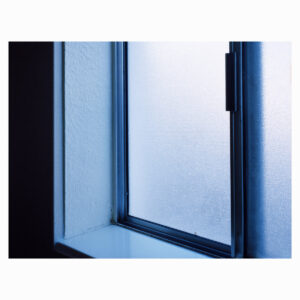
Mastered and cut by Rashad Becker, housed in reversed-board printed inner and outer sleeve with artwork by American photographer Ron Jude.
22,00€
In stock
CD
Okkyung LEE
“Dahl-Tah-Ghi”
Okkyung Lee is a cellist, composer, and improviser who moves freely between of artistic disciples and contingencies. Since moving to New York in 2000 she has worked in disparate contexts as a solo artist and collaborator with creators in a wide range of disciplines. A native of South Korea, Lee has taken a broad array of inspirations—including noise, improvisation, jazz, western classical, and the traditional and popular music of her homeland—and used them to forge a highly distinctive approach. Her curiosity and a determined sense of exploration guide the work she has made in disparate contexts. Lee has appeared on more than 30 albums, including a diverse variety of recordings as a leader, but she is perhaps known best for her improvisational work, where she draws upon visceral extended techniques, in both solo and collaborative contexts. Not content with static performance approaches, Lee routinely explores the spaces she performs in, responding to atmosphere, audience, or objects surrounding her, to produce an immersive experience.
“Dahl-Tah-Ghi” was recorded at the Emanuel Vigelang Mausoleum in Oslo in June 2013 for a limited audience of 30 people. The artist Emanuel Vigeland (1875-1948) erected the building in 1926, intended as a future museum for his sculptures and paintings. He eventually decided that the museum should also serve as a mausoleum. All the windows were closed and his ashes were to rest in an urn above the entrance door. The mausoleum is completely covered with fresco paintings that depict human life from conception till death, in dramatic and often explicitly erotic scenes. The mausoleum also has an extraordinary reverb of up to 18 seconds, and has become a desirable space for artists to perform intimate concerts because of its special accoustic character.
“Dahl-Tah-Ghi” was recorded at the Emanuel Vigelang Mausoleum in Oslo in June 2013 for a limited audience of 30 people. The artist Emanuel Vigeland (1875-1948) erected the building in 1926, intended as a future museum for his sculptures and paintings. He eventually decided that the museum should also serve as a mausoleum. All the windows were closed and his ashes were to rest in an urn above the entrance door. The mausoleum is completely covered with fresco paintings that depict human life from conception till death, in dramatic and often explicitly erotic scenes. The mausoleum also has an extraordinary reverb of up to 18 seconds, and has become a desirable space for artists to perform intimate concerts because of its special accoustic character.
12,00€