
In stock

LP
Marcus SCHMICKLER
“Sky Dice / Mapping the Studio”
Marcus Schmickler's music is designed for multi-channel sound projections and references German electronic music tradition, spectral music, experimentalism as well as 1990s club music. His artistic practice explores avant-garde trajectories in electronic music composition, formal systems, sonification and psychoacoustics. EMEGO 296 features two new major works from this audacious sound explorer.
Sky Dice / Mapping the Studio premiered at Donaueschinger Tage fur Neue Musik 10.20.2018 having being commissioned by SWR and realized at the Experimentalstudio (EXP) in Freiburg. This is a work for ARP 2500, Publison DHM89B, Publison Infernal Machine and Computer. Taking cues from Bruce Nauman's Mapping the Studio I (Fat Chance John Cage) (2001) the piece draws a fragmented acoustic map of the SWR facility itself; the studio serves as a source-model for the sonic display of historical signal flow graphs. Various acoustic and psychoacoustic effects come into play including the Larsen effect, as well as Style Transfer and Topological Sonification. The result is a daring and dizzying display of disorientating audio. Sound moves in most unusual ways, rising and falling simultaneously, appearing and disappearing like apparitions, nothing here behaves in expected ways. To paraphrase Albert Einstein’s now famous quote regarding quantum mechanics, this is spooky audio at a distance.
Fortuna Ribbon is a selection of sonic material that emerged from a research based on how DPOAEs (Distortion Product Otoacoustic Emission) can be designed in the context of musical frameworks, augmenting the compositional pallets in regard to spatial hearing. In this manifestation, the materials are presented without context. The resulting emissions from the ear that are excited in varying ways from the 6 examples on display here. Playback in undisturbed acoustic environments is recommended at >82 dB/A.
Schmickler’s ongoing investigation of sound matter conjures impossible audio that delight’s in the extremity of form and resulting effects on the listener. Schmickler’s audio invocations explore the capabilities of contemporary technology resulting in dizzying new worlds of sound.
20,50€
Out of stock

2 CD
Marcus SCHMICKLER
“Richters Patterns”
Double-CD collecting five of Schmicklers key-works composed & recorded between 2006 and 2016.
Edition of 400 copies in fullcolour digipak with 8-page booklet.Edition of 400 copies in fullcolour digipak with 8-page booklet.
"Richters Patterns (2016) is a collaboration among Marcus Schmickler, artist Gerhard Richter, director Corinna Belz and the Ensemble Musikfabrik. In 2011, Richter took an image of his work Abstract Painting (CR: 7244) and divided it vertically into strips and gave them to Belz who utilized specially developed software operations involving cuts, mirroring and reproduction to create a movie from these images. Schmickler and Belz worked in parallel, with the film and composition following their own independent logic. Schmickler’s idea was to extend Richter’s method to divide, mirror, repeat into sound and time. Richters Patterns was commissioned by Koeln Musik and had its premiere on September 9, 2016 at Cologne Philharmonic Hall. Marco Blaauw (Trumpet), Helen Bledsoe (Flute), Christine Chapman (Horn), Bruce Collings (Trombone), Diamanda Dramm (Violin), Florentin Ginot (Double Bass), Benjamin Kobler (Piano, Synthesizer), Ulrich Löffler (Piano), Heidi Mockert (Bassoon), Melvyn Poore (Tuba), Axel Porath (Viola), Carl Rosman (Clarinet), Dirk Rothbrust (Percussion), Marieke Schoenmakers (Harp), Peter Veale (Oboe), Hannah Weirich (Violin), Dirk Wietheger (Violoncello), Marcus Schmickler (Computer), Paul Jeukendrupp (Soundprojection).
"Kemp Echoes" (2013) refers to a physical phenomenon in the ear discovered by physicist David Kemp in 1978. Otoacoustic Emissions (OAE) are signals in the ear (that can be detected with high quality small microphones) that are emitted by the cochlea, either spontaneously or in response to stimuli (frequently clicks). I have strived to create a piece that can seem ‘electronic’ to the ear without actually utilizing electronics. With Helen Bledsoe (Flute), Peter Veale (Oboe), Carl Rosman (Clarinet), Heidi Mockert (Bassoon), Christine Chapman (Horn), Ales Klancar (Trumpet), Bruce Collings (Trombone), Melvyn Poore (Tuba), Ulrich Löffler (Synthesizer), Benjamin Kobler (Piano/Sampler), Dirk Rothbrust (Percussion), Thomas Meixner (Percussion), Juditha Haeberlin (Violin), Hannah Weirich (Violin), Axel Porath (Viola), Dirk Wietheger (Violoncello), Benedict Ziervogel (Bass), Marcus Schmickler (Computer), Paul Jeukendrup (Soundprojection). Conducted by Enno Poppe.
"Fokker Bifurcations" (2014) marks a departure into microtonal works for keyboards and mallets and maintains the composer’s penchant for juxtaposed fixed pitches with pitch continua. Recorded live at ISSUE Project Room, Brooklyn on Nov 7 2014. The recording has been edited for this publication. With Laura Barger (piano), Ning Yu (piano), Ian Antonio (percussion), Russell Greenberg (percussion).
"E-UROPAS / Plurality of Centers" (2006). Shall we say goodbye to modernism? I dare to confront the myths of new music in this music theater creation. Layers containing the manifestos of Cornelius Cardew, Guy Debord and sound materials from six decades of the avant-garde create a collage that utilizes some of the formal principles guiding John Cage’s Europera V. With Hayden Chisholm (Voice), Juditha Haeberlin (Violin), Axel Porath (Viola), Dirk Wietheger (Violoncello), Ulrich Löffler (Piano), Dirk Rothbrust (Percussion), Marcus Schmickler (Voice, Computer, Radios), Carsten Goertz (scenography).
"ATA OTO" (2017) for Robot instruments TEMBLO, TINTI, TROMS, XY by Logos Foundation & computer.
Original price was: 19,00€.10,00€Current price is: 10,00€.
In stock
CD
Marcus SCHMICKLER
“Palace of marvels (queered pitch)”
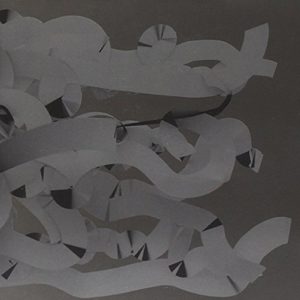
Composed by Marcus Schmickler. Recorded and Mastered at Piethopraxis, Köln. January-August 2010. Artwork by Tim Berresheim. Marcus Schmickler’s new release following his acclaimed ’Altars of Science’ is a must have for those interested in the rising field of contemporary Computer Music. It reconfirms Schmickler’s interest in the liaison of sound, phenomenology and cognitive sciences. Schmickler therefore utilizes a new interpretation of 1960’s discovery, the Shepard-tone, discovered by Roger Shepard, which creates the auditory illusion of a tone that continually rises or descends in pitch yet ultimately seems to get no higher or lower. The phenomenon first got imposed to the music world by James Tenney in his piece "For Ann Rising". Similarly, Schmickler has a musical take on the subject by creating Arpeggios, short sequences of tones creating an akin effect. Schmickler’s interest in the field got fired by Ernst Gombrich’s essays on "Art and Illusion" questioning the very foundations of our understanding of the history of the image and it’s representation of our world. Adequately Schmickler’s work ever since can be seen as a play within an anthropology of music. Here in terms of it’s very fundamental parameters rhythm, sound and pitch, as well as music practice wit it’s socio-economic implications. Beyond that, the title Palace of Marvels was found at French intellectual Jacques Attali, who, in his critically acclaimed book, "Noise: The Political Economy of Music", cites one of Leibniz’s little known but "extraordinary" texts, "Drôle de pensée touchant nouvelle sorte de représentation," in which the philosopher describes the "Palace of Marvels." The Palace of Marvels is Leibniz’s idealization of a perfect political organization, which is built in such a way that the master of the house is able to hear and see everything that is being said and done in the premises without himself being perceived by his subjects. Leibniz’s vision of disciplinary society not only predates Foucault’s subsequent versions of surveillance mechanism, the Panopticon, but it also conceptualizes a more effective and absolute form of power through eavesdropping, censorship, and recording, as well as surveillance through visual means. Listening in on, ordering, transmitting, and recording noise are at the heart of the modern State. The idea for the material was originally conceived for a collaborative Installation-piece together with arts-collective Interpallazo. The technical application was realized with the kind assistance of Prof. Dr. Alberto de Campo.
12,00€