
In stock
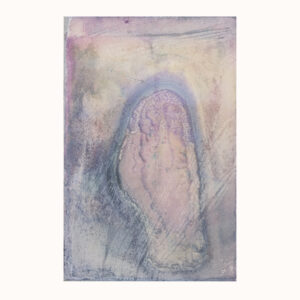
CD
L’OCELLE MARE
“Sans Chemin”
A ritornello that awakens, unfolds, disappears, resurfaces, transforms, forgets itself, awakens again.
A ritornello in folds and hollows, which gives us something to see as well as to listen, a theatre of acoustic shadows where each timbre, each rhythm, each modulation, is born from a meticulously refined gesture. “I don’t write music, it’s an assemblage of gestural memories”, says Thomas Bonvalet. Gestures found, accidentally or not, through long practice: such keyboard rubs on such guitar while preparing a concert, such tambourine vibrates in a singular way when placed on such amp, the duration and intensity of breath given to the flute so that the strings of the open piano decline and reverberate the harmonics...
Gestures that are both very skilful and very simple, that sovereignly refuse the categories of modern and archaic, natural and cultural. Instead, they summon an entire genealogy, both intimate and collective, musical and technical, the memory of a thousand different pieces from a thousand different eras. There is no path, in fact, no path at all in this dismantled world.
There are, however, these gestures that allow us to search for the human measure, that allow for a new attention to be given to bodies, objects, space. Gestures that invent new relationships between themselves and other ways of being alive, gestures to be worked on and shared endlessly. “It’s fragile, it can always fall apart. I have to fight, to stay in tune with what is at stake in a piece, to breathe into it what will make it stand up.
And so the ritornello continues its mutations in the folds and hollows of our own memories.
14,00€
In stock
LP
L’OCELLE MARE
“Sans Chemin”
A ritornello that awakens, unfolds, disappears, resurfaces, transforms, forgets itself, awakens again.
A ritornello in folds and hollows, which gives us something to see as well as to listen, a theatre of acoustic shadows where each timbre, each rhythm, each modulation, is born from a meticulously refined gesture. “I don’t write music, it’s an assemblage of gestural memories”, says Thomas Bonvalet. Gestures found, accidentally or not, through long practice: such keyboard rubs on such guitar while preparing a concert, such tambourine vibrates in a singular way when placed on such amp, the duration and intensity of breath given to the flute so that the strings of the open piano decline and reverberate the harmonics...
Gestures that are both very skilful and very simple, that sovereignly refuse the categories of modern and archaic, natural and cultural. Instead, they summon an entire genealogy, both intimate and collective, musical and technical, the memory of a thousand different pieces from a thousand different eras. There is no path, in fact, no path at all in this dismantled world.
There are, however, these gestures that allow us to search for the human measure, that allow for a new attention to be given to bodies, objects, space. Gestures that invent new relationships between themselves and other ways of being alive, gestures to be worked on and shared endlessly. “It’s fragile, it can always fall apart. I have to fight, to stay in tune with what is at stake in a piece, to breathe into it what will make it stand up.
And so the ritornello continues its mutations in the folds and hollows of our own memories.
21,00€
In stock

LP
L’OCELLE MARE
“Serpentement”
“The very old catfish, covered in moss, that live in the depths of the lake, never go up towards daylight and disdain any bait that nature offers them.They are only attracted by the oddest shapes that fishermen can invent, shiny and silvery blades in the shape of a human hand that, attached to their line, dance a jig; or also a bat made of red glass with hooks treacherously sewn inside their wings”. G.Meyrink. Instruments: mechanical metronome with bell, harmonica reeds, six string banjo, amps, microphones, feet tapping, hand clapping, six string ukulele, tuning forks, timer, mouth organ, Harmonicas, concertina, dry poppy pods,whistlings,... The solitary project of Thomas Bonvalet initially focused on the nylon string guitar, taking short, dynamic and abrupt forms and limiting itself exclusively to the acoustic possibilities of the instrument. A radical posture, it constantly threatened to put itself at an impasse, seeing itself forced into metamorphosis and movement. The instrument thus became less and less identifiable. At the periphery it absorbed the sound of objects (metronome, tuning forks...) deviating from their common usage, integrating the breath and the sounds rising from the instrumental gesture, splitting up to reveal a new fleeting form. Amplification has also progressively taken an essential part in this new instrumentarium/organism. However, there remains this same subterranean voice, the consideration of detail and tension, the seeking of possible points of sudden revelation. “Serpentement” is the fourth recording of “L’ocelle mare” and was recorded by Adrian Riffo, in the Protestant temple of Bergerac (France), in november 2011. Thomas Bonvalet, (born October, 1977) lives in Alpedrete, Spain. Guitar player of the band Cheval de frise between 1998 and 2004, he made is first solo show under the name of l’ocelle mare in September 2005. He toured Europe, Scandinavia, Israel, USA and China.
14,50€
In stock
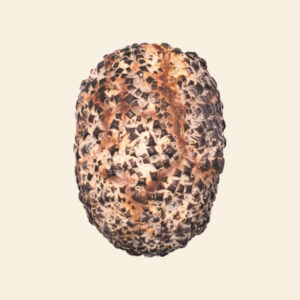
maxi CD
L’OCELLE MARE
“Serpentement”
“The very old catfish, covered in moss, that live in the depths of the lake, never go up towards daylight and disdain any bait that nature offers them.They are only attracted by the oddest shapes that fishermen can invent, shiny and silvery blades in the shape of a human hand that, attached to their line, dance a jig; or also a bat made of red glass with hooks treacherously sewn inside their wings”. G.Meyrink. Instruments: mechanical metronome with bell, harmonica reeds, six string banjo, amps, microphones, feet tapping, hand clapping, six string ukulele, tuning forks, timer, mouth organ, Harmonicas, concertina, dry poppy pods,whistlings,... The solitary project of Thomas Bonvalet initially focused on the nylon string guitar, taking short, dynamic and abrupt forms and limiting itself exclusively to the acoustic possibilities of the instrument. A radical posture, it constantly threatened to put itself at an impasse, seeing itself forced into metamorphosis and movement. The instrument thus became less and less identifiable. At the periphery it absorbed the sound of objects (metronome, tuning forks...) deviating from their common usage, integrating the breath and the sounds rising from the instrumental gesture, splitting up to reveal a new fleeting form. Amplification has also progressively taken an essential part in this new instrumentarium/organism. However, there remains this same subterranean voice, the consideration of detail and tension, the seeking of possible points of sudden revelation. “Serpentement” is the fourth recording of "l’ocelle mare" and was recorded by Adrian Riffo, in the Protestant temple of Bergerac (France), in november 2011. Thomas Bonvalet, (born October, 1977) lives in Alpedrete, Spain. Guitar player of the band Cheval de frise between 1998 and 2004, he made is first solo show under the name of l’ocelle mare in September 2005. He toured Europe, Scandinavia, Israel, USA and China.
15,00€