
In stock

CD
Keith ROWE
“Absence”
"Friday the 6th of November 2015 was an important day for me. Christian Kobi had invited me to take part in his »zoom in« festival in Bern. Earlier that day I visited the Kunst Museum, looking at the work of Cuno Amiet (1868-1961), recalling the work of an earlier Camille Pissarro, interesting contributions from Felix Vallotton (1835-1925), also an very important exhibition of how photography had influenced Toulouse-Lautrec (1864-1901) called “Lautrec’s Photographic Eye”.
What struck me was how the fashion of the day became aged, yet the TL paintings stayed fresh, and that his drawings were fantastic. Connected to the TL photos was film of the American dancer Loie Fuller’s (1862-1928) Fire Dance. Adolf Wölfli’s (1864-1930) large work Memoriam (1926).
For my solo in the festival I used a long lapstick guitar, Boss RC-3, Boss PS-3, six band EQ, Sony ICF-SW22 and Roberts R984 radios. two contact mics, and a metal strip.
November 2015 marked the end of the first year of living with Parkinson's. During that year the right hand tremor was becoming more and more uncontrollable, to the point I could not conceive of how in the future I could manage solo performances. During that year I had experimented with different anti-shaking set-ups, in attempts to work around the tremor caused by stress and anxiety of performing solos.
It was during the 33min solo on the 6th of November in Bern that I concluded that I did not want to continue performing solos, and almost immediately from that day onwards I declined invitations to perform as a soloist. The only exception was three performances of a 20mins Click piece based on using pre-recorded material, meaning all I had to do was press the start button, these events were performed in complete darkness.
Retirement, or stepping away, is difficult and painful. It requires a recognition of certain realities, that you are not important, that the world does not care that you have stopped performing solos, actually the world does not notice that you have stopped, life outside your bubble continues, get used to it, you are not at the centre of anything. A part of the reality is to try not to leave a big mess for others to tidy up after you have left the departure lounge, retirement is an opportunity where you are able to discard all the junk you’ve accumulated.
I want to share with you a recording of that 33 mins solo from Bern before it too departs for the dustbin. An important moment in the solo is at 12:10 thru 12:21 where the Parkinson's tremor frequency (around 300bpm) can be heard, and it’s around this moment I decide not to solo again."
Keith Rowe
Mastered by Taku Unami
15,00€
Out of stock
CD
Keith ROWE
“The room”
“This was one of the first occasions on which I worked with Keith Rowe, who bore more or less the same relation to the electric guitar as David Tudor did to the piano (I put that in the past tense because by no stretch of the imagination could you now call them guitarist or pianist respectively)”. Cornelius Cardew, 1966
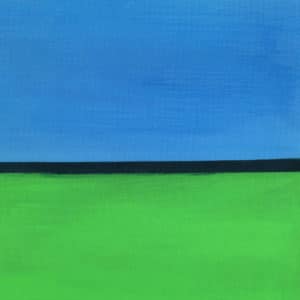
“More than forty years later, Keith Rowe is still adding to his remarkable legacy of sound and color. This latest release, The Room, marks the third full-length solo recording of his career, following A Dimension of Perfectly Ordinary Reality (1989) and Harsh (1999). Each of these prior recordings marked the end of a phase of Rowe’s work just before he switched to a new guitar, whereas The Room is a continuation of his recent collaborative work, as captured on records like between, cloud, A View From The Window, November Quebec and the ErstLive 005 box. The Room is a very personal project for Rowe, and he struggled with its precise conception over the last few years. It’s in part a tribute to two of his most important influences, Cardew and Mark Rothko, and the creation of a recording that did justice to his feelings about these two was a long journey. After many months of thought and numerous attempts to transfer the ideas in his head to a concert context, Rowe began in early 2007 to record at his home each day. He recorded dozens of hours before finally arriving at an end result that he could live with, and those results are here. For Rowe, The Room represents an “emotional state made audible” as well as an attempt to “reject virtuosity”, a philosophy which has been guiding all of his work over the past few years. Erstwhile mastering engineer Earl Howard did some crucial (and uncredited, due to the minimal text on the package) postproduction on Rowe’s home recorded master, just minor tweaks on their own, but resulting in a decided overall improvement in the sound quality. The Room is the first release on the new ErstSolo imprint, and is the first standalone digipak on Erstwhile, with the entire design consisting of two triptych Rothko-influenced Rowe paintings, one on the outside and one on the inside. Keith Rowe: guitar, electronics.”
“More than forty years later, Keith Rowe is still adding to his remarkable legacy of sound and color. This latest release, The Room, marks the third full-length solo recording of his career, following A Dimension of Perfectly Ordinary Reality (1989) and Harsh (1999). Each of these prior recordings marked the end of a phase of Rowe’s work just before he switched to a new guitar, whereas The Room is a continuation of his recent collaborative work, as captured on records like between, cloud, A View From The Window, November Quebec and the ErstLive 005 box. The Room is a very personal project for Rowe, and he struggled with its precise conception over the last few years. It’s in part a tribute to two of his most important influences, Cardew and Mark Rothko, and the creation of a recording that did justice to his feelings about these two was a long journey. After many months of thought and numerous attempts to transfer the ideas in his head to a concert context, Rowe began in early 2007 to record at his home each day. He recorded dozens of hours before finally arriving at an end result that he could live with, and those results are here. For Rowe, The Room represents an “emotional state made audible” as well as an attempt to “reject virtuosity”, a philosophy which has been guiding all of his work over the past few years. Erstwhile mastering engineer Earl Howard did some crucial (and uncredited, due to the minimal text on the package) postproduction on Rowe’s home recorded master, just minor tweaks on their own, but resulting in a decided overall improvement in the sound quality. The Room is the first release on the new ErstSolo imprint, and is the first standalone digipak on Erstwhile, with the entire design consisting of two triptych Rothko-influenced Rowe paintings, one on the outside and one on the inside. Keith Rowe: guitar, electronics.”
15,00€
Out of stock
4 CD
Keith ROWE
“The room extended”
Keith Rowe, guitar, electronics. Recorded at home from mid-2013 to mid-2016. 4 solo CDs, 246 minutes, no content overlap with the earlier The Room (ErstSolo 001) this is Keith’s solo masterwork.
“One of the first things that hits you is the immense depth of much of the work; there always seems to be at least four or five layers of sound occurring, enough that on each subsequent listen (I've been through its four-plus hours five times so far), you pick up not only sounds you've not heard/noticed before but, more rewardingly, new relationships between them, both simultaneous ones and ones spanning the course of the piece. For a while, Rowe has been interested in revisiting sound areas he's investigated over the years, seeing if there might be aspects he'd previously missed or investigating new ways of deploying them and at several moments here, listeners familiar with his history may well recognize some signature sounds. There are plenty of new, even startling ones as well, such as the artificial sounding bird call that's looped for an almost unconscionable length at one point. More tellingly, the habit he first (as far as I know) used in his solo performance in Tokyo in 2008, that of the intentional inclusion of extracts from Western classical music, is a thread that winds through the entirety of 'The Room Extended'. In at least one sense, it's simply an honest evocation of his room, the main room of his home in Vallet, in which any visitor will hear over his stereo, not the latest release from the contemporary improvising world, but rather Wagner, Haydn, Brahms, Purcell, Mondonville and others. This is, in a circumscribed sense, his room.” Brian Olewnick, Just Outside
“One of the first things that hits you is the immense depth of much of the work; there always seems to be at least four or five layers of sound occurring, enough that on each subsequent listen (I've been through its four-plus hours five times so far), you pick up not only sounds you've not heard/noticed before but, more rewardingly, new relationships between them, both simultaneous ones and ones spanning the course of the piece. For a while, Rowe has been interested in revisiting sound areas he's investigated over the years, seeing if there might be aspects he'd previously missed or investigating new ways of deploying them and at several moments here, listeners familiar with his history may well recognize some signature sounds. There are plenty of new, even startling ones as well, such as the artificial sounding bird call that's looped for an almost unconscionable length at one point. More tellingly, the habit he first (as far as I know) used in his solo performance in Tokyo in 2008, that of the intentional inclusion of extracts from Western classical music, is a thread that winds through the entirety of 'The Room Extended'. In at least one sense, it's simply an honest evocation of his room, the main room of his home in Vallet, in which any visitor will hear over his stereo, not the latest release from the contemporary improvising world, but rather Wagner, Haydn, Brahms, Purcell, Mondonville and others. This is, in a circumscribed sense, his room.” Brian Olewnick, Just Outside
38,00€