
In stock

LP
Jim HAYNES
“Inauspicious”
In a recent interview, the California artist Jim Haynes was asked to name his top five noise albums. In quick fashion, he listed off Kill The King, Send, Desnos, Persona, and Carcinosi. Since then, he's equivocated on which albums to choose, but the artists behind such works remain as the adjacent signposts and landmarks to his own constructions of industrial noise. How those records connect to the output from Haynes is found in their unique combination of smoldering dynamism and psychological inquest. For over twenty five years, Haynes has been an autodidactic clinician into the processes of corrosion, decay, and rust, turning his attention away from visual practices and more to the metaphoric crucible of noise and sound. By now, it seems like a cliche that the pandemic changed everything; but since that viral encroachment, there is a noticeable shift in Haynes' work post 2020. It's more aggressive and yet more controlled: a rarification and telescoping of the research into decay for more potent noise and more potent metaphor.
The tools for Haynes' work remain limited: motors, electronics, shortwave radio, found objects, all applied with considerable pressure. Compositionally, Inauspicious is a very rough moire pattern from overlapping elliptical structures that can negate and obfuscate just as easily as they can compound and aggregate. The album surges and collapses upon the two twenty minute chunks of controlled noise that follow an internal logic that snakes from brooding power drones, spectral radio transmission, and an aktionist demolition cast upon metal, glass, and unfortunate wooden objects. Rupture and release. Purge and pulse.
26,00€
In stock

LP
Jim HAYNES
“Turbulence”
Turbulence is a prequel of sorts, with two twenty minute studies in smoldering noise and concretized electricity, as evinced through shortwave radio, corroded metal-on-metal, and glass being vibrating just shy of the point for shattering.
Thick, fluttering, heated rays of sound building a slow tension of rhythmic, oppressive structures. Piercing, crackling tones increase and decrease, layered with icy cold precision. Muffled segments of basspressure enters and are abruptly cut short, leaving just enough room to breathe inside the mechanical stasis.
Edition of 250 copies in printed color sleeves with hand-drilled holes of varying amounts, size and placing.
26,00€
In stock
CD
Jim HAYNES
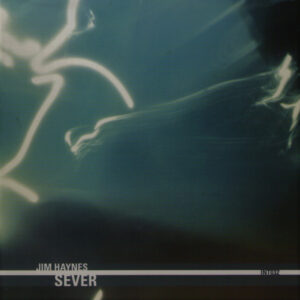
“Sever”
“It gives me great pleasure to present Sever, the third solo album by San Francisco-based composer Jim Haynes, whose singular music evades simple attempts to describe it. The process of decaying and wearing down materials is implied in Sever; its passages of rough clang and cyclic scraping metal seem implacably tangible, as if one is witnessing time-lapsed erosion in action. For me, Sever conjures images of oncoming storms, abandoned industrial sites, huge empty warehouses, creaking glass, ships rocking in a port, the middle of the ocean far from land. Sever is an engaging album of evocative, highly visual drone music made up of layers upon organic layers that are in constant motion, and yet seem somehow still. Jim Haynes has exhibited at Westspace (Melbourne, Australia), Diapason (New York), Jack Straw Productions (Seattle), and Works (San Jose), Eyedrum (Atlanta). He has collaborated with Loren Chasse (as the duo Coelacanth), Keith Evans, Steve Stapleton (Nurse With Wound), and irr.app.(ext.). He runs the acclaimed Helen Scarsdale label, and works as the Editorial Director for 23five, a nonprofit organization dedicated to the development and increased awareness of sound arts within the public arena. He has written extensively on sound art, noise culture, minimalism, and general music experimentation for The Wire, The San Francisco Bay Guardian, Metro Pulse, The Sound Projector, and Chunklet.”
4,00€
In stock
LP
Jim HAYNES
“Flammable Materials from Foreign Lands”
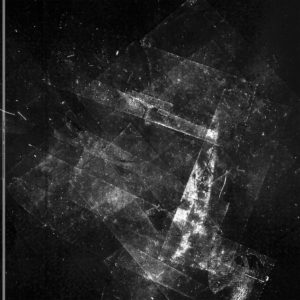
“Flammable Materials from Foreign Lands” has been issued as a clear vinyl LP with gorgeous matte-finish jackets featuring artwork by Jim Haynes. Mastered by James Plotkin, it has been released in a limited edition of 300 copies.
The new LP from Jim Haynes is a haunted and provocative endeavor, rust-covered and mysterious. It is the result of an immersive listening/recording process through which Haynes’ singular techniques intersected with an unfamiliar, disquieting landscape…
“The album was mostly composed, recorded, and sketched during an Estonian residency at MoKS for a program that was hosted by Simon Whetham and John Grzinich called Active Crossover. The goal of that program was to bring together various artists whose work pertained directly or indirectly to environmental recordings. When John asked me about what kinds of spaces I was interested in seeking out before I arrived, I mentioned that I would like to investigate sites that had a considerable amount of electro-magnetic disruption which I could capture on radio along with sites of psychic distress.
The Estonian landscape is pocked with abandoned buildings of considerable size and decay. Many of the excursions for Active Crossover engaged the large crumbling Soviet-era structures. Given that the electricity was off in many of these sites, I had to rely on shortwave to capture any electro-magnetic disruptions instead of any fluctuations from shitty wiring or weird Soviet power transformers... and the radio reception from that particular time and that particular place (i.e. southeastern Estonia) was eerie and unsettled. The crackle, drone, and noise is unlike that which is heard in the United States, looming with a (possibly perceived) paranoia of the Russian state just a few kilometers away. That said, Estonia had experienced an encroachment from Russia as the Russian military kidnapped/extradited an Estonian intelligence officer who was on Estonian soil at the time not too far from where I was staying. Given the contemporary military actions of Russia reclaiming Crimea from Ukraine, this incident put many an Estonian on edge.
The A-side to 'Flammable Materials' reflects this aestheticized paranoia through bursts of static, pulsed noise, and atonal sinews of sustained frequency. The B-side is wholly more introspective, cutting up an Estonian radio broadcast into phonemes, disjointed phrases, and cryptic speech. What few words that can be recognized from the Estonian pertain to the forces of globalization. From the context of someone who understands very little of the language, these snippets of a female voice clip like a surrealist collage or a Dada poem. Compositionally, I was thinking very much of Robert Ashley’s “Purposeful Lady Slow Afternoon” and the Nurse With Wound recontextualization of such sounds.” - Jim Haynes
Based in California, Jim Haynes has exhibited internationally at the San Francisco Museum Of Modern Art, the Lausanne Underground Film Festival, the Berkeley Art Museum, WestSpace (Melbourne, Australia), and Diapason (New York). Recorded media has been published through Editions Mego, Ghostly International, Drone Records, Hooker Vision, Intransitive, Semperflorens, Elevator Bath, and The Helen Scarsdale Agency. He has also been awarded residencies at the Djerassi Resident Artists Program (California), Recombinant Media Labs (California), Jack Straw Productions (Seattle), and MoKS (Estonia). He has participated in a number of fruitful collaborations with Loren Chasse, Keith Evans, Steven Stapleton, and M.S. Waldron. Until 2015, Haynes was the Vice President and Curatorial Director for 23five Incorporated, a nonprofit organization dedicated to the development and increased awareness of sound arts within the public arena. He is also the lone occupant at The Helen Scarsdale Agency.
22,00€
Out of stock

LP
Jim HAYNES
“Electrical injuries”
Jim Haynes on the album: “electrical injuries was designed as an intense record. Something akin to a sustained self-immolation. The themes of corrosion and dislocation central to the research. Similarly, the source material and the means of production also maintains a lineage that dates back to my earlier compositions and designs. I still use shortwave radio, electric disruptions and varispeed motors along with a smattering of synthesized sound that have recently blossomed from a long-term residency at the recombinant media labs. I find myself deliberately pushing these tools to engage with more volatile frequencies and to pursue more aggressive strategies for upheaval. The ruptures are more acute. The harmonic dissonance is more pronounced. In this context, the concepts mentioned above become more existentially stark, eschewing the poetics of residues in favor of an accelerated disintegration. Torn, ripped, blown apart, dissolved in acid, left to rot, atomized, electrocuted.”
200 copies on 180g vinyl, cut by Flo Kaufmann, mastered by Giuseppe Ielasi.
12,00€