
In stock
LP
Félicia ATKINSON & Jeffre CANTU-LEDESMA
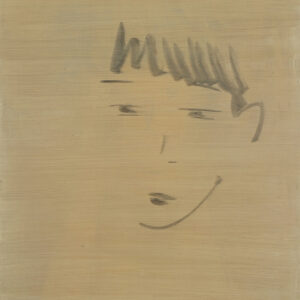
“Un hiver en plein été”
From its earliest utterances, experimental music has been particularly disposed to transnational and cross-cultural collaboration. Seeking the answer for a fundamental problem - how to transcend the boundaries of difference, distance, and time - it presents a means to find common ground and communicate through the elemental form of sound. Over the last 5 years, this precisely what the duo of Félicia Atkinson & Jefre Cantu-Ledesma has achieved, intertwining sublime sonorities across the geographic expanses between their respective homes in France and the United States. Their third album for Shelter Press, ‘Un hiver en plein été’ (‘A winter in the middle of summer’) - the first to have been largely recorded by Atkinson and Cantu-Ledesma together in the same space - distills a mesmerizing pallet of acoustic and electronic sources into an open discourse of radically poetic forms, offering glimpses of warmth and intimacy waiting in the post-covid world to come.
Both veteran experimentalists with celebrated bodies of solo work behind them - each traversing the challenges of electroacoustic practice in their own singular ways - prior to their first recorded outing in 2016, Félicia Atkinson and Jefre Cantu-Ledesma had only crossed paths in person once, initially meeting in San Fransisco during 2009. The mutual bond formed during that brief encounter flowered into their first LP, ‘Comme Un Seul Narcisse’, followed two years later by 2018’s ‘Limpid As The Solitudes’. Both recorded remotely - sending files back and forth, fortified by conversations on a vast range of subjects - these two albums were guided by impassioned conceptual nods to Guy Debord, Baudelaire, Brion Gysin and Sylvia Plath, while seeking resolutions for the challenges and unique possibilities that working at a distance provoked.
Where the triumphs of its predecessors rose from the bridging of disparate moments and divergent spaces, ‘Un hiver en plein été’ culminates as a celebration of closeness, a result of Atkinson and Cantu-Ledesma working together in the studio, responsively in real time, for the first time. Recorded in Brooklyn during August of 2019 - a handful of months before the pandemic would impose chasmic distances across the globe - its six discrete works, carefully crafted and finalized over the ensuing year, evolve seamlessly across the album’s two sides, weaving a sprawling tapestry of sonority, within which both artists retaining their own voices and visions, while drawing each other towards uncharted ground.
Atkinson likens the recording of ‘Un hiver en plein été’ to have been akin to “a playground”, each artist “hungry for each sound, a bit like the rush in the Louvre in Godard’s Bande à part”, to which Cantu-Ledesma adds that the process seemed to have had “a mind of its own”, with both “along for the ride”. This organic sense of entropy and enthusiasm - a joyous exploration of the unknown - guides the momentum of the album’s evolving arc, as unfolding chasms of ambient space ripple with humanity, life, and fleeting glimpses of the actions that led to its material core.
Crafted from deconstructed melodic elements and drifting long-tones - laden with subtle nods to Indian classical ragas and free jazz - searching patterns of speech, textural elements captured within the studio and the outside world, and searching tonal and percussive interventions, ‘Un hiver en plein été’ coheres as a multi-faceted series of electroacoustic dialogues; nesting conversations between two artists working at the juncture of abstraction and narration, field recording and harmony, and the philosophical and phenomenological, in search for the meaning of friendship, and its manifestation in pure sound.
21,00€
In stock
LP
Félicia ATKINSON & Jeffre CANTU-LEDESMA
“Limpid as the Solitudes”
"When is one plus one not two? When two paths converge and a new one appears. But what is this newly activated neural pathway? A Third Mind? In the 1960s, multimedia artist Brion Gysin cut through the words of a newspaper and rearranged them to reveal a new kind of truth contained within the words but not freed until his knife cut it loose. He described this as part of the Third Mind. Likewise, «Limpid As The Solitudes» cuts through sound-making techniques to enter a new zone of sonic revelations.
If you had to look for musical precedents, you might say the record recalls the turn-of-the-century Mille Plateaux glitch era, the warmth of La Monte Young’s raga-inspired microtonal electronic «dream house» drones, a sense of adventure evident in the acousmatic non-space recordings made by GRM artists in the 1960s/ 1970s, 4AD’s floor gazing guitar sound circa Cocteau Twins peak, and blissfully diverse field recordings. But you could equally equate it with entirely different recording sources. «Limpid As The Solitudes» has a widescreen sound that is both familiar and unfamiliar. Warm, comforting and also unsettling in unpredictable ways. Deliberate yet exploratory. It’s a record composed of opposites and contrasts. Following historical guidelines yet also throwing them out of the window. It’s hard to tell if the process of creating it was more akin to abstract painting but it might possibly be easier to understand if it was a large museum painting (to steal a thought from David Stubbs). To describe the album as ambient would indicate a much too passive engagement with the sound – leave it to play in the background and you’ll miss a lot of the joy.
Felicia Atkinson and Jefre Cantu-Ledesma describe the record as a series of postcards – «things and sounds that happen vertically as a slow ascension, vessels communicating in dreams.» In this collaborative recording, there is a feeling of «becoming» – things metamorphose – a concrete sound turns into a electronic sound that turns into a spiral-like melody which then furls / unfurls at the same time.
The title of the album – «Limpid As The Solitudes» – as well as track titles, are all verses stolen from Sylvia Plath’s poems – Atkinson notes «like dropped pearls from a lost collar.» Trying further to capture the records poetic impulses she notes it’s reflects «Empathy to objects and nature’s elements, meteorological states, seasons that answer to your heart, granular etchings carved and sustained to create a blurred sentimental landscape.» But notes with a sharpness that «the finale is more optimistic than Plath’s poetry. Love and lyricism win, the music soaring from deep water to interstellar galaxies.»
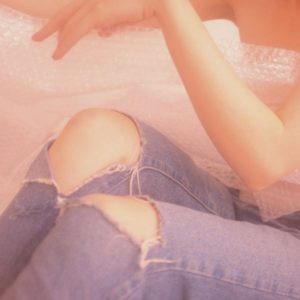
If you look at the cover, you’ll find another key clue – you’ll see an image created by photographer Julien Carreyn of a young women wearing destroyed jeans, playing with bubble wrap. The image is intended to give the viewer an eerie 1990’s feeling that echoes the recording. They note – «think films such as by «Trust» (Hal Hartley, 1990) or «Chuncking Express» (Wong Kar Wai, 1994).» They add «it’s the «ultra modern solitude» of characters lost in an early-digital urban vacuum, looking for a more time to wonder, a soul mate or just some compassion in the grey sky.»
Among the many other references for this album is how Google Maps have created new digital perceptions of space, Gilles Deleuze’s examination of Alice In Wonderland, Andre Bretons poems and more films including the classics «Sacrifice» (Tarkovsky), «Passenger» (Antonioni) and «Last Year In Marienbad» (Resnais). To dig into the more of the ideas and sources behind this record you’ll simply have to talk to the duo. We simply cannot give you the full depth here.
Be sure to come back to this record more than once – it’s then that it’s power will work – you’ll recall the sound of a lover, a garden you once walked through, an echo of a record you once loved. To be appreciated, «Limpid As The Solitudes» requires you to immerse yourself as if in a hot spring, letting the sounds float over you and alter your perceptions and memories." (Shelter Press)
Mastered and cut by Helmut Erler at D+M, Vinyl Edition housed in printed inner and outer jacket, with high-gloss lamination finish. Art by Julien Carreyn. Out on November 9, 2018.
18,00€