SEARCH
What are you looking for?
  • Account
  • Contact
  • Shipping
Facebook
  • Home
  • Shop
  • Sales
  • Infos
0 0

View Wishlist Add all to cart

0 0,00€ 0

No products in the cart.

Return To Shop
Shopping cart (0)
Subtotal: 0,00€

View cartCheckout

0 0
0 My Wishlist

View Wishlist Add all to cart

0 0,00€ 0
0 Shopping Cart

No products in the cart.

Return To Shop
Shopping cart (0)
Subtotal: 0,00€

View cartCheckout

  • Home
  • Shop
  • Sales
  • Infos
  • My Account
Facebook
Home Shop

Ernest BERK

Return to previous page
Grid
List
Show

In stock

2LP (purple)

Ernest BERK
“Electronic Music 1955-1984” (purple)

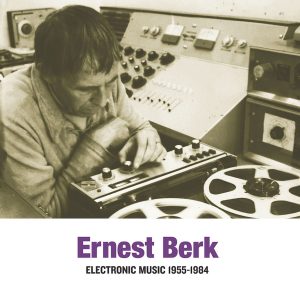
Purple vinyl version. For decades, Berk’s position as a 1950s pathfinder remained largely unrecognised, while his remarkable body of electronic music — comprising more than 280 compositions — lay dormant and neglected. Ernest Berk was a singular figure and a 1950s pathfinder in electronic music in Britain. With a background as a dancer and choreographer, he devoted much of his attention to electronic music for dance. The music collected here spans almost twenty years and was created across his three North London studios at Camden Road, Dorset Street, and the Diorama in Peto Place. In this particular combination of electronic composition and contemporary dance, Berk had no direct counterpart in Britain, with the American composer and choreographer Alwin Nikolais providing the closest parallel. Berk’s musical language evolved from early tape manipulation, microphone recordings and radio interference towards electronically generated sounds produced with tone, pulse and white-noise generators. Throughout these technological changes, he maintained a strict economy of means, often limiting himself to only a few carefully selected sound sources. Rhythm, pulse and percussive tape loops remained central to his compositions, reflecting his experience as both a dancer and percussionist. Gemini (Les Amies), Op. 52, in which recordings of a kettle lid grinding and spinning on various surfaces are juxtaposed with percussion loops, offers a striking example of this approach. Berk also regularly returned to completed works, altering them, extracting sections and reusing recognisable motifs in new compositions. In Your Image, Op. 43 and No Fish (or Oh Mr. Bard), Op. 29 reveal this practice of self-quotation particularly clearly. The latter is presented here in an eleven-minute version preserved on one of a group tapes that had disappeared from Berk’s collection after his death and were thought lost, until Berk’s friend and colleague Andreas Wirth revealed in 2024 that he held a number of them. Dance remained central to Berk’s work. He composed fourteen works for dancer and choreographer Rebecca Wilson, their collaboration continuing until 1976, and in 1971 established the Dance Theatre Commune with his third wife, Ailsa Berk. Nocturne (While I was asleep), Op. 163, with its repeating looped sequences suggestive of breathing, also existed in an hour-long version created for the DTC’s semi-dark, all-night “Liberation” dance sessions. One of his later works, Osterglocken, Op. 221 (1980), distils Berk’s enduring interest in restricted sound materials through subtle variations of timbre, gesture and pulse. For decades, Berk’s position as a 1950s pathfinder remained largely unrecognised, while his remarkable body of electronic music — comprising more than 280 compositions — lay dormant and neglected. This anthology forms part of the ongoing process of rediscovering this distinctive body of work.
21,50€
Add to cart

In stock

2LP

Ernest BERK
“Electronic Music 1955-1984”

Black vinyl version. For decades, Berk’s position as a 1950s pathfinder remained largely unrecognised, while his remarkable body of electronic music — comprising more than 280 compositions — lay dormant and neglected. Ernest Berk was a singular figure and a 1950s pathfinder in electronic music in Britain. With a background as a dancer and choreographer, he devoted much of his attention to electronic music for dance. The music collected here spans almost twenty years and was created across his three North London studios at Camden Road, Dorset Street, and the Diorama in Peto Place. In this particular combination of electronic composition and contemporary dance, Berk had no direct counterpart in Britain, with the American composer and choreographer Alwin Nikolais providing the closest parallel. Berk’s musical language evolved from early tape manipulation, microphone recordings and radio interference towards electronically generated sounds produced with tone, pulse and white-noise generators. Throughout these technological changes, he maintained a strict economy of means, often limiting himself to only a few carefully selected sound sources. Rhythm, pulse and percussive tape loops remained central to his compositions, reflecting his experience as both a dancer and percussionist. Gemini (Les Amies), Op. 52, in which recordings of a kettle lid grinding and spinning on various surfaces are juxtaposed with percussion loops, offers a striking example of this approach. Berk also regularly returned to completed works, altering them, extracting sections and reusing recognisable motifs in new compositions. In Your Image, Op. 43 and No Fish (or Oh Mr. Bard), Op. 29 reveal this practice of self-quotation particularly clearly. The latter is presented here in an eleven-minute version preserved on one of a group tapes that had disappeared from Berk’s collection after his death and were thought lost, until Berk’s friend and colleague Andreas Wirth revealed in 2024 that he held a number of them. Dance remained central to Berk’s work. He composed fourteen works for dancer and choreographer Rebecca Wilson, their collaboration continuing until 1976, and in 1971 established the Dance Theatre Commune with his third wife, Ailsa Berk. Nocturne (While I was asleep), Op. 163, with its repeating looped sequences suggestive of breathing, also existed in an hour-long version created for the DTC’s semi-dark, all-night “Liberation” dance sessions. One of his later works, Osterglocken, Op. 221 (1980), distils Berk’s enduring interest in restricted sound materials through subtle variations of timbre, gesture and pulse. For decades, Berk’s position as a 1950s pathfinder remained largely unrecognised, while his remarkable body of electronic music — comprising more than 280 compositions — lay dormant and neglected. This anthology forms part of the ongoing process of rediscovering this distinctive body of work.
20,00€
Add to cart

In stock

2 CD

Ernest BERK
“Electronic Music 1955-1984”

For decades, Berk’s position as a 1950s pathfinder remained largely unrecognised, while his remarkable body of electronic music — comprising more than 280 compositions — lay dormant and neglected. Ernest Berk was a singular figure and a 1950s pathfinder in electronic music in Britain. With a background as a dancer and choreographer, he devoted much of his attention to electronic music for dance. The music collected here spans almost twenty years and was created across his three North London studios at Camden Road, Dorset Street, and the Diorama in Peto Place. In this particular combination of electronic composition and contemporary dance, Berk had no direct counterpart in Britain, with the American composer and choreographer Alwin Nikolais providing the closest parallel. Berk’s musical language evolved from early tape manipulation, microphone recordings and radio interference towards electronically generated sounds produced with tone, pulse and white-noise generators. Throughout these technological changes, he maintained a strict economy of means, often limiting himself to only a few carefully selected sound sources. Rhythm, pulse and percussive tape loops remained central to his compositions, reflecting his experience as both a dancer and percussionist. Gemini (Les Amies), Op. 52, in which recordings of a kettle lid grinding and spinning on various surfaces are juxtaposed with percussion loops, offers a striking example of this approach. Berk also regularly returned to completed works, altering them, extracting sections and reusing recognisable motifs in new compositions. In Your Image, Op. 43 and No Fish (or Oh Mr. Bard), Op. 29 reveal this practice of self-quotation particularly clearly. The latter is presented here in an eleven-minute version preserved on one of a group tapes that had disappeared from Berk’s collection after his death and were thought lost, until Berk’s friend and colleague Andreas Wirth revealed in 2024 that he held a number of them. Dance remained central to Berk’s work. He composed fourteen works for dancer and choreographer Rebecca Wilson, their collaboration continuing until 1976, and in 1971 established the Dance Theatre Commune with his third wife, Ailsa Berk. Nocturne (While I was asleep), Op. 163, with its repeating looped sequences suggestive of breathing, also existed in an hour-long version created for the DTC’s semi-dark, all-night “Liberation” dance sessions. One of his later works, Osterglocken, Op. 221 (1980), distils Berk’s enduring interest in restricted sound materials through subtle variations of timbre, gesture and pulse. For decades, Berk’s position as a 1950s pathfinder remained largely unrecognised, while his remarkable body of electronic music — comprising more than 280 compositions — lay dormant and neglected. This anthology forms part of the ongoing process of rediscovering this distinctive body of work.
16,00€
Add to cart


Catalogue


  • BACK IN STOCK
  • SALES

New arrivals :

In stock

2LP (purple)

Ernest BERK
“Electronic Music 1955-1984” (purple)

Purple vinyl version. For decades, Berk’s position as a 1950s pathfinder remained largely unrecognised, while his remarkable body of electronic music — comprising more than 280 compositions — lay dormant and neglected. Ernest Berk was a singular figure and a 1950s pathfinder in electronic music in Britain. With a background as a dancer and choreographer, he devoted much of his attention to electronic music for dance. The music collected here spans almost twenty years and was created across his three North London studios at Camden Road, Dorset Street, and the Diorama in Peto Place. In this particular combination of electronic composition and contemporary dance, Berk had no direct counterpart in Britain, with the American composer and choreographer Alwin Nikolais providing the closest parallel. Berk’s musical language evolved from early tape manipulation, microphone recordings and radio interference towards electronically generated sounds produced with tone, pulse and white-noise generators. Throughout these technological changes, he maintained a strict economy of means, often limiting himself to only a few carefully selected sound sources. Rhythm, pulse and percussive tape loops remained central to his compositions, reflecting his experience as both a dancer and percussionist. Gemini (Les Amies), Op. 52, in which recordings of a kettle lid grinding and spinning on various surfaces are juxtaposed with percussion loops, offers a striking example of this approach. Berk also regularly returned to completed works, altering them, extracting sections and reusing recognisable motifs in new compositions. In Your Image, Op. 43 and No Fish (or Oh Mr. Bard), Op. 29 reveal this practice of self-quotation particularly clearly. The latter is presented here in an eleven-minute version preserved on one of a group tapes that had disappeared from Berk’s collection after his death and were thought lost, until Berk’s friend and colleague Andreas Wirth revealed in 2024 that he held a number of them. Dance remained central to Berk’s work. He composed fourteen works for dancer and choreographer Rebecca Wilson, their collaboration continuing until 1976, and in 1971 established the Dance Theatre Commune with his third wife, Ailsa Berk. Nocturne (While I was asleep), Op. 163, with its repeating looped sequences suggestive of breathing, also existed in an hour-long version created for the DTC’s semi-dark, all-night “Liberation” dance sessions. One of his later works, Osterglocken, Op. 221 (1980), distils Berk’s enduring interest in restricted sound materials through subtle variations of timbre, gesture and pulse. For decades, Berk’s position as a 1950s pathfinder remained largely unrecognised, while his remarkable body of electronic music — comprising more than 280 compositions — lay dormant and neglected. This anthology forms part of the ongoing process of rediscovering this distinctive body of work.
21,50€
Add to cart

In stock

2LP

Ernest BERK
“Electronic Music 1955-1984”

Black vinyl version. For decades, Berk’s position as a 1950s pathfinder remained largely unrecognised, while his remarkable body of electronic music — comprising more than 280 compositions — lay dormant and neglected. Ernest Berk was a singular figure and a 1950s pathfinder in electronic music in Britain. With a background as a dancer and choreographer, he devoted much of his attention to electronic music for dance. The music collected here spans almost twenty years and was created across his three North London studios at Camden Road, Dorset Street, and the Diorama in Peto Place. In this particular combination of electronic composition and contemporary dance, Berk had no direct counterpart in Britain, with the American composer and choreographer Alwin Nikolais providing the closest parallel. Berk’s musical language evolved from early tape manipulation, microphone recordings and radio interference towards electronically generated sounds produced with tone, pulse and white-noise generators. Throughout these technological changes, he maintained a strict economy of means, often limiting himself to only a few carefully selected sound sources. Rhythm, pulse and percussive tape loops remained central to his compositions, reflecting his experience as both a dancer and percussionist. Gemini (Les Amies), Op. 52, in which recordings of a kettle lid grinding and spinning on various surfaces are juxtaposed with percussion loops, offers a striking example of this approach. Berk also regularly returned to completed works, altering them, extracting sections and reusing recognisable motifs in new compositions. In Your Image, Op. 43 and No Fish (or Oh Mr. Bard), Op. 29 reveal this practice of self-quotation particularly clearly. The latter is presented here in an eleven-minute version preserved on one of a group tapes that had disappeared from Berk’s collection after his death and were thought lost, until Berk’s friend and colleague Andreas Wirth revealed in 2024 that he held a number of them. Dance remained central to Berk’s work. He composed fourteen works for dancer and choreographer Rebecca Wilson, their collaboration continuing until 1976, and in 1971 established the Dance Theatre Commune with his third wife, Ailsa Berk. Nocturne (While I was asleep), Op. 163, with its repeating looped sequences suggestive of breathing, also existed in an hour-long version created for the DTC’s semi-dark, all-night “Liberation” dance sessions. One of his later works, Osterglocken, Op. 221 (1980), distils Berk’s enduring interest in restricted sound materials through subtle variations of timbre, gesture and pulse. For decades, Berk’s position as a 1950s pathfinder remained largely unrecognised, while his remarkable body of electronic music — comprising more than 280 compositions — lay dormant and neglected. This anthology forms part of the ongoing process of rediscovering this distinctive body of work.
20,00€
Add to cart

In stock

2 CD

Ernest BERK
“Electronic Music 1955-1984”

For decades, Berk’s position as a 1950s pathfinder remained largely unrecognised, while his remarkable body of electronic music — comprising more than 280 compositions — lay dormant and neglected. Ernest Berk was a singular figure and a 1950s pathfinder in electronic music in Britain. With a background as a dancer and choreographer, he devoted much of his attention to electronic music for dance. The music collected here spans almost twenty years and was created across his three North London studios at Camden Road, Dorset Street, and the Diorama in Peto Place. In this particular combination of electronic composition and contemporary dance, Berk had no direct counterpart in Britain, with the American composer and choreographer Alwin Nikolais providing the closest parallel. Berk’s musical language evolved from early tape manipulation, microphone recordings and radio interference towards electronically generated sounds produced with tone, pulse and white-noise generators. Throughout these technological changes, he maintained a strict economy of means, often limiting himself to only a few carefully selected sound sources. Rhythm, pulse and percussive tape loops remained central to his compositions, reflecting his experience as both a dancer and percussionist. Gemini (Les Amies), Op. 52, in which recordings of a kettle lid grinding and spinning on various surfaces are juxtaposed with percussion loops, offers a striking example of this approach. Berk also regularly returned to completed works, altering them, extracting sections and reusing recognisable motifs in new compositions. In Your Image, Op. 43 and No Fish (or Oh Mr. Bard), Op. 29 reveal this practice of self-quotation particularly clearly. The latter is presented here in an eleven-minute version preserved on one of a group tapes that had disappeared from Berk’s collection after his death and were thought lost, until Berk’s friend and colleague Andreas Wirth revealed in 2024 that he held a number of them. Dance remained central to Berk’s work. He composed fourteen works for dancer and choreographer Rebecca Wilson, their collaboration continuing until 1976, and in 1971 established the Dance Theatre Commune with his third wife, Ailsa Berk. Nocturne (While I was asleep), Op. 163, with its repeating looped sequences suggestive of breathing, also existed in an hour-long version created for the DTC’s semi-dark, all-night “Liberation” dance sessions. One of his later works, Osterglocken, Op. 221 (1980), distils Berk’s enduring interest in restricted sound materials through subtle variations of timbre, gesture and pulse. For decades, Berk’s position as a 1950s pathfinder remained largely unrecognised, while his remarkable body of electronic music — comprising more than 280 compositions — lay dormant and neglected. This anthology forms part of the ongoing process of rediscovering this distinctive body of work.
16,00€
Add to cart

In stock

LP

COIL
“How To Destroy Angels”

First reissue of the seminal 1984 EP, originally released on L.A.Y.L.A.H. 180 gr Audiophile LP, Black vinyl, (1 side audio, 1 side etched), Insert.
18,00€
Add to cart

In stock

2 LP

Ragnar JOHNSON – Ralph HARRISSON
“Ethiopian Musics 1971”

These recordings were made in the Empire of Ethiopia in 1971. The music recorded in Addis Ababa uses masenko fiddles, craar and bagana lyres, washint flutes and kabaro drums. There is folk music played in Addis Ababa tej beit bars with vocals, craar, masenko, washint and kabaro, Ethiopian Christian songs accompanied by the bagana large 'Harp of David' and Mary Armede's craar accompanied Amharic sung poetry. There are Afar chants and flutes from the Danakil Desert, Anuak thumb piano, Nuer harp and dance drumming and a Fila Flute Dance from the Sudan and Kenya borderlands. Ethiopian Musics 1971 is one of those albums where each musical moment is pure, intoxicating gold, while also being greater through the sum of its parts. There are the many songs, forming a rich tapestry of remarkable range across the respective two LPs/CDs (moments that wondrously flirt with sonic abstraction; hypnotic rhythms; pulsing chant; melodies that, in structural arrangement and tonal combination, help us reframe how such a thing might be understood, and a great deal more), each imbued with a remarkable directness and emotive sensibility, and there is the stunning quality of these recordings themselves, transporting each sound to our ears as though we intimately share its creator's space, while being imbued with the pure heart and remarkable spirit with which they were made. As we said before, it's little wonder, once heard, why these recordings and this music feels as fresh and relevant (enduring more than 50 years) today as when they were made. Once again, Sub Rosa has raised the bar with this essential addition to the incredible work that Ragnar Johnson and Ralph Harrisson did back in Ethiopia during 1971, radically expanding our access to the sounds that they captured with these stunning, beautifully produced 2LP and 2CD editions. A few words from the recordists: 'The recordings that Ragnar Johnson and Ralph Harrisson made in Ethiopia in 1971 have preserved the skill of the musicians and the beauty of the music for posterity. After more than fifty years the music lives on for the listener.' While Johnson's recording career was relatively brief, ending toward the end of the decade when he turned increasingly to teaching in UK universities - specifically the anthropology of art and social anthropology - his impact on the field was lasting. Between 1971 and 1979, in addition to those he made in Ethiopia, he made hugely significant recordings in Yemen (also issued by Lyrichord before being reissued by Sub Rosa) and Papua New Guinea, which were originally released by David Toop's Quartz Publications to wide celebration, before being revisited by Ideologic Organ in 2023. While it's worth noting that commercial releases of ethno musicological recordings by labels like Folkways, Lyrichord, and Ocora were still in their relatively early days when he entered the field, Johnson's recordings quickly stood apart for their vivid qualities and clarity of space, allowing them to stand the test of time. There is a clear sense of space, and the cries of the flutes exist across the entire stereo field; it is a reflection of his skill as a field recordist that these recordings continue to be reissued over fifty years later. As he later stated: "I used a Uher Report L stereo tape recorder, BASF quarter inch tapes at a recording speed of seven and a half inches per second with two directional microphones mounted to record an isosceles triangle of stereo sound. The location of the microphones and musicians was critical. The musicians were fully informed of all aspects of the recording process... I used to enjoy being in the moment and hearing something wonderful despite the stress of the vigilance required to ensure that the recordings were accomplished according to plan. The responsibility is to record and document the music as effectively as possible so that it has been preserved for posterity. It is better to actually record music than to sit in a seminar room debating the ethics of recording music." It is this very ethos and sense of clarity that can be encountered across the length of Ethiopian Musics 1971.
23,00€
Add to cart

In stock

LP

David TUDOR
“Anima Pepsi”

Blume presents Pepsibird and Anima Pepsi, two works composed in 1970 by David Tudor, one of electronic music’s most visionary pioneers, for the legendary Pepsi-Cola Pavilion at Expo ’70 in Osaka. Created by Experiments in Art and Technology (E.A.T.), the pavilion was conceived as a radical immersive environment where sound, architecture, light and technology converged.

Having emerged as one of the leading interpreters of the post-war avant-garde, performing works by John Cage, Karlheinz Stockhausen, Morton Feldman and many others, Tudor gradually abandoned the piano to develop his own electronic instruments and systems. For the Pepsi Pavilion, he helped create a unique sound environment using 37 speakers, allowing sounds to move through the space in complex stationary and rotating patterns. Pepsibird and Anima Pepsi take the principles of musique concrète into strange new territories. The former draws on recordings of human and animal brain activity, transforming subtle pulses and textures into vast, resonant fields of sound. The latter turns recordings of insects, animals and human voices into detailed, pointillistic patterns and otherworldly atmospheres through electronic processing. Radically experimental, unpredictable and technologically visionary, these works anticipate many later developments in electroacoustic music, from field recording and live processing to immersive spatial sound. More than fifty years later, they remain remarkable documents of an optimistic moment when electronic music sought not simply to create new sounds, but to imagine entirely new environments for listening and experience.
25,00€
Add to cart

CORTICALART

Mail-order and distribution of experimental music (electroacoustic, improvised music, sound-art, noise, sound poetry), past or present, along with some books, magazines and DVDs.

NEWSLETTER

INFORMATIONS

  • Contact
  • My Account
  • Shipping

CORTICALART / Ass. META
44, rue Camille Sauvageau
33800 Bordeaux
France

© Corticalart 2026    • Terms Of Use    • Legal Notice    • Privacy Policy

• CGV    • Mentions légales    • Politique de confidentialité