
Out of stock
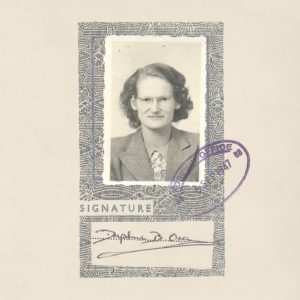
4 LP
Daphne ORAM
“Oramics”
Throughout her life, Oram was a wildly original musician, inventor and theorist who refused to bow to convention. While Delia Derbyshire had more or less become a household name, it was only when Clive Graham compiled ‘Oramics' for a CD release in 2007 that Daphne's legacy started to extend beyond the fringes. In the intervening years (aided by the work of the Daphne Oram Trust and Oram’s archive at Goldsmith’s in London) there have been countless articles, features, a play, an exhibition at the science museum and even a creative arts building and several record labels and arts awards named in Daphne’s honour - going some way to restore her place as a recognised pioneer of electronic music.
To recap, Oram was the founder of the BBC Radiophonic Workshop, a department she more or less single-handedly created in 1958 camping out at the BBC studios for nights on end splicing tapes and working with various modified machines to carefully arrange her abstract soundscapes. Eventually the BBC bent under her pressure and, in studio 13, created the soon-to-be-legendary Radiophonic Workshop - with Oram its first director.
Among her countless other achievements, Oram is also cited as the first woman to design and build an electronic musical instrument, one that worked around the 'drawn-sound' technique whereby strips of 35mm film would be manipulated before being fed into her home-made 'Oramics' machine which would convert and 'read' the film into sound. She was also a prolific writer and lecturer on electronic music and studio techniques, developing concepts of spatial sound years before terms like "spatial sound” were even used.
Despite her considerable and historic list of achievements, Oram's life and work remained largely unknown by the wider public for many years until Clive Graham compiled this set. Spanning 44 tracks, it demonstrates Oram's work as some of the most varied and groundbreaking electronic music ever made. As opposed to so much of the Radiophonic-era material that has surfaced over the last few decades, Oram's work is often characterised by a much more layered and introspective quality, offsetting playful interludes and commercial recordings with beautiful, immersive pieces like the breathtaking "Pulse Persephone" and "Bird of Parallax” - highly atmospheric and experimental variants of musique concrète and tape music that still take our breath away 45 years later.
45,00€
Out of stock
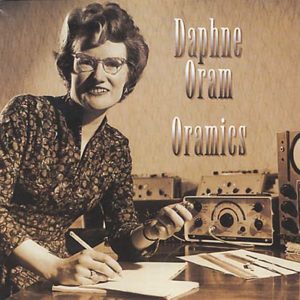
2 CD
Daphne ORAM
“Oramics”
“Daphne Oram is best known for her design of her Oramics system, and also for co-founding the BBC Radiophonic Workshop in 1957, but until now the only easily available piece of music by her on CD has been the 8 minute long ‘Four Aspects’. There was also a 7” EP from 1962 on HMV, released as part of the ‘Listen, Move and Dance’ series that was specifically designed to help children dance. Although the short pieces on this record are very basic it could be argued that this is the first ever electronic dance record !
Now for the first time is a survey of nearly all the major pieces that she produced since her departure from the BBC in January 1959 until her final tape piece in 1977. During this time she worked independently in her home studio, and thanks to a grant from the Gulbenkian Foundation in 1962 she was able to persue her interests. In Britain there were no state funded studios other than the Radiophonic Workshop which mainly existed at the behest of the drama studio and was not generally seen as a place to develop personal artistic ideas. There were also no university studios at this time, so it was necessary for British electronic composers to be self funded. Throughout this period she devoted her attention to developing her Oramics ‘drawn sound’ system, which consisted of a large machine that enabled drawn patterns to be converted into sound. This system was eventually fully realised in the late 60’s and several pieces here incorporate its use.
The 2 and a half hours of music on this 2CD set covers the whole range of Oram’s post BBC output. All of the music is electronic with some occassional use of real instruments, especially small percussion and piano frame. There is also some use of musique concrète techniques. The works fall roughly into the following catagories: works for TV and cinema advertising, film soundtracks, music for theatre productions, installations and exhibitions as well as concert pieces and several studio experiments. There are also a few short pieces that resulted from an experimental music course given by Oram at a high school in Yorkshire in 1967.”
Now for the first time is a survey of nearly all the major pieces that she produced since her departure from the BBC in January 1959 until her final tape piece in 1977. During this time she worked independently in her home studio, and thanks to a grant from the Gulbenkian Foundation in 1962 she was able to persue her interests. In Britain there were no state funded studios other than the Radiophonic Workshop which mainly existed at the behest of the drama studio and was not generally seen as a place to develop personal artistic ideas. There were also no university studios at this time, so it was necessary for British electronic composers to be self funded. Throughout this period she devoted her attention to developing her Oramics ‘drawn sound’ system, which consisted of a large machine that enabled drawn patterns to be converted into sound. This system was eventually fully realised in the late 60’s and several pieces here incorporate its use.
The 2 and a half hours of music on this 2CD set covers the whole range of Oram’s post BBC output. All of the music is electronic with some occassional use of real instruments, especially small percussion and piano frame. There is also some use of musique concrète techniques. The works fall roughly into the following catagories: works for TV and cinema advertising, film soundtracks, music for theatre productions, installations and exhibitions as well as concert pieces and several studio experiments. There are also a few short pieces that resulted from an experimental music course given by Oram at a high school in Yorkshire in 1967.”
17,00€