
Out of stock

CD
Christina KUBISCH
“Italienische Stücke”
Release of conceptual and perfomative pieces by Christina Kubisch composed & realised between 1974 and 1984, during Kubisch's years in Italy.
Christina Kubisch (born 1948 in Bremen, lives and works in Hoppegarten, Germany) studied painting, music and electronics in Hamburg, Graz, Zürich and Milano, where she graduated. Performances, concerts and works with video in the seventies, subsequently sound installations, sound sculptures and work with ultraviolet light. Her compositions are mostly electroacoustic, but she has written for ensembles as well. Since 2003 she works again as a perfomer and collaborates with various musicians and dancers.
Christina Kubisch has been a visiting professor in Maastricht, Paris and Berlin. She has been a professor for sound art at the Academy of Fine Arts, Saarbrücken, Germany, from 1994 to 2013. She is a member of the Akademie der Künste Berlin since 1997.
Six panel DVD-sized digipak, illustrated with archival photos of CK and extensive programme, notes in English. Edition of 300 copies.
14,50€
In stock
CD
Christina KUBISCH
“Schall und Klang”
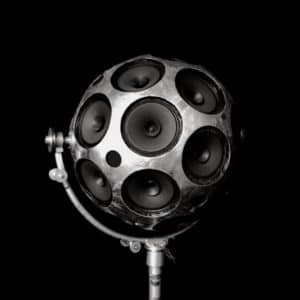
»Schall und Klang« is the result of Christina Kubisch's extensive fieldwork on the trail of Hermann Scherchen (1891-1966), conductor and key figure in 20th century new music. After moving to the village of Gravesano (Ticino/Northern Italy) in 1954, Scherchen established an electroacoustic experimental studio on his premises and created a meeting place for scientists, composers, musicians and sound engineers from all over the world. Among his guests were Iannis Xenakis, Luc Ferrari, Edgar Varèse and Luigi Nono, just to name a few. Originally commissioned and broadcasted by Deutschlandfunk Kultur, »Schall und Klang« is a personal portrait of Scherchen and his time in Gravesano. Kubisch brings together archival footage from the Scherchen estate and the Scherchen archive at Akademie der Künste in Berlin, tape recordings, recited texts from Scherchen's own quarterly »Gravesaner Blätter« as well as her own compositions and field recordings referring to her research made on site in 2016.
»I have built this studio for myself [...] as a direct activity for my existence. I live Gravesano« (Hermann Scherchen)
Production: Deutschlandfunk Kultur / Studio für Elektroakustische Musik der Akademie der Künste / Studio Hoppegarten 2017. Edition of 500 copies in Digipak, incl. 8pp booklet with photos and texts by Christina Kubisch.
12,50€
Out of stock
CD
Christina KUBISCH
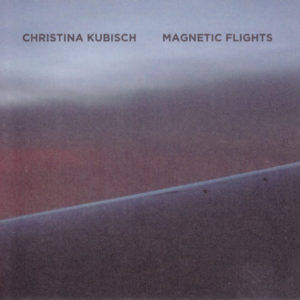
“Magnetic flights”
“Two brand new pieces from one of the most exciting, active & relevant members of the first generation sound artists. Magnetic Flights is a perfect follow up to Five Electrical Walks (imprec167) and it is being released at the same time as a collection of two of Kubisch’s unreleased archival pieces, also on Important.
Magnetic Flights is entirely made of electromagnetic field recordings of international airports and inside airplanes. The recordings of this piece were made by Christina Kubisch on her travels in 2007 from and to the airports of Bukarest, Manchester, Chicago, Seoul, Munich, Amsterdam, Zurich, Frankfort, Paris, Lisbon, Berlin, Pisa, Milan and London. The sounds were not altered electronically nor changed in any other way. The only tool, which was used for a part of it, was a filtering program (DINR)
All recordings were made with the help of special sensitive wireless headphones, by which the aboveground and underground electromagnetic fields are detected, amplified and made audible. The headphones are custom made and have been develeoped by myself and constructed by the engineer Manfred Fox, Berlin. The sounds are much more musical than one could expect. There are complex layers of high and low frequencies, loops of rhythmic sequences, groups of tiny signals, long drones and many things which change constantly and are hard to describe.
Magnetic Flights consists of three parts with a short special sound at the beginning and another one at the end. The piece starts with an electromagnetic sound recorded just before departure and continues with the material of flight radiations recorded inside different airplanes. These electromagnetic fields slightly change pitch during departure and arrival, but remain quite constant during the flight itself. The relatively high and compact sounds gradually build up a dense layer of vibrations with continuous minimal variations. In the second part some of the previous flight radiations gradually become filtered. The single signals mingle into a mix of small, short, nervous and very rhythmic signals. Their origin might be radio waves, communication signals with the tower , internet and atmospheric disturbances., but this is only a guess. The third part, the situation of arrival or transition, is a mix of typical electromagnetic sounds in the waiting areas of airports such as the deep vibrations of the screens of monitors which slowly fade in and out. The piece ends with the electrical flickering of an electromagnetic field of unknown origin.”
Magnetic Flights is entirely made of electromagnetic field recordings of international airports and inside airplanes. The recordings of this piece were made by Christina Kubisch on her travels in 2007 from and to the airports of Bukarest, Manchester, Chicago, Seoul, Munich, Amsterdam, Zurich, Frankfort, Paris, Lisbon, Berlin, Pisa, Milan and London. The sounds were not altered electronically nor changed in any other way. The only tool, which was used for a part of it, was a filtering program (DINR)
All recordings were made with the help of special sensitive wireless headphones, by which the aboveground and underground electromagnetic fields are detected, amplified and made audible. The headphones are custom made and have been develeoped by myself and constructed by the engineer Manfred Fox, Berlin. The sounds are much more musical than one could expect. There are complex layers of high and low frequencies, loops of rhythmic sequences, groups of tiny signals, long drones and many things which change constantly and are hard to describe.
Magnetic Flights consists of three parts with a short special sound at the beginning and another one at the end. The piece starts with an electromagnetic sound recorded just before departure and continues with the material of flight radiations recorded inside different airplanes. These electromagnetic fields slightly change pitch during departure and arrival, but remain quite constant during the flight itself. The relatively high and compact sounds gradually build up a dense layer of vibrations with continuous minimal variations. In the second part some of the previous flight radiations gradually become filtered. The single signals mingle into a mix of small, short, nervous and very rhythmic signals. Their origin might be radio waves, communication signals with the tower , internet and atmospheric disturbances., but this is only a guess. The third part, the situation of arrival or transition, is a mix of typical electromagnetic sounds in the waiting areas of airports such as the deep vibrations of the screens of monitors which slowly fade in and out. The piece ends with the electrical flickering of an electromagnetic field of unknown origin.”
12,00€