SEARCH
What are you looking for?
  • Account
  • Contact
  • Shipping
Facebook
  • Home
  • Shop
  • Sales
  • Infos
0 0

View Wishlist Add all to cart

0 0,00€ 0

No products in the cart.

Return To Shop
Shopping cart (0)
Subtotal: 0,00€

View cartCheckout

0 0
0 My Wishlist

View Wishlist Add all to cart

0 0,00€ 0
0 Shopping Cart

No products in the cart.

Return To Shop
Shopping cart (0)
Subtotal: 0,00€

View cartCheckout

  • Home
  • Shop
  • Sales
  • Infos
  • My Account
Facebook
Home Shop

Chris ABRAHAMS

Return to previous page
Grid
List
Show

In stock

LP

Chris ABRAHAMS
“Follower”

On the opening track, Costume, bass piano meanders through a wilderness of de-tuned bells and organ swells; a strange sort of festival. Low frequency sighs evenly punctuate, like a pump or a heartbeat. It’s a procession that takes it time as it wanders the terrain, brought to a close with transcendent distortion. On track 2, New Kind of Border, muscular modal piano surfs among waves of percussion and analogue synthesisers. A buffeting travel. Follower is Abrahams’ 6th album for Room 40 and showcases his continuing interest in the ambiguous spaces between music and noise; tonality and atonality; rhythm and texture. All four tracks have piano as a key factor: in one instance, high-pitched and atonal; in another, emotive yet distant as if projected on to a screen. Follower presents the listener with a sound world of colourful juxtapositions, rich orchestration and organically open forms.
24,00€
Add to cart

Out of stock

CD

Chris ABRAHAMS
“Appearance”

A note from Lawrence English: I first met Chris Abrahams sometime in the early part of the 00s. In 2003, I had the pleasure of spending a very late night glued to his sofa, lights diminished, being introduced to his solo work. That listening experience became known as Thrown, a record that to this day haunts me with its electronic timbral shifts and wheezing positive organ textures. Since that release, Chris’s work has resided at the very heart of Room40. His music captured across his five solo editions is, I believe, both utterly personal and compellingly diverse. It is music that has been a source of respite, provocation and, most of all, inspiration for me (and many of you I am sure). Over the years, I have gently encouraged Chris to consider making a solo piano recording to compliment the series of electro-acoustic works he has made for us. Appearance is the manifestation of this encouragement. Appearance typifies a very particular approach to piano that Chris has cultivated across three decades. He creates a pairing of rippling cascades of tonality with a macro-minimalist compositional form that invites a sense of perpetual release. Notes cycle and gently coalesce to create weaving melodic patterns that accumulate into a slow unfolding of form, across time. Chris Abrahams’ pieces, in many respects, defy an easy categorisation. He creates music that is unto itself, but profoundly open to the situations in which is it encountered. It’s this porous quality that makes his work so intoxicating. It is a music of moments, cycling in memory and accumulating across time in a way that is without compare. I can’t recommend Appearance to you strongly enough. Chris Abrahams, Piano Recorded by Phil Punch at electric avenue studios November 28, 2019
12,00€
Read more

In stock

LP

Chris ABRAHAMS
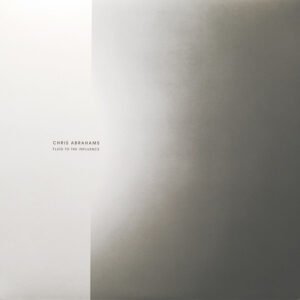
“Fluid to the influence”

Chris Abrahams returns in 2016 with a new edition for Room40, Fluid To The Influence. Building upon the foundation of his previous three editions, Abrahams charts out a divergent course through lilting piano flows, distended organ passages, thunderous electronic eruptions and focused concrète explorations. Fluid To The Influence spans a huge spectrum of sound, each movement calling forward to the next in a flowing motion that demonstrates Abrahams’ commitment to and interest in the album as an artistic form. Known widely for his piano work with post-everything trio The Necks, Abrahams output as a composer orbits an otherly sonic sphere. Piano is just one element he draws upon, creating a deliberately expansive sound field within which the listener is invited to become lost. He is one of the most significant voices in Australian music, and arguably one of the most restless and original artists creating work today.
20,00€
Add to cart

Out of stock

CD

Chris ABRAHAMS
“Memory night”

Chris Abrahams’ Memory Night is his third edition for Room40 - Play Scar and Thrown preceding this album. Widely recognised as the pianist for Australian liminal improvisation trio The Necks, Chris Abrahams’ solo work etches out an entirely different universe. It’s a place that is entirely his own, unashamedly unique and at times startling - yet always alluring. On Memory Night, Abrahams’ expands his sonic palette, building on the uneasy frontiers of the highly regarded Play Scar. Never content to revisit past glories, Abrahams’ charts course into unfamiliar sound spaces, where electronics and instruments meet in a constant state of tension and release. Nothing is quite what it appears upon first listen and as a result Memory Night demands an attentive ear. Recorded across 2011 and 2012, Memory Night is a haunted series of compositions that provoke and compel. Chris Abrahams has created what can only be described as a profound rendering of contemporary composition - a powerful, yet delicate evocation of sound, where instruments and electronics melt and are reformed.
12,00€
Read more

In stock

CD

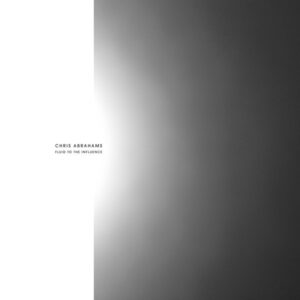
Chris ABRAHAMS
“Fluid to the influence”

Chris Abrahams returns in 2016 with a new edition for Room40, Fluid To The Influence. Building upon the foundation of his previous three editions, Abrahams charts out a divergent course through lilting piano flows, distended organ passages, thunderous electronic eruptions and focused concréte explorations. Fluid To The Influence spans a huge spectrum of sound, each movement calling forward to the next in a flowing motion that demonstrates Abrahams’ commitment to and interest in the album as an artistic form. Known widely for his piano work with post-everything trio The Necks, Abrahams output as a composer orbits an otherly sonic sphere. Piano is just one element he draws upon, creating a deliberately expansive sound field within which the listener is invited to become lost. He is one of the most significant voices in Australian music, and arguably one of the most restless and original artists creating work today.
13,00€
Add to cart


Catalogue


  • BACK IN STOCK
  • SALES

New arrivals :

In stock

4 CD

Cornelius CARDEW
“The Great Learning”

All seven Paragraphs of Cardew's The Great Learning by the Scratch Orchestra Strasbourg under Didier Aschour, an orchestra born from an open call and two years of shared practice: 4CD box with a 116-page booklet. 4CD box with a 116-page booklet. Shiiin's thirteenth release is a complete recording of Cornelius Cardew's The Great Learning, the seven Paragraphs written between 1968 and 1971 on the opening of the Ta Hio (Daxue, "the Great Learning"), the Confucian treatise on self-cultivation and the harmonious ordering of collective life, in Ezra Pound's translation. Mixing voices, instruments, objects and actions through graphic and verbal notation, the score prescribes relationships between the performers more than sounds, and shares out among them the responsibility for the form. The work is inseparable from the Scratch Orchestra, which Cardew founded in London in 1969 with Michael Parsons and Howard Skempton. The Scratch Orchestra Strasbourg grew out of an open call launched by the Musica festival in spring 2023, with no condition of level or background: amateurs and professionals, the self-taught and people with no previous practice. First gathered in September 2023, the group worked regularly under Didier Aschour, with members of the Dedalus ensemble and Strasbourg musicians versed in improvisation, graphic scores and open protocols passing on tools rather than imposing a reading. The aim was neither to reproduce a traditional orchestra nor to rebuild Cardew's, but to put his principle back into play: turning a diversity of skills into a shared resource. On 15 September 2024 the orchestra performed all seven Paragraphs in the Saint-Paul church in Strasbourg, a concert of nearly seven hours that opened the music programme of the 42nd Musica festival, in dialogue with Mode d'emploi, the exhibition of instruction-based works at the city's museum of modern and contemporary art. The group went on working on other pieces and came back to The Great Learning for this recording, made in the same church from 27 to 29 November 2025. What it fixes is an interpretation shaped by more than two years of common practice, not a line-up assembled for a single date, which brings it close to Cardew's own idea of the orchestra as a lasting space of practice, learning and collective change. Alongside Aschour play Lou Renaud-Bailly, Jeanne Barbieri, Stéphane Clor, Yannick Guédon, Jean-Philippe Gross and Thierry Madiot, with Jérémy Marchal on the church organ, the Pelicanto choir directed by Mathilde Mertz and the De-ci De-là choir directed by Cédric Dosch. Paragraphs 1 to 3 fill the first disc and Paragraph 4 the second; Paragraph 5 alone runs over an hour and a quarter on the third, and the fourth holds Paragraphs 6 and 7. The booklet opens with a text by Stéphane Roth and gathers two essays. Dean Inkster's, written for the 2009 Cardew exhibition at CAC Brétigny, places the work within the composer's aesthetic and political path and shows how the dispersal of the voices opens onto a shared freedom of listening rather than a fusion of the collective. Matthieu Saladin's, first published in Revue & Corrigée in 2020, examines the devices of each Paragraph as so many attempts to contain the relations of domination that form again within any group.
49,00€
Add to cart

In stock

2LP

Eliane RADIGUE
“Occam XIII, Occam River XI, Occam V”

Occam Ocean is a series of acoustic compositions made for and with individual instrumentalists by the late French composer Éliane Radigue. Extending the interactive process pioneered in Naldjorlak (2005–2009), Occam Ocean employs a scoreless method of composing in dialogue with each performer. Dating back to 2011, the series has proliferated almost organically, growing out of a musical and social dynamic of combinatoriality and multiplication to a catalog of more than eighty discrete compositions. This body of work stands as one of the most extraordinary late-career outpourings in recent music history. The Occam series was catalyzed in part by a visit to the Natural History Museum in Los Angeles, where Radigue encountered a depiction of the electromagnetic spectrum—from radio signals to gamma rays—which impressed upon her the minuscule range of human hearing relative to the seemingly unlimited compass of universal wavelength and frequency. The Occam compositions seem to address this vertiginous confrontation with the infinite; each individual composition elaborates a radically reduced technique or sound process, frequently working outward from only a handful of fundamental tones, to expose the flickering, idiosyncratic spectral behavior of the instrument. The reference to William of Ockham indicates a principled commitment to parsimony; paradoxically, the reduction in material content makes possible an incommensurate richness in perceived acoustical detail. Notable in the Occam series is the inextricable identification of the composition with the performer for whom, and with whom, it was made. The particular sounds and techniques of each individual performer are thus indelibly stamped in the composition; the piece composes the playing of that musician, as much as the musician plays the composition. The time-honored division of labor between performer and composer is thus suspended and reconfigured, proposing a model for new music composition that has not yet been fully theorized or understood. Occam XIII, Occam River XI (presented here in two distinct readings, which reveal subtle variations in instrumental response), and Occam V feature two longtime collaborators of Radigue in solo and duo formations. Charles Curtis, the first instrumentalist for whom Radigue wrote an acoustic composition (Naldjorlak), performs on cello, while Dafne Vicente-Sandoval—whose parallel investigations into her instrument’s complex sounding properties led her to collaborate with Radigue—performs on bassoon. The works were recorded at Temple Saint-Théodule, La Tour-de-Peilz, Switzerland, during a 2024 residency at La Becque, a setting previously explored by the musicians for its distinctive acoustic properties.
45,00€
Add to cart

Out of stock

CD

Eliane RADIGUE
“Occam XIII, Occam River XI, Occam V”

Occam Ocean is a series of acoustic compositions made for and with individual instrumentalists by the late French composer Éliane Radigue. Extending the interactive process pioneered in Naldjorlak (2005–2009), Occam Ocean employs a scoreless method of composing in dialogue with each performer. Dating back to 2011, the series has proliferated almost organically, growing out of a musical and social dynamic of combinatoriality and multiplication to a catalog of more than eighty discrete compositions. This body of work stands as one of the most extraordinary late-career outpourings in recent music history. The Occam series was catalyzed in part by a visit to the Natural History Museum in Los Angeles, where Radigue encountered a depiction of the electromagnetic spectrum—from radio signals to gamma rays—which impressed upon her the minuscule range of human hearing relative to the seemingly unlimited compass of universal wavelength and frequency. The Occam compositions seem to address this vertiginous confrontation with the infinite; each individual composition elaborates a radically reduced technique or sound process, frequently working outward from only a handful of fundamental tones, to expose the flickering, idiosyncratic spectral behavior of the instrument. The reference to William of Ockham indicates a principled commitment to parsimony; paradoxically, the reduction in material content makes possible an incommensurate richness in perceived acoustical detail. Notable in the Occam series is the inextricable identification of the composition with the performer for whom, and with whom, it was made. The particular sounds and techniques of each individual performer are thus indelibly stamped in the composition; the piece composes the playing of that musician, as much as the musician plays the composition. The time-honored division of labor between performer and composer is thus suspended and reconfigured, proposing a model for new music composition that has not yet been fully theorized or understood. Occam XIII, Occam River XI (presented here in two distinct readings, which reveal subtle variations in instrumental response), and Occam V feature two longtime collaborators of Radigue in solo and duo formations. Charles Curtis, the first instrumentalist for whom Radigue wrote an acoustic composition (Naldjorlak), performs on cello, while Dafne Vicente-Sandoval—whose parallel investigations into her instrument’s complex sounding properties led her to collaborate with Radigue—performs on bassoon. The works were recorded at Temple Saint-Théodule, La Tour-de-Peilz, Switzerland, during a 2024 residency at La Becque, a setting previously explored by the musicians for its distinctive acoustic properties.
23,00€
Read more

In stock

CD

David GRANSTRÖM
“Echoes of Impermanence”

Echoes of Impermanence sees David Granström’s previously established strict hermetic minimalist musical topography undergo a major shift with the introduction of the electric guitar, which instigates a breaking of the sealed crystal walls of the composer’s previous work within music of long duration and precise digital synthesis, bringing forth a riff-laden spirit previously lingering below the surface. The album was recorded at the world-renowned Elektronmusikstudion EMS as well as in the composer’s own studio with the help of Mats Erlandsson and features a guest appearance by long-time collaborator and XKatedral co-founder Maria W Horn performing on the Hurdy-Gurdy on the title track. David Granström is a composer and musician from Umeå in the northern part of Sweden. His hometown is a stronghold of extreme musical expression and consequently Granström grew up playing guitar in a metal band and started to compose music within that context which eventually evolved into solo projects, having access to studio facilities adjacent to the rehearsal space. Granström initially found his personal musical voice within the context of electroacoustic composition utilizing his advanced programming ability to manifest a sound and formal structure governed by algorithmic processes. The resulting musical work is characterized by harmonic simplicity and spatiotextural complexity, employing sounds of synthetic and acoustic origin in combination with strict digital synthesis techniques.
17,00€
Add to cart

Out of stock

CD

William BASINSKI
“Passing the Cup of Sorrows”

In the realm of past-life regression hypnotherapy, there is a concept known as “Life Between Lives,” wherein a sacred exchange of energy occurs between two souls in the spirt world, helping a spirit fully understand and forgive a being who hurt them in a past life. This exchange – called “passing the cup of sorrows” – became the unexpected inspiration for William Basinski’s first new album in six years. While sinking deeper into the daily abyss of our collective negativity bias, William Basinski stumbled upon a video describing the spiritual hypnotherapy exercise known as “passing the cup of sorrows.” Fixed on the glow of a screen that projected mounting anxiety and cynicism at a seemingly interminable pace, Basinski found the testimonials of this fascinating therapeutic practice to be profoundly moving. He sat at his piano, translating the transformation of those traumatic memories of past lives into cathartic tears of the present day. Channeling the quiet curiosity and asymmetrical patterns of pioneering 20th Century composer, Morton Feldman, Passing the Cup of Sorrows is a single 40-minute piece that employs a solitary piano and subtle electronics to truly haunting effect. It recalls fragments of traumatic memories and projects them as fractals in a slow-moving soft focus that’s as eerie as it is enlightened.
15,50€
Read more

In stock

LP

Oren AMBARCHI
“Cooked”

With Cooked, Oren Ambarchi takes his adventurous sonic universe into gloriously unpredictable territory. Bringing together an extraordinary cast of international collaborators, including Eiko Ishibashi, Jim O’Rourke, Joe Talia and members of his Ghosted trio, the album unfolds across two expansive, side-long compositions. Blending hypnotic grooves, shimmering guitars, intricate electronics, jazz-inflected rhythms and surreal sonic detours, Cooked moves effortlessly between delicate atmospheres and exuberant experimentation. Meticulously constructed yet remarkably spontaneous, it reveals Ambarchi at his most playful, inventive and delightfully unpredictable. A dazzling journey through the outer limits of contemporary experimental music. Oren Ambarchi - Guitars and whatnot Hidden Tableau: Johan Berthling - Double bass Eiko Ishibashi - Piano Jim O'Rourke - Synth Konrad Sprenger - Voice synthesis, electronics & production Joe Talia - Drums Sleight of Hand: Johan Berthling - Double Bass Will Guthrie - Gamelan & drums Isak Hedtjärn - Whistling Michiko Ogawa - Shō Marcus Pal - Synthetic Sound Fredrik Rasten - Guitars James Rushford - Celeste, piano & portative organ Andreas Werliin - Drums
30,00€
Add to cart

CORTICALART

Mail-order and distribution of experimental music (electroacoustic, improvised music, sound-art, noise, sound poetry), past or present, along with some books, magazines and DVDs.

NEWSLETTER

INFORMATIONS

  • Contact
  • My Account
  • Shipping

CORTICALART / Ass. META
44, rue Camille Sauvageau
33800 Bordeaux
France

© Corticalart 2026    • Terms Of Use    • Legal Notice    • Privacy Policy

• CGV    • Mentions légales    • Politique de confidentialité