SEARCH
What are you looking for?
  • Account
  • Contact
  • Shipping
Facebook
  • Home
  • Shop
  • Sales
  • Infos
0 0

View Wishlist Add all to cart

0 0,00€ 0

No products in the cart.

Return To Shop
Shopping cart (0)
Subtotal: 0,00€

View cartCheckout

0 0
0 My Wishlist

View Wishlist Add all to cart

0 0,00€ 0
0 Shopping Cart

No products in the cart.

Return To Shop
Shopping cart (0)
Subtotal: 0,00€

View cartCheckout

  • Home
  • Shop
  • Sales
  • Infos
  • My Account
Facebook
Home Shop

Alvin CURRAN

Return to previous page
Grid
List
Show

Out of stock

LP

Alvin CURRAN
“Fiori Chiari, Fiori Oscuri”

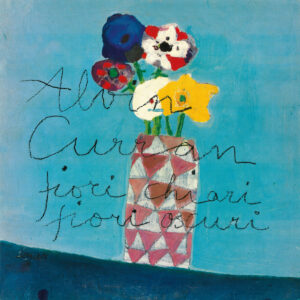
2023 repress. Black Truffle is pleased to announce the first-ever vinyl reissue of Alvin Curran’s classic Fiori Chiari, Fiori Oscuri, originally issued in 1978 on Ananda, the cooperative label run by Curran, Roberto Laneri, and Giacinto Scelsi. Fiori Chiari, Fiori Oscuri (Light Flowers Dark Flowers) – its title inspired by an intersection in Milan – is the second in the series of four solo recordings Alvin Curran issued in the 1970s and early 1980s, preceded by Songs and Views from the Magnetic Garden (1975), followed by The Works (1980) and Canti Illuminati (1982). Each of these solo works combines field recordings with performances on synthesiser, various acoustic instruments, and voice, arranged in languorously paced, dreamy sequences. Far from the bracing pointillism of much musique concrete, the elements encountered on the meandering course followed by Fiori Chiari, Fiori Oscuri – whether a frenetic piano improvisation, dense layers of Serge synthesiser and ocarina, or a monologue from Frederic Rzewski’s five-year old son, Alexis – often occupy the foreground of our attention for minutes at a time. As Curran explains, his approach is like that of a filmmaker in the editing process, working with “whole blocks of recorded time”. The purring of a cat, toy piano, a child counting, plaintive synthesiser tones, the cacophony of exotic birds at the London Zoo – each disappears into the next, until, on the LP’s second side, a solo piano performance takes centre stage, moving unexpectedly from percussive minimalist permutations to a halting rendition of Georgia on My Mind. A subtle yet stunning work that more than forty years on still seems charged with possibility, Fiori Chiari, Fiori Oscuri arrives in a loving reproduction of the original sleeve, featuring Edith Schloss’ beautiful cover painting, remastered audio and with new liner notes by Alvin Curran and Francis Plagne.
24,50€
Read more

Out of stock

LP

Alvin CURRAN
“Drumming Up Trouble”

Black Truffle is thrilled to announce Drumming Up Trouble, the first release of previously unissued music by Alvin Curran on the label. Collecting works recorded between 2018-2021 and a side-long epic dating back to the early 80s, as the title suggests, Drumming Up Trouble focuses on a hitherto almost unknown aspect of Curran’s encyclopaedic and omnivorous musical world: his experiments with sampled and synthesised percussion. As Curran’s wonderful, wildly sweeping liner notes make clear, his fascination with drumming belongs to the radical investigation of music’s fundamental elements that has marked his output since the beginnings of MEV, who aimed (as he says in a recent interview) to return ‘in some collective way to a non-existent start time in the history of human music’. Whatever kind of music our proto-human ancestors played, he writes, ‘drums were front and centre in the mix. Drums rule!’ In a paradox typical of Curran’s approach, Drumming Up Trouble interrogates this most ancient dimension of music with contemporary technology. On the first side, we hear recent pieces performed using the sampling software and full-size MIDI keyboard setup Curran has refined since the 1980s. Two of them are wild real-time improvisations, primarily utilising an enormous bank of hip-hop samples. Building from polyrhythmic layers of drum machine fragments to wild cacophonies of clashing vocal samples, scratching, and frantic pitch shifting, these energetic and at times hilarious pieces occupy a space somewhere between John Oswald’s Plunderphonics, Pat Thomas and Matt Wand in the Tony Oxley Quartet, and the propulsive Kudoro/Grime fusion of Lisbon’s Príncipe label. They are improvisations are accompanied by two austere, minimal compositions realised in collaboration with Angelo Maria Farro: ‘End Zone’ for orchestral bass drum and high oscillator, and ‘Rollings’, where a snare roll is gradually stretched and filtered by digital means into ‘floating electronic gossamer’. The incredible breadth of Curran’s output makes it pretty unlikely that a listener familiar with his work would be surprised to find it branching out in a new direction. But no degree of familiarity with his work can really prepare for side B’s epic and bizarre ‘Field it More’. It’s perhaps best to let the maestro describe this unhinged and infectious offering in his own words: ‘It features an 8 bar funky minimal riff à la James Brown, played on synth and an-out-of-tune piano, synced to a pre-paid patch on the Roland drum machine. Over this is laid a heavily processed track of the voices of dancer Yoshiko Chuma and movie-maker Jacob Burckhardt discussing an upcoming performance of theirs at the Venice film festival, capped by a track of my playing an increasingly out of control blues over the top of all of the above’. Only Pekka Airaksinen’s Buddhas of the Golden Light comes to mind as a reference point that might even vaguely compare to this wild home-brew of drum-machine funk, mad improvisation and squelching electronics, which eventually dissolved into a massive, layered cluster. Ancient and modern, synthetic and human, hysterical and rigorous, Drumming up Trouble is 100% Curran.
24,50€
Read more

In stock

LP

Alvin CURRAN
“The Works”

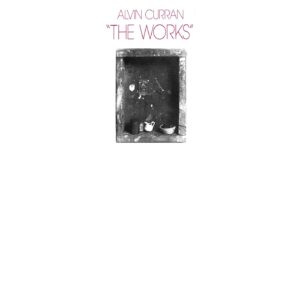
The Works - one of the most famous pieces by brilliant American composer Alvin Curran - was not created by will and direct purpose but, as the composer himself states, as a “providential accident” which is to say quite organically. Combining piano and voice with found sound and a custom-built Serge modular synthesizer, “The Works” is a slowly developing piece where space and ambient tape are eventually overtaken by raga-esque chanting and frenetic piano playing, where synthesizer washes become full-on workouts all leading to a coda where the listener is “finally carried off on the wheels of the Berlin U-Bahn.” Curran - whose initial training and musical education was as a pianist - had been living in Roma, Italy, in the mid-‘70s returning to his roots and performing regularly in cocktail lounges on Via Veneto. It was this return to piano and vocals that became the genesis for The Works. In relearning the piano, a five-note “motive” took hold. Added to this was “a recording I had made of our 14 year old dachshund Caspar just before he died. It was, in fact, a love song which he persisted in singing all day after meeting a lovely bitch in heat in Piazza Navona. This I knew would be the beginning of the piece.” As the piece expands further the listener will hear “cows munching grass, the Rome-Florence express train, a horse-fly caught against a window pane, my footsteps approaching a Roman fountain and later going up the steps of my old studio, cicadas, an Amsterdam calliope, a tin can being kicked, and a series of sounds from La Serra di Lerici.” Though “The Works” has been performed in many incarnations over the years, it’s this performance - captured on February 24, 1980, and originally released that same year by the short-lived Italian avant-garde label Fore - that is the definitive version, and one of the finest recordings ever made by the celebrated composer.
23,00€
Add to cart

Out of stock

LP

Alvin CURRAN
“Canti Illuminati”

An occupant of the present and thread to the past - a rare juncture between diverse polarities of experimental practice, from free improvisation and modern classical composition, to primitivism, electronic music, and extended techniques, for more than half a century Alvin Curran has stood as beacon in the landscape of organized sound. From his efforts within Musica Elettronica Viva, the collective which he helped found in 1966 with Frederic Rzewski and Richard Teitelbaum, to those as a solo-performer and composer, his sounds and ideas have effected immeasurable change. Canti Illuminati, composed and recorded between 1973 and 1977, stands as one of the great documents from the golden era of Curran's singular brand of creative radicalism - combining a deep sense of social and political consciousness, with creative humanism and visionary compositional ideas. Blume Editions is proud to present the first ever vinyl reissue of this seminal master-stoke by one of the most important composers working today. A bridge between the American and European traditions of experimental music, Canti Illuminati, Curran's tribute to the human voice - "the most natural source of music", delves toward the very origins of music itself. In lyrical and poetic form, it rethinks the possibilities and potential of organized sound, seeking something fundamentally human - an optimistic vision of the future, born of the primitive past. Standing apart from canonical definition, it contributes to a more complex and nuanced understanding of what musical Minimalism is. Consciously conceived by Curran for the format of the LP, the album takes form as a single work in two parts - Canti Illuminati, For Choir, Synthesizer, Piano And Tape - a structured choral improvisation, built from the contributions and voices of Alessandro Bruno, Antonella Talamonti, Antonio Cesareni, David Thorner, Elisabetta Bordes-Page, Giorgio Caruano, Luca Miti, Manuela Garroni, Nicola Bernardini, Pierluigi Castellano, and Sista Carandini, and Canti Illuminati, For Voice, Synthesizer, Tape, which Curran realised as a solo performer with his own voice, tape delayed feedback, and a Serge synthesizer and sequencer. Sinfully under celebrated and all too rarely heard since its initial release, Canti Illuminati remains a profoundly compelling and moving body of sound - unavoidably beautiful - a landscape of sustained tone, rippling texture, and structural intervention. Necessity stripped to the elemental, while challenging, endlessly surprising, and complex. A crucial component in Curran's life long musical quest for something deeply human and fundamentally representative - that elusive thing which connects us all. Fully remastered by Giuseppe Ielasi, with brand new expanded liner text written by Bradford Bailey.
21,00€
Read more

Out of stock

LP

Alvin CURRAN
“Canti E Vedute Del Giardino Magnetico”

American composer and multi-instrumentalist Alvin Curran has remained one of the great emblems of experimental music for the last half-century. In 1966, along with Frederic Rzewski and Richard Teitelbaum, Curran co-founded Musica Elettronica Viva, a seminal gesture in collective free improvisation. In the early '70s, his solo work would become a crucial bridge between minimalist traditions on both sides of the Atlantic. Canti E Vedute Del Giardino Magnetico, Curran's solo debut, was recorded by the artist himself and issued on Ananda, the small Italian imprint started by Curran and fellow composers Giacinto Scelsi and Roberto Laneri. The piece itself was put together in the winter of 1973 and presented for the first time at Teatro Beat 72 (Rome's The Kitchen). Encouraged by the work of Terry Riley, La Monte Young, Charlemagne Palestine and Simone Forti, Curran binds the listener to aberrant notions of place and time: blending field recordings (wind, high-tension wires, beach waves, etc.) with simple and often primitive instruments. Across two sidelong tracks, Giardino Magnetico forms a lyrical collage of synthesizer, glass and metal chimes, plastic tubes, brass and the composer's alluring voice – converging in an immersive realm of Curran's inner / outer experiences. This first-time vinyl reissue is recommended for fans of Harry Bertoia, Michel Redolfi and Lino Capra Vaccina.
22,00€
Read more

Out of stock

2 CD

Alvin CURRAN
“Maritime rites”

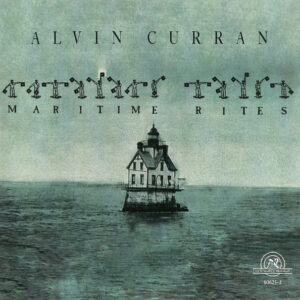
“In the middle 1970s I began to formulate ideas and projects leading to the making of music outside the concert halls-often in large open and naturally beautiful sites. Ports, rivers, lakes, caves, quarries, fields, and woods, always ready sources of my musical inspiration, now became my new music theaters.” - Alvin Curran Maritime Rites is a series of ten environmental concerts for radio composed by Alvin Curran (b. 1938) in 1985. This series features the Eastern Seaboard of the United States as a musical source in collaboration with improvised musical performances by ten distinguished artists in the American new-music scene: John Cage, Joseph Celli, Clark Coolidge, Jon Gibson, Malcolm Goldstein, Steve Lacy, George Lewis, Pauline Oliveros, Leo Smith and Alvin Curran. The programs use specifically recorded natural sounds as musical counterpoint to the soloists whose improvisations are freely restructured and mixed by Curran. Featured here are the foghorns of Virginia, Maryland, Delaware, New Jersey, New York, Connecticut, Rhode Island, Massachusetts, New Hampshire, Maine and New Brunswick, Canada. Also included are maritime bells, gongs, whistles and regional bird and animal life. Comments from lighthouse keepers, Coast Guard personnel and other local people are woven impressionistically throughout. Rich in ambient detail, Maritime Rites presents the foghorn as indigenous American “found” music par excellence and the source of one of the most enduring minimal musics around us. The series is also a comprehensive aural documentary of our regional and national maritime heritage including such historical sounds as the Nantucket II Lightship, now out of service and doing service as a museum docked in Boston Harbor. The Lightship’s horn is the only one of its kind (and the loudest!) on the East coast and was recorded extensively during an exclusive session ten miles off shore with the special cooperation of the ship’s crew. As the foghorn gives way to other electronic navigational aids, this work may serve as a historical document of some of the most beautiful and mysterious sounds of the sea. As an expression of sonic geography, Maritime Rites brings together different areas of the Seaboard in a single musical moment. The series was expressly conceived for radio, the only medium that can safely accommodate over sixty foghorns at once and bring an entire coastline, seemingly live, into anyone’s home! An essential document for anyone interested in sound art.
24,00€
Read more


Catalogue


  • BACK IN STOCK
  • SALES

New arrivals :

In stock

4 CD

Cornelius CARDEW
“The Great Learning”

All seven Paragraphs of Cardew's The Great Learning by the Scratch Orchestra Strasbourg under Didier Aschour, an orchestra born from an open call and two years of shared practice: 4CD box with a 116-page booklet. 4CD box with a 116-page booklet. Shiiin's thirteenth release is a complete recording of Cornelius Cardew's The Great Learning, the seven Paragraphs written between 1968 and 1971 on the opening of the Ta Hio (Daxue, "the Great Learning"), the Confucian treatise on self-cultivation and the harmonious ordering of collective life, in Ezra Pound's translation. Mixing voices, instruments, objects and actions through graphic and verbal notation, the score prescribes relationships between the performers more than sounds, and shares out among them the responsibility for the form. The work is inseparable from the Scratch Orchestra, which Cardew founded in London in 1969 with Michael Parsons and Howard Skempton. The Scratch Orchestra Strasbourg grew out of an open call launched by the Musica festival in spring 2023, with no condition of level or background: amateurs and professionals, the self-taught and people with no previous practice. First gathered in September 2023, the group worked regularly under Didier Aschour, with members of the Dedalus ensemble and Strasbourg musicians versed in improvisation, graphic scores and open protocols passing on tools rather than imposing a reading. The aim was neither to reproduce a traditional orchestra nor to rebuild Cardew's, but to put his principle back into play: turning a diversity of skills into a shared resource. On 15 September 2024 the orchestra performed all seven Paragraphs in the Saint-Paul church in Strasbourg, a concert of nearly seven hours that opened the music programme of the 42nd Musica festival, in dialogue with Mode d'emploi, the exhibition of instruction-based works at the city's museum of modern and contemporary art. The group went on working on other pieces and came back to The Great Learning for this recording, made in the same church from 27 to 29 November 2025. What it fixes is an interpretation shaped by more than two years of common practice, not a line-up assembled for a single date, which brings it close to Cardew's own idea of the orchestra as a lasting space of practice, learning and collective change. Alongside Aschour play Lou Renaud-Bailly, Jeanne Barbieri, Stéphane Clor, Yannick Guédon, Jean-Philippe Gross and Thierry Madiot, with Jérémy Marchal on the church organ, the Pelicanto choir directed by Mathilde Mertz and the De-ci De-là choir directed by Cédric Dosch. Paragraphs 1 to 3 fill the first disc and Paragraph 4 the second; Paragraph 5 alone runs over an hour and a quarter on the third, and the fourth holds Paragraphs 6 and 7. The booklet opens with a text by Stéphane Roth and gathers two essays. Dean Inkster's, written for the 2009 Cardew exhibition at CAC Brétigny, places the work within the composer's aesthetic and political path and shows how the dispersal of the voices opens onto a shared freedom of listening rather than a fusion of the collective. Matthieu Saladin's, first published in Revue & Corrigée in 2020, examines the devices of each Paragraph as so many attempts to contain the relations of domination that form again within any group.
49,00€
Add to cart

In stock

2LP

Eliane RADIGUE
“Occam XIII, Occam River XI, Occam V”

Occam Ocean is a series of acoustic compositions made for and with individual instrumentalists by the late French composer Éliane Radigue. Extending the interactive process pioneered in Naldjorlak (2005–2009), Occam Ocean employs a scoreless method of composing in dialogue with each performer. Dating back to 2011, the series has proliferated almost organically, growing out of a musical and social dynamic of combinatoriality and multiplication to a catalog of more than eighty discrete compositions. This body of work stands as one of the most extraordinary late-career outpourings in recent music history. The Occam series was catalyzed in part by a visit to the Natural History Museum in Los Angeles, where Radigue encountered a depiction of the electromagnetic spectrum—from radio signals to gamma rays—which impressed upon her the minuscule range of human hearing relative to the seemingly unlimited compass of universal wavelength and frequency. The Occam compositions seem to address this vertiginous confrontation with the infinite; each individual composition elaborates a radically reduced technique or sound process, frequently working outward from only a handful of fundamental tones, to expose the flickering, idiosyncratic spectral behavior of the instrument. The reference to William of Ockham indicates a principled commitment to parsimony; paradoxically, the reduction in material content makes possible an incommensurate richness in perceived acoustical detail. Notable in the Occam series is the inextricable identification of the composition with the performer for whom, and with whom, it was made. The particular sounds and techniques of each individual performer are thus indelibly stamped in the composition; the piece composes the playing of that musician, as much as the musician plays the composition. The time-honored division of labor between performer and composer is thus suspended and reconfigured, proposing a model for new music composition that has not yet been fully theorized or understood. Occam XIII, Occam River XI (presented here in two distinct readings, which reveal subtle variations in instrumental response), and Occam V feature two longtime collaborators of Radigue in solo and duo formations. Charles Curtis, the first instrumentalist for whom Radigue wrote an acoustic composition (Naldjorlak), performs on cello, while Dafne Vicente-Sandoval—whose parallel investigations into her instrument’s complex sounding properties led her to collaborate with Radigue—performs on bassoon. The works were recorded at Temple Saint-Théodule, La Tour-de-Peilz, Switzerland, during a 2024 residency at La Becque, a setting previously explored by the musicians for its distinctive acoustic properties.
45,00€
Add to cart

Out of stock

CD

Eliane RADIGUE
“Occam XIII, Occam River XI, Occam V”

Occam Ocean is a series of acoustic compositions made for and with individual instrumentalists by the late French composer Éliane Radigue. Extending the interactive process pioneered in Naldjorlak (2005–2009), Occam Ocean employs a scoreless method of composing in dialogue with each performer. Dating back to 2011, the series has proliferated almost organically, growing out of a musical and social dynamic of combinatoriality and multiplication to a catalog of more than eighty discrete compositions. This body of work stands as one of the most extraordinary late-career outpourings in recent music history. The Occam series was catalyzed in part by a visit to the Natural History Museum in Los Angeles, where Radigue encountered a depiction of the electromagnetic spectrum—from radio signals to gamma rays—which impressed upon her the minuscule range of human hearing relative to the seemingly unlimited compass of universal wavelength and frequency. The Occam compositions seem to address this vertiginous confrontation with the infinite; each individual composition elaborates a radically reduced technique or sound process, frequently working outward from only a handful of fundamental tones, to expose the flickering, idiosyncratic spectral behavior of the instrument. The reference to William of Ockham indicates a principled commitment to parsimony; paradoxically, the reduction in material content makes possible an incommensurate richness in perceived acoustical detail. Notable in the Occam series is the inextricable identification of the composition with the performer for whom, and with whom, it was made. The particular sounds and techniques of each individual performer are thus indelibly stamped in the composition; the piece composes the playing of that musician, as much as the musician plays the composition. The time-honored division of labor between performer and composer is thus suspended and reconfigured, proposing a model for new music composition that has not yet been fully theorized or understood. Occam XIII, Occam River XI (presented here in two distinct readings, which reveal subtle variations in instrumental response), and Occam V feature two longtime collaborators of Radigue in solo and duo formations. Charles Curtis, the first instrumentalist for whom Radigue wrote an acoustic composition (Naldjorlak), performs on cello, while Dafne Vicente-Sandoval—whose parallel investigations into her instrument’s complex sounding properties led her to collaborate with Radigue—performs on bassoon. The works were recorded at Temple Saint-Théodule, La Tour-de-Peilz, Switzerland, during a 2024 residency at La Becque, a setting previously explored by the musicians for its distinctive acoustic properties.
23,00€
Read more

In stock

CD

David GRANSTRÖM
“Echoes of Impermanence”

Echoes of Impermanence sees David Granström’s previously established strict hermetic minimalist musical topography undergo a major shift with the introduction of the electric guitar, which instigates a breaking of the sealed crystal walls of the composer’s previous work within music of long duration and precise digital synthesis, bringing forth a riff-laden spirit previously lingering below the surface. The album was recorded at the world-renowned Elektronmusikstudion EMS as well as in the composer’s own studio with the help of Mats Erlandsson and features a guest appearance by long-time collaborator and XKatedral co-founder Maria W Horn performing on the Hurdy-Gurdy on the title track. David Granström is a composer and musician from Umeå in the northern part of Sweden. His hometown is a stronghold of extreme musical expression and consequently Granström grew up playing guitar in a metal band and started to compose music within that context which eventually evolved into solo projects, having access to studio facilities adjacent to the rehearsal space. Granström initially found his personal musical voice within the context of electroacoustic composition utilizing his advanced programming ability to manifest a sound and formal structure governed by algorithmic processes. The resulting musical work is characterized by harmonic simplicity and spatiotextural complexity, employing sounds of synthetic and acoustic origin in combination with strict digital synthesis techniques.
17,00€
Add to cart

Out of stock

CD

William BASINSKI
“Passing the Cup of Sorrows”

In the realm of past-life regression hypnotherapy, there is a concept known as “Life Between Lives,” wherein a sacred exchange of energy occurs between two souls in the spirt world, helping a spirit fully understand and forgive a being who hurt them in a past life. This exchange – called “passing the cup of sorrows” – became the unexpected inspiration for William Basinski’s first new album in six years. While sinking deeper into the daily abyss of our collective negativity bias, William Basinski stumbled upon a video describing the spiritual hypnotherapy exercise known as “passing the cup of sorrows.” Fixed on the glow of a screen that projected mounting anxiety and cynicism at a seemingly interminable pace, Basinski found the testimonials of this fascinating therapeutic practice to be profoundly moving. He sat at his piano, translating the transformation of those traumatic memories of past lives into cathartic tears of the present day. Channeling the quiet curiosity and asymmetrical patterns of pioneering 20th Century composer, Morton Feldman, Passing the Cup of Sorrows is a single 40-minute piece that employs a solitary piano and subtle electronics to truly haunting effect. It recalls fragments of traumatic memories and projects them as fractals in a slow-moving soft focus that’s as eerie as it is enlightened.
15,50€
Read more

In stock

LP

Oren AMBARCHI
“Cooked”

With Cooked, Oren Ambarchi takes his adventurous sonic universe into gloriously unpredictable territory. Bringing together an extraordinary cast of international collaborators, including Eiko Ishibashi, Jim O’Rourke, Joe Talia and members of his Ghosted trio, the album unfolds across two expansive, side-long compositions. Blending hypnotic grooves, shimmering guitars, intricate electronics, jazz-inflected rhythms and surreal sonic detours, Cooked moves effortlessly between delicate atmospheres and exuberant experimentation. Meticulously constructed yet remarkably spontaneous, it reveals Ambarchi at his most playful, inventive and delightfully unpredictable. A dazzling journey through the outer limits of contemporary experimental music. Oren Ambarchi - Guitars and whatnot Hidden Tableau: Johan Berthling - Double bass Eiko Ishibashi - Piano Jim O'Rourke - Synth Konrad Sprenger - Voice synthesis, electronics & production Joe Talia - Drums Sleight of Hand: Johan Berthling - Double Bass Will Guthrie - Gamelan & drums Isak Hedtjärn - Whistling Michiko Ogawa - Shō Marcus Pal - Synthetic Sound Fredrik Rasten - Guitars James Rushford - Celeste, piano & portative organ Andreas Werliin - Drums
30,00€
Add to cart

CORTICALART

Mail-order and distribution of experimental music (electroacoustic, improvised music, sound-art, noise, sound poetry), past or present, along with some books, magazines and DVDs.

NEWSLETTER

INFORMATIONS

  • Contact
  • My Account
  • Shipping

CORTICALART / Ass. META
44, rue Camille Sauvageau
33800 Bordeaux
France

© Corticalart 2026    • Terms Of Use    • Legal Notice    • Privacy Policy

• CGV    • Mentions légales    • Politique de confidentialité