
Out of stock

CD
Ake PARMERUD
“Grains”
4th solo disc by Swedish composer Åke Parmerud.
Rerelease of 4 of his major acousmatic works. These works had been recorded in 1994 and '96 on discs that have been sold out for many years.
"Grains of Voices" (1994-95). "Jeux imaginaires" (1993). "Les objets obscurs" (1991). "Alias" (1990).
Åke Parmerud has successfully pursued a professional career in contemporary music and multimedia art since the late 70s. Although he originally trained as a photographer (1972-74) he went on to study music at the University and later at the Conservatory of Music in Göteborg (Sweden). In addition to his electroacoustic and instrumental music, his work includes a broad cross-section of modern experimental music in the fields of dance, film, interactive art, multimedia, theatre, and video.
13,00€
Out of stock
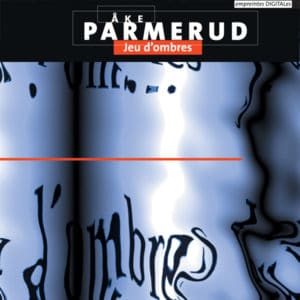
CD
Ake PARMERUD
“Jeu d’ombres”
“Strings & shadows” (1993) pour harpe et bande, “Stringquartett” (1988), “Renaissance” (1994), “Retur” (1992-93) pour quatuor de saxophones et bande, “Les flûtes en feu” (1999), “Repulse” (1986).
12,00€
Out of stock
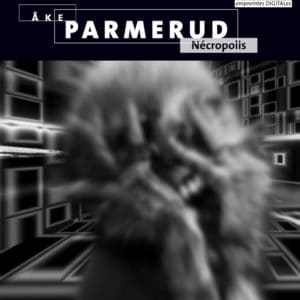
CD
Ake PARMERUD
“Nécropolis”
“Dreaming in Darkness” (2005), “Crystal Counterpoint” (2009), “ReVoiced” (2009), “Necropolis - City of the Dead” (2011).
“Dreaming in Darkness is forged primarily from small sounds, spaced apart from one another. A chime, a chink or a clunk, and then silence before a scrape or a click or a bump. It’s fragmentary, the origins of the sounds unclear. Taking the question of what a person who cannot see dreams about, Parmerud explains that the piece is an attempt to create surrealistic fragments of a blind person’s dreams. As the piece progresses, the sounds become increasingly densely packed, and with longer durations and overlaid, building sinister abstract scenes: in fact, not so much scenes as shifting shadows and variations in light.
The bubble of conversation marks the opening moments of Crystal Counterpoint: a recording which sounds like a restaurant or party, the chinking of classes and general hubbub of people grows and stops abruptly with the chime of a glass. Inspired by the sounds of the parties Åke’s parents used to host, and which he would hear from upstairs, the piece uses the very same glasses to create a wealth of sounds, from long, low drones to higher hums, elongated undulations and quick, bright glissandos. Grand swells of sound rise and cease suddenly, replaced by strange, quiet drifts of sound: it’s very easy to forget exactly what you’re listening to. But if anything, awareness of the origin of the sounds only heightens the experience, as you’re likely to marvel and wonder just how glasses could sound like an oboe or high winds across mountain tops. In his notes, Parmerud notes that there already exist a large number of recordings which explore glass sounds, and it is, indeed, an interesting piece to place alongside Miguel Frasconi’s Standing Breakage (for Stan Brakhage) (clang records, 2016).
ReVoiced moves away from musical abstraction and instead uses the voice as its instrument. A single voice is layered up on top of itself exponentially until a whole crowd of one voice is speaking. It’s actually quite a disconcerting experience. Voices are subject to all kinds of manipulation: sped up, slowed down, pitch adjusted, stretched, overlaid, echoed and delayed, in myriad permutations. Chants and dialogue and ululations, crowds and multiple languages meld together, and gradually, extraneous sounds — hard, heavy slabs of sound — crash in, while sharp-edged sounds slash for create a dull, percussive element to the slow-building torture of the familiar becoming twisted, distorted, abstracted and unfamiliar.
The final track, Necropolis — City of the Dead, is a musical tour through the catacombs of an imaginary city which contain the remains of some of the greatest music of all time. ‘But the condition of the musical bodies that rest in the crypts is unfortunately in various states of decomposition’. As such, in combining a well-worn joke (which is usually about Mozart when I’ve heard it) with a project to assimilate and deconstruct fragments of existing works, Necropolis is a sort of a collage. Classical, jazz, film soundtracks, many renowned and bordering on recognisable, at least in essence, all fade in and out and collide against one another.
While the title track may pick over the bones of musical history, it equally breathes new life, and the same is very much true of the work as a whole: the parts are disparate, fragmentary, scattered in origin from around the globe and individually amount to not very much at all. But the sum is spectacular, an experience which is thought-provoking and which has the capacity to be quite unexpectedly affecting.” By Christopher Nosnibor in Aural Aggravation, May 3, 2016
“Dreaming in Darkness is forged primarily from small sounds, spaced apart from one another. A chime, a chink or a clunk, and then silence before a scrape or a click or a bump. It’s fragmentary, the origins of the sounds unclear. Taking the question of what a person who cannot see dreams about, Parmerud explains that the piece is an attempt to create surrealistic fragments of a blind person’s dreams. As the piece progresses, the sounds become increasingly densely packed, and with longer durations and overlaid, building sinister abstract scenes: in fact, not so much scenes as shifting shadows and variations in light.
The bubble of conversation marks the opening moments of Crystal Counterpoint: a recording which sounds like a restaurant or party, the chinking of classes and general hubbub of people grows and stops abruptly with the chime of a glass. Inspired by the sounds of the parties Åke’s parents used to host, and which he would hear from upstairs, the piece uses the very same glasses to create a wealth of sounds, from long, low drones to higher hums, elongated undulations and quick, bright glissandos. Grand swells of sound rise and cease suddenly, replaced by strange, quiet drifts of sound: it’s very easy to forget exactly what you’re listening to. But if anything, awareness of the origin of the sounds only heightens the experience, as you’re likely to marvel and wonder just how glasses could sound like an oboe or high winds across mountain tops. In his notes, Parmerud notes that there already exist a large number of recordings which explore glass sounds, and it is, indeed, an interesting piece to place alongside Miguel Frasconi’s Standing Breakage (for Stan Brakhage) (clang records, 2016).
ReVoiced moves away from musical abstraction and instead uses the voice as its instrument. A single voice is layered up on top of itself exponentially until a whole crowd of one voice is speaking. It’s actually quite a disconcerting experience. Voices are subject to all kinds of manipulation: sped up, slowed down, pitch adjusted, stretched, overlaid, echoed and delayed, in myriad permutations. Chants and dialogue and ululations, crowds and multiple languages meld together, and gradually, extraneous sounds — hard, heavy slabs of sound — crash in, while sharp-edged sounds slash for create a dull, percussive element to the slow-building torture of the familiar becoming twisted, distorted, abstracted and unfamiliar.
The final track, Necropolis — City of the Dead, is a musical tour through the catacombs of an imaginary city which contain the remains of some of the greatest music of all time. ‘But the condition of the musical bodies that rest in the crypts is unfortunately in various states of decomposition’. As such, in combining a well-worn joke (which is usually about Mozart when I’ve heard it) with a project to assimilate and deconstruct fragments of existing works, Necropolis is a sort of a collage. Classical, jazz, film soundtracks, many renowned and bordering on recognisable, at least in essence, all fade in and out and collide against one another.
While the title track may pick over the bones of musical history, it equally breathes new life, and the same is very much true of the work as a whole: the parts are disparate, fragmentary, scattered in origin from around the globe and individually amount to not very much at all. But the sum is spectacular, an experience which is thought-provoking and which has the capacity to be quite unexpectedly affecting.” By Christopher Nosnibor in Aural Aggravation, May 3, 2016
13,00€
Out of stock
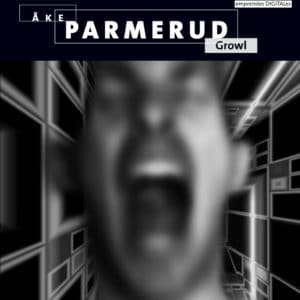
CD
Ake PARMERUD
“Growl”
“La vie mécanique” (2004), “Grooves” (2011), “Electric Birds” (2014), “Growl!” (2014-15), “Transmissions II” (2015).
Åke Parmerud has successfully pursued a professional career in contemporary music and multimedia art since the late 70s. Although he originally trained as a photographer (1972-74) he went on to study music at the University and later at the Conservatory of Music in Göteborg (Sweden). In addition to his electroacoustic and instrumental music, his work includes a broad cross-section of modern experimental music in the fields of dance, film, interactive art, multimedia, theatre, and video.
The last ten years have seen Åke Parmerud working as an innovative sound and software designer for interactive audiovisual installations at home and through several creative international collaborations. From 1999 to 2006 he worked closely with Boxiganga (Denmark) developing interactive video installations, exploring telematic concepts and interactive solutions for live performance. In 2000, ’01, and ’02 he worked as composer, sound designer, and software designer with choreographer Pierre-Paul Savoie (Québec). Finally, with Olle Niklasson, he formed AudioTechture, a project specialized in acoustic interior design for diverse environments, from private houses to public spaces.
He is a member of Kungliga Musikaliska Akademien (Royal Swedish Academy of Music) since 1998.
Åke Parmerud has successfully pursued a professional career in contemporary music and multimedia art since the late 70s. Although he originally trained as a photographer (1972-74) he went on to study music at the University and later at the Conservatory of Music in Göteborg (Sweden). In addition to his electroacoustic and instrumental music, his work includes a broad cross-section of modern experimental music in the fields of dance, film, interactive art, multimedia, theatre, and video.
The last ten years have seen Åke Parmerud working as an innovative sound and software designer for interactive audiovisual installations at home and through several creative international collaborations. From 1999 to 2006 he worked closely with Boxiganga (Denmark) developing interactive video installations, exploring telematic concepts and interactive solutions for live performance. In 2000, ’01, and ’02 he worked as composer, sound designer, and software designer with choreographer Pierre-Paul Savoie (Québec). Finally, with Olle Niklasson, he formed AudioTechture, a project specialized in acoustic interior design for diverse environments, from private houses to public spaces.
He is a member of Kungliga Musikaliska Akademien (Royal Swedish Academy of Music) since 1998.
13,00€