
Out of stock
CD, Book
Annea LOCKWOOD
“Glass World”
“I have become fascinated by the complexity of the single sound.” - Annea Lockwood
A note from Lawrence English
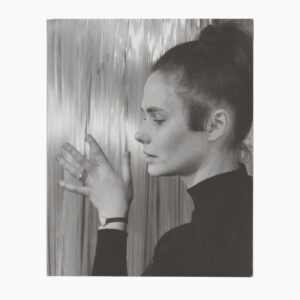
To attempt to summarise the journey of Annea Lockwood’s life, as a composer and performer, is difficult if not impossible. For six decades now, she has carved out a multifarious and fluid existence that has orbited various musical movements and approaches. Hers is a life led by intuition, curiosity and listening, one in which passion is paramount and wonderment abounds.
If you were to reflect upon one aspect of her way of being that holds the greatest gravity in her day to day, it is perhaps listening that resonates most vibrantly. It is a practice that she has sought to deepen, with an unwavering dedication across her life, and a it is practice that has sustained her in the absolute. It’s here that Glass World comes into focus for it documents some of her first significant studies into sound, object and listening. It is a recording that captures her in a moment of profound fascination with a rather familiar material, glass.
This recording celebrates many things, amongst them Lockwood’s willingness to allow single sounds to resonate, fully. Across each of the twenty three vignettes captured here, Annea Lockwood invites us to lean into the material nature of sound with her. Glass World shimmers with an almost fanatical incandescence. It radiates a vibrational intensity that holds as strongly today as it did upon its original release in 1970 on Tangent Records. I had the privilege to re-master these recordings, under the guidance of Annea, and sitting with them so intensely was nothing but a delight.
In tandem with this project, Annea and I have undertaken a long-form in conversation, which is collected in the book which sits alongside this edition. The conversation splays outward from Annea’s work on Glass World and it deliberately seeks to visit upon her interests and passions, and through doing so revel a certain perspective that has guided her ways of being, and ways of making.
It’s an honour to have the opportunity to share this edition with you. I hope you too can catch Annea’s resonate curiosity and be as captivated by these sounds as I (and many others) have been.
18,00€
In stock

CD
TENNISCOATS
“Totemo Aimasho (15th Anniversary Edition)”
A note from Lawrence English
Some time in the early 00s John Chantler, who was living in Japan at the time, sent me a couple of curious sound pieces he’d just recorded with musicians he’d met from Tokyo - Tenniscoats. This was my first introduction to Saya and Ueno, who have subsequently gone on to become longtime friends and a wellspring of sonic inspiration.
In 2005, through their connections to Guy Blackman in Melbourne, Tenniscoats under took a tour of Australia and as part of that visit I arranged a concert for them in Brisbane. Their show, held at Rics Cafe in Fortitude Valley, was a wildly-flowing flux of song, improvisation and sheer melodic freedom. Following the performance Saya, Ueno and drummer Yoshinari Kishida spent a few additional days in Brisbane, and it’s during this time that the majority of Totemo Aimasho was recorded.
The recording itself took place in a reappropriated office building, where my friend Heinz Riegler had set up a small recording space. We were able to use the various offices as somewhat isolated recording zones. The results were surprisingly rich, a testament to office room design I suppose.
For this special 15th anniversary edition, I spent some time going back over the recordings to remaster them. This version is perhaps a bit more faithful to the dynamics of those sessions. I also spent some days going through archival materials that were not included in the original Totemo Aimasho sessions. To my surprise I found a couple of demo versions of Cacoy, one of my favourite pieces from the record, as well as some variations of other album pieces and also a couple of experiments not included on the record.
There’s a certain radiant joy to this music. The record is equal parts curiosity, porousness and generosity. It's a mixed methodology that informed this collaboration, and equally the creation of Totemo Aimasho itself.
I want to send a special note of thanks to John, without whom this project, and many subsequent other connections, would not have occurred.
Produced by Lawrence English and John Chantler with Tenniscoats
Drums, Percussion, Tape, Synth – John Chantler
Flute – Carina Thorén
Guitar, Saxophone, Synthesizer [Unisynth], Vocals – Ueno Takashi
Synthesizer, Electronics, Effects [Field Recordings] – Lawrence English
Vocals, Piano, Keyboards, Bass – Saya
Drums - Yoshinari Kishida (2, 5, 6, 11)
Koji Shibuya - Melodica (15,16)
14,00€
In stock

LP
David TOOP & Lawrence ENGLISH
“The Shell That Speaks The Sea”
A note from Lawrence English
I first met David Toop some 20 years ago. I think we were in touch shortly before that, but our first meeting took place when I invited him to Australia to perform and to speak as part of REV, a festival held at Brisbane Powerhouse. It was a memorable meeting, I vividly remember his solo performance and the edition A Picturesque View, Ignored, documents an improvised meeting during that time.
Over the years, David and I have shared an interest in both the material and immaterial implications of sound (amongst other things). Moreover we’ve connected many times on matters which lie at the fringes of how we might choose to think about audition, our interests seeking in the affective realm that haunts, rather than describes, experience. The Shell That Speaks The Sea very much resonates from this shared fascination.
I’m not exactly sure when we first mooted this duet, but I sense its initial trace is now more than a decade ago. I tend to live by the motto of ‘right place, right time’ and I believe David likely also subscribes to this methodology. A couple of years ago, David and I reignited the duet conversation and began exchanging materials. As a jumping off point, I explored a series of field recordings that, for me at least, captured something of this affective haunting that I mentioned previously.
One such recording was of a Tawny Frogmouth at Nugum (White Rock) on the lands of the Yugarabul people. The frogmouth is an utterly elusive creature whose voice is like a modulating low frequency oscillator. They are a magical bird, and like the Potoo, have captivated David and I at various points in our lives. The recording seemed to suggest a whole way of approaching sound and, for me at least, it opened an entirely new range of sound worlds which are present in the final version of this recording.
This edition is the product of spontaneous burst of exchanges, buffered by periods of tempered silence. A patient work, charged with unexpected dynamics.
It’s with great pleasure we share this recording with you.
David Toop - Voice, digital electronics, Spanish, electric and lapsteel guitars, bowing, whistling, percussion, flutes.
Lawrence English - Electronics, field recordings, shortwave radio, bass drum, ghost flute, bamboo, stones.
24,00€
In stock

CD
Christina GIANNONE
“Reality Opposition”
A note from Christina Giannone
Dissociation is the driving force behind the composition. The act of surrendering, the attempt to observe our existence from the outside.
Giving in feels like giving up.
Acceptance feels like resignation.
The process included digital sound experimentation by means of observance and detail orientation and the idea of sound presenting itself in different identities depending on the listener. This attention to detail acts as a hologram, changing shapes depending on the angle. Ideas of multi-dimensional existences and indifference in its purest form. Slow, digital evaporation.
An attempt to recreate what ‘nothing’ means. It might be a gaze out the window, conversations in passing, an incomplete thought. Fleeting, meaningless moments that fill the gaps. Things we are only subconsciously aware of.
The periphery. The forgotten. The static in between.
14,00€
In stock

CD
Hyunhye SEO
“Eel”
A Note From Hyunhye Seo
Every year, the eels arrive in Sargasso. The eels that sprang to life when the sun god Atum warmed the Nile, the eels generated within the entrails of the earth, from the rubbing of the rocks and dew drops on riverbanks, they travel thousands of kilometres to Sargasso to breed.
Their larvae, eels of glass, move to freshwater homes, crawling across land or up waterfalls if necessary, breathing through their skins, to get to where they want to go, although no one knows exactly where or why. Sometimes, they eat snakes and birds. After decades, when they're ready to breed, they stop eating and develop sex organs, and they travel back to Sargasso. If they can't go back to Sargasso, they never fully mature. They just stop ageing.
No human has seen eels breed. Freud dissected over 400 eels in search of eel testicles. Aristotle thought they grew from earthworms in dirt. No one knows why they go where they go, or how they find their way back.
Creatures of mud and rain, fluid in time and age, unabashed in its metamorphosis, unknown yet always found.
14,00€
In stock

CD
Yann NOVAK
“The Voice of Theseus”
From Yann Novak
In Greek mythology, the legend of Theseus describes how the king-founder of ancient Athens rescues the children of his city from King Minos’ minotaur on the island of Crete. In commemoration, Athenians began a pilgrimage to honor his victory, taking the ship of Theseus and sailing it from Athens to Delos. It was with this tradition that a philosophical paradox about the historic ship was raised: As the ship was repaired, piece by piece, until it was no longer composed of any original parts, at what point could the ship no longer be considered the same entity?
In recent years, I’ve become interested in exploring the perceptual differences I experience. While some of these differences—partial color blindness and dyslexia—have been with me my entire life, tinnitus caused by hearing damage is a relatively new change to how I experience the world. It is these sensory challenges which have shaped my artistic practice by creating what I call a perceptual insecurity—an uncertainty of how accurately I discern the world around me.
The Voice of Theseus is my attempt to explore the obstacles I face in processing external sensory information. If I have trouble perceiving reds and greens, if I have trouble hearing certain frequencies, if I don’t interpret written language in a standard way, how closely can I experience reality in the way that others experience it? The album asks the listener to question how their unique means of perception and interpretation might differ from that of others.
For The Voice of Theseus, I asked two of my favorite vocalists to assist with this experiment. Both Dorian Wood and G.Brenner recorded vocals for me to manipulate throughout the album. If their original audio is Theseus’s ship, the changes I make to their voices are like the Athenians replacing each of the original vessel’s pieces. And so, how far can these vocals be pushed while still remaining attached to the vocalists’ identities? Where lies the separation between the source materials and the objects they’re used to create?
The myth of Theseus’ ship allowed me to tease at the nuances of how reality can be observed, interpreted, and altered in an indeterminate number of ways; it can be dismantled and rebuilt, many times over. And yet, because of my internal circumstances, a perceptual insecurity remains. As flexible as the true nature of an object or moment may be, inaccuracy looms. There’s no real way to know how great the disparity is between my observational experiences and another’s, and no clear limit of how many pieces of our shared reality can be altered—before it stops being just that.
14,00€
In stock

CD
Siavash AMINI
“Eidolon”
A note from Siavash Amini
Let me get this out of the way; I'm obsessed with Safi-al-din Urmavi’s theory of tuning, rhythm, and maqam. It started in my last year of high school, at the time there was a lot of back and forth between Iranian music scholars about his 17-tone scale and whether it had any use or relevance to Iranian music of that day.
I've been thinking about those discussions and more general discussions of tuning in the maqam system of the 13th century a lot in the past half-decade.
I didn't know how to approach these tunings, but I started to get a sense of it while making A Trail of Laughters. I decided that the relevance of these tunings couldn't be explored with conventional instruments and composition techniques. I do not want to approach them in a historical sense, either. I want to use these as my raw material and find my approach, borrowing from experimental and electronic music of our time.
The apparition, an image appearing and disappearing, taking shape in an instant and gone in the next, something you’re not sure you’ve seen, needs a particular setting to be experienced. Something seen or felt in an undetermined space like Redon's drawings. I tried to see if these tuning systems (mostly Urmavi’s 17-tone scale) could be a starting point for creating such a space for myself by letting their frequencies and intervals roll over each other, and letting the resulting sound and textures float, crash, spill and bleed.
Maybe my other obsessions, namely darkness, light, and death, can be at least in some sense contemplated in this shadowy undetermined space and just maybe something here and there makes its presence felt.
14,00€
Out of stock

CD
Jérôme NOETINGER
“Outside Supercolor”
A note from Jérôme Noetinger
Lionel Palun and I met in 2003 in a context of social struggle. Aware of an inevitable downfall, we decided to discuss our respective practices. Sound for me and image for him.
Then there were the basic questions: "What does it do if you connect a video output to a sound input?"; "What does a sound output do to a video input?" Then the tinkering that goes with it, like opening a SCART socket and plugging directly into it. And to finish, we discovered that as always, everything has already been done!
But in the end it's like rock music, it's always the same, and what counts is how to appropriate it, how to live it.
These discussions and first experiences led Lionel to develop his own video feedback software. He has a scientific background and a taste for computers which helps!
In this record, I wanted to draw inspiration from this work with Supercolor Palunar, the name of our duo, to better examine CRT parasites and virtual instruments whose purpose I still don't quite understand.
I dedicate this record to Lionel Palun who, afterwards, made two videos echoing the two pieces.
14,00€
In stock

CD
Werner DAFELDECKER
“Neural”
A Note From Werner Dafeldecker
For whatever reason, I have always found the idea of using alien material as the structuring element of an artistic process exciting. That doesn’t mean the elements always stay, but rather I often remove them right at the end of the creative process. This working method creates areas of tension that reflect the artistic process on a different emotional level. It reduces the sense of creation and moves more toward accomplishment. This method applies to both pieces of this phonogram in a similar way.
„Neural“ places sound surfaces as its central focus and is inspired by the idea that neural networks develop a memory when they repeatedly send information. The ensemble focuses on vibrations and rhythmic variations of the overtones, which are caused by dynamics and pitch shifts in the microtonal range. With the passage of time and performance practice, spherical, acoustic stamps become established, caused by the conscious perception of when rhythm changes into sound sensation and vice versa.
For „Tape 231“ I re-discovered a long-forgotten music cassette in my archive which contained peculiar percussive electronic sounds.
As Lucio and I worked on the recordings of his elongated tones and multi-phonics I again was drawn to the idea to use the tape sounds primarily as a structuring element for the piece, (time, density, dynamics) only to be left out afterwards.
The targeted handling of hidden structures evokes a somewhat stubborn emotionality when dealing with creative processes, I like that.
NEURAL
Nicholas Bussmann - cello
Werner Dafeldecker - double bass
Judith Hamann - cello
John Heilbron - double bass
TAPE 231
Lucio Capece - bass clarinet
Werner Dafeldecker - electronic
Wolfgang Seidl - gongs
14,00€
In stock

LP
Francesco FABRIS & Ben FROST
“Vakning”
A Note from Lawrence English on Vakning
Nothing is fixed, nothing is permanent, nothing holds for anyone, any time or anything.
As stable as we might choose to think it is, this planet is anything but that. A paper thin crust, the zone in which we find ourselves, and mostly concern ourselves with, exists as a modest veil cloaking a dynamic seismic turbulence that is as powerful as it is unknowable.
There are moments though where ruptures occur. The pressure from within carves its way to, and through, the surface of the planet simultaneously delivering destruction and virgin landscapes, as primordial as any we might care to imagine. It is here, in these places, where we can literally see the living planet, that geologic time is condensed and world building is made visible, and audible to us, in an unrestrained and provocative detail.
These volcanic ruptures, such as those captured on Vakning by Francesco Fabris and Ben Frost, speak to the very living geology of Earth. These recordings, captured at close range, exist at a nexus where liquid rock becomes solid. They capture moments of transformation, of obliteration and of creation, often all at once.
These are recordings of a living, material planet, dynamic and unrestrained.
24,00€
Out of stock

CD
Mike COOPER
“Black Flamingo”
Collaboration, improvisation, innovation.
The remit for Black Flamingo.
During the Covid lockdown period I started on line long distance collaborations with a team of friends and made Oceans Of Milk and Treacle for Room40.
A family of long time associates plus some more recent and one that I have never met in person. All of them with a unique ability to respond creatively, in any genre or context, in a creative, spontaneous and improvised manner.
Featuring Geoff Hawkins on tenor sax. Our 60 year friendship goes back to the 1960s and my first band The Blues Committee then on through the 1970s to Trout Steel and the Machine Gun Company on the Dawn label meeting up again in the mid 1990s on my Island Songs c.d. and more recently on Oceans Of Milk and Treacle on Room40.
His son Aaron Hawkins who I have known since he was born, is now a prominent figure on the Bristol music scene in the UK joins us on tenor saxophone as well.
Elliott Sharp, guitarist, composer, improviser from the Downtown New York music scene. We first played together in Rome many years ago. We have a duo digital collection on my Bandcamp site and here on Black Flamingo Elliott plays bass clarinet.
Jon Raskin, a founder member of The Rova saxophone quartet based in California surprised me one night in London by appearing in the audience at a folk club concert I gave. We also have a duo collection together on my Bandcamp site.
Scot Ray, slidationist; lap steel and pedal steel guitar visionary. We have never met in the real(?) world, only on line. I am always seeking audacious players of both those instruments and Scot is a true star. Check out his own solo and other projects.
Michael Thieke, a fellow part time Roman part time Berliner member of the International Nothing (great name) brings peace on the clarinet with breathy playing on this most beautiful of wind instruments.
Viv Corringham has shared her voice on many past musical roads with me from Greek Rembetronika to an improvising trio with Lol Coxhill and Soundwalks in hills around Hong Kong.
Tim Hill on Baritone sax. We go back to my 1980’s in Reading in the UK. Together we had Beating Time with Paul Burwell on drums and Gary Jones on bass, both sadly gone now and Mayhem Quartet with Pat Thomas on keys and Neil Palmer our improvising dj both happily still with us. Then we started Trystero System which became a floating membership duo spanning several years and has included both Viv Corringham and Pat Thomas with myself and continues from time to time.
Lastly The Migrant School of Bodies Choir was the result of a workshop in Milan for a performance/dance piece organised by choreographer/dancer Ariella Vidach. The text is each member counting from one to 26 in their own language each one starting to count after the neighbour had reached the number eight . Most of the members were from Africa and shared no common African language. The rhythmic and tonal variations set up an interesting shingling effect with the voices tumbling over one another.
14,00€
In stock

CD
Matt RÖSNER
“Empty, Expanding, Collapsing”
Empty, Expanding, Collapsing was recorded in the months after the release of 2021’s No Lasting Form. Whilst No Lasting Form documented a return to the creative process after a long period away, Empty, Expanding, Collapsing comes from a more confident and assured place.
At the heart of this record is an upright piano, loaned from a dear friend for safe keeping. Built in the 1898, the piano is heavy, laden with time, a resonant lead sound board and the carefully restored hammers and strings.
These pieces started as loose piano improvisations played in the early morning light to be later assembled alongside an array of guitars, electronics, synthesisers and percussion. Whilst the basis of the tracks started as tentative improvisations, the overdubbed parts were very much painstakingly written, rewritten and aged with sounds of the surrounding dune systems seeping through the wafer thin studio walls.
- Matt, December 2022
14,00€
In stock

CD
Bill SEAMAN and Stephen VITIELLO
“The Clear Distance”
From Bill Seaman
I got a note from Stephen. As the consummate archiver he had inherited a tape of an interview with me in 1985 done with Kevin Concannon, in particular about my music production. He points out that in it I mention “a device called a digital delay” that I had been exploring. A Deltalab Effectron II Digital Delay, which let you make little short 1 second loops and manually inject other sounds among other things – nice kind of kluge aesthetic. We knew each other through Electronic Arts Intermix where Stephen worked for some time. I had started out as a Video Artist exploring Image/Music /text relations.
I had liked Stephen’s work in the past with Molly Berg called “Between You and the Shapes You Take.” I also enjoyed “Captiva” with Taylor Deupree. More recently I had started a collaboration with Michael Grigoni (who lives here in Durham, NC) that was put on pause due to his course schedule. Stephen sent me his lovely album with Grigoni – “Slow Machines.” So I wrote Stephen a note and asked “Would love to collaborate with you if you ever feel like it!” and he responded “Sure, I'd be happy to work on something together. Let me know what you're thinking - or when something feels like a time and idea to start. I can generate some material and send it your way, or just as happy if you want to send me something.” He sent me some things.
I had just completed working with a very good recording engineer on some new piano recordings, which I edited into short sample libraries, which I in turn sent to him. I often use these to build up my tracks in a very physical manner in Ableton live, often exploring chance relations and juxtapositions, then choosing what I feel “works”. Later I sent him some other things – DX7 and analogue synth.
We started working on both our own linear tracks with the materials and others, and also exploring the re-arrangement of each other’s work samples juxtaposed with some other parts of the library of materials. Stephen also began to include some found sound that was quite lovely.
I was hoping he might convince Molly Berg to contribute – I really love her sound.
Stephen sent me acoustic guitar, some ebow which I love, and some experimental abstraction of guitar. Later he sent some tracks with Molly on them. We both went at the material and did a series of back and forths. Stephen arranged some of my Piano samples into a lovely repetitive long work which is the center of our digital release. I went back in and further arranged the arrangement and added some new layers. Stephen added Banjo in one case to the album material…in any event we seemed to find a good method of sending, experimenting and responding to each other – then moving forward with the best of those digital volleys.
14,00€
Out of stock
CD, Book
Philip SAMARTZIS
“Atmospheres And Disturbances”
From Philip Samartzis
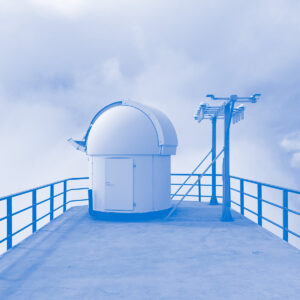
Atmospheres and Disturbances registers the changes in high altitude ecologies caused by increasing global temperatures. The composition is based on field work undertaken at the High-Altitude Research Station at Jungfraujoch, Switzerland where for four weeks I deployed various recording devices around the station, and in the surrounding alpine environment to register natural, anthropogenic and geophysical forces. The project provides new encounters of an endangered alpine environment to enhance the way we perceive and engage with notions of place, community, and environmental dissonance.
During fieldwork I used different microphones to record a variety of acoustic, spatial, atmospheric, and vibration-based phenomena. Omnidirectional microphones registered wind, snow, and ice as well as social, material, and industrial sound emanating from the nearby train terminus and viewing platforms. Hydrophones were placed within water and ice to record geophysical sound resonating within the frozen environment of Jungfraujoch and the adjacent glacier. The recordings capture the pervasive presence of anthropogenic sound permeating throughout the landscape produced by tourists, transport operations and recreational sports. Accelerometers were attached to various surfaces and structures to record solid vibration generated by high-velocity wind, and the process of melting and freezing. The recordings produced by the accelerometers clearly express the stress and fatigue occurring within the material structure of buildings and infrastructure.
Atmospheres and Disturbances is designed to place audiences deep inside an extreme environment to afford embodied experiences of an alpine ecology under duress.
18,00€
Out of stock

CD
Lionel MARCHETTI & DECIBEL
“Inland Lake (le lac intérieur)”
From Cat Hope
This is the second Room 40 release of collaborations between Australian chamber ensemble Decibel, and French music concrète composer Lionel Marchetti, after ‘The Last Days of Reality’ in 2018. This release consists of two pieces: Inland Lake (le lac intérieur (2019), and La Patience (2020). Working with Lionel is magical.
Inland Lake was devised with the ensemble when Lionel visited Australia in 2019. As he sometimes does, he came with an ‘partition concrète’ that was part score, part ensemble member, part fixed media. The music is coaxed from the ensemble, without score, but with discussions, listening and experiments. In the live performances, Marchetti efficiently and imaginatively positions speakers in strange directions, heights and places and somehow, the sounds melt together, intertwining and indiscernible - as on this recording. Marchetti adapts the partition concrète after first rehearsals and performances, integrating recordings of the acoustic instruments with synthesizers, tape and electronic manipulations in his home studio.
The recording of Inland Lake occurred in two places at once: at the Digital Hub, Sir Zelman Cowen School of Music and Performance at Monash University, Melbourne and Soundfield Studio in Perth, Western Australia. Marchetti joined from France. Determined to make this recording despite the ongoing border closures within Australia and the world, the group came together telematically – using software to reduce the perception of latency and improve the sound quality ‘down the line’ for the performers. The ensemble was split in half between the east and west coasts of Australia, listening together over the Internet, recording locally. Marchetti later mixed and mastered the track in his own studio. Listening to the piece once the recording and mixing process was complete was like hearing it for the first time, again.
The recording of La Patience was also an overcoming of separations. Commissioned for Decibel’s ‘2 Minutes from Home’ project, this is Marchetti’s first notated composition.The score is beautiful – hand written in ink on crinkled paper, with white out, blurry artefacts and scraps of paper pasted on, a combination of traditional and graphic notations sitting on and around the stave. The project saw each member record their part in their own home, mixed by Marchetti, and blended with video by Karl Ockelford. The score is read in motion, and contains some precise coordination uncommon in other Marchetti works.
14,00€
In stock

CD, Book
PHAUSS
“Audiodrome”
Phauss is Carl Michael von Hausswolff and Erik Pauser. Formed in the early 1980s, Phauss operated amidst of generation of uncharacteristic Swedish artists concerned with reshaping the edges of practices in sound, light, performance and vision. It was a monumentally fertile period for Sweden in that a confluence of factors allowed artists to dedicate themselves to the relentless excavation of ideas, drilling down to the absolute core of their interests and ways of making.
Von Hausswolff and Pauser, who both operated across sound and installation, used Phauss as a means for deconstructing ideas of composition, situationalism, site-specific works and extended performance methodologies. Across the second half of the 1980s and into the early 1990s, they made connections, through their travels, outward from their homeland into scenes and communities that stretched from the Middle East, through North America and into Asia.
Like their travels, their ways of approaching the work they made was similarly wide-reaching and innately curious. They worked with often quite strict conceptual structures within which they were able to unlock entirely new ways of considering composition and also the material production of sound, through performance, through iteration and through considered experimentation which allowed for failure, just as much as success.
Audiodrome collects together two discreet works that sit somewhere between field recording, chance composition and experimental soundscape. Both pieces pre-date the widespread arrival of field recording as a creative practice, and expand outward the work that had been developed by musique concréte and other experimental music approaches concerned with the intersections of found sound and composition. Both works were devised using the same working methodology, whereby an alarm would sound every few days and wherever and whenever it sounded the pair would start recording their surroundings. Those raw material became the basis for the pieces.
The first composition Zürich - Zürich is a piece that traces a line around the world, Phauss travelling on a round the world air ticket stopping only in countries where conflict was present. This unsettling journey became a meditation on the evolving state of the world in those moments. Voices, traffic, cafes, radios, transportation system and other incidental environments float into one another in a kind of stream of (temporally incongruous) consciousness.
The second work Alger - Lagos brings to mind some of Brion Gysin and William S. Burroughs tape cut-ups. Street musicians are splice against bursts of radio, roadside conversations and searing blasts of industrial noise captured from aircraft and other unfamiliar sources. It is an unsteadying journey where even the sounds of the everyday feel alien and repositioned. The sounds call to us prompting a sensing that is at its heart utterly fascinated, and fascinating.
The edition includes a book featuring an exhaustive collection of photographs, documents and artworks made by Von Hausswolff and Pauser during their journeys undertaken to complete each of the compositions. Many of these images and artworks have never been published previously.
18,00€
In stock

CD
Simon SCOTT
“Long Drove”
‘Long Drove’, the title of Scott’s first edition for Room40, is a location in the Fens close to the home of British composer, multi-instrumentalist and mastering engineer Simon Scott. It is the connective pathway between two nature reserves, called Holme Fen and New Decoy, and both sites are part of a habit restoration project called The Great Fen Project and is close to where Scott grew up as a child. This area first became a location of compositional inspiration over a decade ago, when Scott created 'Below Sea Level' on 12k (later reissued on Touch). His return to the Fens has produced a number of new works, presented here on ‘Long Drove’, that are intimate sonic narratives of place and rural trauma.
‘Long Drove’ is a site-specific sound study which shifts the Anthropocene discourse from spectatorship to musical participation, accountability, and creative engagement. The near future of the Fens, with concerns of further subsidence and threat of flooding, remains a palpable concern. One can almost hear Scott’s thought processes within these five compositions, of what the Fens would sound like if submerged and flooded by water again, returning to its original marshland state as a result of climate change, as the field recordings dissipate and unfurl with melancholic washes of decaying tape loops and digitally processed textures of Fenland sonorities.
“I regularly visit the remote and nameless broken bridge,” Simon explains, “that is situated over a long drainage ditch that connects Holme Fen and New Decoy nature reserves, simply to listen. Each season I’d return to observe the sonorities of wildlife merge and coalesce with the hum of the long telephone wires that stretch across the wide and flat Fens. Within my audition I’d perceive different sonic characteristics within the same location and I soon began to record its vast polyphonic glory. By pure serendipity my water bottle accidentally struck the steel bridge, and it rang out like a gong across the Fen landscape. This inspired me to use soft mallet beaters to actually play the bridge as a percussive musical instrument and capture its resonant qualities. A subsequent desire was also to place my tiny DPA microphones inside one of the bridge vertical openings to act as a filter of the many sonorities within and outside of the metal bridge. The vibratory aural qualities of the bridge would differ depending on what part of the bridge I struck and what season it was.”
‘Holme Fen Posts' traces out looped recordings taken from one of two of the famous steel Holme Fen nature reserve posts, which are located at the lowest cartographical location in England (six feet below mean sea level). The posts were driven into the ground in 1851 to take ground readings of subsidence by local landowner William Wells. Metal placards were attached to the posts to depict the subsequent dates of the level of the ground and Scott wedged two contact microphones in between the horizontal posts to capture its sonorities. The recordings reveal not only the slow and deep vibratory sounds of the steel sculptures but also the rhythmic dynamics created by natural phenomena, such as the downpour occurring as Scott recorded, and the resonances within the surrounding area.
The natural phenomena of wind became aeolian sound characteristics, as heard in The Whistling Wire, and the soft rhythm of the bridge being struck became the long-pitched drones and reverberant textures that these vibrations produced reveals the complex sonic topography of the Fens. From capturing the symphonic glory of the wind which, without any human intervention, ignites the holes in the wires. This triggers shifting planes of transmissible climate change induced musicality. ‘The Black Fen’ traces sound fields through cassette tape loops of aeolian field recordings which are manipulated when fed into Scott’s modular synth system to gradually tease out submerged hidden melodies.
14,00€
Out of stock

CD, Book
PHAUSS
“Nya Sverige – Nothing But The Truth”
Phauss is Carl Michael von Hausswolff and Erik Pauser. Formed in the early 1980s, Phauss operated amidst of generation of uncharacteristic Swedish artists concerned with reshaping the edges of practices in sound, light, performance and vision. It was a monumentally fertile period for Sweden in that a confluence of factors allowed artists to dedicate themselves to the relentless excavation of ideas, drilling down to the absolute core of their interests and ways of making.
Von Hausswolff and Pauser, who both operated across sound and installation, used Phauss as a means for deconstructing ideas of composition, situationalism, site-specific works and extended performance methodologies. Across the second half of the 1980s and into the early 1990s, they made connections, through their travels, outward from their homeland into scenes and communities that stretched from the Middle East, through North America and into Asia.
Like their travels, their ways of approaching the work they made was similarly wide-reaching and innately curious. They worked with often quite strict conceptual structures within which they were able to unlock entirely new ways of considering composition and also the material production of sound, through performance, through iteration and through considered experimentation which allowed for failure, just as much as success.
Nya Sverige - Nothing But The Truth is a recording made in the United States whilst the pair were undertaking an exhaustive tour in 1991 alongside Hafler Trio and Zbigniew Karkowski. This, now legendary, tour was both arduous and rewarding. Living in a van for many weeks at a time, travelling between cities with the most modest of means meant Phauss came to know a very particular vision of the United States, one that existed below plain view. Their’s was an experience had at the rawest edges of cities.
Equally the performances they gave, from which this edition is assembled, were raw and quite frankly dangerous. Fire on stage, sparks flying from short circuiting electronics and intense physical rituals guided so much of their work during this tour and looking back at bootleg videos from the time it’s difficult to imagine the work being able to be presented in the modern world.
One of the flyers from their tour reads ‘Extreme Swedish Industrial’, and as familiar as those words might appear now, in 1991 they held a very different resonance. They were unfamiliar terms of reference and the intensity of Phauss’s music maintains that unknowability to this day. This is a profoundly individual work and sets the stage for a generation of musicians who followed them.
The edition includes a book featuring a long-form in conversation between Carl Michael Von Hausswolff and Erik Pauser with Lawrence English. It also includes never before seen photos and documents from their North American tour and collects together an essential and largely under-documented history of this period of the group’s work.
18,00€
In stock

CD
Brad E. ROSE
“Annular Silhouettes”
From Brad E. Rose
There are many times when I’m working on a music project that, in the moment, I’m not sure what I’m really doing. I don’t believe there’s some otherworldly power guiding my hands or thought processes unless our own subconscious could be classified as such a thing. It’s mostly about trying to be present at that moment and letting the ideas and sounds unfold in a way that isn’t forced. Oftentimes, after the fact, it will become clearer to me that certain feelings or thoughts were trying to find their way out, but my brain, as is often the case, wasn’t sure how to process them and let them go. Sound has often acted as that medium for me over the last three decades; a way to channel difficult thoughts into a language I can understand.
One evening as I watched the snowfall in mid-January, after thinking about what Annular Silhouettes was, it finally hit me. Recorded during the depths of 2020, during a time spent within the vicinity of where I live, it’s a bit of a love letter to the place I grew up. I live in the house that my grandparents lived in for over 20 years, that my grandfather gutted and rebuilt with his own hands. It’s the last place he ever called home and his spirit remains firmly etched into its walls. I live less than 10 minutes from my childhood home, where both my parents still live. I moved away and eventually came back. I am lucky to gain a different understanding of this place than I had growing up.
Place is a strange thing in the way it can influence and shape us, for better or worse. Nearly 20 years ago, when I moved back here with my partner, she would tell me how she couldn’t get over how big the sky felt in Oklahoma. I still think about that often. For a place that is stuck moving backward in so many ways, the possibilities above us can be endless beyond the forces dragging us back into the soil. We all find our way to the dirt eventually and one circle will close, but during my time inhabiting this space, I hope to have started a few new circles along the way so that the cycle will grow.
14,00€
In stock

CD
SENYAWA + ENGLISH / ENDEAN / KNIGHT / SVOBODA / TALIA
“The Prey And The Ruler”
From Lawrence English
The first time I witnessed Senyawa was in the early 2010s. We shared a bill at the MonaFoma festival in Hobart. Some memories hold strongly in your mind and Senyawa’s performance that day did just that. It was a monstrous portent of things to come. A promise, in sound, of the energetic force that has since come to mark them as one of the truly unique and visionary musical pairings from South East Asia.
This project, The Prey And The Ruler, finds its root in the unsteady months of mid 2021. As the pandemic plodded onward, and lockdowns were a thing of the everyday here in Australia, Peter Knight and I were talking about the situations unfolding in our respective states. We also got to talking about friends in the region and found ourselves pondering the situation just north of us, in Indonesia. It was around this time we thought to reach out to Rully and Wukir from Senyawa and to hear how things were first hand for them, and their communities.
Following that initial conversation we collectively decided that it was a good moment to commence a project that could cut through the geographic isolation of those long months, and also seek to create some opportunities for a community of instrument builders, friends of Senyawa, who had been significantly hit by the force of the pandemic.
A few weeks after this exchange, Wukir sent a series of videos; grabs from his cellphone. The videos were of plastic moulds, smoke, spray paint and sound. In each short clip, instruments were being conceived, tested and forged. These were new instruments coming to life before our eyes, and ears. It was these instruments, and the audio possibilities they suggested, that are at the very heart of this edition.
Following several more exchanges we started passing recordings to one another. The process of sharing materials back and forth quickly took on the shape of the works you hear on this album.
Once all the contributions were in place I set about forging them. On the first listen there was a deep sense of intensity to all the performances, like an outpouring or eruption. This was no doubt the result of people being largely locked away, a chance to break the looping around of their own daily routines. These sonic offerings from Senyawa, these instruments with their sounds so unfamiliar and at times unexpected, seemingly unlocked approaches from everyone in surprising ways. It was as if everyone was leaning into the sounds, applying themselves to the particular qualities of these new instruments.
What you hear on this edition then is a collective effort at expanded listening. It is an album that affords a certain act of leaning in. The results trace many individual minds, applied to the same collective actions.
Wukir Suryadi - Industrial Mutant instrument
Rully Shabara - voice
Helen Svoboda - double bass & voice
Peter Knight - trumpet & Revox B77 reel-to reel tape machine
Joe Talia - drums
Aviva Endean - clarinets & harmonic flute
Lawrence English - organ, electronics
14,00€
In stock

CD
Aviva ENDEAN
“Moths & Stars”
From Aviva Endean
Coming from a background as a performer and clarinet player, the opportunity to record my own music opened up a whole new context to think about music. Sounds are freed from being confined to one place, one time, or even one perspective. I wanted the recording to have a right-up-in-your-ear kind of intimacy - so close, that you could hear the beating of a moth’s wing, but I also wanted the listener to experience the expansiveness of the recorded space, like the vast night sky.
The microphones became extensions of my instruments, getting right up close to capture the microscopic, creating tones of feedback which captivated me, or zooming out to capture multiple acoustic spaces. My recording and composing process became more intuitive and explorative, another form of play. I could start creating and see where the piece would take me, and notice how new relationships were formed as I folded multiple time/spaces in and over each other.
Sometimes I would begin by gleaning sounds from my archives, and listening to how they could be reimagined and transformed alongside the discoveries my microphones and instruments were finding. In ‘Nightwork’ I wanted to find a way to revisit some microtonal humming that I had recorded for a sound design project, and then discovered the Leslie speaker as a way to spin my bass clarinet sound around the microphones, creating bass tones emerging as waves out of the densely layered pitches. Sometimes a new instrumental fascination, such as the e-bows and magnets on ‘Mirror Signals’ or the binaural microphone feedback on ‘Moths & Stars’ would call for me to find further layers of clarinets and field recordings to be woven into their story.
14,00€
In stock

LP
Peter KNIGHT
“Shadow Phase”
From Peter Knight
Most of this record was created in the shadow of COVID and deep in the maw of Melbourne’s 2020 long winter lockdown. It is a meditation on the nature of connection.
Restricted to a 5km zone, one of the only people I saw outside my family during this time was my old friend and teacher, Ania Walwicz. We met in the overlap between our zones on the waterfront near Docklands to walk and talk on bright, cool winter afternoons.
Those conversations became large in my thoughts when Ania suddenly passed away in September. Her voice was in my head as I worked on this music, trawling through threads of ideas, recordings made on my phone, and thoughts jotted down in notebooks.
Ania’s practice as a writer relied on ‘automatic’ processes. Her work was informed by everything she had read (a lot) but it was created in the manner of dreams. In a state where the subconscious might bubble up and the words arrange themselves into meaning bearing forms that resonate more than represent.
I thought a lot about that as I made this music. I recorded everyday using the trumpet, my old Revox reel-to-reel, a couple of synths, a harmonium I lent from a friend, and whatever else was around. I worked mostly on just diving a little deeper each time I sat down to it.
Through the simple process of exhalation, I explored my relationship with the trumpet, which has been through so many twists and turns. I let the tones produced by my breath unfurl on long tape loops and degrade beyond recognition through pedal and plugin chains, until the only imprint of the initial gesture remained.
My process also involved long bike rides during which I’d listen to the work of previous days on ear buds, gliding through familiar streets made slightly strange by the absence of people and movement. Often my rides took me along Footscray Rd next to the port, and as I washed down towards Docklands past the old boat moorings I stopped pedalling to coast. The sounds from my darkened studio mingled with the low rush of air past my helmet, the click and whirr of my bike gears, a squalling bird, a whooshing car. And I remembered my last conversation with Ania. Sitting in the late afternoon sun, squinting against the light that raked across the water, she was telling me about all the different words for they have for blue in Polish and Russian, and how words don’t just change our perception of things, but also actually change the thing being perceived.
As I rode home that afternoon, I felt like anything was possible.
Peter Knight - trumpet, voice, synthesisers, laptop electronics, Revox B77 reel-to-reel
Fia Fiell - synthesiser (Eunoia)
Jacques Emery - bass (The Softened Shore)
Katherine Philp - cello (The Softened Shore)
Rachael Kim - violin (The Softened Shore)
Tamara Saulwick - whispered voice (The Softened Shore)
Tony Buck - percussion (Shadow Phase)
Ania Walwicz - spoken voice
24,00€
Out of stock

CD
Lawrence ENGLISH
“Approach”
From Lawrence English
I often find myself thinking about the opening line of William Gibson’s Neuromancer, "The sky above the port was the color of television, tuned to a dead channel." When the book was written in early 1980s, a dead TV channel was a deadened grey of noise. Revisit the book now though and its character has shifted, for in the digital age a dead channel is a richly saturated sky blue. The referential effects of time are not constant, but they rather provoke new perspectives and ideally new understandings.
This album, Approach, is an echo that has travelled with me for 33 years, even if I wasn’t fully aware of it. It’s a record about memory, about how seemingly cursory encounters shape us and how experiences accumulate in time. It’s a distorted mirror catching the diminished glow of the fires that forged me.
The record draws its root from Yoshihisa Tagami’s seminal manga Grey. In many respects this album is a soundtrack to that manga. What makes Grey unique, in the west at least, is that it was amongst one of the first Manga to be translated and distributed outside of Japan (yes, even before the touchstone that is Akira). It was one of the first droplets that has since become a torrent pouring outward from Japan. It was also the first Manga I bought for myself, when I was 13, and read as a serial.
I tend not to think or speak very much about my teenage years. I had some profound experiences that have carried forward, I forged deep emotional partnerships that carry to this day. The majority of that time however was something of a slog, a day by day performance of self-preservation. Those years were a quiet war to push back against expectations for a way of being I had no interest in sharing.
All boys’ schools, one of which I attended, are a maleficent prison if you are not participating in, or as was my case you are maintaining an antithetical position to, hegemonic masculinity. There’s no real need to detail my experiences but suffice to say several years after high school a classmate approached me in a stationery store and asked for my forgiveness for what he had done to me. I was only too happy to give him that relief, it was obvious he wore scars from those experiences that seemingly ran deeper than my own.
I don’t find myself dwelling on those negative experiences partly because during those years I was a sponge for culture. It’s difficult for me to quantify how much cultural consumption happened during my teen years, but I recognise now how formative so many of those exposures have become. An example of this came into sharp focus last year when I happened to remember, and then re-read Tagami’s Grey.
As laconic and occasionally unlikable as the main character, Grey, might have been I associated deeply with their sense of determination. Grey’s rejection of societal expectation (which is foregrounded by the edition’s introduction penned by speculative fiction author Harlan Ellison, who highlighted the class politics that haunt the storyline), and his refusal to accept the immobility of systems, and social codes, clearly resonated with me. Add to this a delightfully nihilistic optimism matched with unquenchable rage and that young version of me was sold; I knew already that sensation of rage, when applied with focus, would be my fuel throughout those years.
This record then is also a kind of sonic postcard retrospectively drafted for that very unsteady and volatile version of myself. It’s more than that of course, but I want to recognise and thank that belligerent young person, who seems so distant to me now. I recognise that their way of navigation, their determination to be curious and try to discover who they were, not who they were told to be, allowed this version of me to exist today. It also pays homage to the family and friends (and the cultural artefacts such as this manga) that helped cushion and guide that young body and mind. Without them, it’s difficult to know how I might be in the here and now.
14,00€
In stock

CD
Manuel MOTA & David GRUBBS
“na margem sul”
From David Grubbs
This recording documents Manuel Mota’s and my first public performance as a duo. We had played together previously for a recording session—a relaxed afternoon at Lisbon’s ZDB, where I recall zoning out, guitar in my hands, watching the endless throng of people Sunday-strolling past the plate glass window next to the stage. That deeply pleasurable afternoon session felt like a live accompaniment to a film.
This recording also documents, for the both of us, a first indoor collaborative performance since the beginning of the pandemic. It felt familiar—I do remember how to do these things—and yet upped in its intensity of focus, and afterward that much more imprinted in memory, even prior to sitting down with this recording. It seemed I could have narrated it after the fact, its various twists and turns, which is not often the case for me with improvised concerts, details of which often vanish—to return who knows when—or transform into a series of disconnected impressions.
One of the things that I love about Manuel’s playing is that as a listener I quickly abandon my search for the logics of continuity that apply to most performers. With Manuel I rarely feel that I anticipate the shape of a given phrase in the time of its unfolding—as a duo we’re definitely not finishing one another’s sentences—nor do I sense that I’m tracking larger structures in the making to serve as signposts for the performance as a whole. The two of us first met more than a decade ago, but throughout many conversations we haven’t spent much time speaking analytically about playing, never really compared notes from inside. It’s not that we’ve chosen not to talk about music, or that there’s a barrier or unspoken ideology to doing so. There’s always something else to talk about.
This concert took place in the Biblioteca Municipal of Barreiro, a smaller city to the southeast of Lisbon across the Tejo River estuary. “Na margem sul” means “on the south bank,” and is commonly used to refer to the area south of the Tejo. For a first time returning in many months to playing in an indoor setting, the library seemed an especially welcoming location.
14,00€
In stock

CD
Pierce WARNECKE
“Deafened By The Noise Of Time”
From Pierce Warnecke:
‘The darkness does not lift but becomes yet heavier as I think how little we can hold in mind, how everything is constantly lapsing into oblivion with every extinguished life, how the world is, as it were, draining itself, in that the history of countless places and objects which themselves have no power of memory is never heard, never described or passed on.’ - W.G. Sebald, ‘Austerlitz’
Deafened by the Noise of Time is a speculative take on how sound might decay and disappear; a reflection on the unavoidable entropy and dislocation of all things over time through 4 compositions, one with video. The titled is borrowed from Julian Barnes' novel 'The Noise of Time' (itself borrowed from Jewish Russian poet Osip Mandelstam), a fictional biography of Shostakovitch.
I first started working on the material for this album for a performance at Eglise Saint-Merry in Paris in 2017. Following the concert, I sat down to edit the music but struggled with the pieces, every time finding new flaws, unable to follow through with the original compositional ideas. Somewhat frustrated, I decided to strip down the musical content to form more bare-bone structures and look for a different principle or process to tie everything together.
For this, I shifted focus to a long running part of my video practice: the deterioration of things over time, where I use my camera with simple lighting and slow movements to focus on rusty, dirty, burned or broken found objects. I like the idea of these things being both recent and ancient, contemporary artefacts of a world in constant decay. I like the idea of being able to still sense memory on objects even when they’ve become almost entirely unrecognizable. I like how this pushes back against the inevitability of impermanence. I like the act of scavenging and reusing discarded objects to put them in new but uncertain light. I like to think of it as a kind of ritualistic transformation of 'trash-to-treasure', a conjuring of a thing's entire past through imperceptible clues left on it's surface.
For Deafened by the Noise of Time I wanted to apply these ideas to sound, and consider how a musical idea might disappear under an accumulation of interferences, as a kind of sonic sedimentation and erosion. External elements such as conversations, field recordings, generative noises, silence and inharmonic tones cover the original music similar to the way rust covers metal, or how memories dim and fade, or the way debris accumulates and compresses an object, casting it in stone. For these pieces I looked at Time as a continual burying of the present moment, leaving visible only small details of the 'now' (and the things within it) as echoes towards the future.
14,00€
In stock

CD
Madeleine COCOLAS
“Spectral”
From Madeleine Cocolas
Spectral is built on a foundation of sounds I collected from my immediate surroundings in recent times. It’s a familiar story, casting your ears close to home. I captured these sounds as a type of aural diary to mark days and weeks as they passed. As our physical worlds seemed to become smaller, my senses of observation and perception of my immediate surroundings sharpened. Inside these small spaces I found a wellspring of materials that seemed to offer themselves up.
At the time I didn’t know why I was collecting sounds or what I would do with them, it just felt like something I needed to do and it helped me stay connected and feel tethered to my surroundings. With my phone on hand, ready to record on walks around the block, past whirring industrial machines, deafening crickets and crashing storms, I found so much beauty and meaning in the sounds and the recordings I collected.
As the collection grew, I could sense these links between them, some sounds seemed to gravitate towards one another, they self arranged almost. It felt very natural to then build layers over the top of them, to be able to express some of the emotions that the sounds triggered, of memories from the moments from when they were captured.
At its core, Spectral is about deep stillness, observation and perception underpinned by emotional expression. It is a subtle shift in memory, a recolouring of the world we think we know and a willingness to lean into that possibility.
14,00€
In stock

CD
Yui ONODERA
“Too Ne”
From Yui Onodera:
These pieces are what can be described as almost static ambient tracks. They are about a recognition of perceived stillness, even when there is change in the sounds’ relationships with each other, and with the listener.
“Too Ne" is an old Japanese word that refers to a sound that is sounding from far away. It is about distance, and also perhaps about reaching out to those sounds that seem to exist far away from us.
Too Ne is a word that is not often used in modern Japan, but it has a long history, and can be found in the oldest extant collections of Japanese waka (poetry in Classical Japanese), such as "Manyoshu".
It is sometimes understood that there are many sounds that appear in people’s minds here, when they think of an imagined landscape. Sounds as memory markers, but also as devices to help us imagine more deeply the places we visit and recollect with our minds. Here, I recall in my mind the distance of static sounds like vague clouds, delicate sounds like a state where cherry blossoms whirl in the wind and resemble snow falling.
14,00€
Out of stock

CD
Phill NIBLOCK
“Ghosts And Others”
Lawrence English on Phill Niblock’s Ghosts And Others...
Ghosts And Others is a singular work in the Phill Niblock canon. It’s singular not just in its material content, but also in its methodology and approach. It represents a highly focused exercise in editing, location recording and acoustic observation.
In many ways, this work reflects a kind of acoustic mirroring of his practices as a film maker. It makes itself available to the world and in doing so reveals a particular perspective that says as much about its creator as it does about its subjects.
Like all of Niblock’s works this is a piece of patience. It is a work that dwells in the places it finds itself in, allowing certain moments to dominate in some sections, and seemingly vanish away in others. It suggests a movement within boundaries, in that it bounces from one locale to another counterpointing their gradual evolutions across time.
There’s a sense of collision throughout Ghost And Others. Explosions of Chinese percussion punctuate the piece, dynamic strikes to ward off ghosts during a funeral procession in Aberdeen, Hong Kong. They clang between bursts of car horn, the bellows of cows from collective Soviet-era farm in Hungary and various other sonic ephemera. Elsewhere a reeded instrument tries to carve a space for itself, but the world does not allow it to hold. It is a work that celebrates proximity as much as an aural vista.
Transit is also a theme here. What is a fascinating about Ghost And Others is the sense of movement in the work. Trains divide up this piece, marking points of transition, of distraction and of discovery. They act as gate-keepers almost, allowing us through into new spaces and suggesting new relations between the sounds as they combine or detach.
As a work of field recording, Ghosts And Others is generous, invitational and most of all effortlessly deep. It is resonate sensing of place, people and things.
14,00€
In stock

CD
PINKCOURTESYPHONE
“All Intensive Purposes”
A decade has passed since Pinkcourtesyphone's unexpected debut album 'Foley Folly Folio' (LINE)... time does fly in face of expectations, since expectations are just future resentments. 'All Intensive Purposes' is a lush compliment to Pinkcourtesyphone's previous outing for Room40 'Leaving Everything To Be Desired'
Immured within the deep deep pink velvet lining of their sonic smudge satchel ooze forth the obsessions and peculiar delicacies that have captivated both Pinkcourtesyphone and audiences alike. Moody glowering, ghostly utterances re-situated, hissy, distant and sad, all the while light and tender. It is that Sound that is at the fluffy heart of a long string of successful though surprisingly varied albums. A new sparkling jewel that already gathers cloudiness in its facets. This album can be best characterized by one word — charm, well, maybe two words — questionable charm.
"I could listen to it for hours" — a possible proclamation for these inconsistent consistencies.
Theoretical A and B sides makes one long for the warmth of antiquated plastic possibilities, if only for a moment to distill the gnawing hungry need for consumption within. Seven "songs" lilt and wallow, indefinable, intangible, yet always... there.
This is "catastrophe muzak", the sound of sympathy amplified, leaving the room.
Here is a collection of moods which we anticipate and enjoy with no misgivings. A long trail of evening debris awaits your ears' pleasure. Let it procure that pleasure for you, let it devour you.
I can’t imagine... you will.
14,00€
In stock

CD, Book
ZIMOUN
“Guitar Studies I-III”
From Zimoun
With the Guitar Studies series I’ve dealt solely with noises and sounds produced by guitars.
Partly I played the guitars by hand in a more conventional way, but more often I prepared them, or activated them by using small DC motors. I used various microphones for the recordings, as well as the loose contact of a pickup and many different amps; from a small toy amp that was partially defective to a beautiful Magnatone amp with analogue tremolo from the sixties and an old Fender Amp I bought together with my first guitar when I was 10 years old.
I also played recorded sounds back in different environments, for example inside a cardboard tube or in different rooms with various sizes, and then recorded them again. This way I added natural resonate and spatiality to the sounds. I also created a distorted sounds by sending the signal of the guitar to a naked speaker membrane lying on the table, and then put some sand on the membrane itself. The friction between the membrane and the sand then created various forms of distortion. I was trying to test various processes of iteration to discover how transformed the guitar might become.
I did not work with loops in any of the compositions. For each layer in each piece, I recorded whatever I was exploring over the whole period of about an hour. In this way, I put together countless hours of sounds. Through the almost endless overlaying and long recording takes, I have tried to achieve a kind of liveliness, even if at the same time no major changes happen in the composition. It’s never exactly the same, but never going somewhere else either. In that sense these compositions also have a strong sculptural component.
After this process, I started working on the microstructures of the recordings. For example, I recorded slow equalizer shifts in some of these tracks over the whole period of time. I also played these live via various controllers and analogue equalizers. This approach allowed the individual frequencies to become more present over long periods of time or mix with others. Figuratively speaking, this is similar to using a lamp (or various lamps) to illuminate a sculpture from different perspectives, or to create slow changes in light, which affects our perception of the sculpture. At different sonic stages, this can also provoke additional psychoacoustic phenomena. Through these methods I have tried to create a complexity in the microstructures of the sounds and their evolutions.
All three compositions last about an hour each. Digitally, they are released in their full length, while the CD contains shortened versions.
18,00€
In stock

CD, Book
Lawrence ENGLISH
“Viento”
In the summer of 2010 I had the opportunity to visit Antarctica through an invitation extended by the Argentine Antarctic Division. It was nothing short of life-altering, as I am sure anyone would suspect.
Upon departing from Buenos Aires for the iced continent the Hercules transport aircraft, under direction of the Argentine military, made a routine stop at an airbase outside Rio Gallegos.
What was meant to be a few hours layover turned into several days as, on landing, a strong wind storm blew in unexpectedly. Conditions exceeded expectations, and before long it was clear the transport could not take off. The situation was only compounded by adverse weather along the Antarctic Peninsula.
Whilst the scientists and military personnel we were travelling with bunkered down in their quarters, I found myself drawn outside into the howling air. The wind in Patagonia is, well, breathtaking. Literally, there were moments where it was so physical, that it was difficult to catch my breath. Across three days I recorded abandoned buildings, lone trees folded over in fields of tundra-like grasses, quivering road signs, wailing fences and other objects shaken into life by the wind. It wasn't a comfortable experience by any means, but the multiplicity of sounds I was able to capture, I hope, speak for themselves.
The Antarctic recordings were made during two blizzards at Marambio and Esperanza bases. During the blizzard in Marambio, the temperature dropped to -40 degrees centigrade (with wind chill) which made recording particularly challenging. The wind battered the base’s structures and telecommunications equipment, making a range of unsettling, phasing choral drones and deep low frequency vibrations that resonated inside the base itself. The blizzard at Esperanza was mild by comparison, but still strong enough to coat penguins in layer of snow as they huddled together during the worst of the storm.
This year marks the 10th anniversary of completing these compositions and since that time, I have had the pleasure to diffuse them on numerous occasions. With those experiences in mind, as well as the format on which these works are now being made available, I have revisited them and completely remixed and remastered the pieces.
Listening back to these recordings I am struck by the sheer physicality of the wind. It's rare that you feel physically reduced by the motion of air, but in both Patagonia and Antarctica that is just how I felt. A small speck of organic dust in a howling storm.
Recorded on location in Patagonia and Antarctica in the summer of 2010.
Mixed and mastered at Negative Space 2022.
18,00€
In stock

LP
Natalie BERIDZE
“Of Which One Knows”
From Natalie Beridze
“Of Which One Knows”, was written and produced between 2007-2021.
Such unreleased material is a quintessential backdrop to an artist’s processes, as it has obviously never landed in any full bodies of work. It does however gain humble significance, which feels approachable, which is about absence and hence always fresh, drifting somewhere between remembrance and obliviousness.
I see sound in smells, maps and mischievously put random words in poems, as they provoke pivotal subconscious algorithms in me.
Every blissful moment of the divine process of music-making, that goes back to a sacred process of a child at play - a burning response to the intensity of the neigh to invisible blueness of half-formed ice.
The span of time for this music reminds me of my Dad’s studio. Infinite thick wooden drawers that crackle clack, bounce clatter, peal, rattle the same way as before. There is no decay crumbling, perishing or rot in the objects inside. Clippers, liner pens, tracing paper, cutters for grown-ups, unused razors and their tiny spare blade packs, tapes, compasses, leather and metal roll meters, are all intact. Random snapshots, outdated student ids and driving licenses in leather sliders, letters, postmarks, piled up separately in intense small section drawers. All’s in perfect order. All intact.
Layouts, house models with tiny tables and chairs and swimming pools with people inside, others by the fireplace, some holding cocktails, others reading books- are very dusty, smelling of glue and cardboard, all intact. Some stacked one on top of another, others unfinished on the modelling table under the stained swinging arm desk lamp.
24,00€