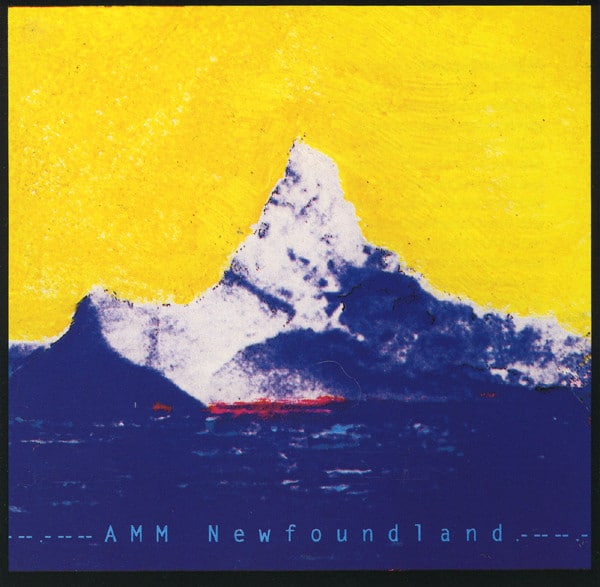
AMM
“Newfoundland” (1992)
14,00€
Out of stock
“This music speaks for itself. So any attempt at characterization should be hedged with a warning that it might deflect the listener’s attention. The very fact of the attempt supposes the pre eminence of ‘character’. In Epilogue , one of his Essays Before A Sonata, Charles Ives made a strong case for what he called ‘substance.’ Substance, he wrote, “has something to do with character.” But what of sheer beauty? For Ives, ‘beauty’ was a problematical concept: “We like the beautiful and don’t like the ugly: therefore, what we like is beautiful, and what we don’t like is ugly – and hence we are glad the beautiful is not ugly, for if it were we would like something we don’t like. So having unsettled what beauty is, let us go on.” Ives contrasted ‘substance’ with ‘manner’ which “breeds a cussed cleverness only to be clever (a satellite of super industrialism) and perhaps to be witty in the bargain – not the wit in mother wit, but a kind of indoor, artificial, mental arrangement of things quickly put together which have to be learned and studied.” Well, there is nothing mannered about AMM. In place of the ‘indoor’ and the ‘artificial’, we discover breath taking openness and inventiveness. The sound of AMM is preterhumanly spacious and it makes sense to characterize this music less in human terms (as ‘lively’ and ‘graceful’, for example) than in terms of landscape. However, any landscape suggested by an AMM improvisation is light years from the affectively pastoral. It is akin perhaps to the paradoxically abstract landscapes of musique concrete. This writer’s own description, written for his own benefit, of the recorded performance in Newfoundland frequently resorts to Arctic and aquatic imagery. So there are dangers in knowing even a little! It is surely too easy to resort to adjectives such as ‘rumbling’, ‘juddering’, ‘thudding’, rippling’ and ‘growling.’ This music is so stunningly immediate, so palpable, that it makes a nonsense of such musings.” Howard Skempton September 1993.
Keith Rowe, John Tilbury, Eddie Prévost. 1992 à Newfoundland.
Related products
Out of stock
Out of stock
In stock

Out of stock
Out of stock
Out of stock
Out of stock
Out of stock